Archive for the ‘Amps’ Category

Dean’s custom amplifier build progress

July 17, 2012

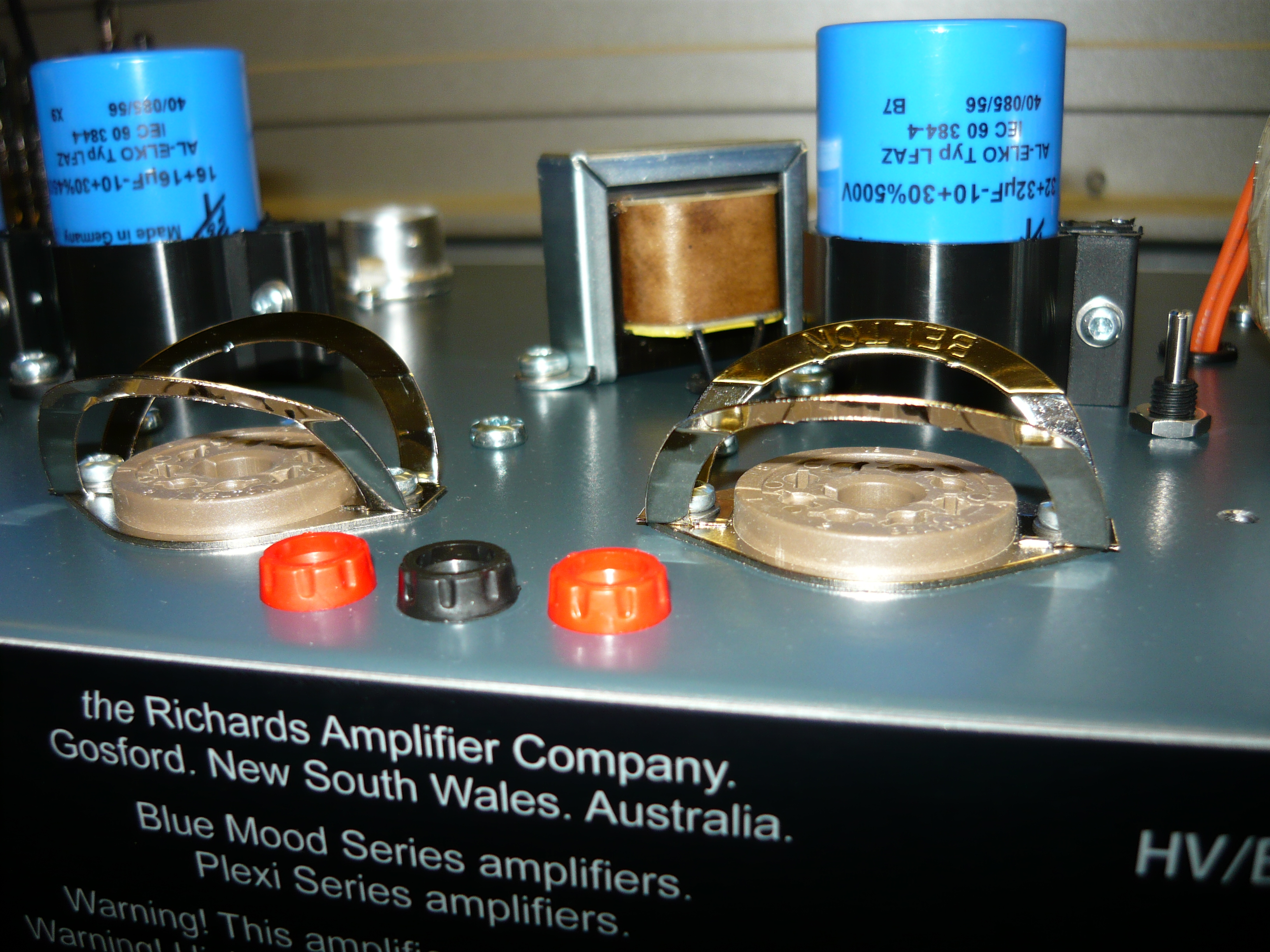
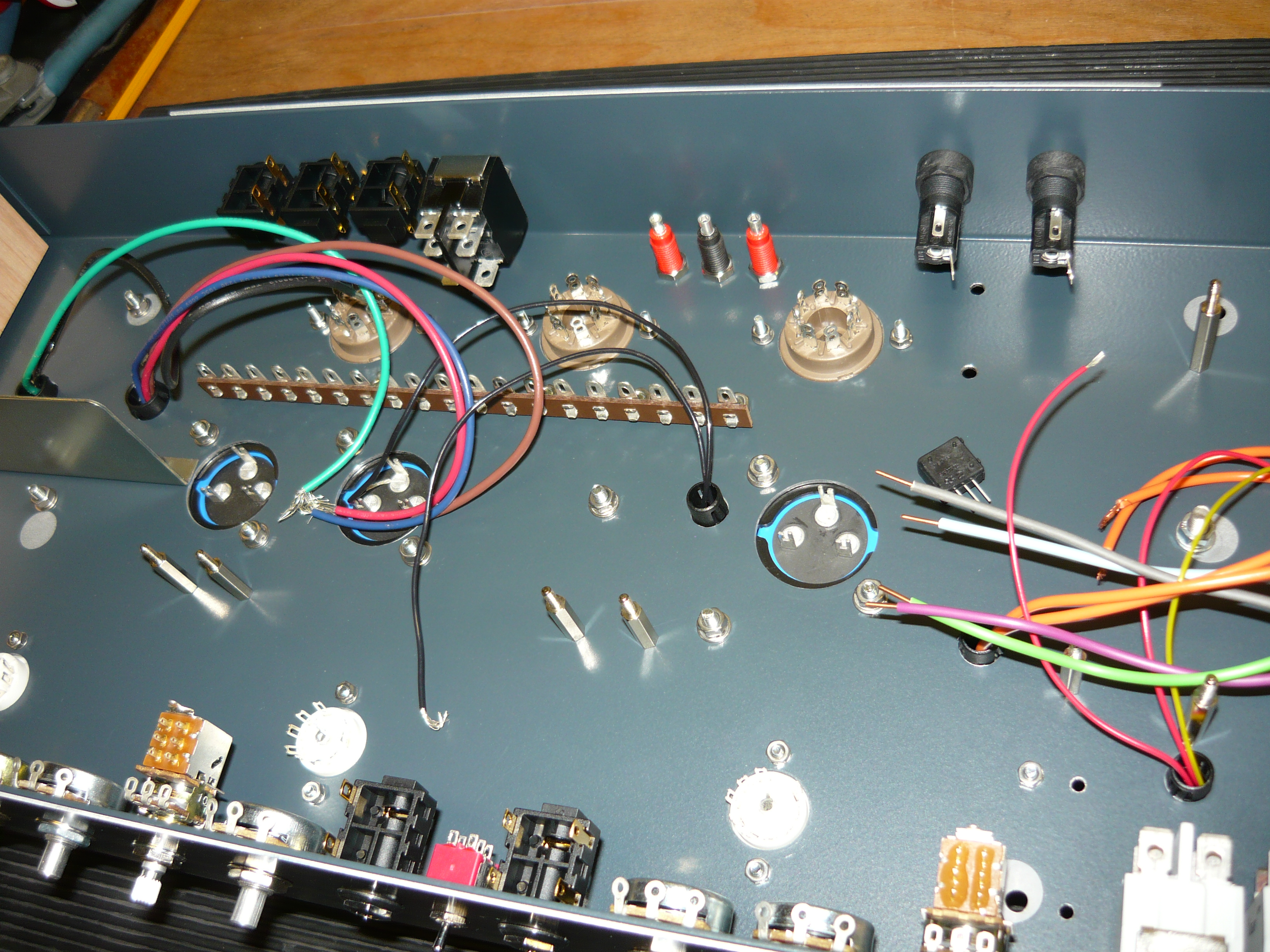
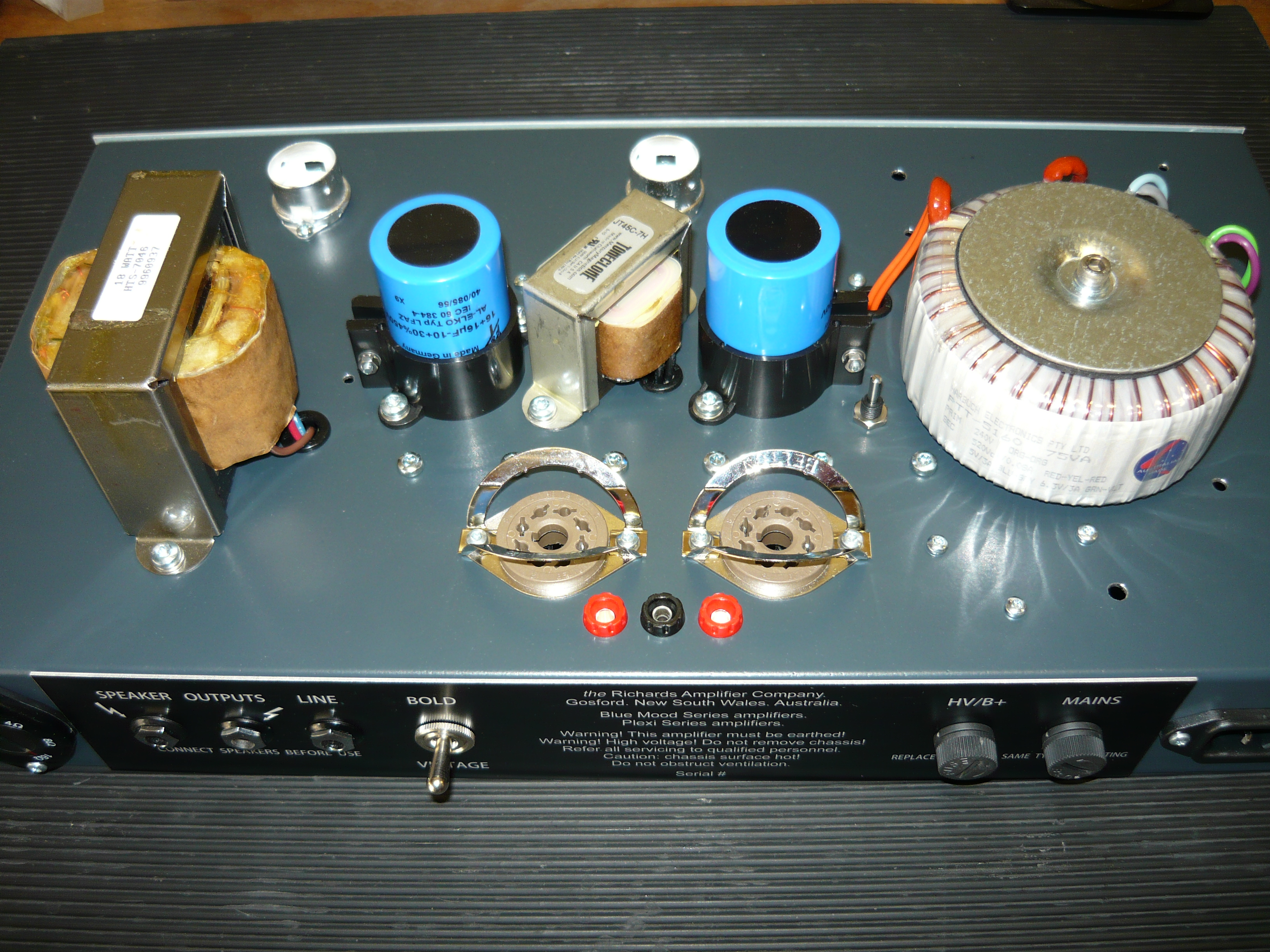
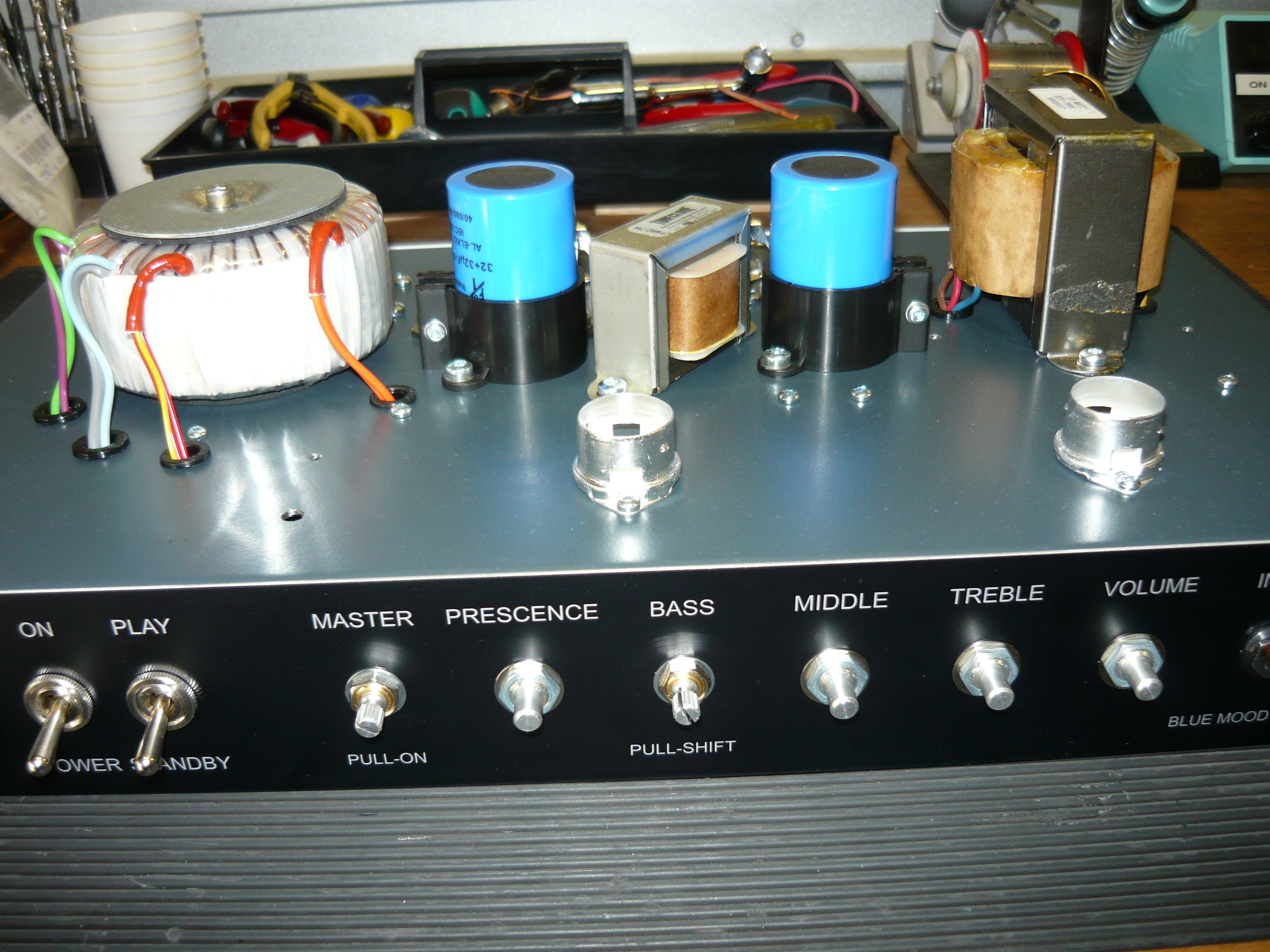
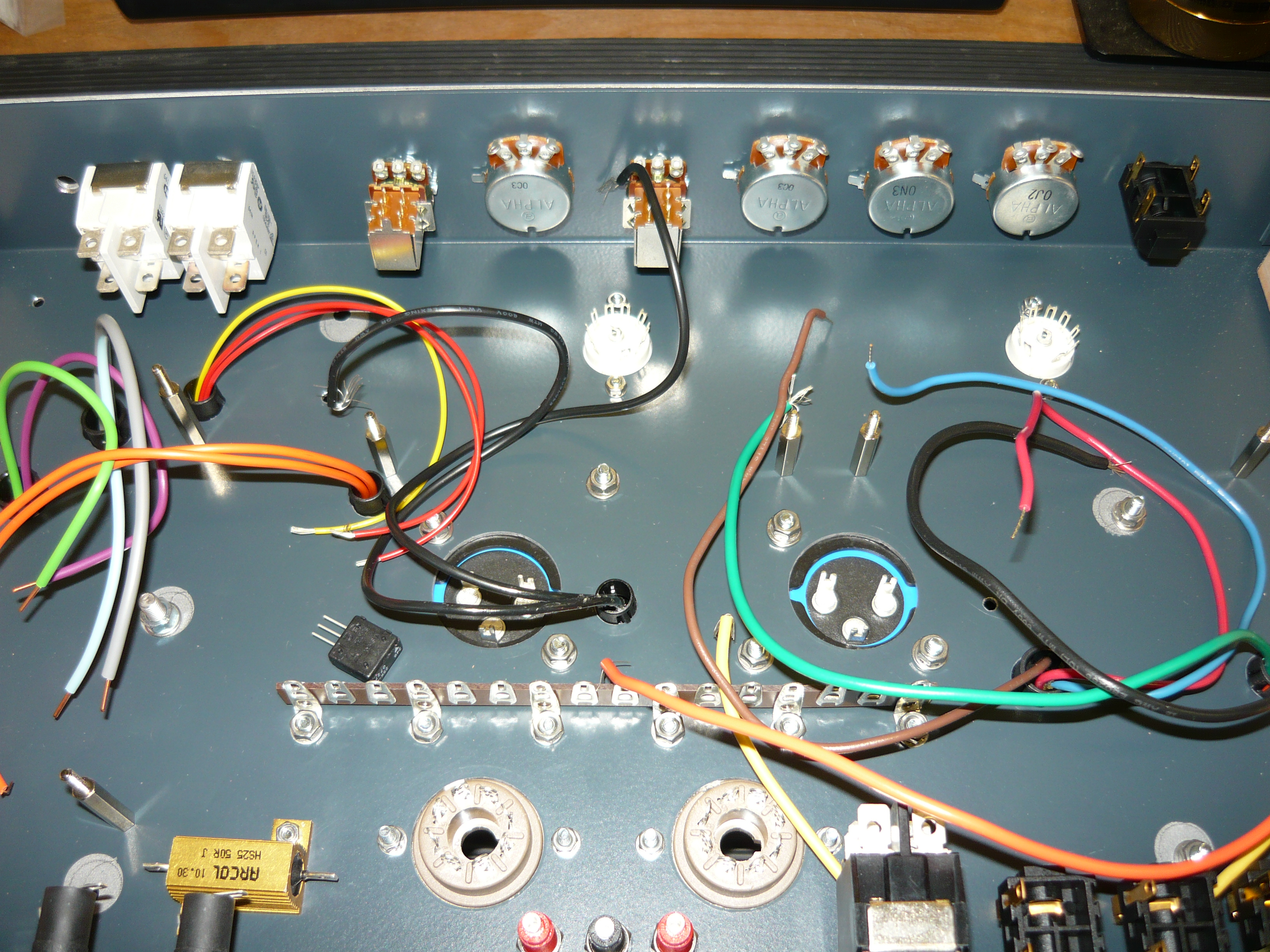
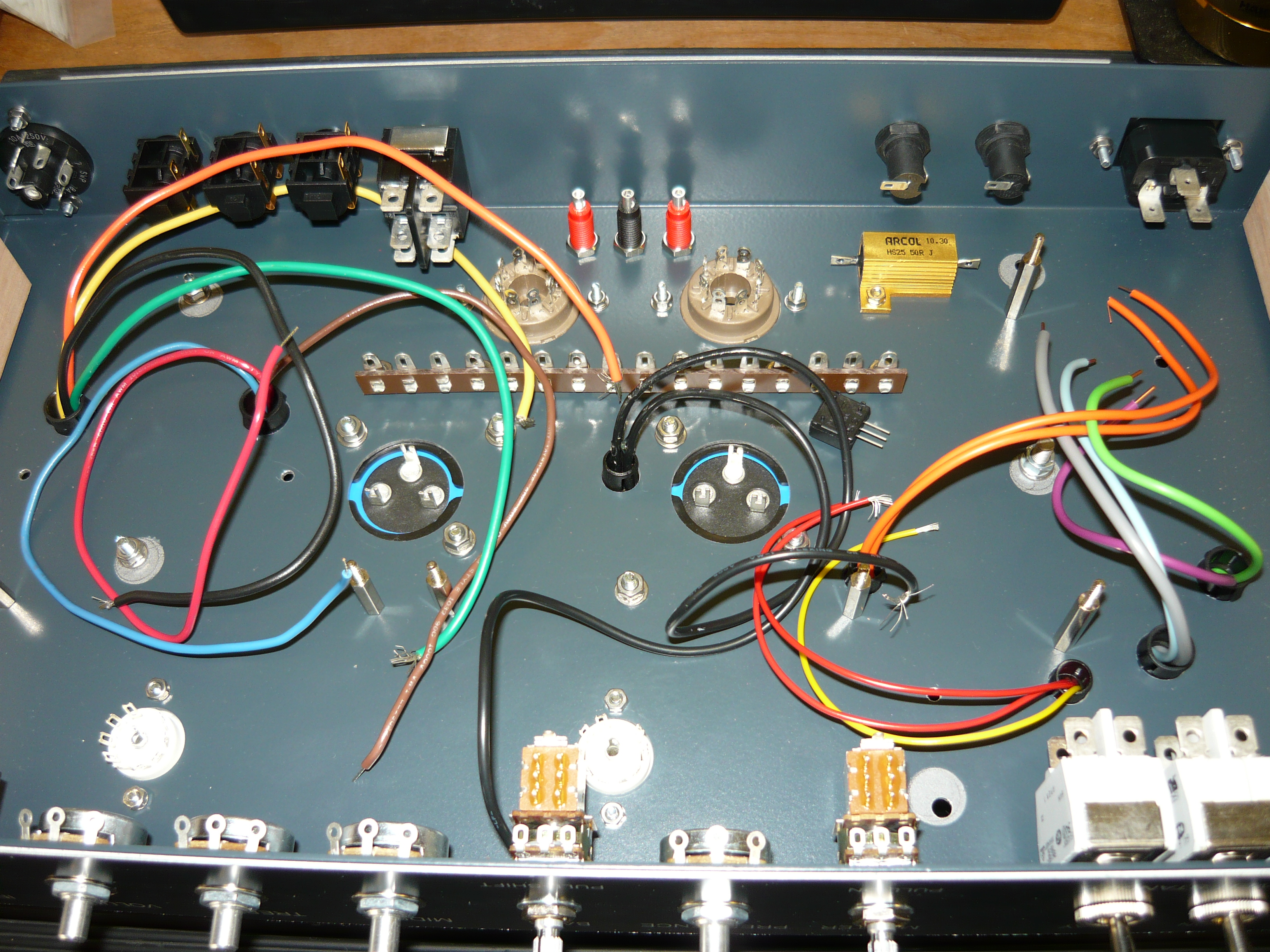
Here is the 2nd in our occasional series of blogs where we publish a visual progress report of a custom-order amp build. This example shows a Blue Mood series amp chassis under way for Dean Gardiner. This amp is a customised variation on the Blue Mood concept, with the addition of a fully-featured valve (tube) driven FX Loop.

The FX Loop features separate Send & Return level controls, as well as separate Send & Return buffer stages. Obviously the Return buffer stage can be configured as an additional gain stage, or purely just to balance the wet signal against the dry signal. The FX Loop can be activated or bypassed by means of a toggle switch mounted on the front control panel. There is no need to be messing around at the rear of the amp in the middle of a gig or session.

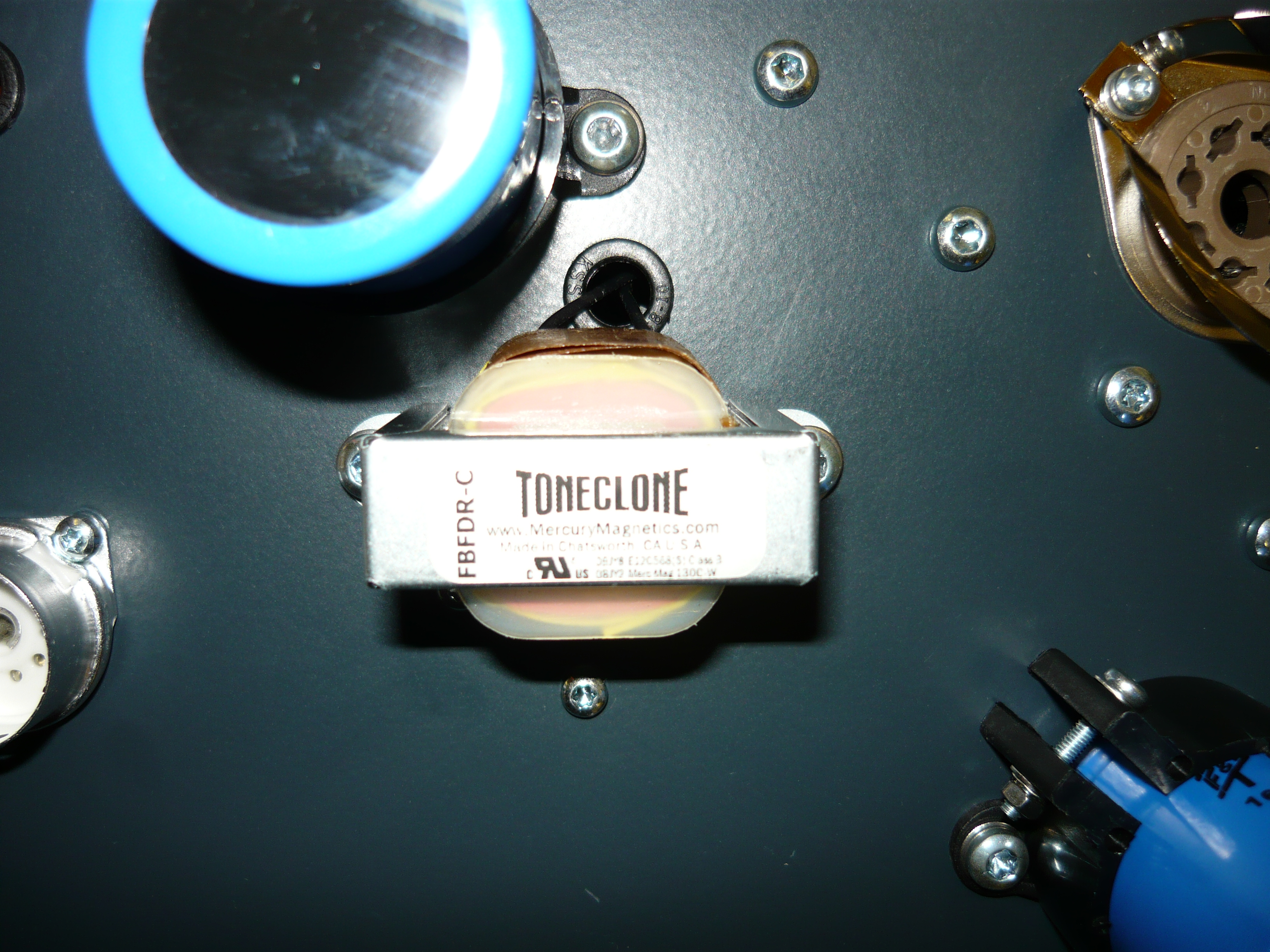
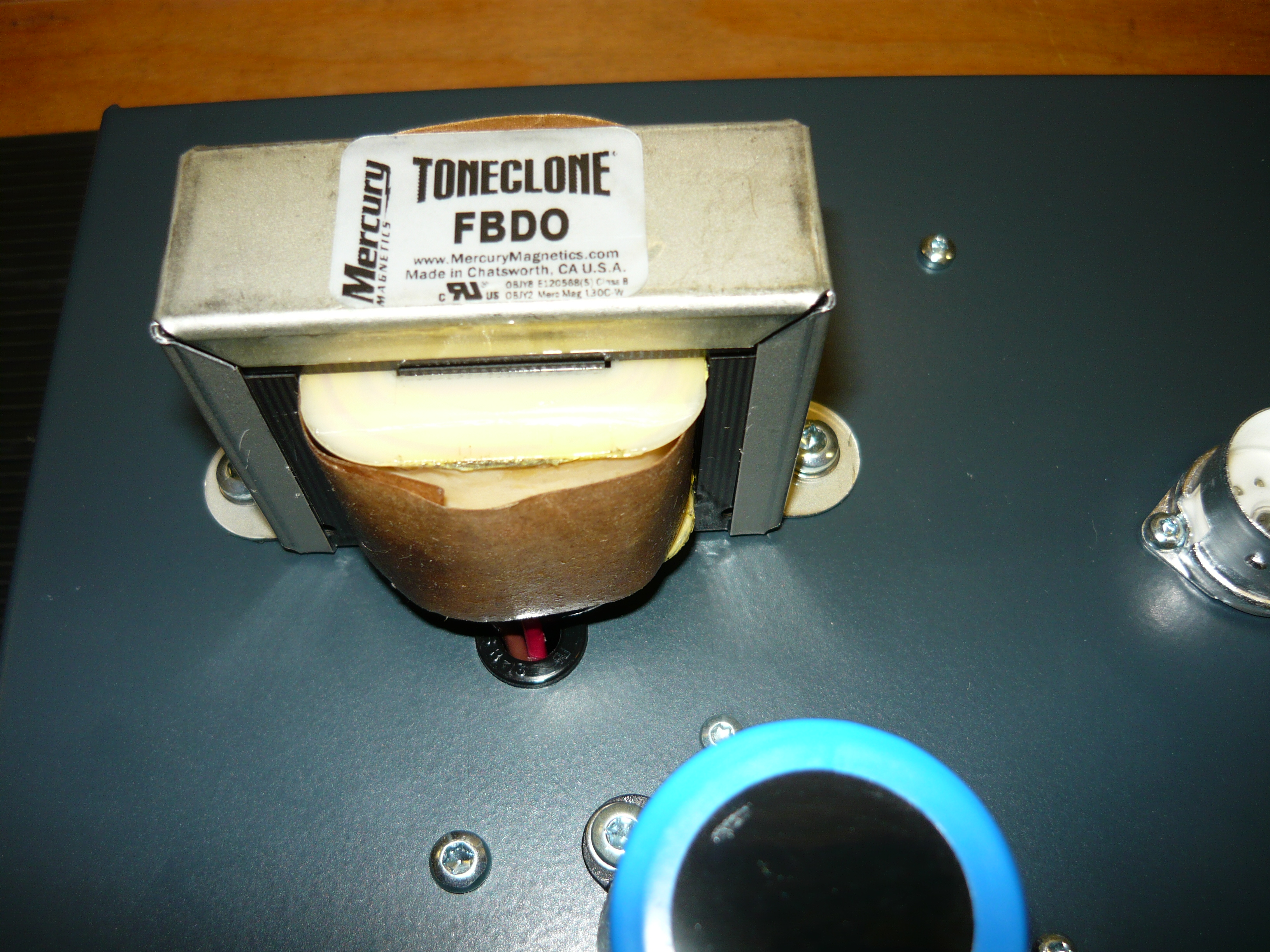
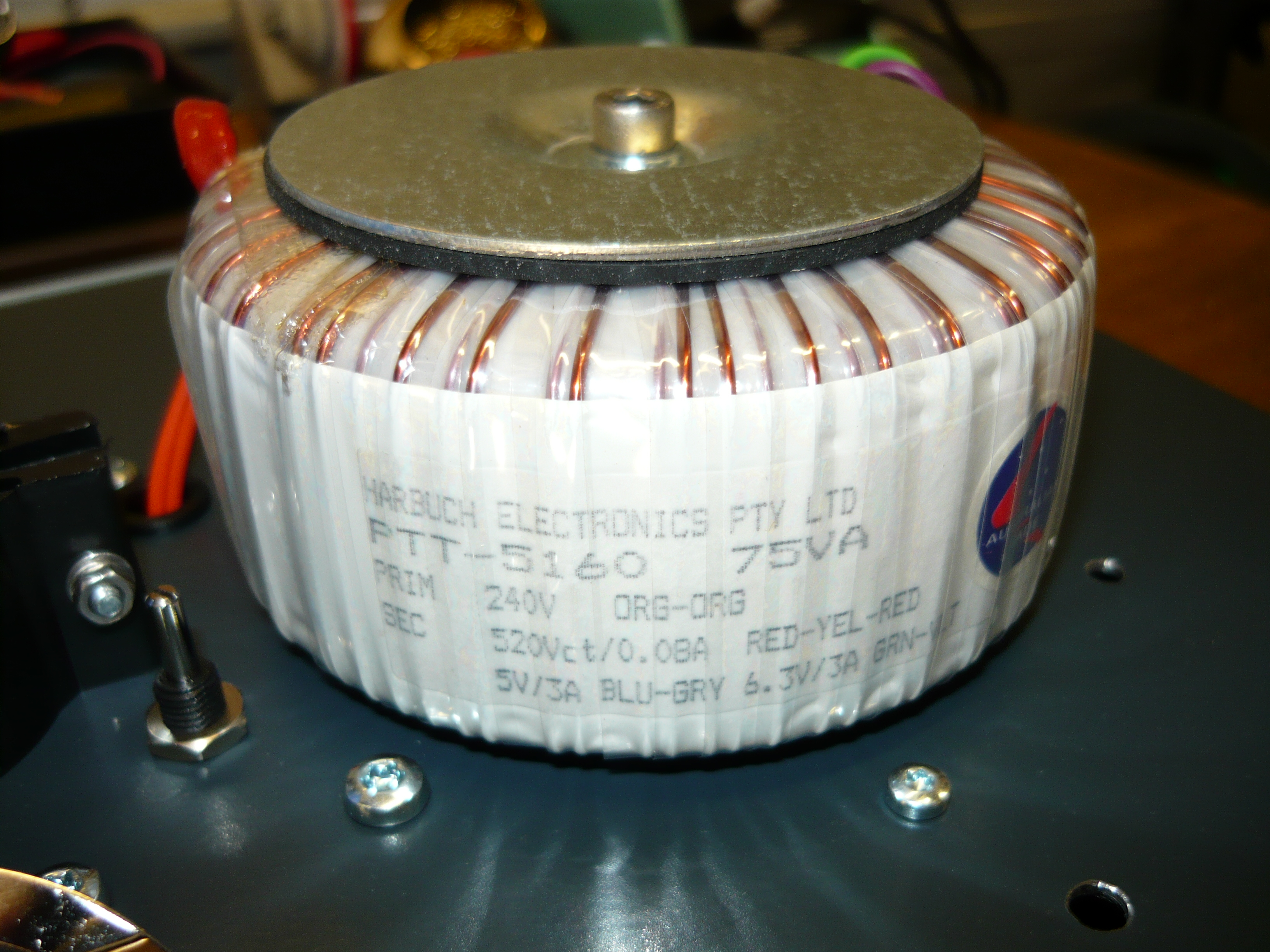
This 18 watt Blue Mood head is built around a pair of 6V6 output valves, with power transformer from the very fine Harbuch company of Sydney, plus output transformer & choke from the very fine Mercury Magnetics company (USA). The 6V6’s can be operated in fixed-bias mode for maximum power & dynamic range, or cathode-bias mode for a sweeter tone & more compression (activated rear panel).

Rectification of the high voltage supply on this model is handled by a GZ34/5AR4 rectifier valve (tube). The basic tonality of the Blue Mood amp is inspired by everyone’s favourite early 1960’s amp from California, as exemplified by the Mark Knopflers, the Stevie Ray’s & the Brian Setzer’s of the guitar world. We just go out of our way to make it a little fatter, a little warmer & a little sweeter.

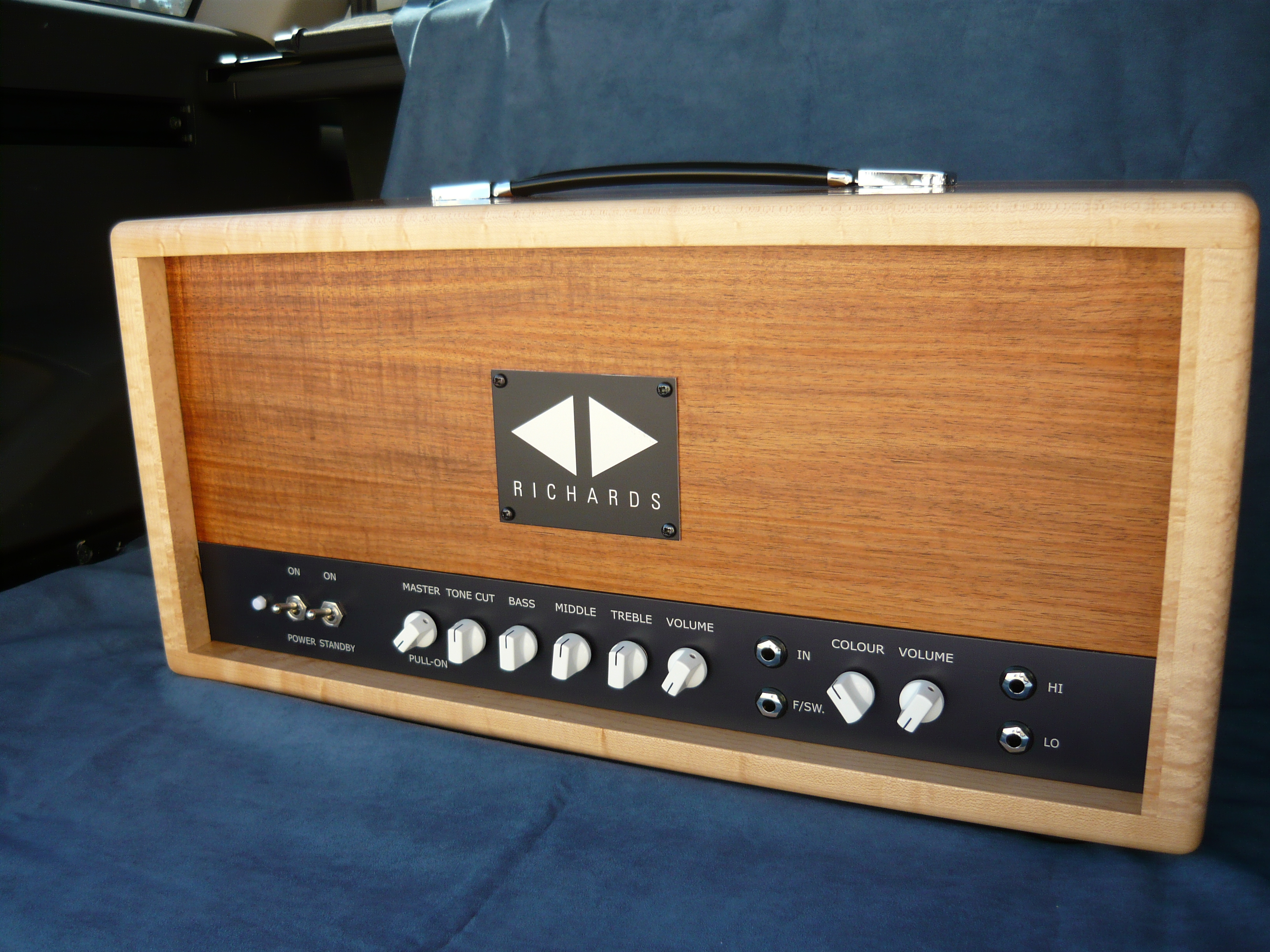
The front panel controls are as follows: single high-impedance input jack, volume, treble, middle, bass (with EQ pull-shift), FX Loop send level & send jack, FX Loop activate/bypass switch, FX Loop return jack & return level, (active) prescence control, master volume (pull activate), standby switch, power on/off switch, neon power on indicator.

The rear panel controls are as follows: 240V/IEC power inlet; mains fuse, HV (high voltage supply) fuse; bold/vintage switch (selects mode of operation for 6V6’s), bias test points (for 6V6’s), line/DI jack, pair of speaker jacks (wired in parallel), speaker impedance selector switch.

The Richards Amplifier Company – Australia. Each & every amplifier is individually hand-assembled, hand-wired, one at a time, by one person from beginning to end, to a specific customer order.

A Modification to the Laney LC30-II

July 10, 2012

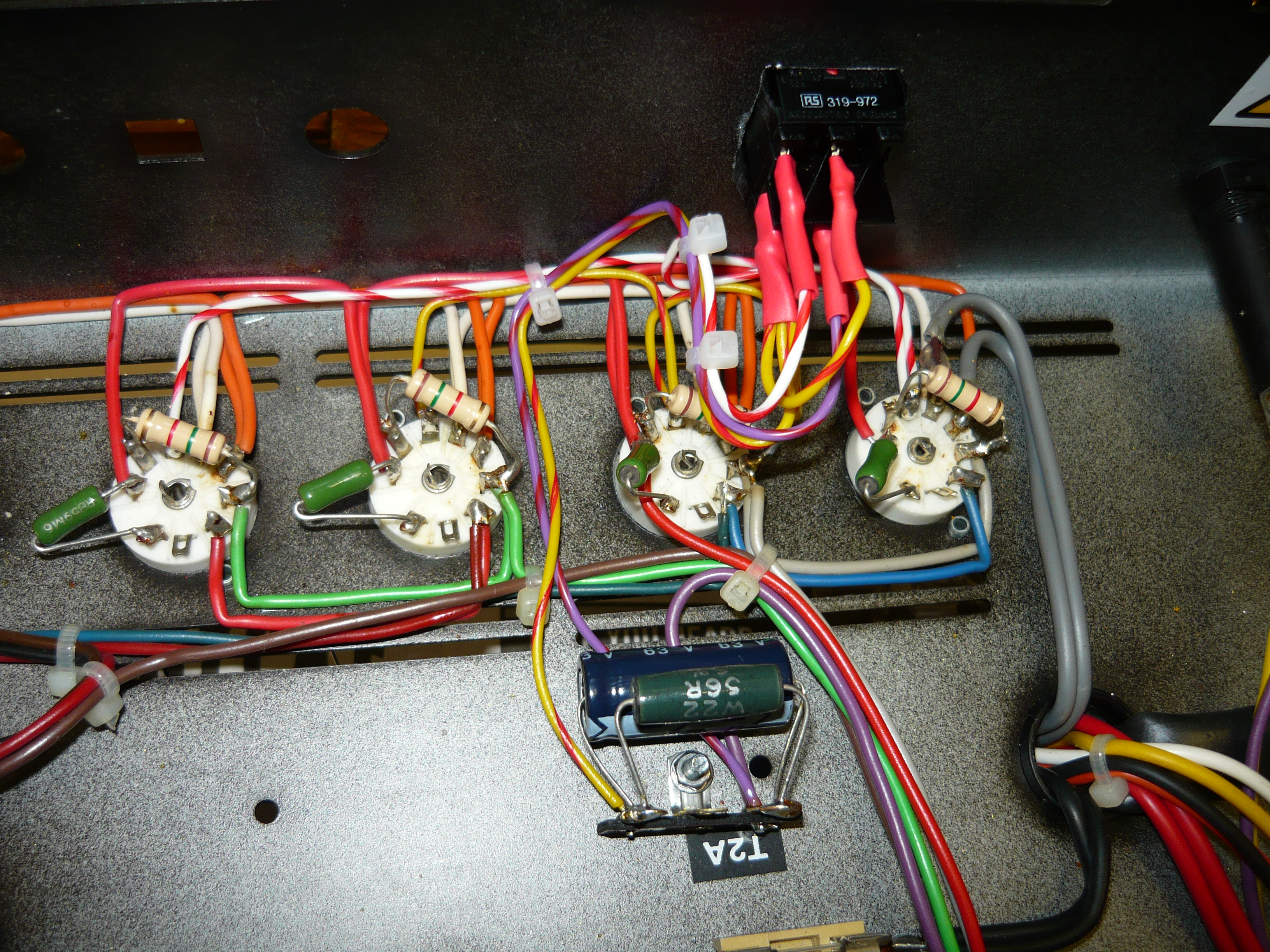
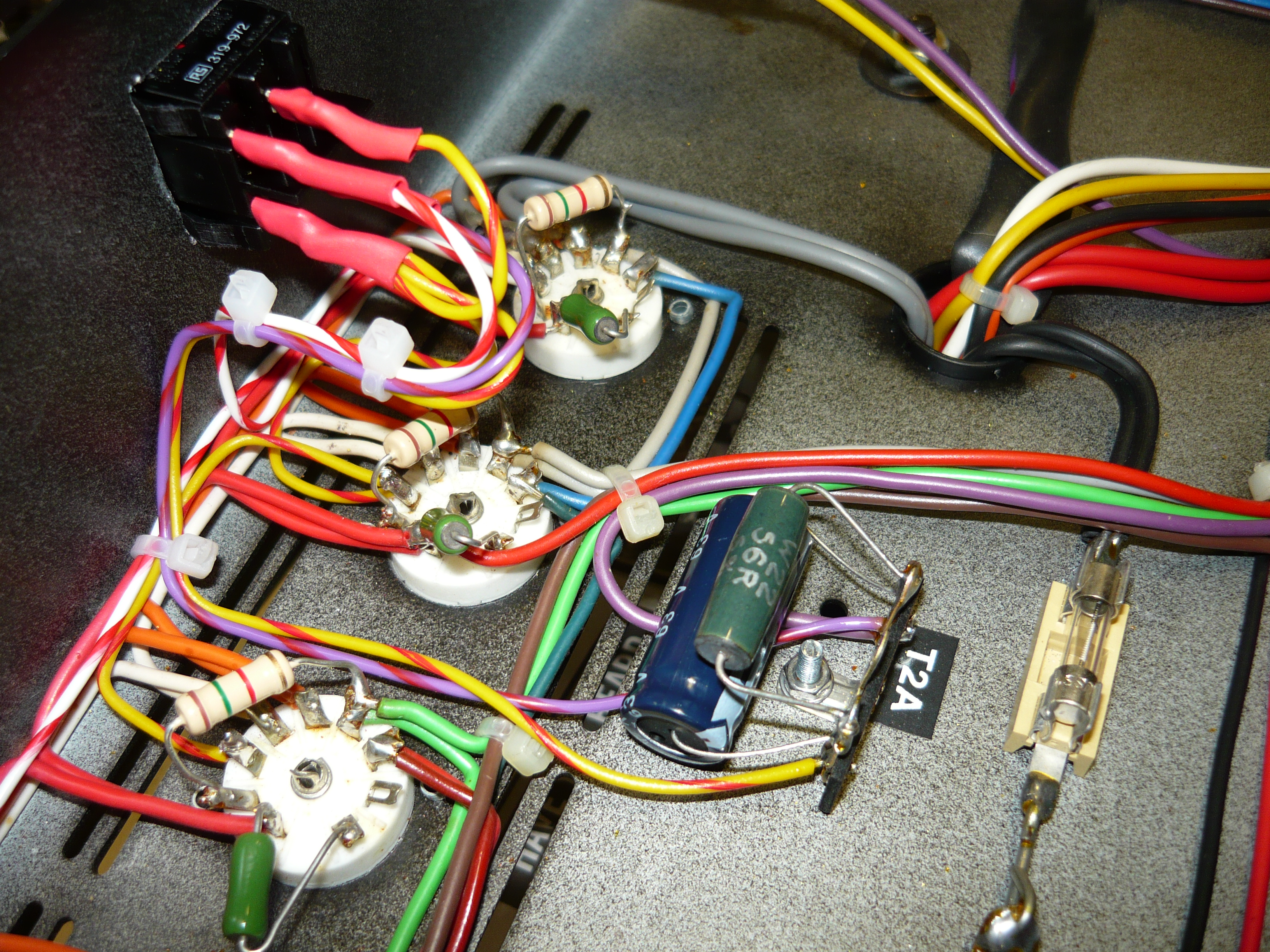
A new customer for us, Peter Timperley, delivered his Laney LC30 II 1×12 combo to the workshop for a general service, but with a special request. Peter wanted to restore the sweet tone that previously existed with this amp, but also wanted to know if we could install a full power/half power switch. The obvious way to implement this mod would be to switch out one pair of the quartet of EL84 power output valves, and correct the impedance mismatch that this introduces by utilising the impedance selector switch on the rear panel.

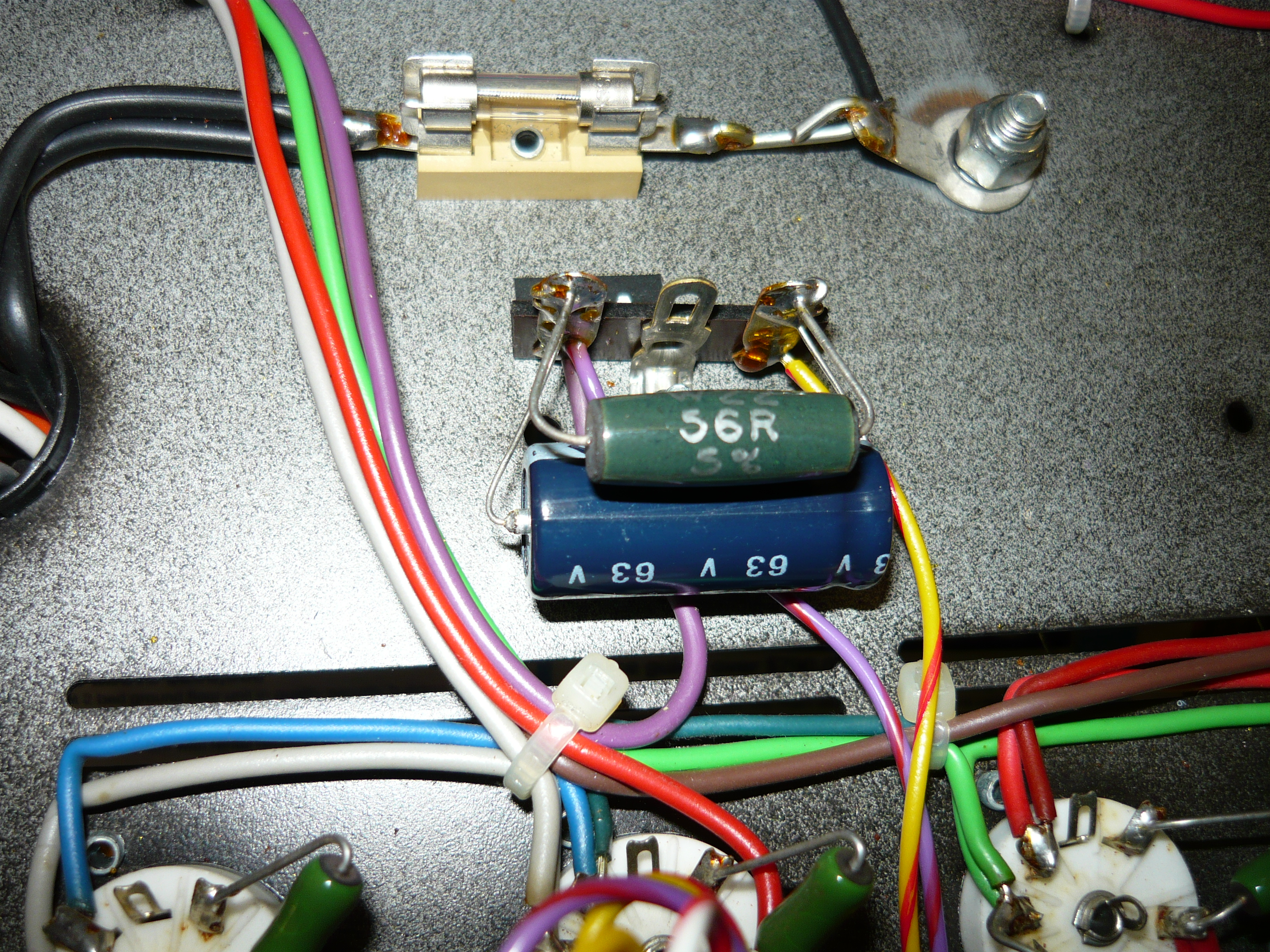
In other words, we need to increase the primary impedance that the EL84’s require from 4000 ohms a-a (anode to anode) for a quartet, to 8000 ohms a-a for a pair. We can achieve that by driving the internal 8 ohm speaker from the 4 ohm connection to the output transformer (see photo #5). That is not the full story, however, as this amp employs a cathode-bias configuration for the EL84’s, so when we switch to half-power we also need to change the bias circuitry appropriately, otherwise the EL84’s will be quite seriously under-biased, resulting in certain destruction.

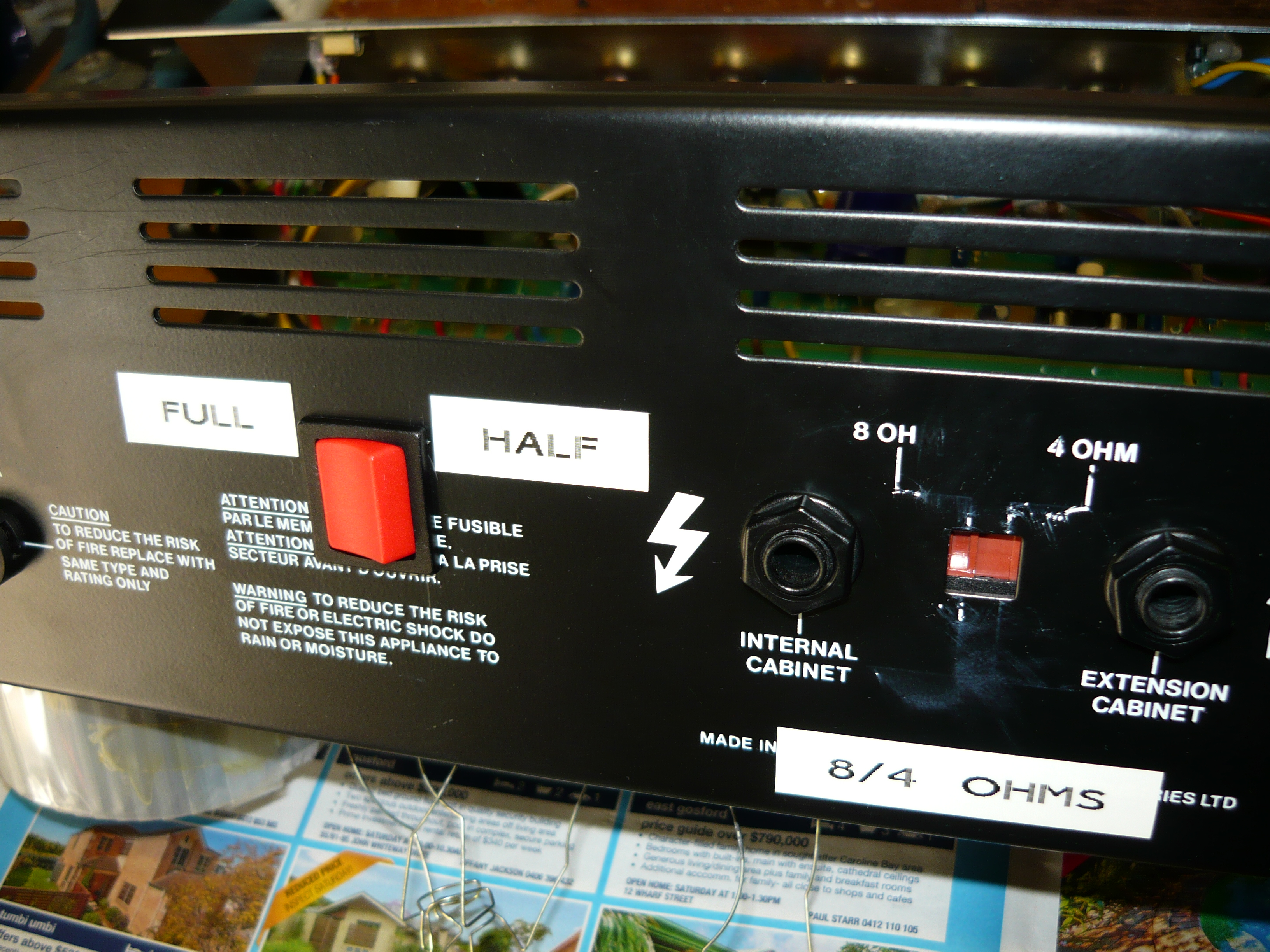
There is not much depth from the rear of the cab to the rear panel of the amp chassis, so we selected a low profile DPST (double-pole, single-throw) rocker switch to mount on the rear panel. One pole is used to switch out (in this case) the outer pair of EL84’s in low-power mode, leaving the inner pair activated for both scenarios. The second pole is used to switch in an additional cathode-bias resistor (plus cathode bypass capacitor) in series with the existing p.c.b. mounted bias components. By this method, the bias voltage is maintained exactly the same, regardless of mode of operation.

Creating a 19 x 22mm hole for the rocker switch on the rear of the chassis really isn’t much fun at all, unless you happen to own a hydraulic hole punch. The cathode pins (pin 3) on the EL84 9-pin sockets were rewired, with the inner & outer pairs now having separate paths to the switch. You can see from the photos, the additional cathode-bias components are wired on a small tagstrip installed conveniently near the valve sockets. One end of these components will be wired back to the original cathode bias resistor, on the main board, and from there to ground (earth).

We added some Dymo labelling on the rear panel to finish the job. How successful was the mod ? The final power output test resulted in 32 watts/8 ohms full-power, and 17 watts/8 ohms half-power. The tonal quality in half-power mode was in no way inferior to full-power, in fact it might have been a tad sweeter ! Peter contacted us after taking the amp home to confirm he was very pleased with the result. As part of a general service, prior to implementing the mod request, we replaced corroded input & output jacks, cleaned all pots with FaderLube, replaced a dodgy Standby switch, and replaced some high voltage electrolytic capacitors with selected upgraded caps. IR.

Vaughan’s JCM2000 TSL100 major repair

July 1, 2012

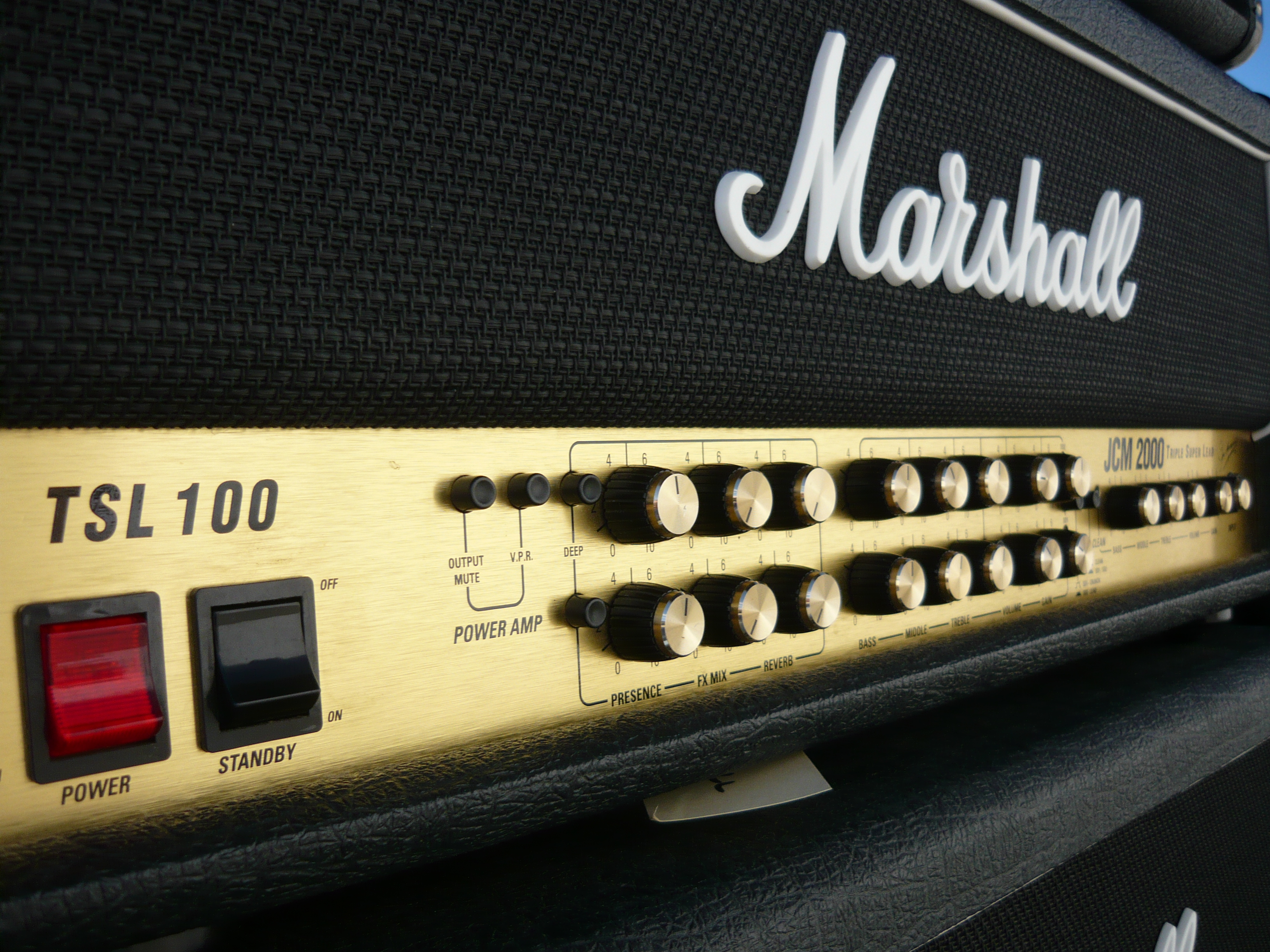
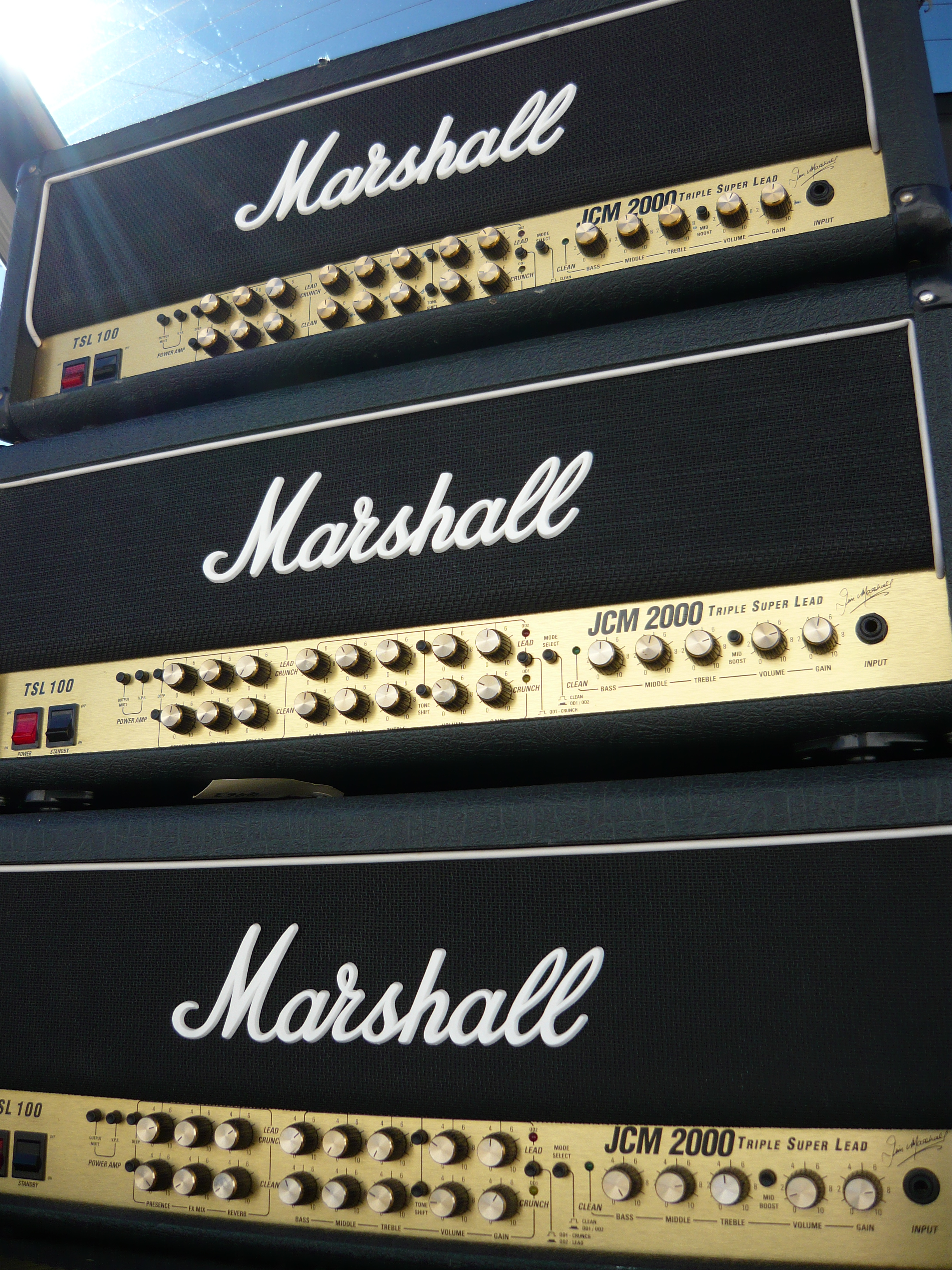
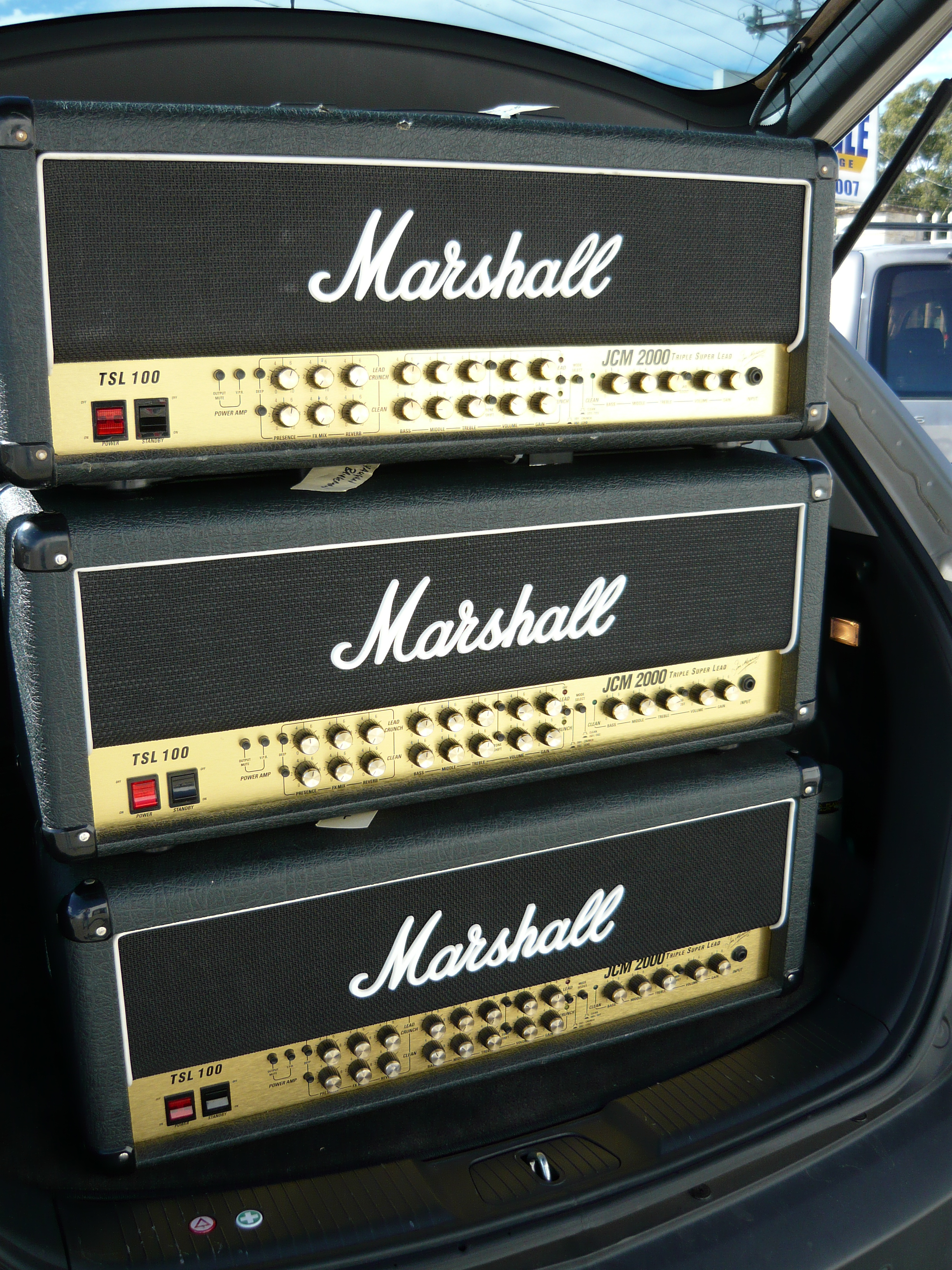
Vaughan B. is a loyal regular customer on the NSW Central Coast since way back when he was using a Rocktron rig. In more recent times he updated to a Marshall JCM2000 TSL100 head, which we also have been servicing for him. A couple of months ago the amp “just stopped” for no apparent reason, so back to the workshop it came.

We already had a few TSL100’s in the workshop with similar symptoms, so we had a pretty good idea what might be wrong. Preliminary examination of Vaughan’s amp revealed that the 2 amp slow-blow mains fuse was blown and one pair of the existing EL34 output valves had experienced some kind of melt-down. In other words they had begun to draw more & more current, increasing out of control until finally the fuse blew.

Unfortunately, the fuse didn’t blow quickly enough to save the amp from further (expensive) damage, as further testing revealed that the primary winding of the Dagnall power transformer had gone S/C (short-circuit). So far we will have to replace the quad of EL34 output valves, plus the power transformer. What could have caused such a scenario ? From past experiences with this specific model we have learned (the hard way) that some of the main boards have left the factory with inappropriate components loaded, and/or some boards have developed leakage paths which significantly upset the normal DC voltage conditions.

Before you all start panicking, this scenario does not apply to every single TSL100, just some of them, and they are likely to have been manufactured earlier in the life cycle of this model, rather than later. Looking at the photo to the right, you can see that the main board is the one that all the valves (tubes) plug into, ie the valve sockets are p.c.b. mounted. Most of the valve circuitry is mounted on the board, in particular all of the phase-inverter and power amp valve circuitry.

The problem with Vaughan’s board is that a leakage path developed between the high voltage tracks & pads and the bias supply to one pair of EL34’s in particular. We have previously proven this to be true by powering up a faulty amp with the EL34’s removed, and a DVM (digital voltmeter) connected between pin 5 of one of the EL34 sockets & earth (ground). Over a period of time it was easy to observe the bias voltage to one pair of the EL34 sockets gradually drop quite significantly. This would result in a runaway condition for that pair of valves, just drawing more & more current.

You can see from the photo to the right that components/tracks/pads are packed tightly together in this design, regardless of the design rules concerning high voltage on p.c.b.’s. Nevertheless, in the numerous TSL100 amps where we have replaced the main board altogether, the repair has been successful, so the latest issue of this board appears to have had the problem corrected. But – back to Vaughan’s amp: we therefore ordered in a new power transformer, a new main board, and a matched quad of the very nice Mullard (reissue) EL34’s from New Sensor.

To sum up, we replaced the transformer, board & output valves in that order, with a successful rebias of the EL34’s and conducted the usual power output tests (30V/8 ohms = 110 watts), burn-in tests & electrical safety test. The final cost of this major repair was significant – almost the resale value of this amp in the current economic climate, but at least Vaughan now has a reliable TSL100 to gig with. Vaughan B. is a very decent guy, and was happy to pay the estimated cost of repairs in full prior to commencement, so that we wouldn’t be out of pocket. We truly appreciate that !

Victor’s custom amplifier build progress

June 28, 2012

This is a brand new initiative we are implementing with this blog, to give our amp customers a visual indication re the progress of their custom amp builds. In this example, Victor has ordered a custom-design version of our popular Blue Mood amp series, a stripped-down, single-channel 12 watt 6V6-powered amp, built on our shorter chassis.

Victor is already the proud owner of our Studio Expressionist 15 watt switchable EL84/6V6 amp, please see the blog archive for photos & testimonials re this exceptional amplifier. Victor has now developed an appetite for vintage tones from California, but with the power output scaled down to a more manageable 12 watts at full power, with the option of reduced output in “vintage” mode, which reconfigures the 6V6 output stage to cathode-bias.

The Blue Mood series amps are designed for blues, country, old-school rock’n’roll, roots & jazz stylists with a stripped down single-channel circuit for pure valve tone & no unnecessary frills. Front panel controls include volume, treble, middle, bass (with pull-shift), prescence & master volume (with bypass for pure vintage dynamics), plus power & standby metal toggle switches & neon indicator.

In response to customer demand, from May 2012 the Blue Mood series amps are available with an active FX Loop as an optional extra – fully featured with valve (tube) driven send & return buffer stages, plus separate send & return level controls. A miniature toggle switch on the front control panel provides true hard-wired bypass. This model option is built on our longer chassis.

All amplifiers are individually & meticulously hand-wired by Ivan Richards, veteran OZ amp-tech & musician with over 30 years hands-on experience. All amplifiers incorporate premium selected components – all components are selected specifically to enhance the musicality, serviceability & the on-the-road reliability of the amplifier. All controls, switches, input & output jacks, valve sockets are individually chassis-mounted and hand-wired in the traditional tried & tested way.

Thank you Victor, for your continued custom. Regards – IR.

The Challenge guitar amplifier

June 26, 2012

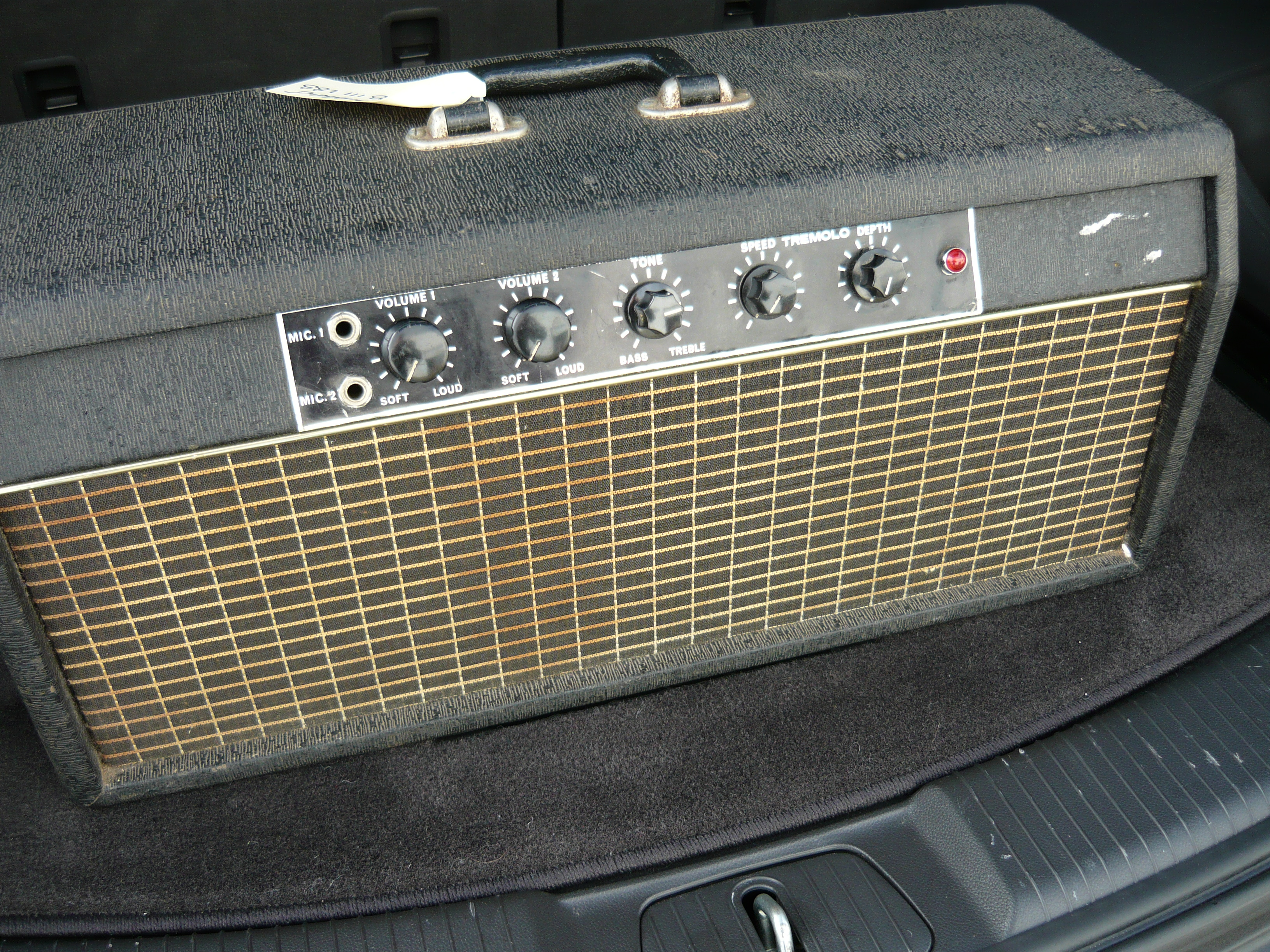
Back in the 50’s & 60’s, one of the largest musical instrument retailers in Sydney, Australia, was Nicholsons. I vaguely remember their premises in a prime location on George Street, in the CBD. They indulged in some importing & distribution of instruments, but we don’t know the full scope of this activity, and they also had some guitars & amplifiers manufactured here in Sydney.

Nicholson’s house brand was in fact Challenge, and they marketed various guitars & amps with that brand name. The guitars were possibly cheap knock-offs of Strat style guitars, and were likely sourced from Japan, as well as locally. The Challenge amplifiers were much more interesting and were seemingly destined to survive longer than the guitars.

The subject of this week’s blog is only the 2nd Challenge amp we have ever seen, since taking up amp servicing on a full-time basis, but obviously they are still out there in unknown numbers. The Challenge amps were designed & built for Nicholsons by ZJM Industries, located in Waverley, in Sydney’s eastern suburbs. The primary consideration for Nicholson’s would have been to produce the house brand products at the lowest possible cost.
The ZJM story is indeed a very colourful one. ZJM stands for Zoltan Julian Mielnik, and he was a Polish immigrant to Australia in the aftermath of WW2. He was rumoured  to have been in the Polish Army, possibly in their Intelligence Service, possibly was even a prisoner of the Russians and sent to Siberia. Some even suspected him of being a spy ! How does someone from such a background end up building valve guitar amps, and respraying guitar bodies, winding pickups, etc etc etc, in Sydney suburbia ?? We don’t have any of the answers to this mystery, but we would like to hear from anyone who does.
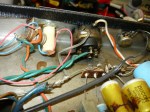
The amp that inspired this blog, was received from customer Greg as a very unknown quantity, requiring a full appraisal to decide whether a restoration job was justified. The most important thing, initially, was to prove that the two huge transformers were functional, which they were, so then we could arrive at an agreed $$$ figure to complete the job to get this amp useable and meeting electrical safety standards. We still had no idea what this amp would ultimately sound like, so it was a bit of a gamble for Greg, but one that paid off in the end.

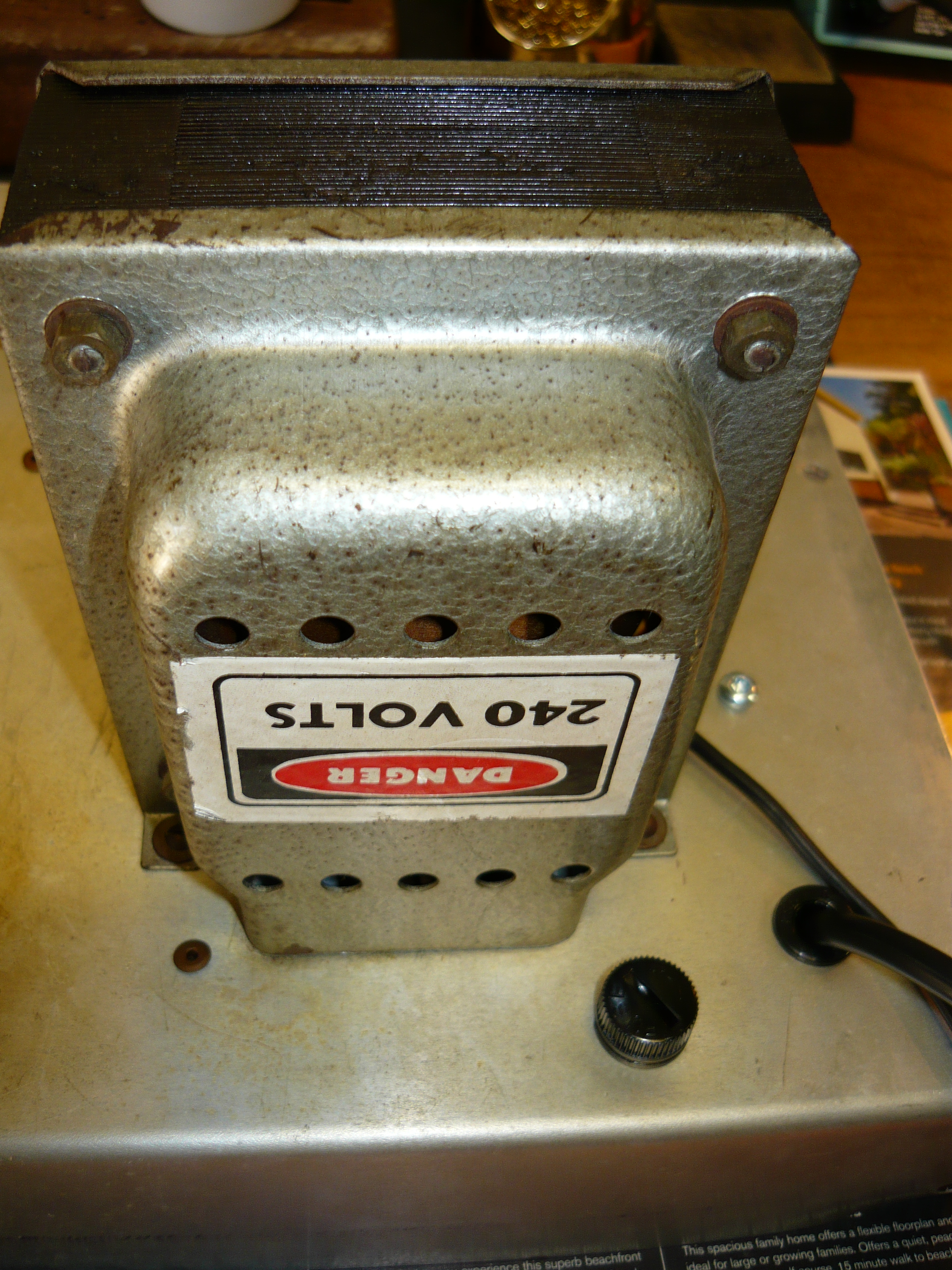
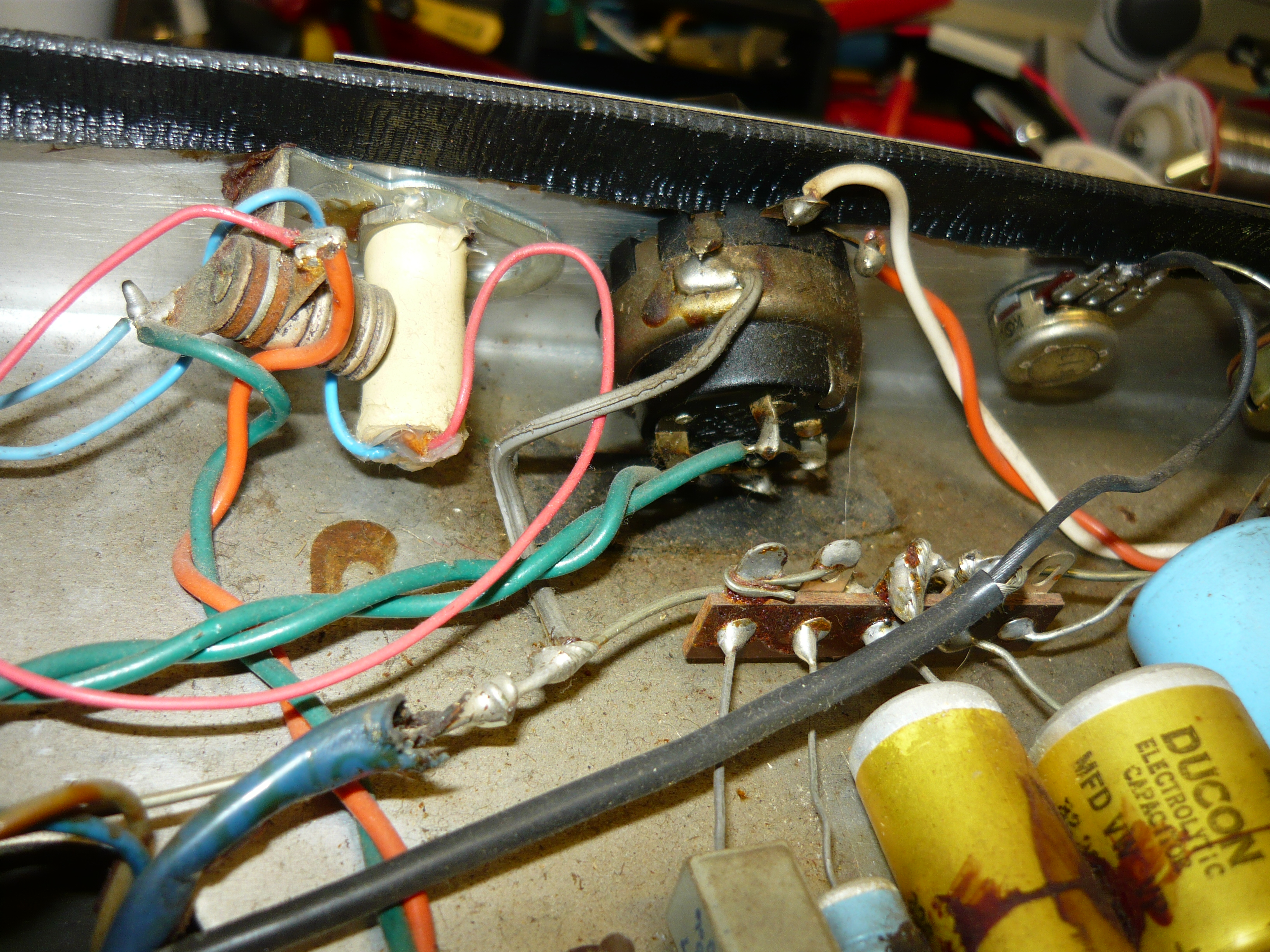
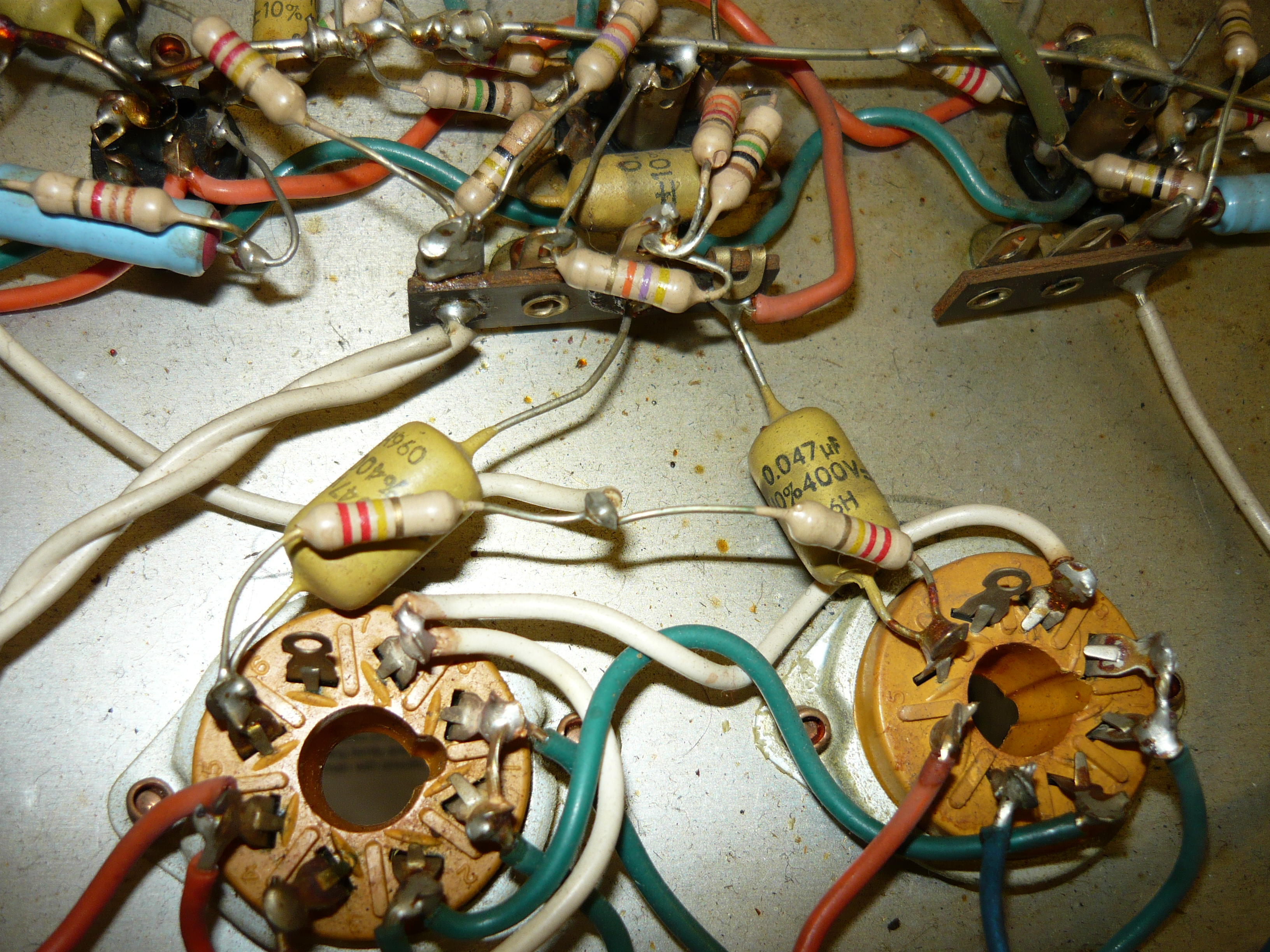
As you can see from the photos, the amp is wired up in a seemingly fairly random manner. Low budget amps from this late 50’s/early 60’s period show scant regard for contemporary electrical safety standards – quite often there isn’t even a fuse. This amp required complete rewiring of the 240V side of things, with a new 3-core mains lead, 3-pin plug, the installation of a grommet and cable clamp, and the installation of a fuseholder & fuse. The mains earth connection requires its own dedicated nuts/bolt/solder tag – not a shared connection.

Every electrolytic capacitor looked original and needed to be replaced, which we did. Interestingly, all the signal capacitors are the now famous “mustard caps”, renowned for their great guitar amp tone. Many Aussie manufactured domestic electronics employed these capacitors in the 60’s. The larger caps are bedded down in silicone (neutral cure). A general clean up of jacks, valve sockets & pots was required, with some new pots installed. New valves installed were a 12AX7 in V1, a matched pair of EL34 output valves, plus a 5U4 rectifier valve.

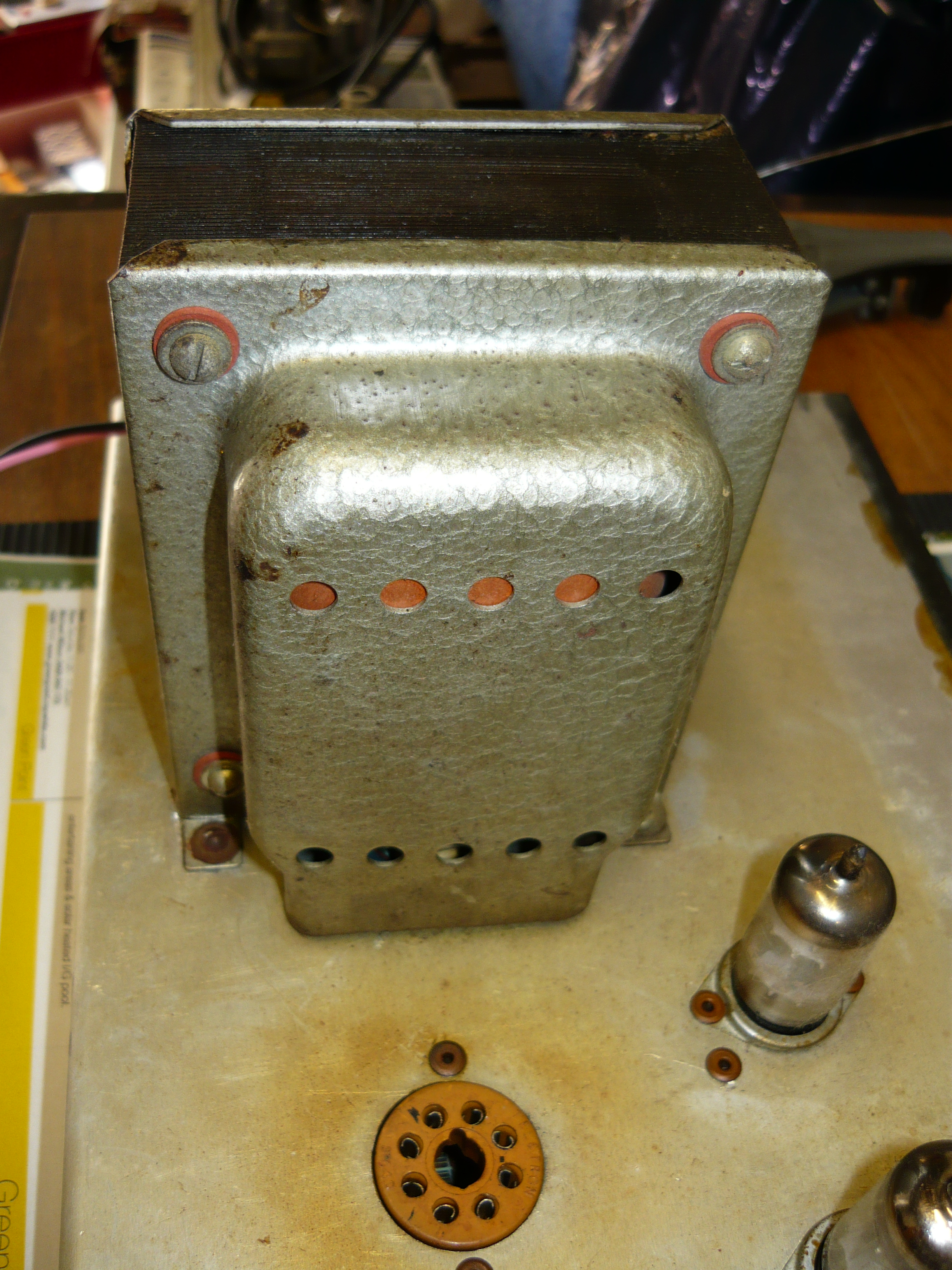
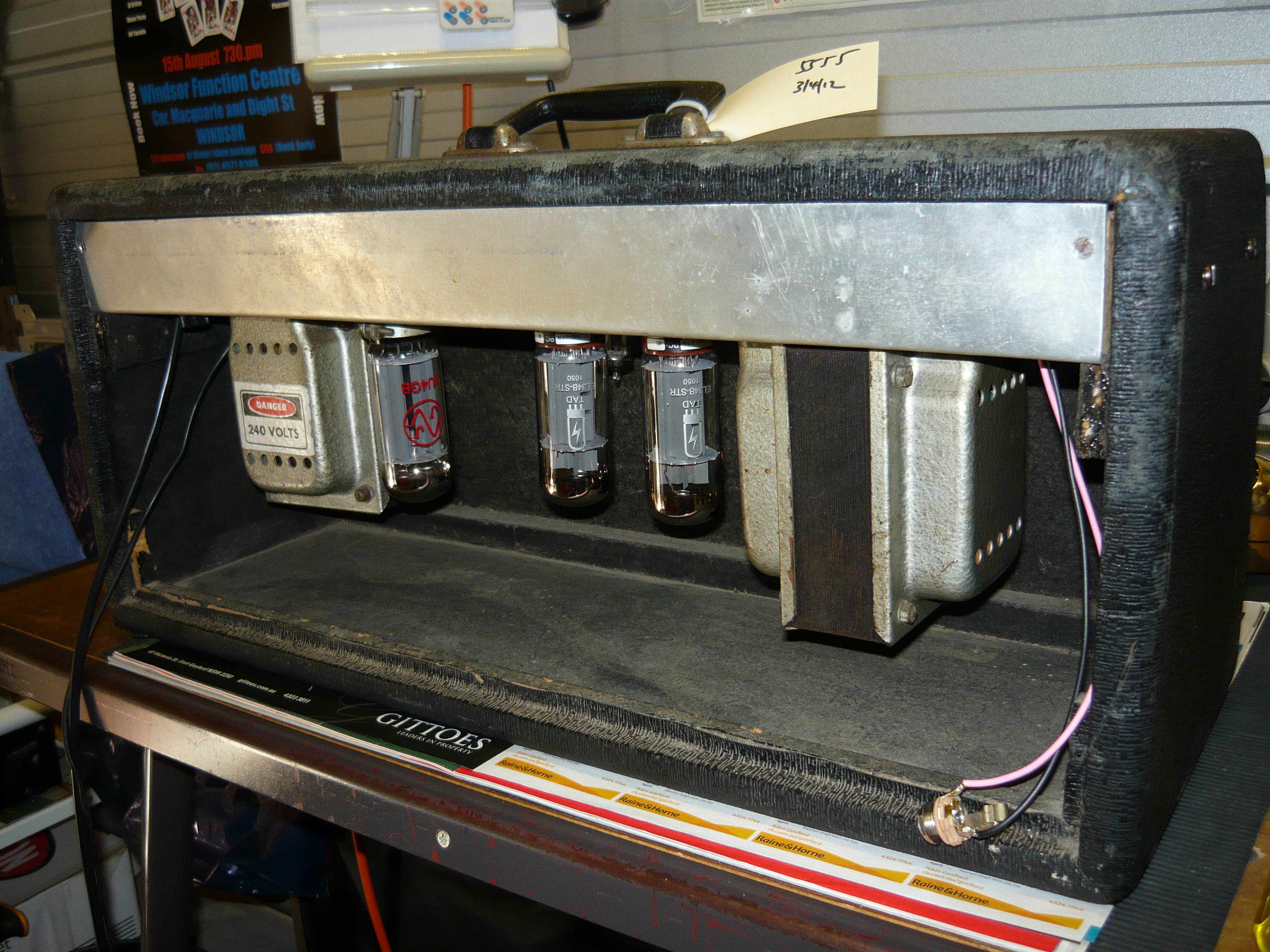
The use of off-the-shelf transformers (rather than OEM units) in this amp is a dead give away that only small quantities of this model were ever going to be built. The transformers lack any kind of identification, but they look exactly like the multi-purpose units sold in the day through electronics wholesalers, and probably manufactured by Ferguson, A&R, or similar companies. The transformers are physically quite large, and were comfortably over-engineered for the job – no wonder they have survived.

This amp lacks any kind of a model name, model number or serial number, so we have no idea where it sits in the ZJM heirarchy of amp designs, or even approximately when it was built. We just know that it sounds great. Neil Young would love this amp. The front end is very similar to the famous tweed Deluxe amp as used by Neil, with a very simple circuit and just two volume controls and a single tone control, in this design common to both channels. The two volume controls interact with each other as per the tweed amps. This amp also has a very sweet sounding tremolo on board, which modulates the bias for the output valves.
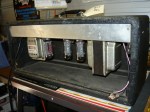
The big difference between this amp & the tweed amps, apart from the big Aussie transformers, is the power amp stage, employing a pair of EL34/6CA7 output valves in a Class-A/cathode-bias configuration. These valves are drawing a lot of current, before you’ve played a single note, yet the transformers remain relatively cool. The power amp develops 20 watts/Class-A into 8 ohms, at the onset of clipping, and sounds huge. Greg assures me that when he got to turn the amp up flat-chat, it sounded even better.
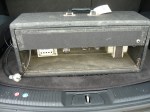
You may have noticed only two of the original control knobs have survived – the others are generic. The Challenge sticker has also been removed at some point. The only way we knew for sure that this actually was a Challenge amp was by direct A/B comparisons with another Challenge guitar amp ( a 15 watt 1X12 combo). The grille material looks the same as that used on the Moody amps, also of Sydney (Lidcombe), which initially caused some confusion.

Due possibly to the complete lack of high frequency pre-emphasis, and the huge midrange response, this amp sounds particularly fine with Telecaster style guitars, and other brighter instruments. You know – we Aussies were making very unique & great sounding amps as far back as the late 1950’s (and even pedal steel guitars as far back as the late 1940’s), and yet hardly anybody remembers or knows anything about any of this stuff. So much of it seems to have disappeared off the face of the planet (apparently). It goes without saying, we would love to hear from anybody who has any more information about the Challenge amplifiers and also their builder, ZJM Industries. This is all part of our musical heritage, so let’s try to keep it alive !   Best regards, IR.

Mark takes delivery of his new Rich Tone KT66 amp in Tassie Blackwood

June 9, 2012

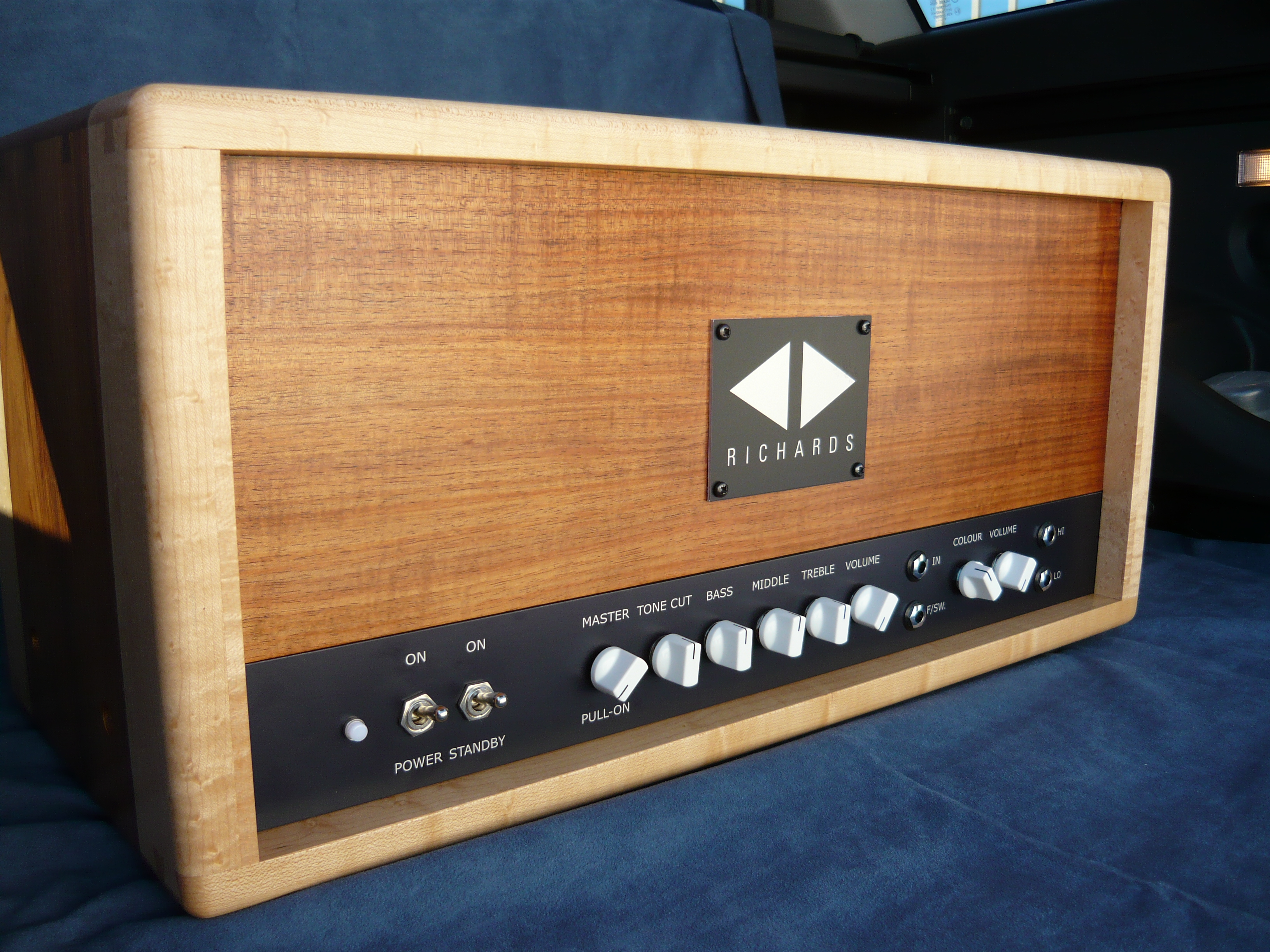
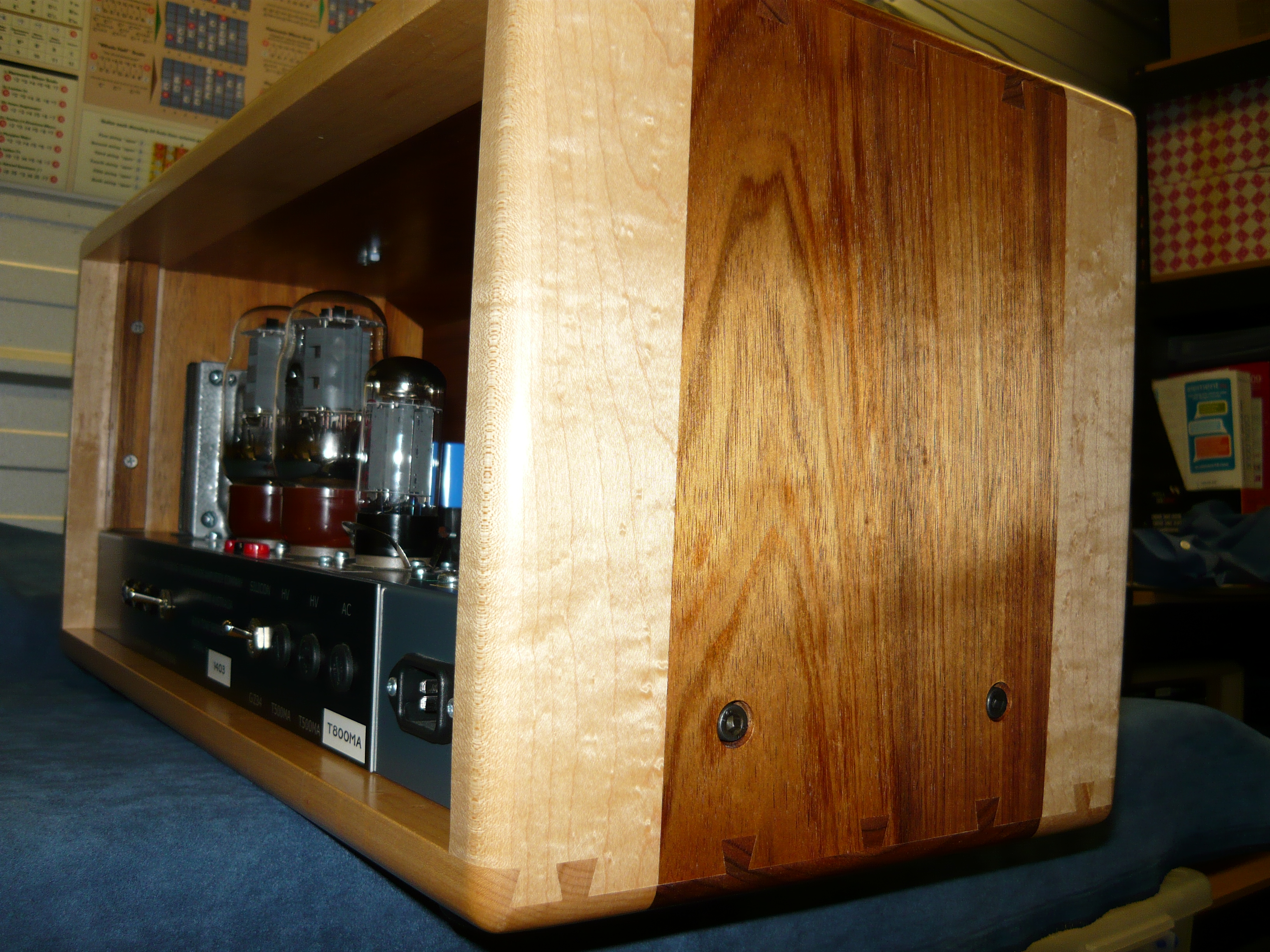
Hello – in this week’s blog we take a look at a new model of the Richards amp, recently completed for Mark T., of Melbourne. The amp is stunningly presented in a cabinet handcrafted from Tasmanian Blackwood (with Bird’s Eye Maple edges) by my good friend Peter Davies, now also resident in Melbourne.

This is actually Mark’s 2nd acquisition of a Richards amp – his original purchase is an Expressionist series amp, actually the 15W Studio Expressionist model, which is switchable between EL84 & 6V6 power output valves, with a very British front end. Mark has been recording & performing with that amp  together with those very fine Scumback speakers with his original music project for the last few years.

As you can imagine, we are extremely gratified by such return business, with some individual customers investing in not just one amp, but two or three ! The Rich Tone series amps could be described as the further evolution of the Expressionist models, offering vintage Brit tones from 1959 to 1965 & beyond, but instead of an EL84 valve power amp section, the Rich Tone offers 6V6, EL34, KT66 or even KT88 power output valves.

The front end is actually exactly the same as the Expressionist amp, but with the addition of a midrange control on CH-2. The phase-inverter stage onwards though is completely redesigned & optimised for the customer’s choice of output valves. The end result is a unique blend of classic valve (tube) amp voicings. This new model is definitely our current flagship amp !

After the amp underwent its quality control testing, I took it to the Rock God Music School, just around the corner, for a play test at stage volumes. Jonny Gardiner from the Nevilles supplied the talent, and also an Orville Les Paul loaded with boutique pickups, plus a Telecaster loaded with Mick Brierley pickups.

We hooked up to Jonny’s favourite Marshall quad box loaded with very well played in G12H‘s, and a Richards 1X12 loaded with the WGS ET-65, which is voiced like the Celestion 65W, ie it sounds like a beefier “Greenback”. Both these cabs sound great. No pedals were required !

What were our impressions ? Just mind alteringly good !! This amp has changed both our perceptions and parameters about what a hand-wired valve amp can (& should) deliver. Pretty much every “British” sound from the last 50 years was in there, obviously including old VOX tones, very early Marshall, even Keith Richards slamming away on a Telecaster tuned to open-G into every amp Keef ever owned.

It’s all in there at any volume level. The GZ34 rectifier can be bypassed, and the KT66’s can be reconfigured for Class-A/cathode-bias operation. The combination of KT66’s & the reverse-engineered RS Deluxe audio output transformer definitely gives this amp the most unique clean & overdrive characteristics. Many thanks to Mark for his continued custom, and to Jonny Gardiner for his assistance in putting this amp through its paces.

Silverface Princeton Reverb

June 2, 2012

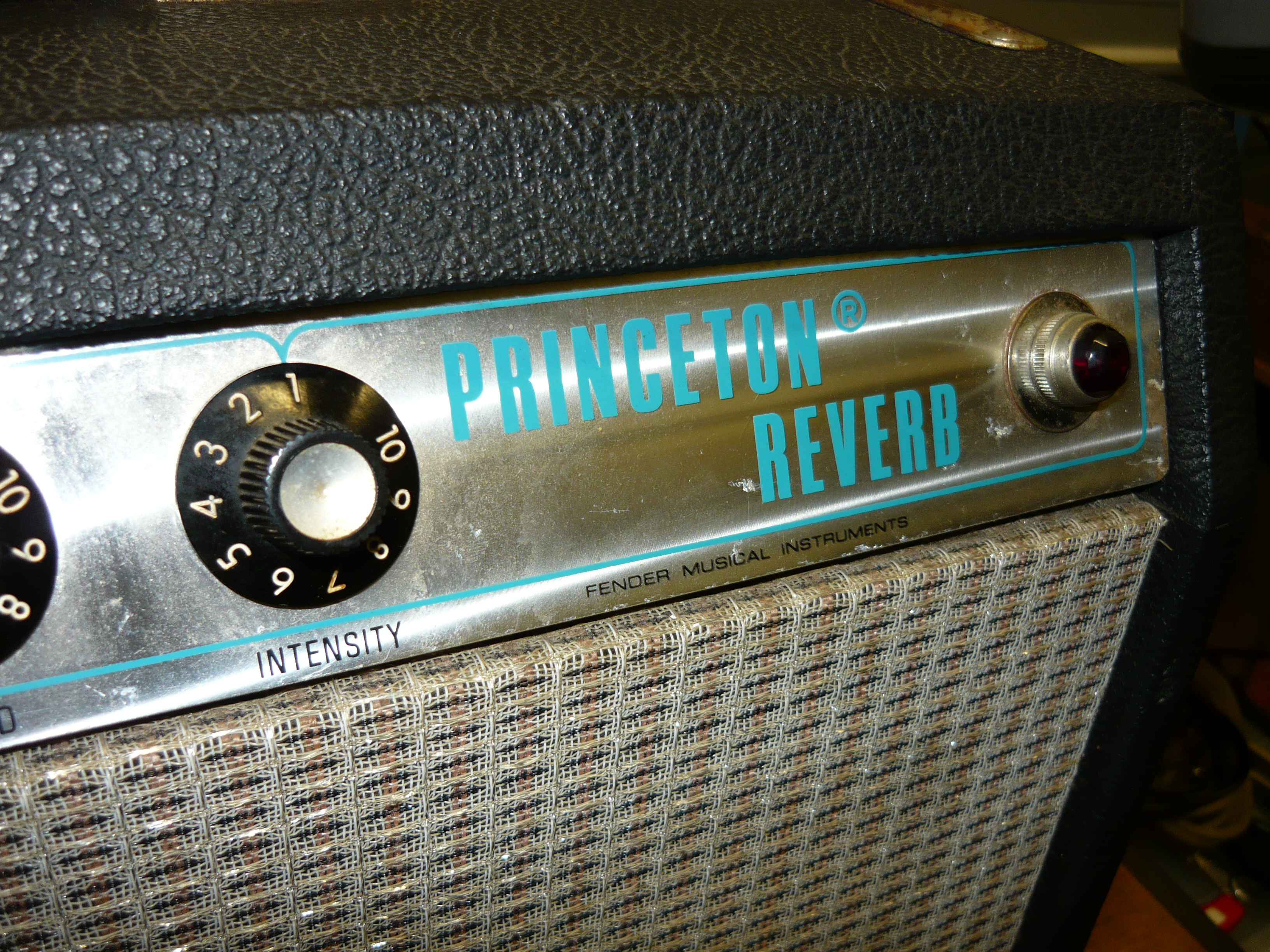
A customer brought in a recent acquisition – a late 1970’s Silverface Fender Princeton Reverb 1×10 combo amplifier, serial # A816986, for a complete overhaul & safety check. This amp was obviously in pristine condition, probably stored somewhere nice & dry in recent years without much use, and has rarely, if ever, been serviced.

This could be a blessing in disguise, as the amp has remained all original with no dodgy repairs or modifications to deal with. Ben advised us that the amp was farty and all the pots were very scratchy and cutting in & out. Before we even got to an appraisal of the chassis and electronics, we discussed with Ben the options for a suitable upgrade speaker unit, as the stock speaker in these amps is very ordinary, especially after 30+ years.

As you can see from the photo on the left, Ben accepted our recommendation to supply and install the Celestion G10/Vintage in this amplifier. Regular readers of this blog will know that we enthusiastically recommend certain speaker units by Weber, WGS and in certain applications Jensen Neo 10 & 12-inch speakers. We will also be trying out some Scumback speaker units in the coming months. However, in this amplifier upgrade the G10 is a very cost effective choice, which fills in the previously missing details in the lows and low mids, without sacrificing the top end.
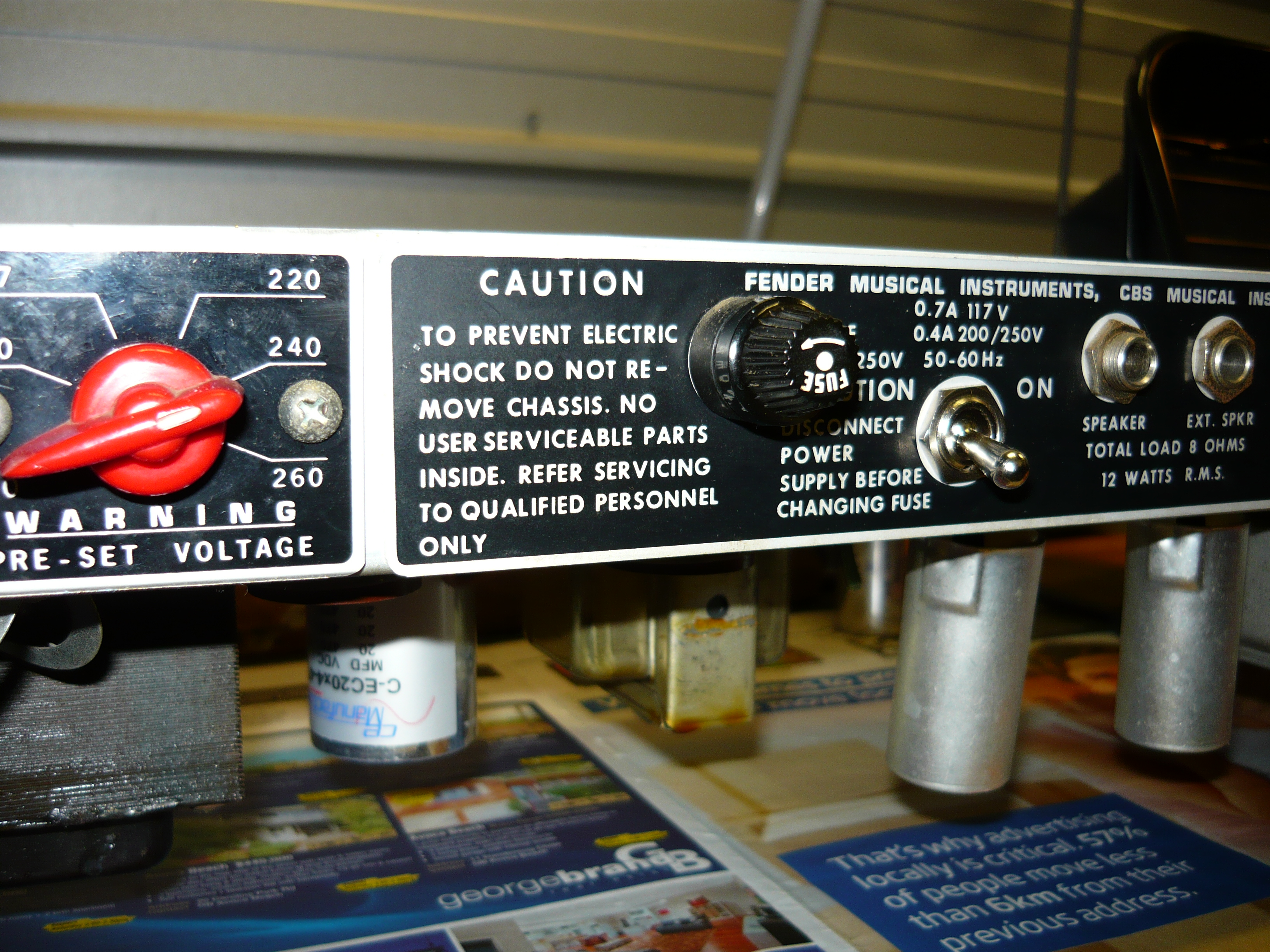
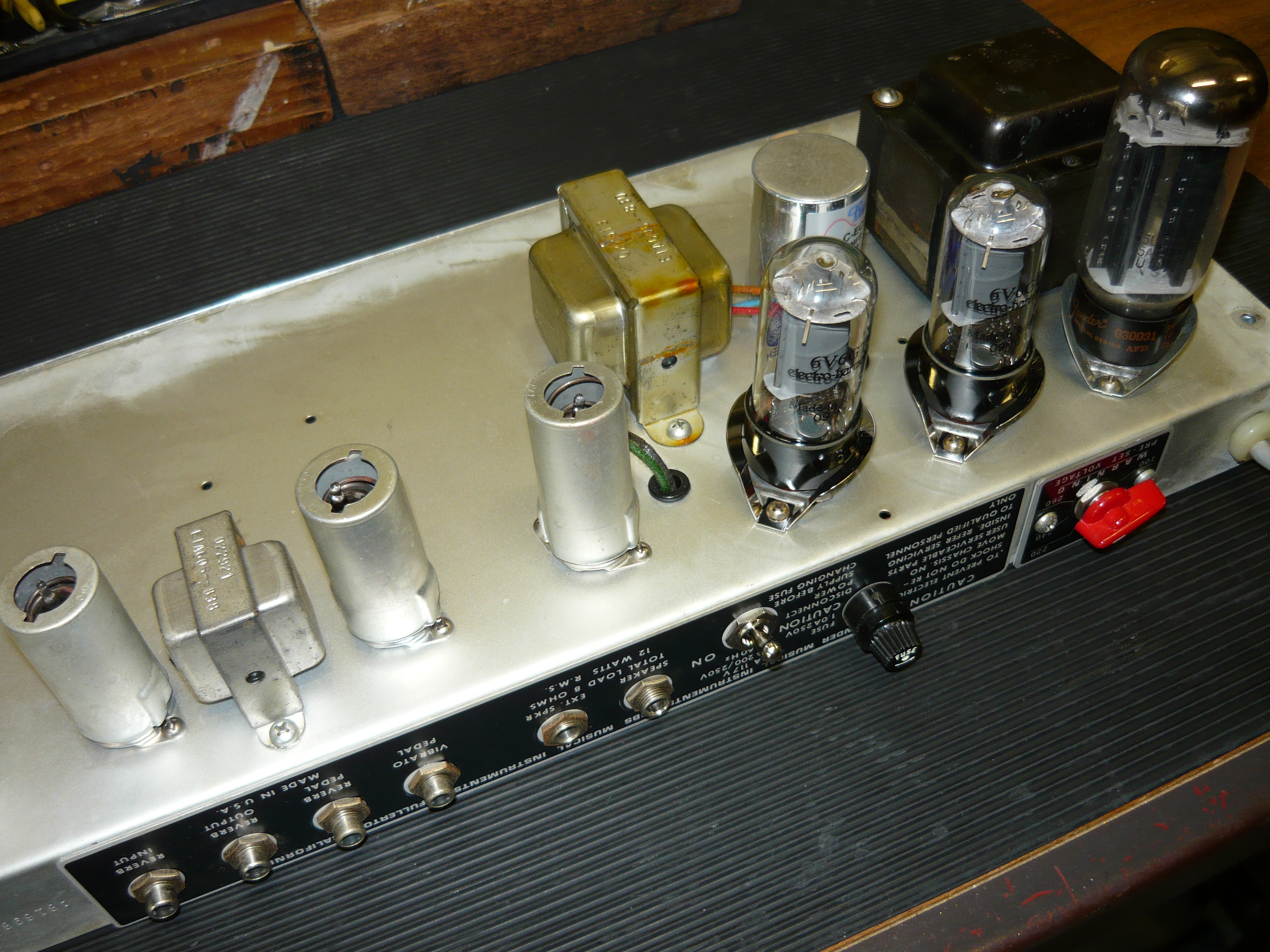
The first thing we noticed about the chassis, apart from the fact that everything including the valves (tubes) appeared to be original, was that the voltage selector was incorrectly set to 220V instead of 240V. These voltage selector switches have a pretty rubbery feel to them, and it’s quite easy to knock them off the required setting. It does mean that this amp was being operated with higher internal voltages than normal. We replaced the intermittent power on/off switch with a Carlingswitch, and rewired the 240V primary so that the fuse is in series with the active (ie, brown) wire. We installed the correct value fuse for 240V mains, and replaced the 240V 3-pin plug. The amp passes the Workcover NSW electrical safety test without further problems.

We cleaned all the pots with FaderLube, and the input jacks with DeOxit. This cured the issues with scratchiness. The main power supply capacitor was well overdue for replacement. This particular can-mounting capacitor is actually four capacitors in one single metal can, which is of course earthed (grounded) to the chassis. Fortunately these capacitors are being manufactured again by a USA based amp parts distributor, and we replaced the 20+20+20+20F/475V can.

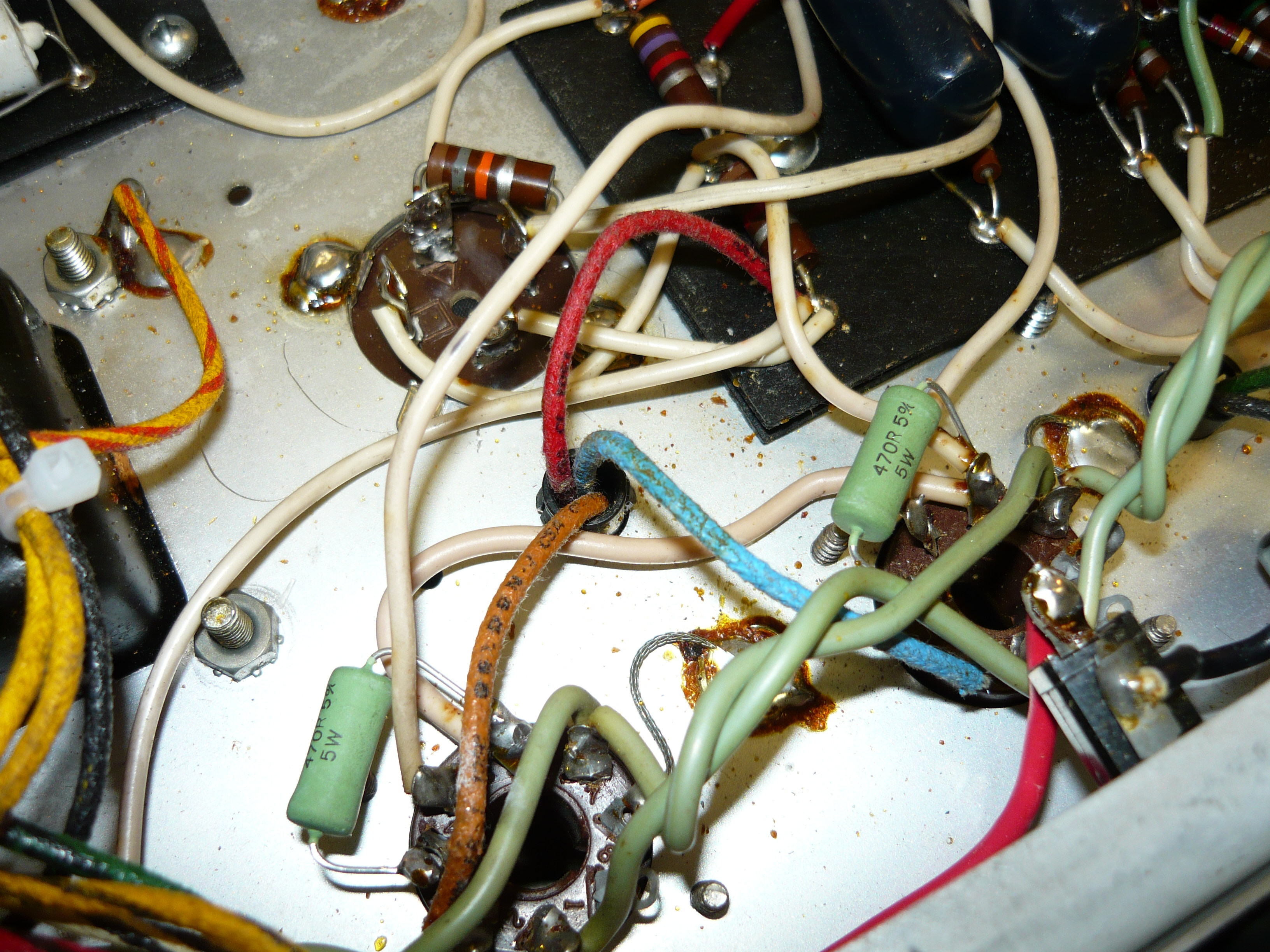
Before we could install a fresh matched pair of 6V6 output valves, a small upgrade was required. These amps were never originally built with screen grid resistors, which is NOT a great idea with modern valves (tubes).  We installed a pair of 470 ohm 5 watt wire-wound resistors directly on to the octal sockets, and rearranged the wiring accordingly. This will help the 6V6’s to survive by limiting screen grid dissipation when the amp is driven hard, and also will contribute to amplifier stability.

We set up the amp with a new matched pair of 6V6 output valves, and found that they were under biased, ie the quiescent no-signal current drawn was too high, exceeding the ratings of a 6V6 before actually playing a note. The bias supply in this amp is non-adjustable, so required paralleling of a pair of resistors in the circuit to set the desired bias voltage. An acceptable no signal current draw with the voltage conditions present in this amp is approx 22 to 24 ma per 6V6, which equates to around 9W anode dissipation per valve. We also installed a pair of spring clips to firmly hold the valves in their sockets.

The final power output test and burn-in test revealed a power output into an 8 ohm resistive load, at the onset of clipping, of 11.75V/8 ohms = 17 watts (rms). The clipping of the output signal is quite assymetrical, which is a characteristic of this particular amp design, or more specifically the type of phase-splitter employed. Don’t worry about the technical details – it sounds good, that’s all that really matters.

So, how does it sound ? Well, the amp sounds very good at conversation levels, which is what I think the customer was anticipating, and it packs a punch as well, thanks to that speaker upgrade. The sound is very balanced now across the guitar spectrum, as compared to before. The reverb and tremolo are fine, with somewhat less depth than some of the bigger Fenders. The negative comments that apply to some of the Silverface Fenders, in particular from the late 1970’s, don’t seem to apply to the Princeton.

The schematic for the Princeton doesn’t seem to change very much at all from the Blackface to the Silverface models, so one possible theory is that the Princeton was considered so low down in the Fender amplifier heirarchy, that the engineering staff just left it as it was. Whatever the reason, I am quite impressed with the end result of this service and upgrade, and had a bit of a blast through it with a couple of my Telecasters. Many thanks to Ben for his custom and for supplying us with the subject matter for this week’s blog – IR.

Richards Expressionist Amp and MI Audio Crunchbox

May 1, 2012

An Aussie guitarist who records under the name of Totally Undecided has just recently posted a sound clip on soundclick.com that we thought we would share with you.

http://www.guitargear.net.au/discussion/index.php?topic=32670.0

http://www.soundclick.com/bands/page_songInfo.cfm?bandID=1234554&songID=11590353&showPlayer=true

Mr Undecided recorded a short instrumental piece titled “Crunchy”, playing a Maton BB1200 Blackwood routed via an MI Audio Crunchbox into a Richards Studio Expressionist model amp. The amp was set to the 6V6 option, and the guitar & pedal were plugged straight into CH-1, ie the EF86 channel.

You will notice that the Maton BB1200, the Richards amp and the MI pedal are all proudly built here in the land of OZ ! We don’t know any details regarding the settings on the pedal or amp unfortunately, but crunchy is a very appropriate description. We do know that the amp was driving a 2×12 cab loaded with the Eminence Governor  & Private Jack specialist guitar speakers.

The end result rocks, and that’s what we love to hear. The Expressionist series amps are built in 7.5W, 15W & 30W models, and distinguish themselves from any current commercially manufactured amps that we have heard, with their pure, vintage British tones. These amps work well with overdrive pedals too, as you can hear in the sound clip. Each & every amp is individually hand-built, one at a time, the old fashioned way.

We would love to hear from any of you who may have recorded short but interesting pieces using any of the Richards amps. We are sure other people would love to hear your work, too. Thanks for checking in with us, more stuff coming soon. Regards, IR.

Service Centre for the Orange AD200 Amplifier

April 28, 2012

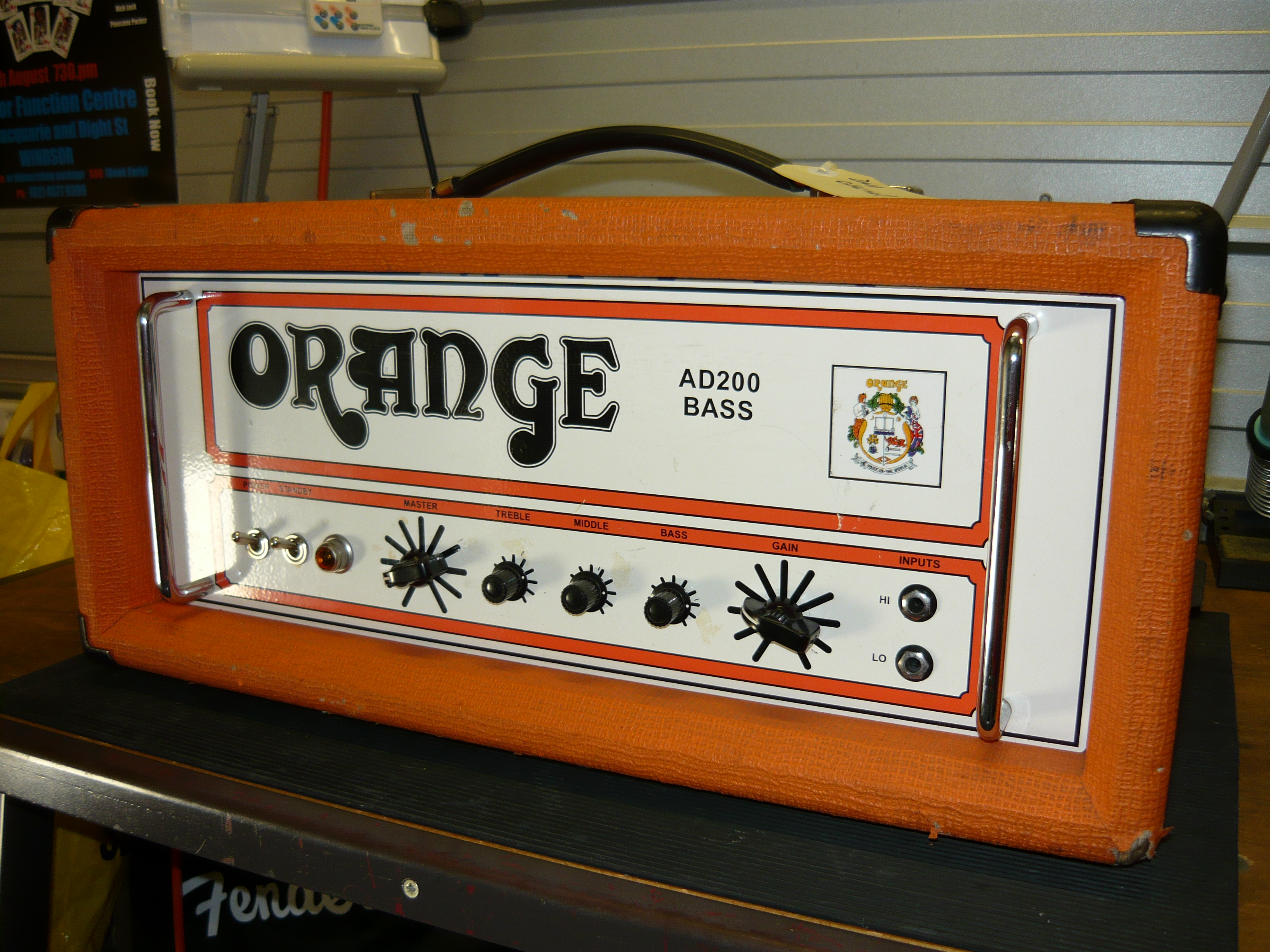
Welcome back ! This is our third blog on the subject of service & repairs to Orange amplifiers (UK), here in Australia. This week we are discussing the AD200 model, a 200 watt rms amp head primarily intended for the bass guitarist, but actually this is one of those rare bass amps that sounds & records mighty fine for 6-string guitar as well.

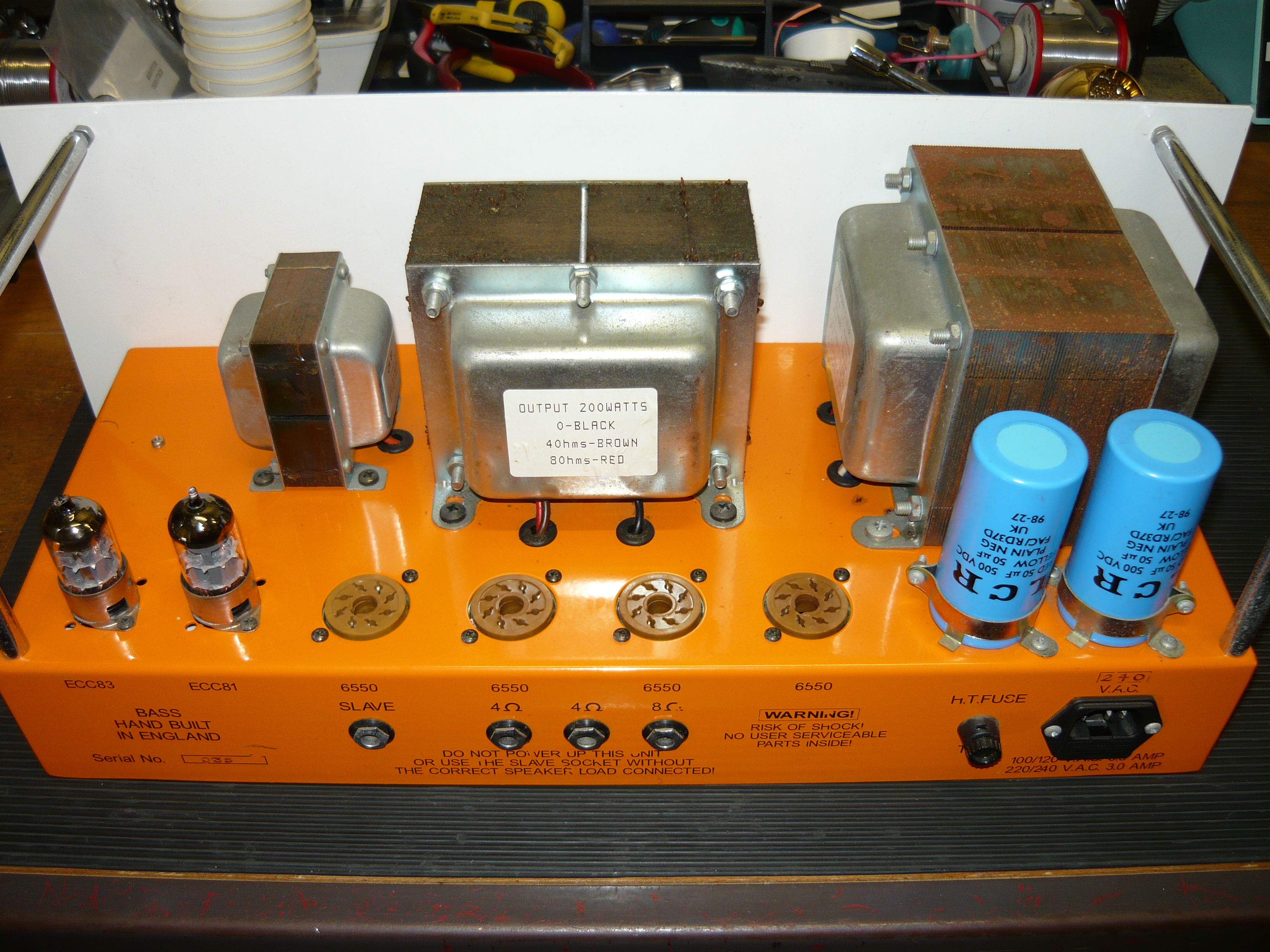
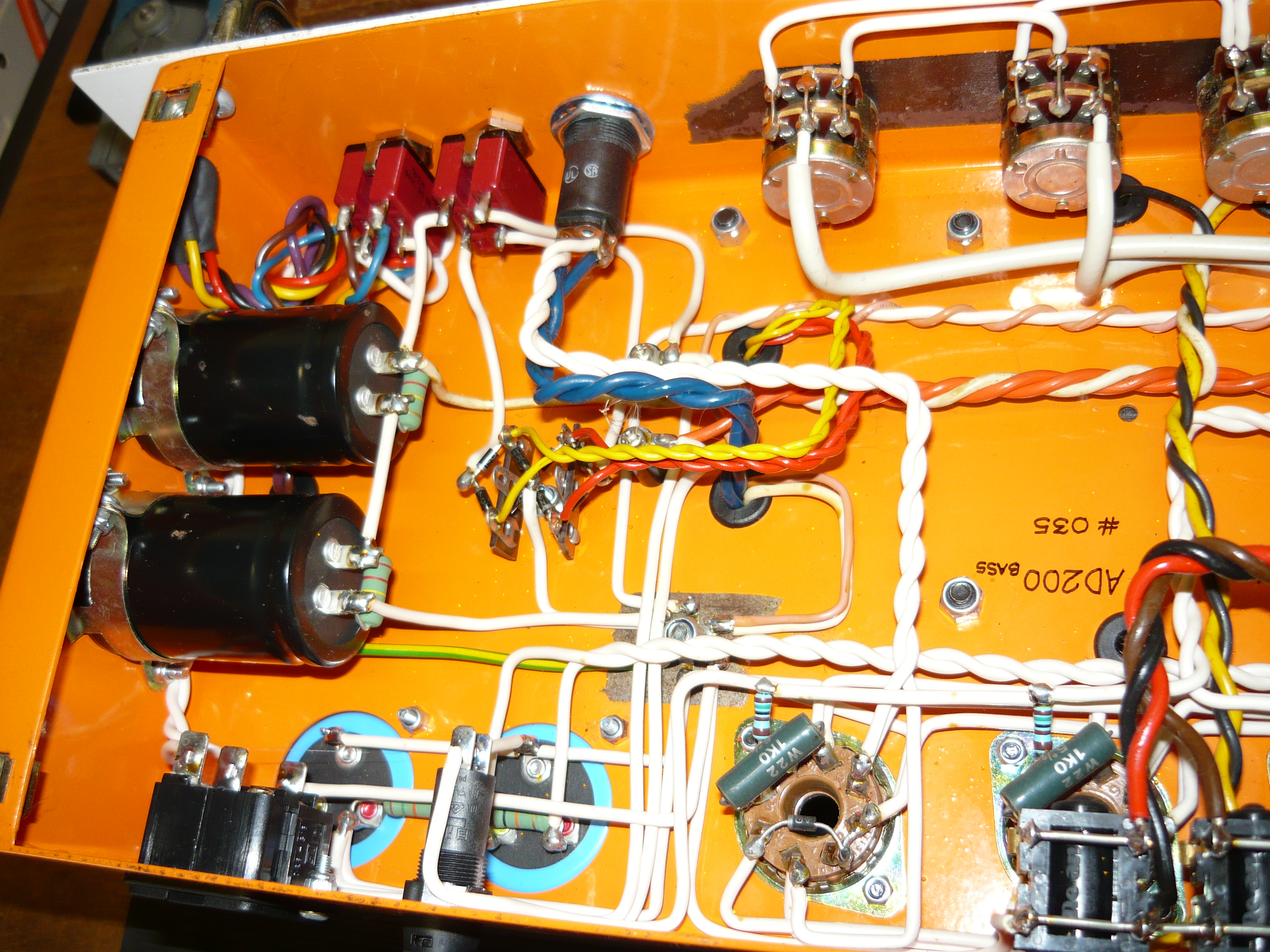
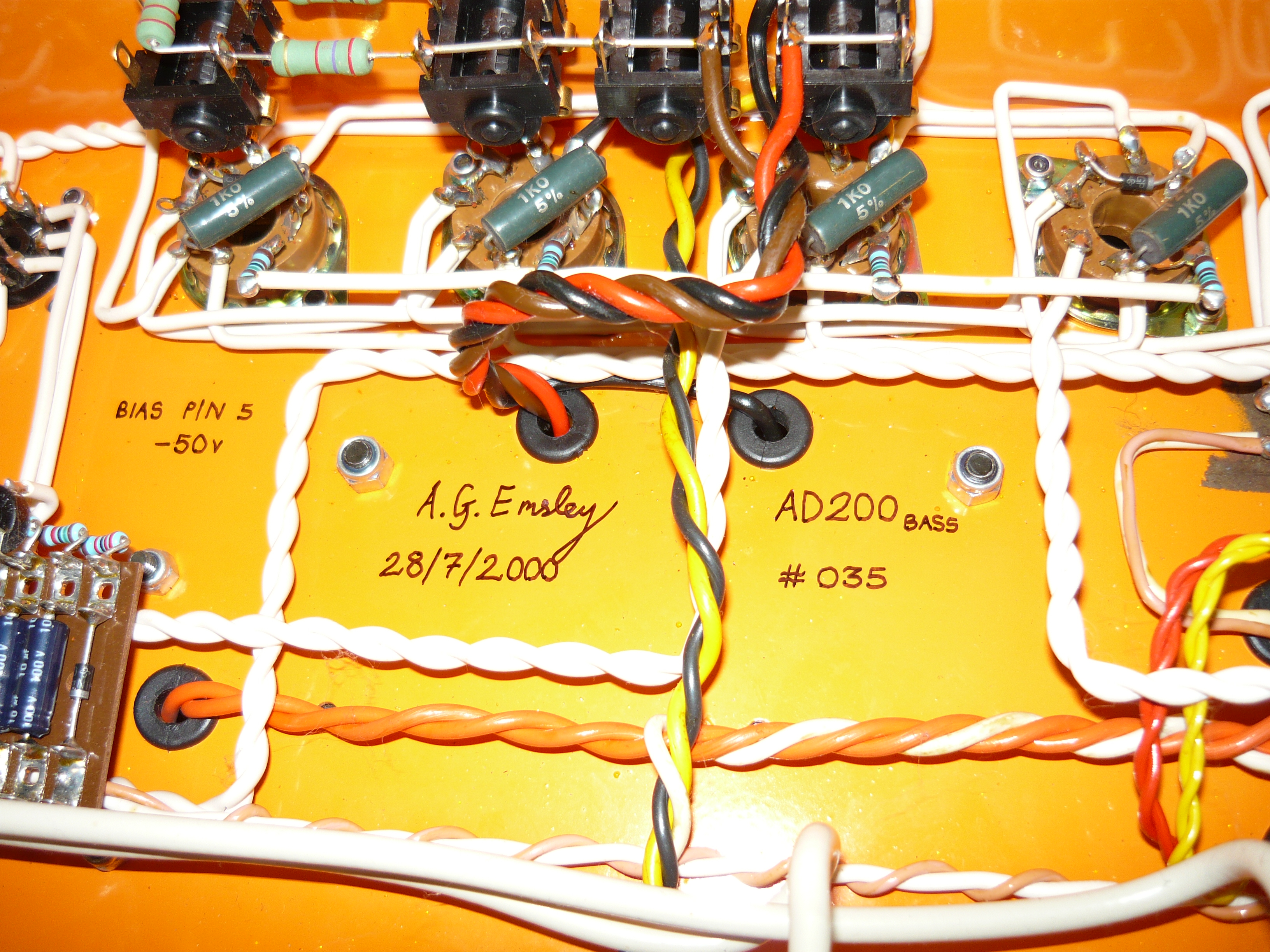
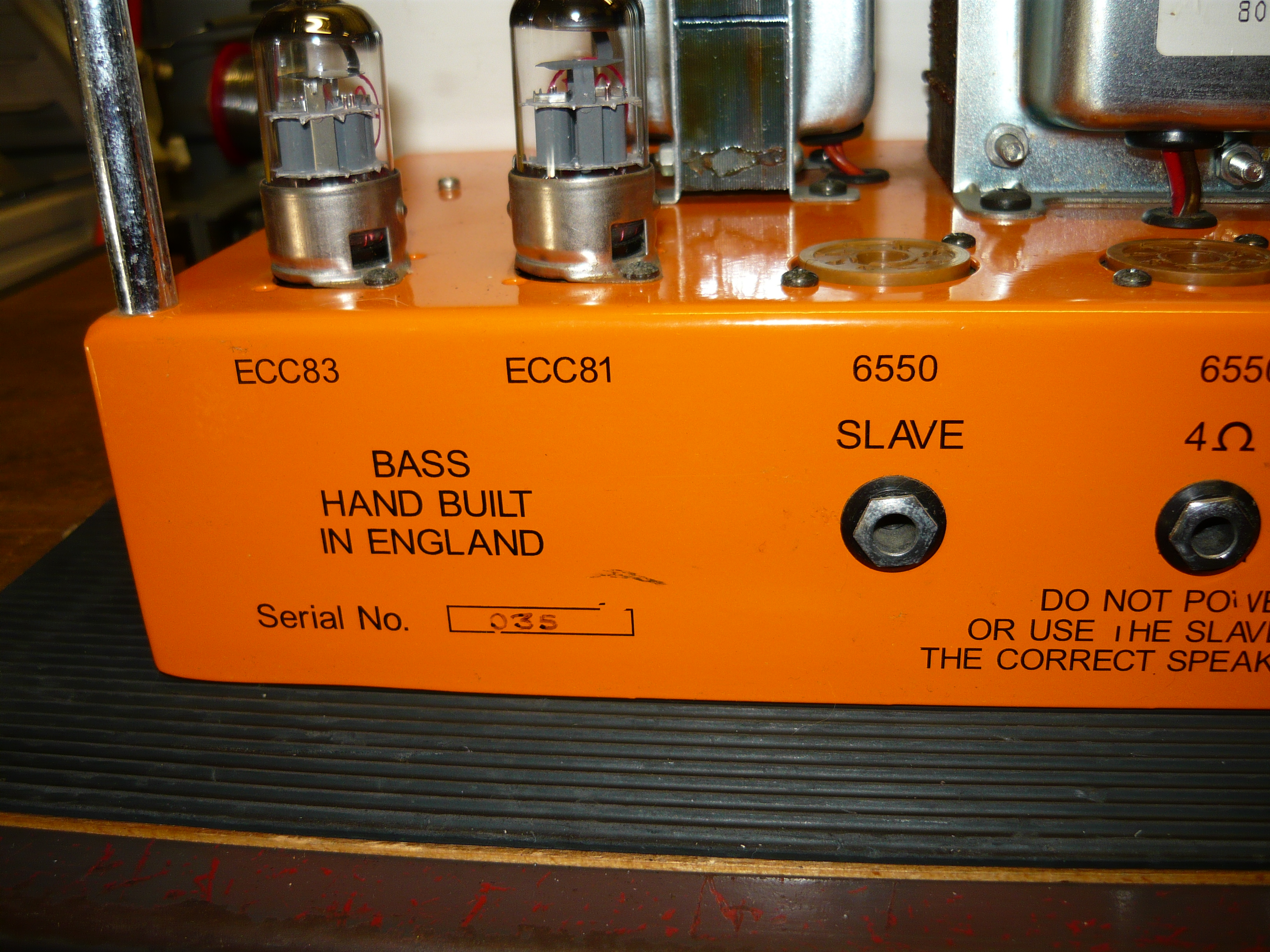
This particular AD200 is serial # 035 and is signed by A. G. Emsley on 28/7/2000. We suspect that the initial production of this model was completely hand-wired, and that later production moved to p.c.b. technology, with a revised circuit design. This model has a two valve preamp & no negative feedback loop, the later models have a three valve preamp incorporating a negative feedback loop. The standard of wiring & assembly is exemplary, by the way.

The amp was brought in to the workshop by Dave from Sounds Like Sunset for a general service & checkover, having been dropped. There weren’t any signs of physical damage, but the amp did require a re-valve and some minor servicing. We tightened up a loose transformer and loose handle, and removed a couple of foreign objects from within the chassis. Remember, amps such as the AD200 will generally have around 700V DC high voltage supply, so attention to electrical safety issues is critical.

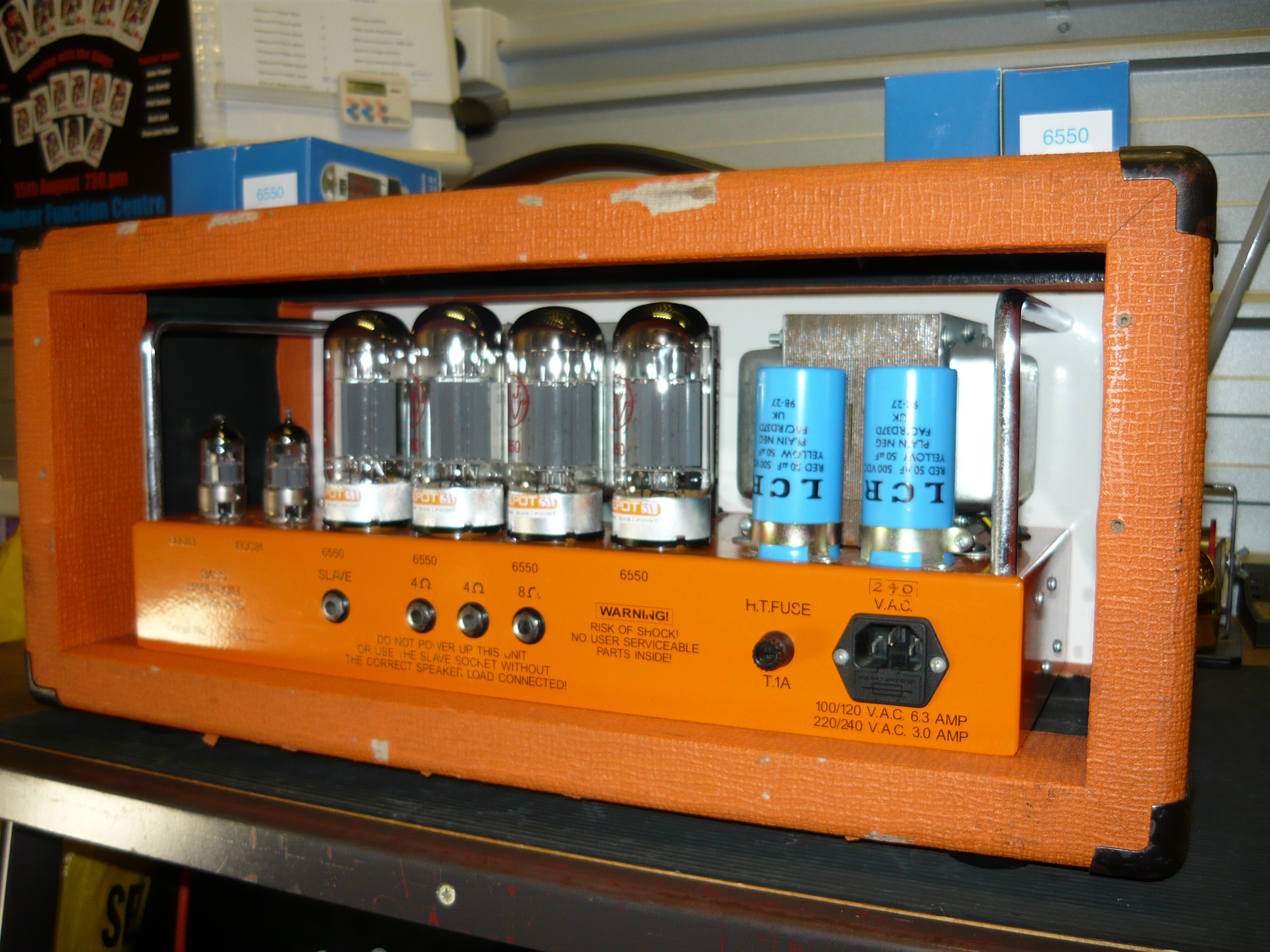
In any valve (tube) bass amp, microphony is a potential issue, so we test & select replacement valves appropriate to the customer’s intended application. We installed a JJ 12AX7 & 12AT7 in the preamp. This isn’t a particularly high gain design. This service job gave us the opportunity to try out the relatively new JJ 6550 power output valves, which have already received favourable reviews.

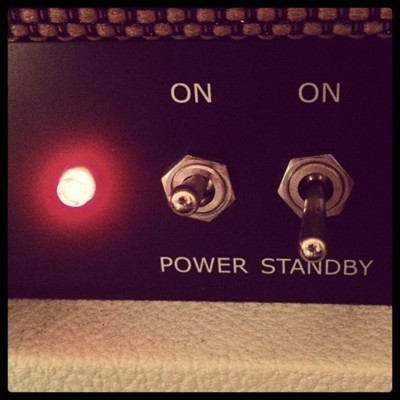
We installed a matched quad of JJ 6550 and rebiased the amp for 25 milliamps quiescent current for each 6550. This is adequate with an anode voltage of (in this case) 717V DC. A power output test delivered 29V into a 4 ohm resistive load at 400 Hz, which is approx 210 watts. We also carried out an electrical safety test to Workcover NSW requirements.

Well, to finish up – the JJ 6550’s did indeed live up to expectations and we have every intention of using them again. They appear to be very well made and sound very good, although we haven’t actually made any comparisons with n.o.s. 6550’s. We have had intermittent reliability issues with the JJ 6L6GC, and sometimes the JJ EL34, to the extent that we now have switched to other brands for those valves. However, other JJ models have been very reliable.

Many thanks again to Sounds like Sunset for their continued loyalty. If you are a proud owner of an AD200, we can offer you world-class service/repairs & advice re your amp, we are here in Wyoming (Gosford), just north of Sydney. If you are a bass player who loves warm, valvey old-school tones, then the AD200 may be worth checking out. Regards, Ivan.

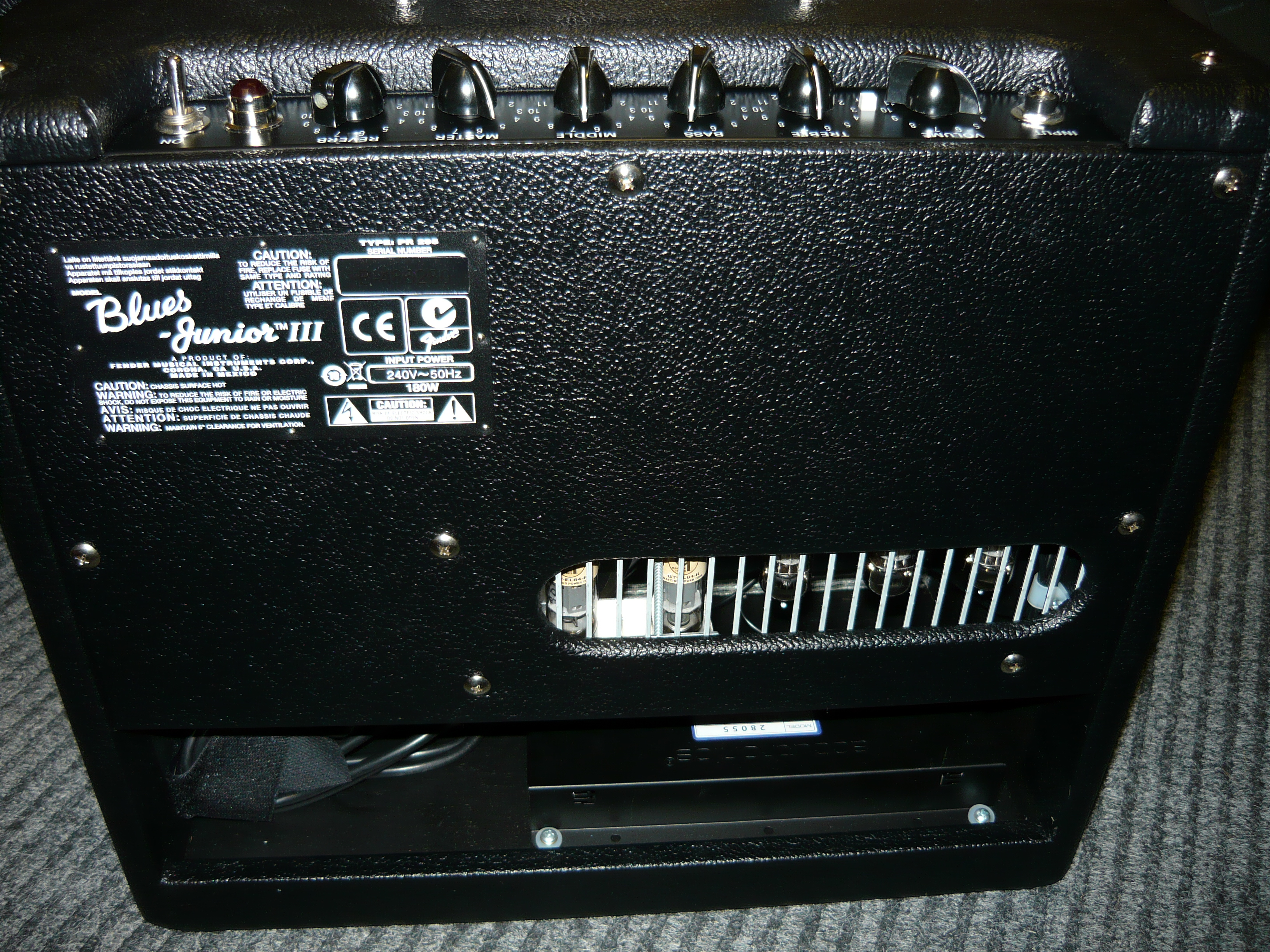
MODs and Upgrades to the Blues Junior

April 25, 2012

One of the services we happily provide to our customers is the implementation of widely publicised MODs to the Blues Junior and also the Pro Junior amps by FMIC. Indeed, modding the Blues Junior has turned into a growth industry the last few years ! Having completed any number of such MODs, we are in a position to advise customers as to the best choices for their particular requirements. You can understand that the law of diminishing returns applies to modding amps, whereby customers can spend a lot extra for only a slight improvement in tone.

Nevertheless, both these amps are relatively inexpensive to begin with, so spending a few hundred $$$ bringing them up to performance standard is easy enough to justify. Our original approach to modding these amps, long before we had even heard of the Bill Machrone mods & website, was simply to install better valves (tubes) for a warmer tone, to sort out the instability issues (due to bad layout & lead dress), and to alter the fixed bias network to reduce the quiescent current drawn by the pair of EL84 output valves. We have never been happy with the Groove Tubes 12AX7 valves, for example, and some of these amps were biased so hot that the EL84 9-pin p.c.b. mounted sockets were desoldering themselves !

We heartily endorse many of the Bill Machrone (or BillM) MODs, in particular the power supply capacitor MOD, the signal path capacitor MODs, and especially the adjustable fixed-bias MOD. The replacement of the power on/off toggle switch with a 3-way toggle that gives off/standby/on is a great idea on any valve amp with a solid-state rectifier which is missing a separate standby switch, and is definitely recommended.

Many of the other BillM MODs could not be regarded as absolutely essential, and should be assessed individually as to whether they would enhance your own use of this amp. Some options include additional front panel controls, such as prescence and sparkle, an alternative boost function, and upgraded transformers – even conversion to 6V6 or 5881 operation. For owners of the earlier versions with input jacks that are prone to breakage, the Switchcraft metal input jack could be a worthwhile option.

The most significant upgrade to either amp would be replacement of the stock speaker, a 12-inch driver in the case of the Blues Junior, and a 10-inch driver in the case of the Pro Junior. The most obvious choice would be one of the Weber VST models – we can advise you on this at the time we implement the chosen MODs, as there is a bewildering array of models to choose from. If you are a jazz guy, we also recommend one of the Jensen NEO models, for their balanced frquency response and high power handling, late break-up.

The starting price for the basic MODs is $180.00 AUD parts & labour. We have allowed 2 hours maximum for this. For example, if you ordered every single MOD available, we would have to allow for at least 5 hours labour content. We can quote you re your chosen options, and we can order the recommended speaker option on your behalf. Customers of note who have had their amps modded include James Black of RocKwiz Orkestra fame & one of Australia’s most in demand musician/producer/musical directors of the last three decades, Illya Swec (blues guitarist based on NSW South Coast, solo career plus Robert Susz Continental Blues Party), Isaac Hayward (successful Sydney based guitarist/arranger/musical director, including The Rock Show with Jon English), and Paul Disspain (musical director of any number of NSW Central Coast music projects).