Archive for August, 2014

the Landry 100 watt amplifier in our workshop

August 3, 2014
the Landry amplifier

the Landry amplifier

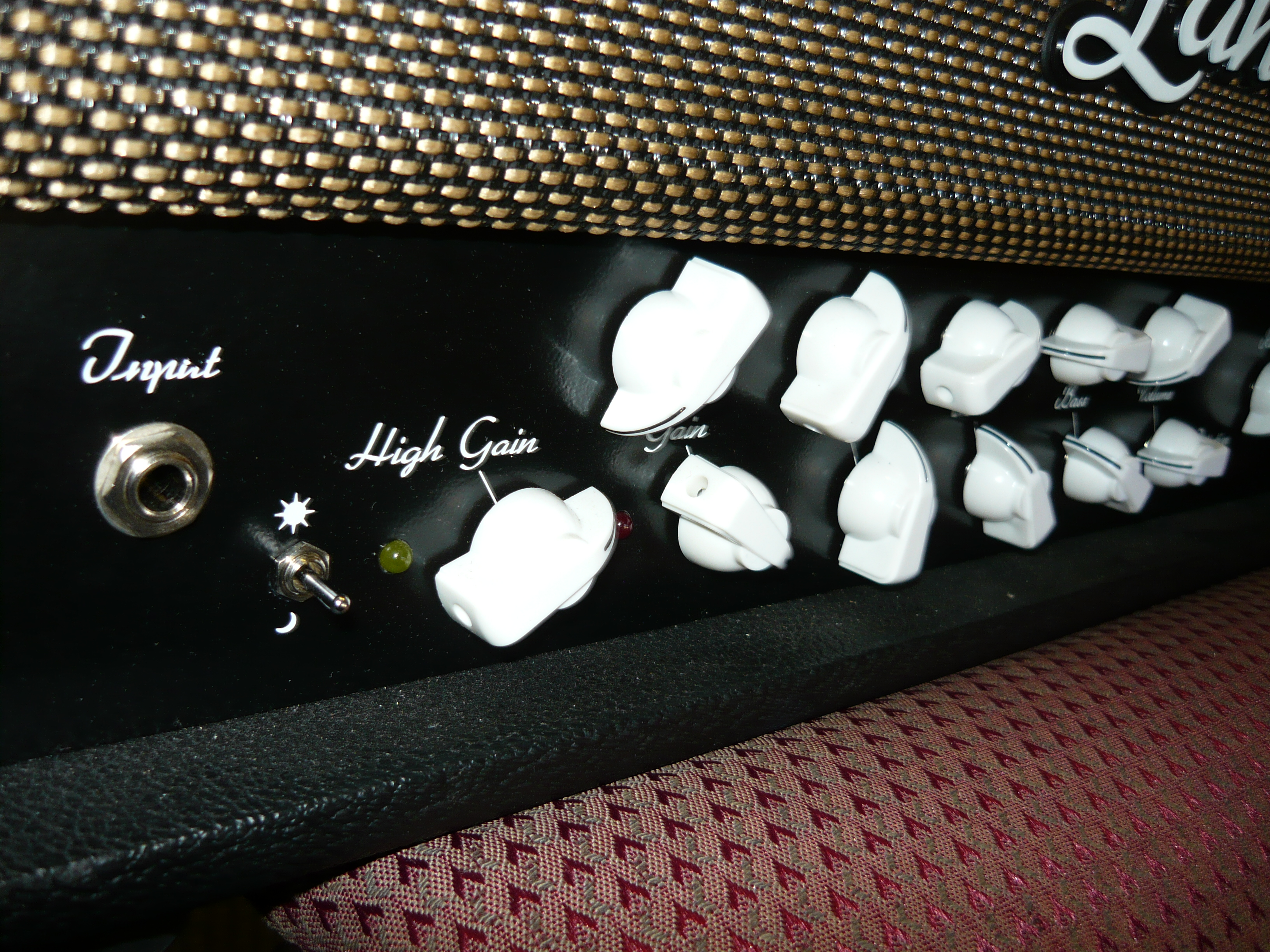
Hello again. We are now offering world-class (non-warranty) service and repairs to Landry amplifiers of St. Louis, Missouri USA. We should point out that we have no official relationship with Landry amplifiers, so we cannot accept any warranty repair claims without the endorsement of Landry or their Australian sales representative. The Landry amp is a relative newcomer to the boutique guitar amp scene. We endorse the fact that these amps are totally valve (tube) circuitry (apart from solid-state rectifier), and are completely hand-wired and assembled, presumably by one person.
the Landry amplifier

the Landry amplifier

Landry are producing only one or two models, very obviously voicing their amps towards the classic British/Marshall sounds (in both channels), but with a number of enhancements and more modern high gain sounds available as well. There are two independent preamp channels, each with its own 3-band passive EQ. The ‘clean’ channel is voiced similar to a JTM45/Bassman style amp, and the ‘distortion’ channel is voiced similar to a JMP series amp, but with additional gain available via a footswitch. After the channel switching takes place the signal is routed via a valve-driven series FX Loop.

the Landry amplifier

the Landry amplifier

The master volume is of completely conventional design, following after the FX Loop, but works very effectively in this amp design. The big surprise in a Marshall inspired amp such as this, is the inclusion of a valve (tube) driven reverb of very acceptable sound quality. Certainly much better than the reverbs ever were in Marshall amps over the years ! The phase inverter, power amp and power supply stages are very similar to what you would find in a 100 watt JMP Marshall.

Landry turret board and hand wiring

Landry turret board and hand wiring

The power and audio output transformers are in fact the very excellent 100 watt JMP style models by Classic Tone/Magnetic Components of Chicago USA. The claim on the Landry website that the ‘clean’ channel delivers sparkling blackface tones is of course an exaggeration. This channel delivers the fatter JTM45/plexi/’59 Bassman type tones, and there is absolutely nothing wrong with that at all.
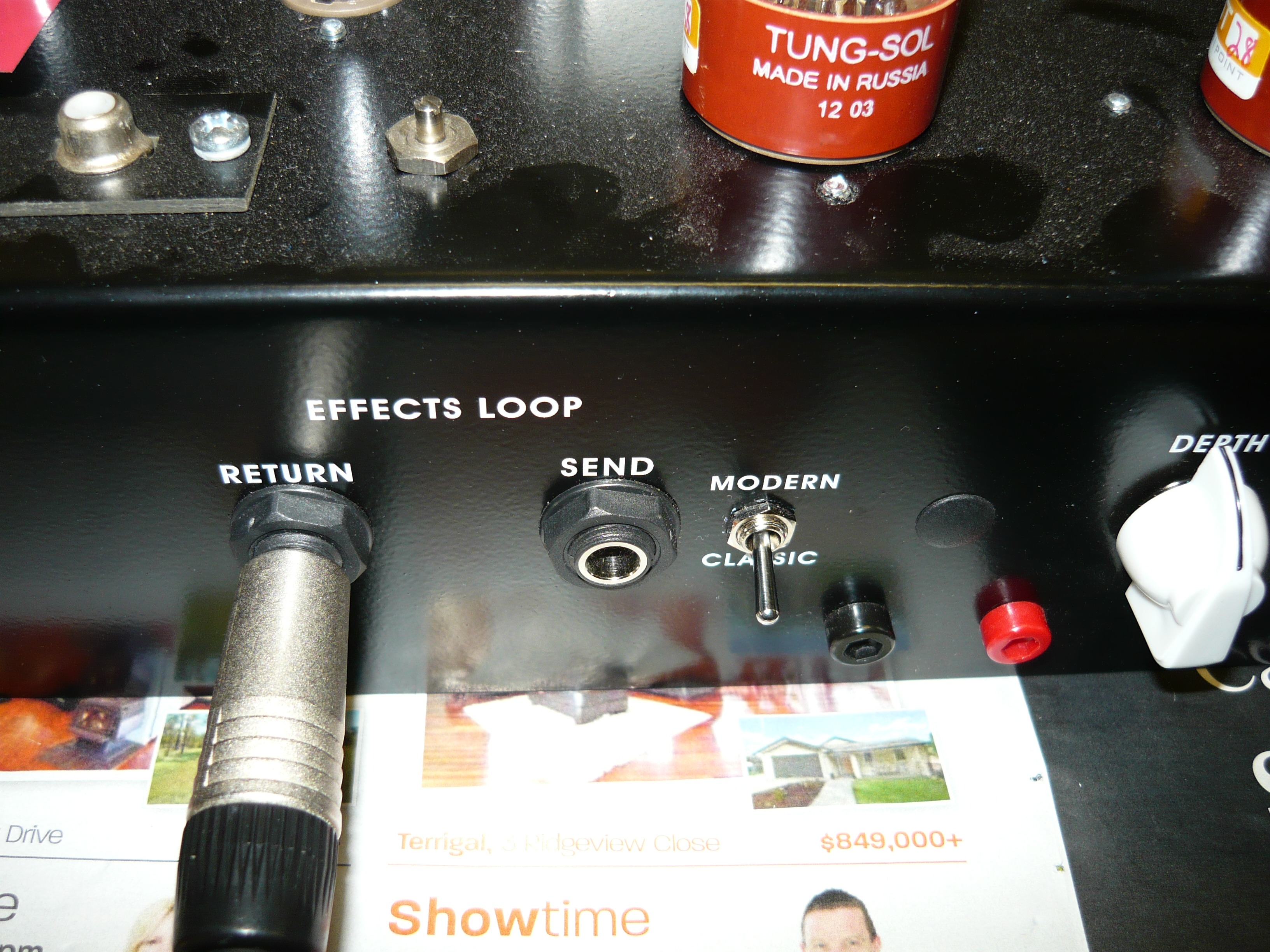
setting the bias on this amp is very easy

setting the bias on this amp is very easy

Our good customer, Steve Edmonds brought this 100 watt head into the workshop last week, stating that the amp had lost some of its magic. Please see our post of 25/2/2014 re the Steve Edmonds band, and new project Mescalero. Inspection of the chassis revealed no apparent problems, but testing all the valves (tubes) separately from the amp did reveal most of them were in a degraded state, suffering from microphony, low gain, etc. Apart from a Tung Sol (reissue) 12AX7 in position V1, all other valves (tubes) were Chinese 12AX7B and EL34B. Now this amp is really only a few months old, but Steve is currently the hardest working guitarist we know, generally playing four gigs per week.

Landry chassis: six preamp valves in total

Landry chassis: six preamp valves in total

As a sweeping generalisation, Chinese manufactured valves (tubes) can quite often sound very good indeed when brand new, but can also lose their quality relatively quickly. Their 12AX7’s especially seem to become not only microphonic but also rather harsh and brittle. No doubt they will improve their quality of manufacture over time, the Russians certainly have. We installed a mixture of JJ, Electro-Harmonix and Tung Sol (reissue) valves, pre-tested and graded in our workshop, making an effort to select the ideal valve for each position. For the output stage we installed a matched quartet of Tung Sol EL34B, which have been certainly the most reliable of current production EL34’s (in our experience), although they do sound different to other EL34’s – therefore the customer’s personal tastes have to be taken into account in these situations.

the Landry chassis

the Landry chassis

Rebiasing the Landry for new output valves is easy and convenient – I wish the major manufacturers would take note ! All four EL34 cathodes are connected together to ground via a 1 ohm/10 watt resistor, which in turn is connected to external DVM test points. Simple ! The amp passed its power output and burn-in testing with flying colours, and it seems that Steve is very happy with what he was hearing at last week’s rehearsal. Many thanks to Steve Edmonds for his continued support and for supplying us with the subject matter for this blog. IR.
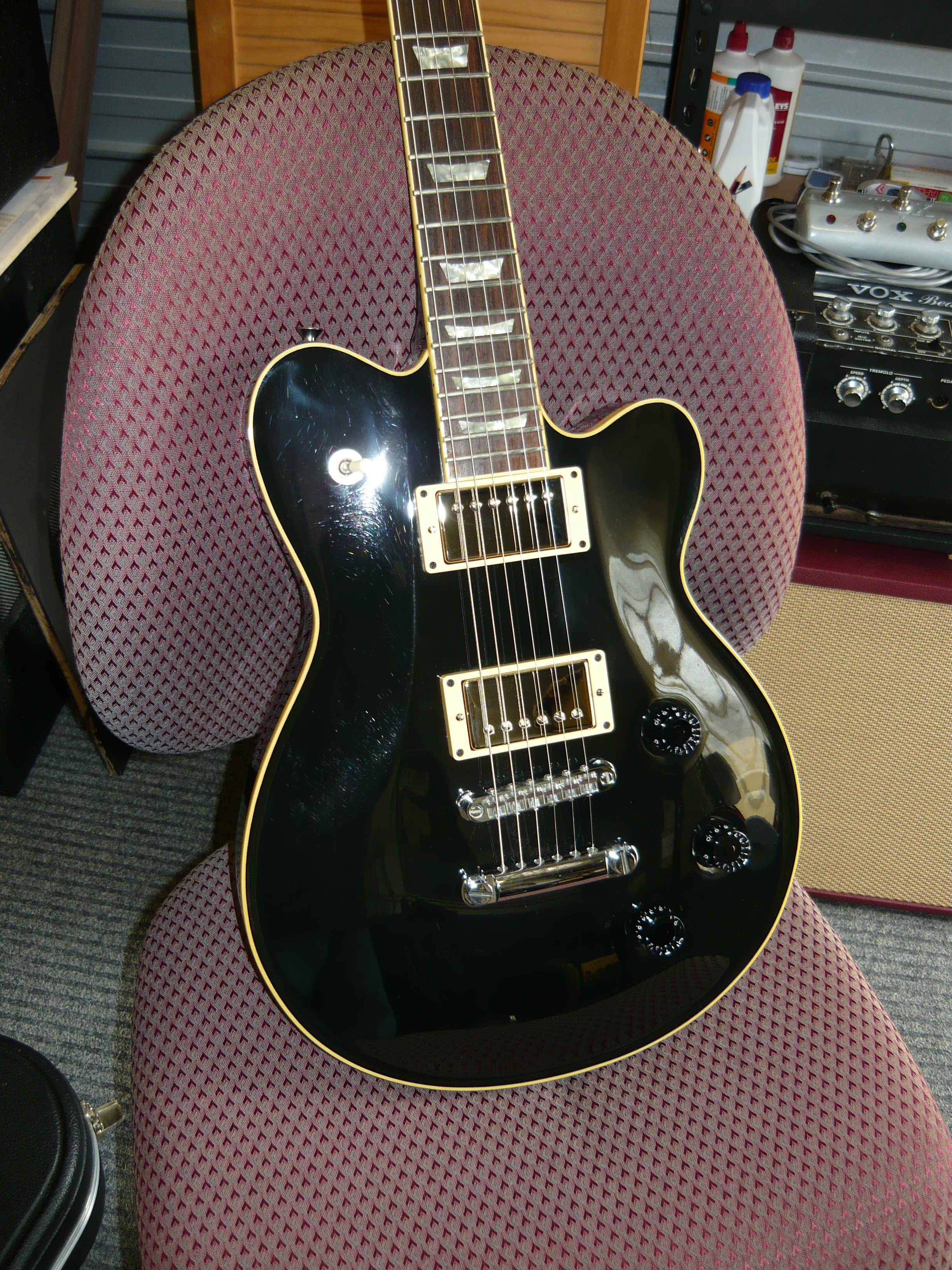
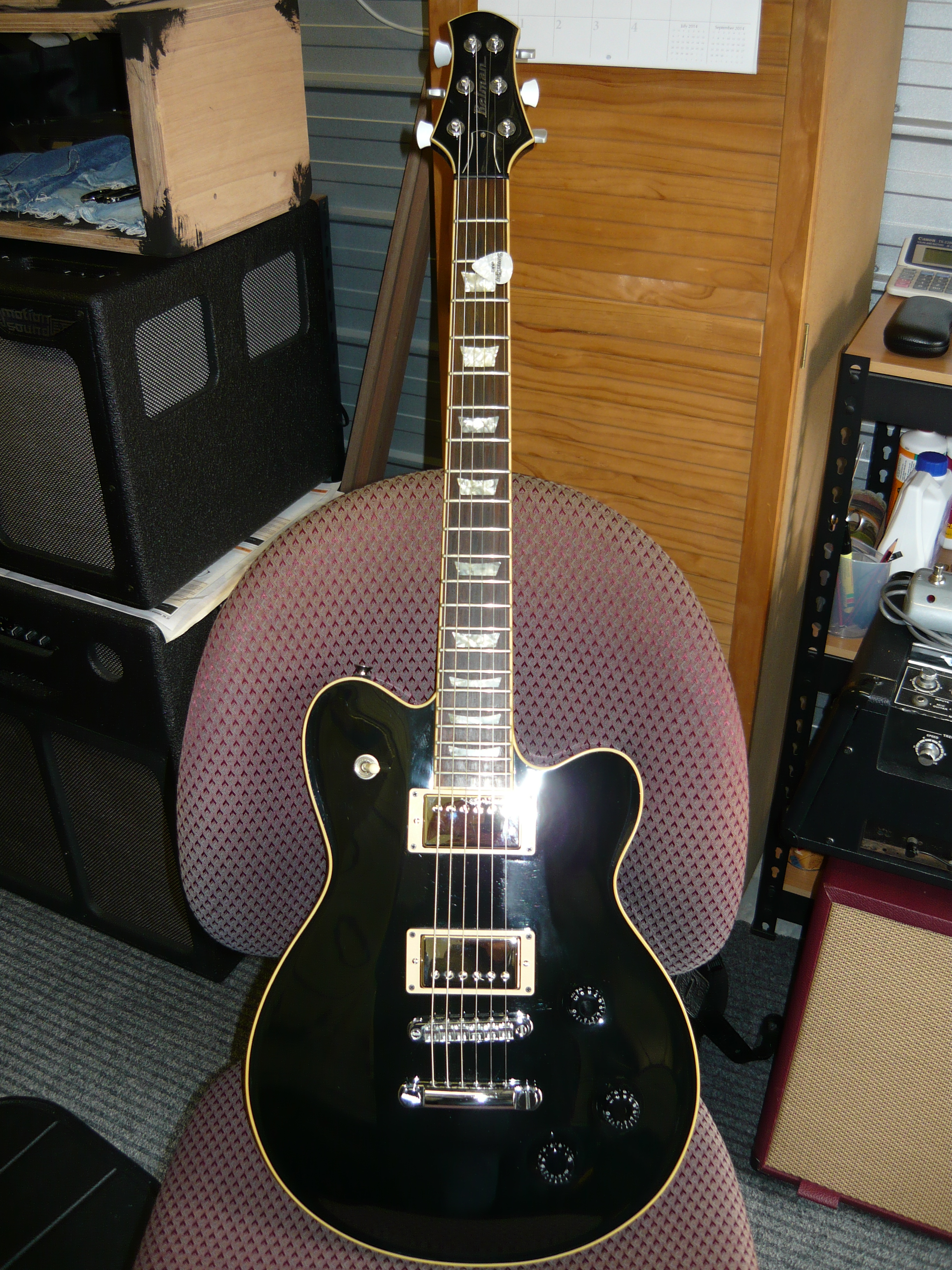
Ivan’s Belman ‘Albatross’

August 2, 2014
Belman Albatross

Belman Albatross

Thanks for checking in to our blog. From time to time we like to share our experiences in upgrading our own instruments, as distinct from customer repair work. This week we discuss an Australian made instrument – the Belman Albatross (standard). The most recent similar blog was published November 24 2013, regarding a ’52 Tele (reissue) upgraded with the marvellous  Pete Biltoft pickups, plus an upgrade of an ESP Tele. We purchased the Belman at the beginning of this millenium from East Gosford Music (NSW). The proprietor, Trent Crawford, was one of the first stockists in NSW (as far as we were aware) of the Belman guitar and was a Belman player himself.

Belman Albatross

Belman Albatross

Trent enthusiastically promoted the Belman, and quite a number of local Central Coast players (including myself) purchased the Albatross and subsequent models such as the double-cutaway. The thing that struck us all was the consistent quality of construction and assembly of these instruments, especially when making direct comparisons to the leading imported brand (at that time), selling for twice the price or more. Another unique aspect of the Belman was the use of exotic Australian tone woods.


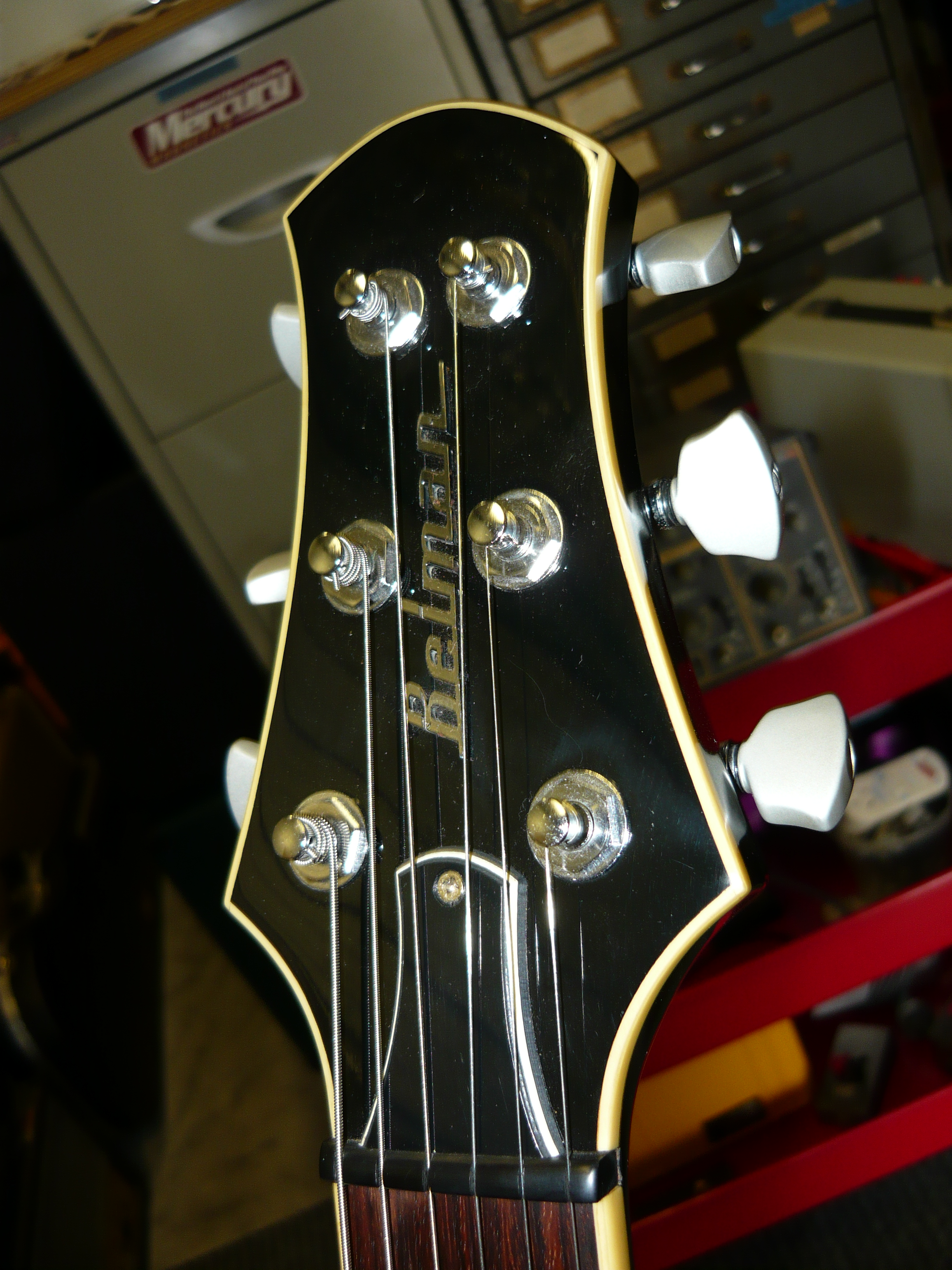
Belman headstock & logo

Belman headstock & logo

Belman guitars were hand-made in Melbourne, Australia from 1994 to 2007. I recall visiting their factory in Thomastown (Victoria) in the company of Bob Spencer, who was in the process of ordering a customised model. Belman was only ever a small operation, involving just a handful of people. Like many such small businesses in a highly competitive industry, they were under-capitalised and had no choice but to stop production in early 2007. For a more in depth discussion of the Belman models – see the Jedistar Belman Page. East Gosford Music also closed their doors a few years back, due to the shift in musical instrument retailing from bricks and mortar to on line. Trent, however is still very much involved in the music industry – see Trent Crawford Music.

location of the serial number

location of the serial number

With the Belman Albatross – I always thought that the electronics let the guitar itself down very badly. The pots, 3-way switch and jack socket were all just a bit cheapo, and were upgraded to Switchcraft and CTS components a.s.a.p. All the other Belman hardware was excellent. We don’t understand the reasoning behind these choices, as the RRP of the Albatross at that time was $2,399 ! Please note: when replacing cheapo guitar pots, the mounting holes will usually have to be carefully enlarged to 3/8″ diameter with a suitable reamer.

rear view with EGM sticker still in place

rear view with EGM sticker still in place

I was never happy with the high output pickups either, and didn’t feel that they were bringing out the best in this instrument at all. This particular issue of course applies to thousands of guitars out there, a fact which supports a whole after-market guitar pickup industry. Next, I installed a set of Lindy Fralin humbuckers which also were too hot and therefore too muddy. I probably should have researched my requirements a lot more, as Lindy Fralin offer many choices from underwound to overwound. I went through a P90 obsession phase, and installed a set of Seymour Duncan Phat Cats, which are P90 pickups modified to install in a standard humbucker mounting.

new Seymour Duncan neck humbucker

new Seymour Duncan neck humbucker

I still wasn’t getting the combination of warmth/sweetness/clarity/articulation that I was craving so badly by now. I knew the problem wasn’t the guitar itself – the solution could only be achieved by matching up the right choice of pickups. Last year I upgraded the neck pickup in my ESP Ronnie Wood Telecaster (also purchased from EGM), with a Seymour Duncan ‘Seth Lover’ humbucker, with the best results so far in that guitar, paired up with the ‘Jerry Donahue’ bridge pickup (both Alnico II). I ordered a set of Seymour Duncan ‘Seth Lover’ pickups, SH-55b (8.07K) and SH-55n (7.33K), from a dependable supplier Darren Riley, for around $100 ea USD.

I could have spent well over $400 AUD acquiring the new Joe Bonamassa signature pickups, or some other more exotic boutique models, but exercised some restraint and I’m pleased I did, because these pickups have worked wonders for my Belman which now has mucho warmth without compromising on clarity, and the amp can be easily cleaned up from the guitar volume control, which is always a good thing. The tone is vintage PAF to be sure, but these pickups can still supply enough boldness and punch for most applications short of heavy rock and metal. IR.