Archive for February, 2012

A Nice Stack !

February 26, 2012

Hello again, readers ! Two very good customers and also very good friends of ours, Mr Bob Spencer and Mr Simon Bray, sent us this photo quite recently. They have stacked up their personal collections of the Richards amp for a photo opportunity. No doubt they got together to do some speaker comparisons, or some such activity. The photo shows three generations of the Richards amp.

The top amp is Bob’s ‘Lil Buddy’ 6V6-powered amp, old-logo and from an earlier millenium, also discussed in great detail in an earlier blog. The next amp down used to be Bob’s but he sold it to Simon. This amp is a 28-watt KT66-powered beauty, old-logo but from this millenium, with baxandall EQ and gain stages designed to achieve the level of robustness demanded by Bob ! The output transformer in this one was wound for us by N.Z. audio guru, Simcha Delft, based on the original RadioSpares (UK) transformers of the mid-1960’s. We think Simcha may have quit the transformer winding business, which is a real pity. If you have any more information re this topic, please contact us.

The next amp down, in stunning vintage Brit green repro tolex, is Simon’s 7.5 watt “Studio Expressionist” amp head, new-logo, 3rd-generation, 2007 build. Don’t be fooled by the 7.5 watt rating – this amp is not a toy or a ‘practice’ amp, but a serious piece of rock’n’roll kit which earns its keep being regularly hired out for recording sessions, as part of Simon’s hire business. The Expressionist” amps have been described in great detail in previous blogs.

And last, but most definitely not least, is Bob’s 4 x KT66-powered 85 watt monster, old-logo and from the very beginning of this millenium. The same design criteria was applied to this amp as the 28 watt KT66 amp mentioned above. The transformers were wound for us by Sydney audio guru, Martin Kell. This is the amp Bob uses with his band “Raw Brit”, based in Melbourne. Check them out on the web, there are now heaps of videos uploaded.
Thanks guys !

Service Centre for the BIG MUFF

February 9, 2012

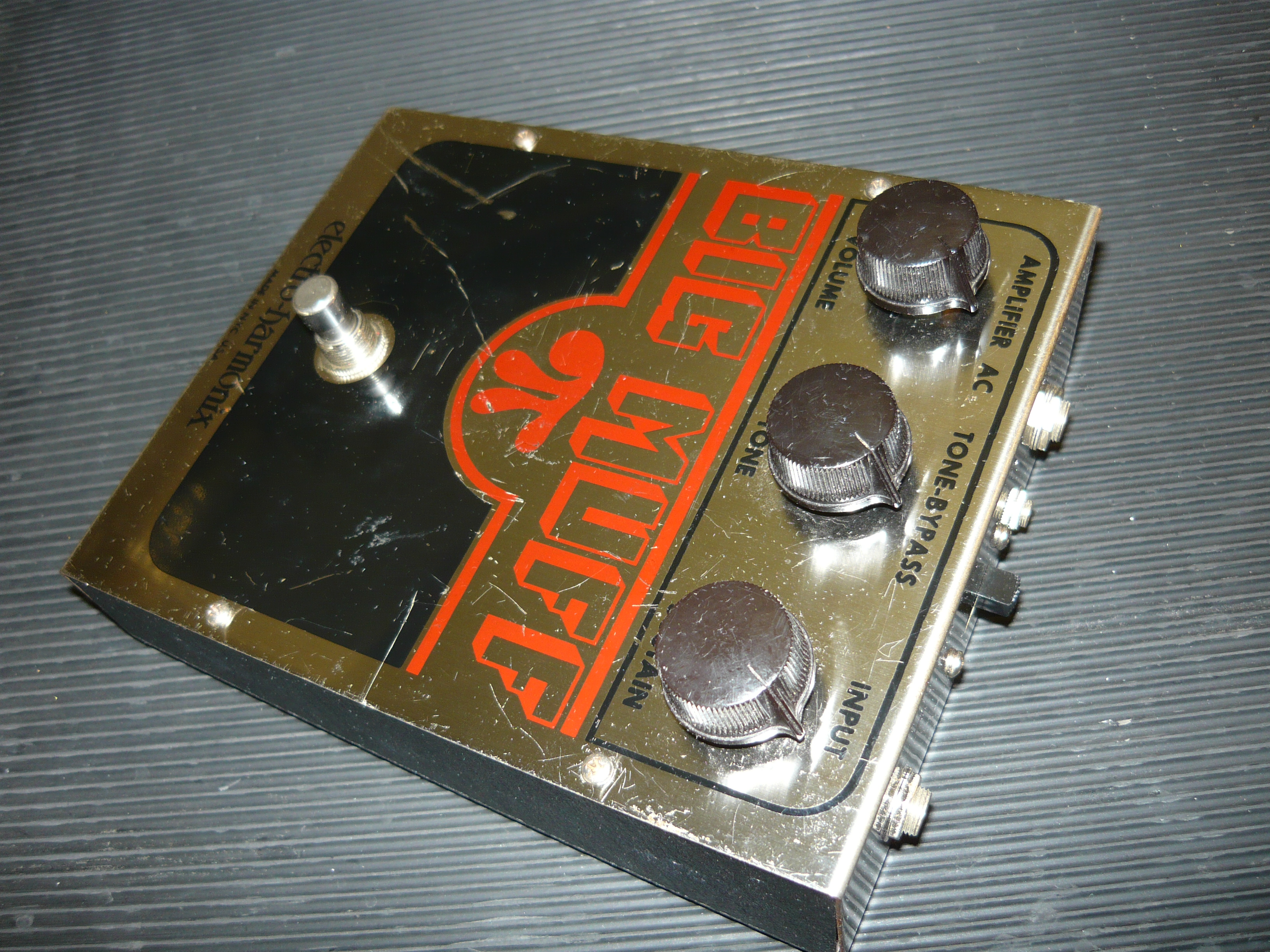
The Big Muff is a timeless classic in the fuzz-pedal world. It’s been heard on numerous recordings and been offered by countless boutique pedal manufacturers in one form or another over the years. There are a bewildering number of different versions of this pedal, which for convenience can be broadly grouped into four categories: vintage USA Big Muff, vintage USA (op-amp) Big Muff, Russian Big Muff, modern USA (NYC) Big Muff.

Many Big Muff users and collectors will tell you that pretty much every Big Muff sounds different, even comparing examples from the same version and/or year of manufacture. We tend to agree with this, based on our experiences servicing these pedals. Apart from normal component variations over time, different component values were often substituted, whether this was intentional or simply a case of running out of certain components, we do not know. We have also noticed different pots fitted to otherwise identical models, which would result in a different sweep altogether !

When considering the reasons for such wide variations in tone & performance with the Big Muff & other E-H pedals, one factor cannot be overlooked. At different times over the four decades of production of E-H pedals, the quality of assembly and in fact quality control in general was pretty poor ! The pedals often looked like they were wired up by someone in a hurry, with soldering that wasn’t going to hold up on the road. This applies to both USA & Russian manufacture.

To give credit where it’s due, however, E-H have come up with some of the most extraordinary pedals over the years. Our personal favourite has to be the Electric Mistress (flanger), for those classic early 80’s guitar sounds, a la The Police, The Pretenders, etc. Once again, there are several versions of the Electric Mistress, and restoring this pedal to full operation can sometimes create challenges for the service tech, depending on the problem.

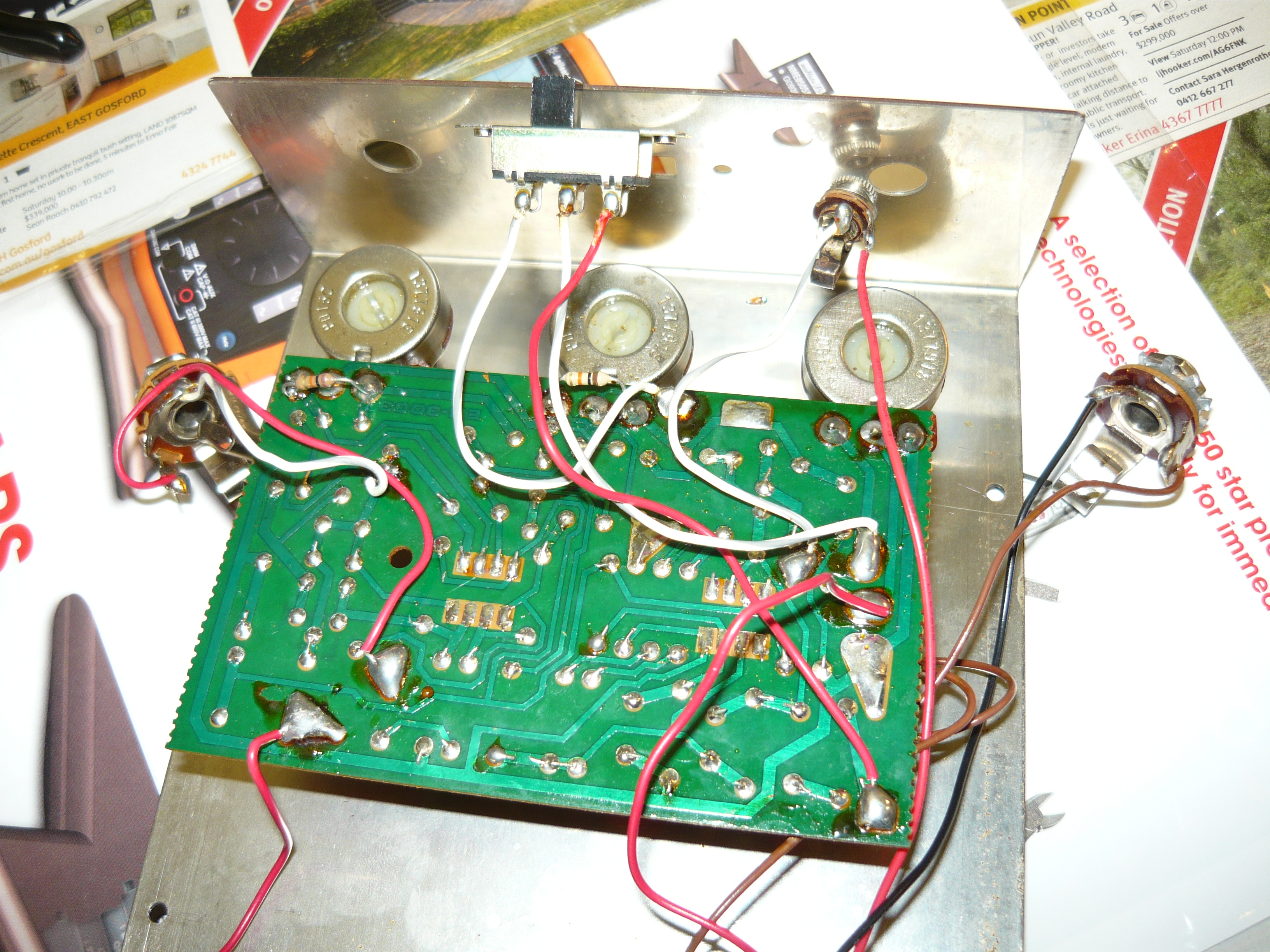
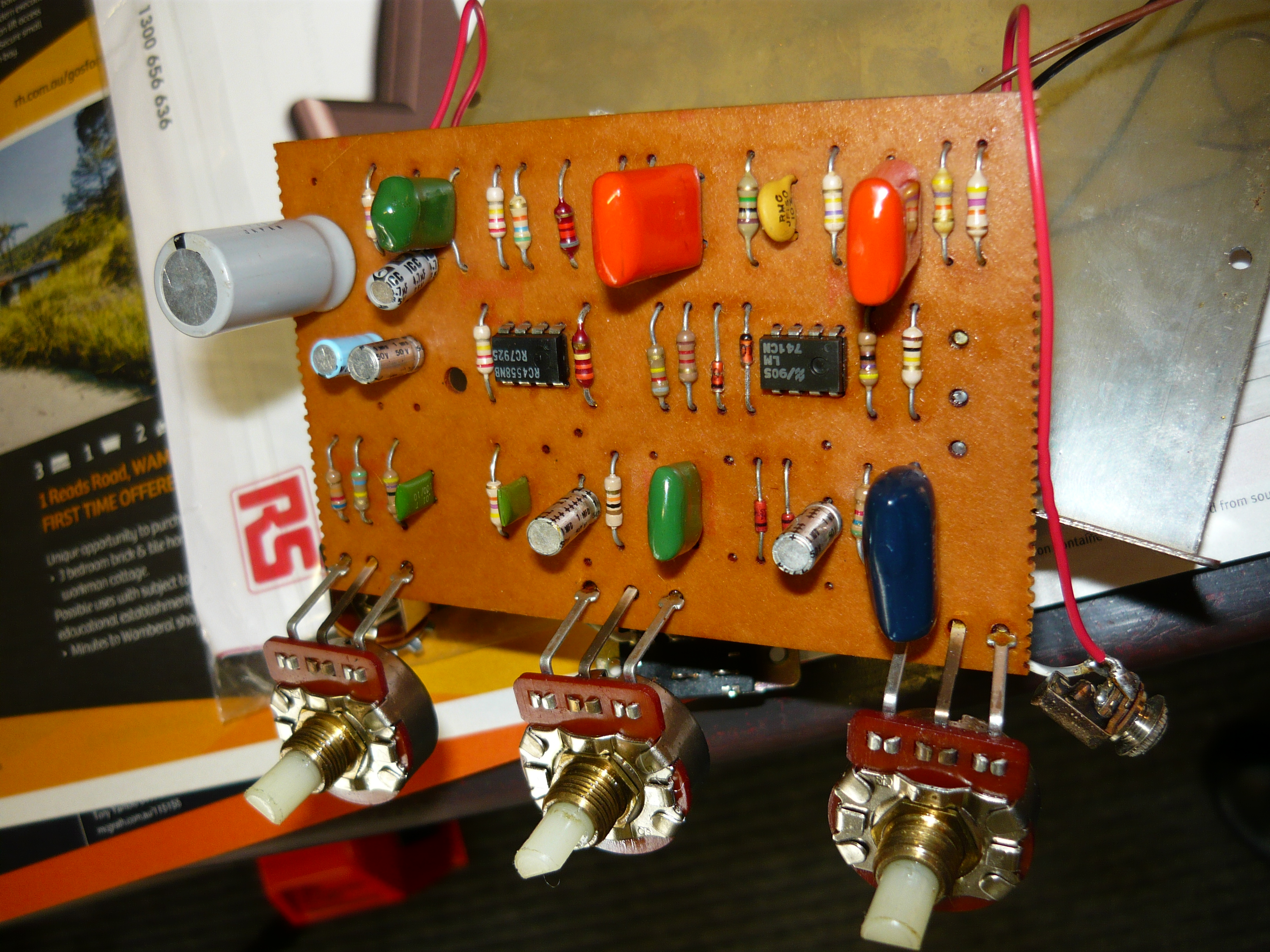
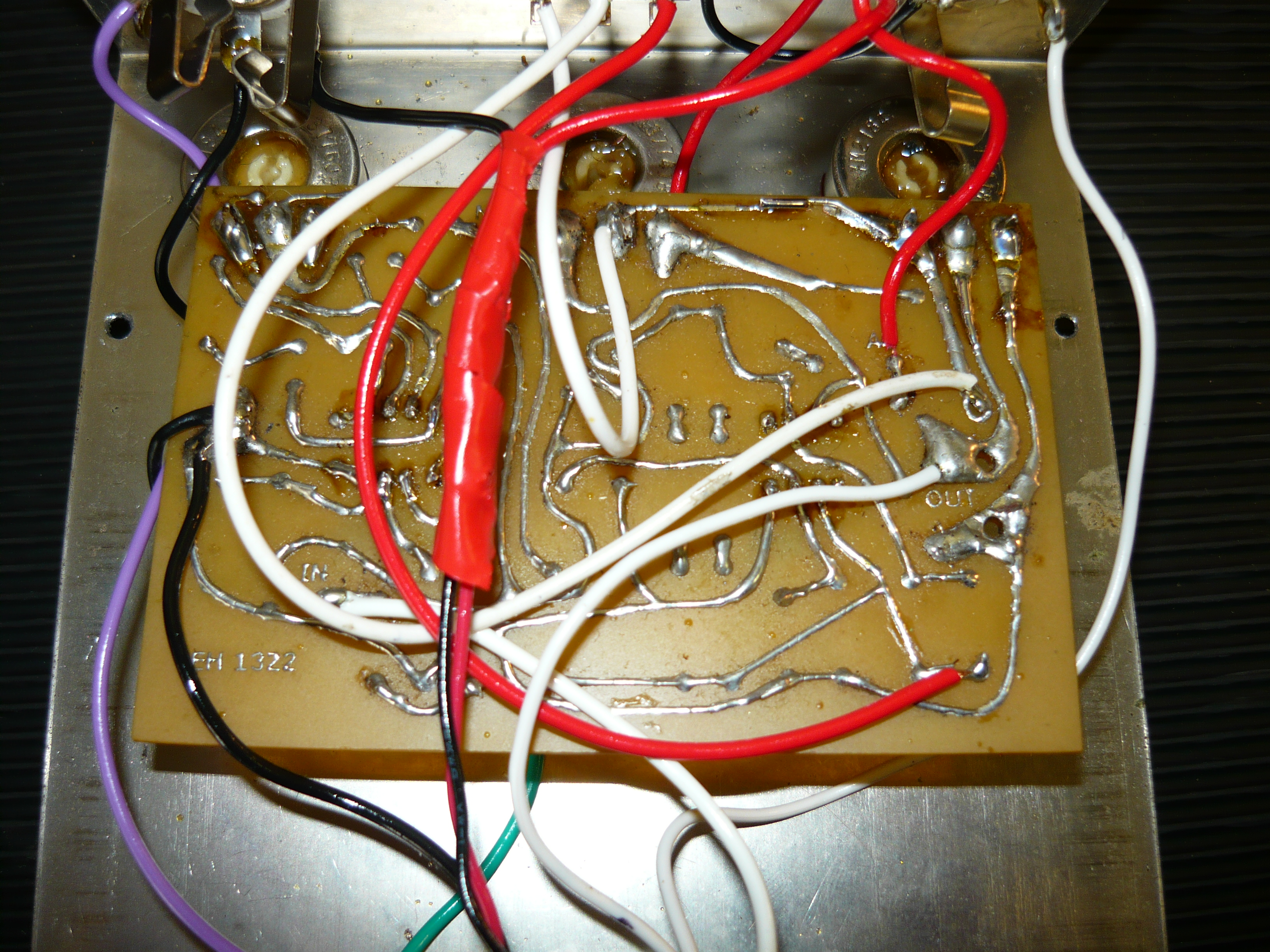
Recently, a pair of barely functional Big Muff (IC/op-amp) pedals from the late 70’s arrived in our workshop for attention. The two pedals had quite different printed circuit boards, different pots, but almost exactly the same circuit (which we reverse-engineered as the schematics available on the internet often have errors). Even if working properly, these two apparently exactly the same pedals would have sounded very different to each other. You can see from the photo above that the older pedal of the two has been the subject of numerous attempts at rewiring & modification. We ended up correcting & rewiring much of this in order to get the performance on par with the newer of the two pedals.

Amazingly, the pots in both of these pedals work OK, just requiring a squirt of Faderlube to clean & lubricate. The main issues tend to be jacks & switches. The original jacks are cheapo – the best solution is to replace them with Switchcraft jacks. The EQ bypass slide switches are particularly prone to causing loss of signal and should automatically be replaced. Luckily there is an exact size replacement out there. In one of the pedals there was a blown IC and very cheapo IC sockets which just weren’t doing the job, so they were all replaced. Tidy up the wiring & rework any dodgy soldering and we have a pair of working Muff’s, still not quite the same as each other, but much closer than before.

Please contact us by email re any service enquiries for E-H pedals in general, and the Big Muff in particular. In most cases we will be able to assist. We can also supply custom linear power supplies for pedals that require different voltages from the usual 9V DC, ie 18V & 24V DC are sometimes specified by E-H (see previous blog re Rich Split & 18V PSU for example).

Tye Pennington orders a custom Rich Split with 18V power supply

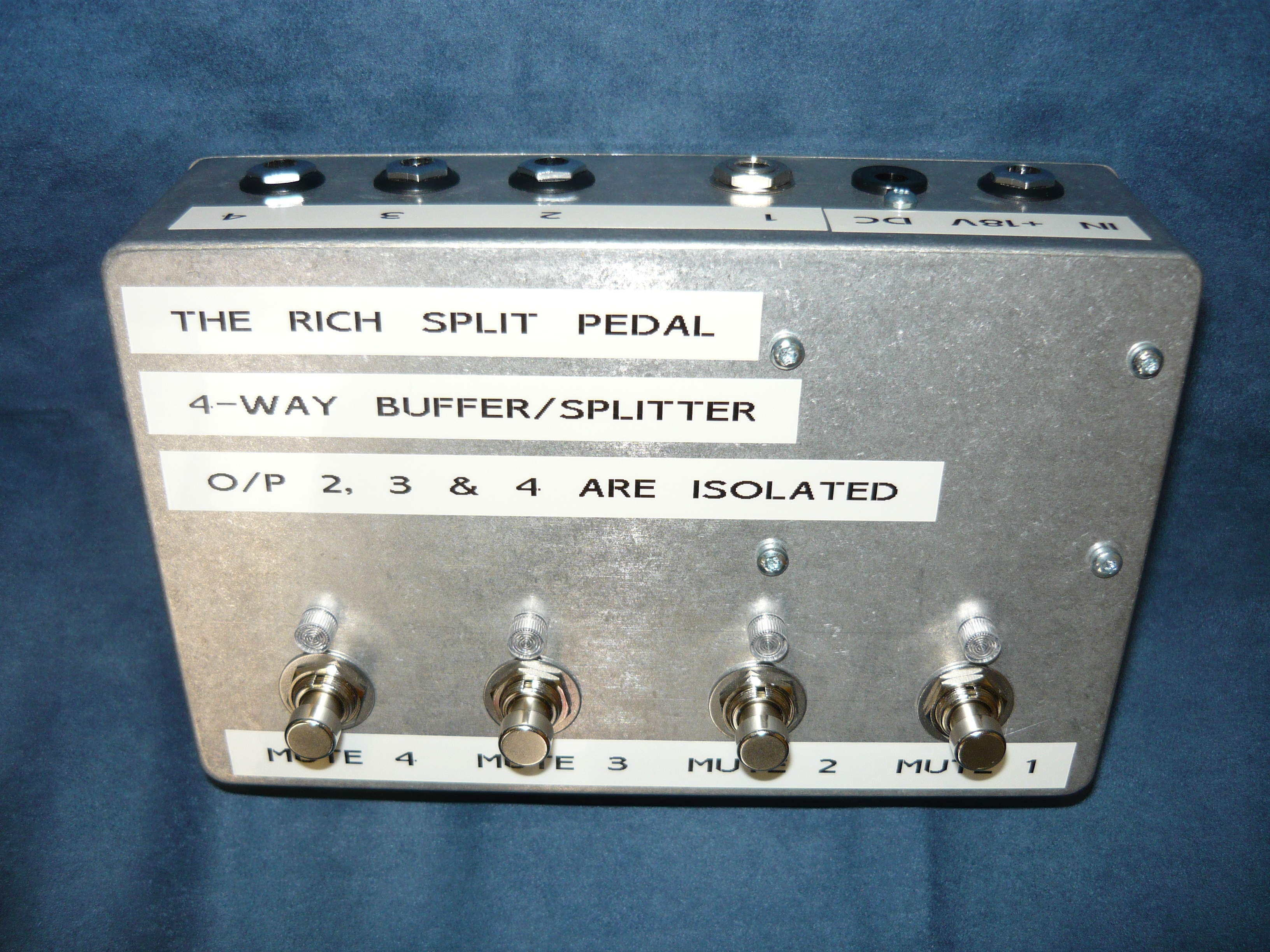
February 2, 2012

Sydney-based guitarist & recording/mixing engineer Tye Pennington contacted us in November of 2011 regarding the availability of a customised version of the Rich Split active buffer/splitter pedal. Tye and his band KTR, ie Killing the Ritual, were in the studio working on their debut album, with Tye performing both engineering and guitar playing duties. At this stage, Tye had already attempted splitting the guitar signal to record with multiple amps, experiencing terrible noise problems with “ground loops”.

For a more detailed appraisal of the issues arising from recording &/or performing with multiple amps &/or signal paths please read our previous blogs on the subject: Rich Switch A/B/Y, Bob’s Rich Split & More About Signal Splitting. These can be found in the Pedals archive.

Here is what Tye had to say:  Hi Ivan, just wanted to quickly say how much I love your pedals, I am the proud owner of the Rich Fuzz & the Class-A Distortion, and they have a permanent home on my pedalboard. Anyway, I was interested in the Rich Split for a studio project where we will be splitting to at least four guitar amplifiers simultaneously. I think the Rich Split will be perfect for the task, but I am also interested in using the pedal at live gigs. My question is would it be possible to have the pedal modified with fooswitches to engage/disengage the sends (outputs) ? Cheers !

So, we set about designing a 4-way Rich Split, with three transformer isolated splits, one direct split, plus four individual mute switches and LED status indicators. An external regulated +18V DC power supply is required, although the pedal will run off +9V DC at reduced headroom. Power consumption is quite low, even with all LEDs illuminated. The electronics, footswitches & Harbuch broadcast quality line transfromers all fit neatly inside a Hammond die-cast aluminium enclosure, which also provides superior shielding from external noise sources. The Rich Split pedal is currently available with up to five splits, although the majority of customer orders have been for the 2-way & 3-way splitters.

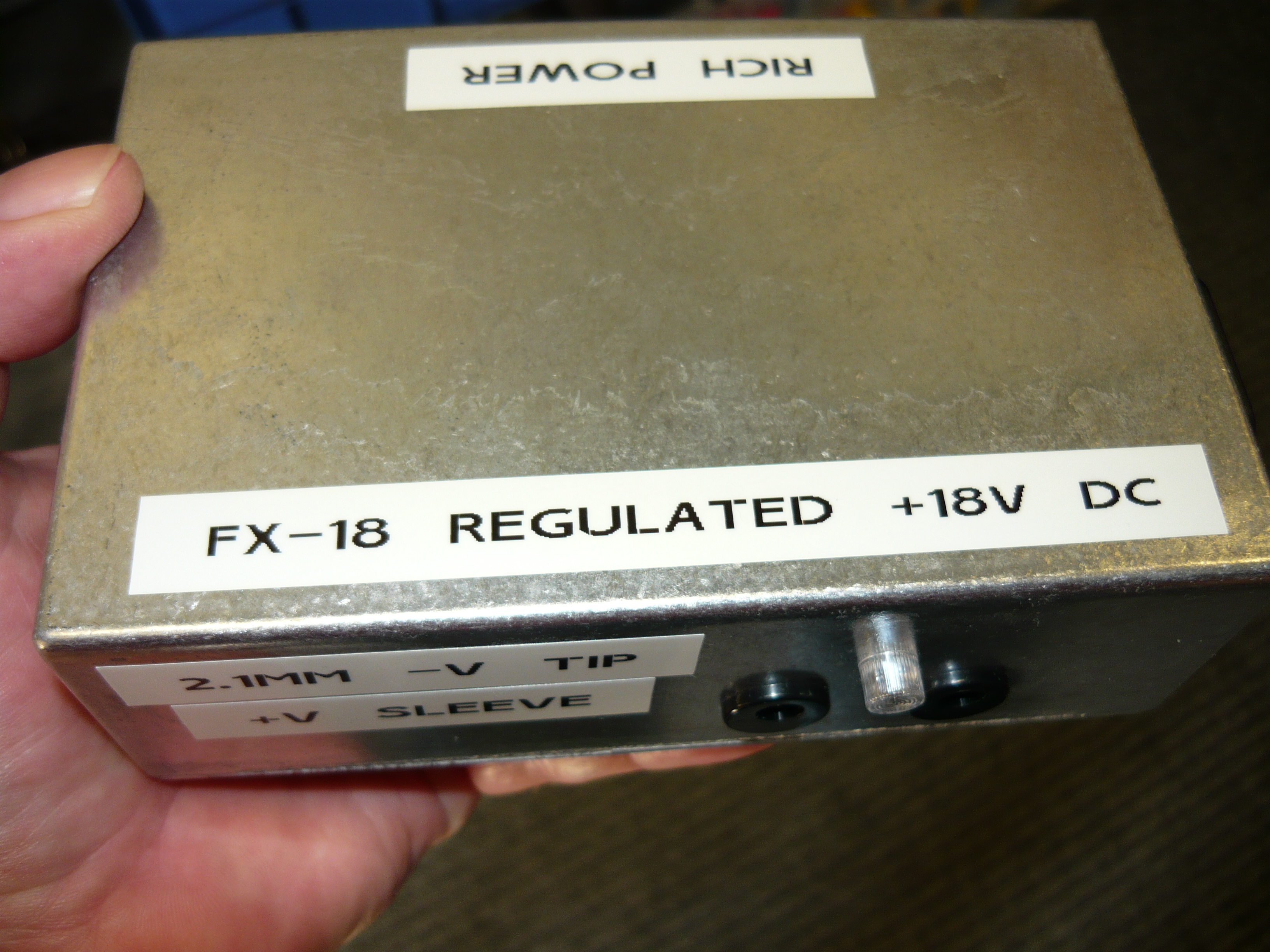
A high-quality regulated power supply is a critical component for an active splitter & other similar gear. Although this pedal will happily run off +9V DC, +18V DC is the recommended supply voltage to achieve reasonable headroom. Some commercial pedalboard power supplies will provide regulated +18V DC. We have experimented with some of the switch-mode power suplies (SMPSU) on the market, and have found them to be unsatisfactory for powering the Rich Split & Rich Switch  pedals, ie under some circumstances they have introduced noise into the signal chain. The best solution is still the linear (ie, analogue) power supply.

For customers like Tye, who require an external +18V DC regulated power supply, we can supply the model FX-18 Rich Power pedal at reasonable cost. We are not a commercial manufacturer of power supplies, but have always offered individually custom-built pedalboard power supplies for guitarists in a variety of configurations. These units are relatively indestructable, housed in a robust Hammond die-cast aluminium enclosure, and protected from normal guitarist type abuses & incidents.

Thanks agin to Tye, for his enthusiasm for our products and we hope to hear soon the results of his recording project. Future blogs now being prepared will include the extremely rare Marshall JMP 10 watt Lead/Tremolo combo, and other major overhauls of vintage amps.