Archive for July, 2011

A Testimonial to the Richards Expressionist Series Amps

July 24, 2011

Here is a testimonial ref the Studio Expressionist model amplifier, rated at 15 watts into 4, 8 or 16 ohms, designed and hand-wired, one at a time, by the Richards Amplifier Company – Australia.


The testimonial was written by ARIA Award winning producer, Jonathan Burnside and is reproduced here in its entirety, without any editing. Jonathan is an American producer, has worked with Nirvana, Faith No More, etc, but has also produced a number of successful Aussie bands, including The Sleepy Jackson, Dallas Crane, Eskimo Joe, The Grates, The Living End, Dan Sultan, The Melvins, Grinspoon and many more, most recently Cold Chase. My aplogies to any names I have overlooked.

Recently I was engineering and producing the Australian band Slow Chase at Mixmasters, an excellent studio in the Adelaide Hills. Being a lover of fine low-wattage amplifiers, I encouraged guitarist Adam Gresty to bring along his new Richards Expressionist 15W model amp head. I had heard great reports about the amp but had not yet used one. Adam was able to fly with the amp with no excess baggage charges, another perk of a low-watt head !

We were in a studio equipped with a million bucks worth of audio goodies, but the Richards Expressionist proved to be the most important piece of gear in the house. The songs were glam-boogie-rock-and-roll and I was able to dial in that fat Marc Bolin/T. Rex Les Paul sound perfectly. Some of the leads involved more of an eighties Van Halen tone, and again I was able to dial in Eddie’s famous ‘brown sound’ in a matter of seconds.
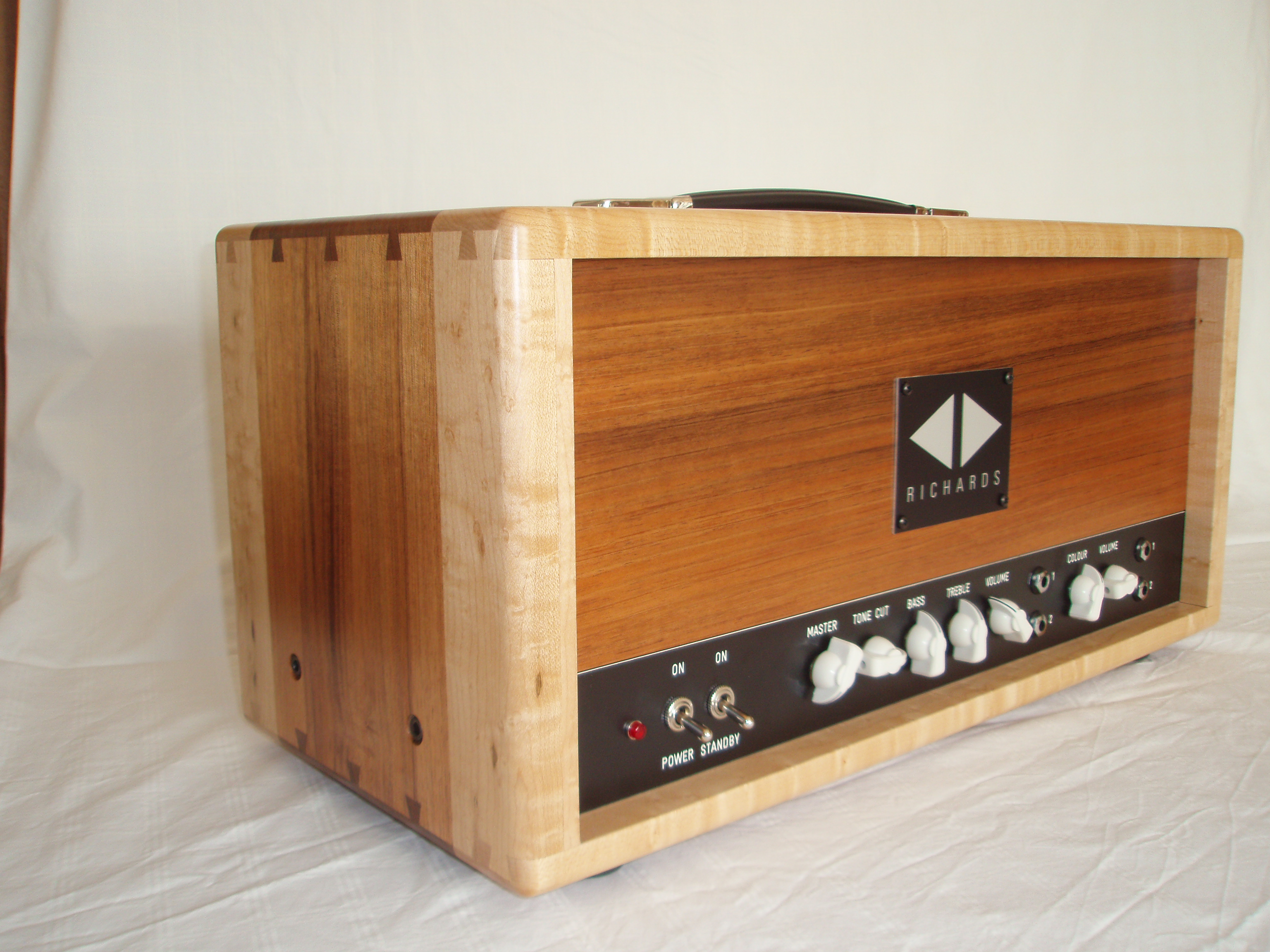
I find amplifier tube (valve) saturation generally more pleasing than pedal distortion, and the beauty of a low-watt amplifier is that you can get output tube (valve) saturation in on the game without risking permanent ear damage. The Expressionist was a champ at this (pun intended), and I loved being able to flick a switch to choose between output tube (valve) types for significantly different sounds.

I also favour using guitar amps for recording bass guitars in the studio, because I like the punchier, more even tonal balance they supply in comparison to a huge bass rig. The Expressionist was wonderful for this and using the tone selector I was able to come up with the perfect midrange/low frequency balance for every song. Even though I also used a high-quality direct-box for the bass as well, and phase-corrected it to the amplified bass mic, I ended up using only the mic’d Expressionist bass track in the mixes for all the songs. As we say in America, it covered all bases.
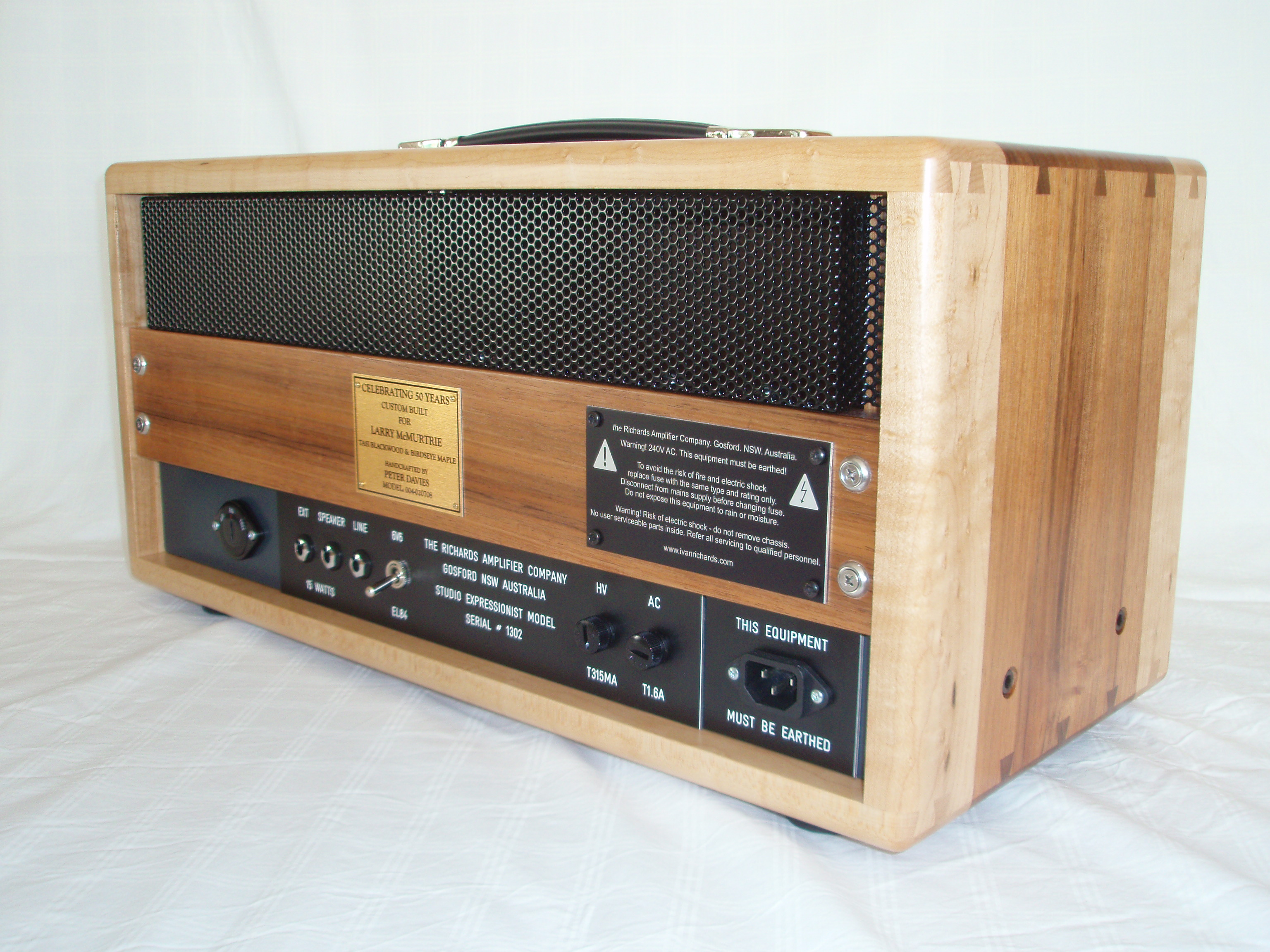
Ivan Richards has nailed down many a guitar (and bass !) sound in one classy package. In an age of anaemic digital amp simulators and cheaply constructed reissue amps, it’s great to hear this level of quality from a new (to the USA) amp maker. During the entire project, I was able to imagine a guitar sound and then dial it in easily, varying from retro to modern at will. A big win for the studio-time budget !

Jonathan Burnside,

San Francisco, USA.

Thanks, Jonathan !! That brings this week’s blog to a close, please tune in again next week. Please check out the Jonathan Burnside/Producer website. Please also check out our earlier blog ref Aussie band Slow Chase in the studio, plus all our other amp and pedal related blogs.
http://jonathanburnside.com

http://www.mixmasters.com.au

http://www.slowchase.com

http://www.ivanrichards.com

Bob’s Rich Split pedal returns to HQ for 18V MOD

July 16, 2011

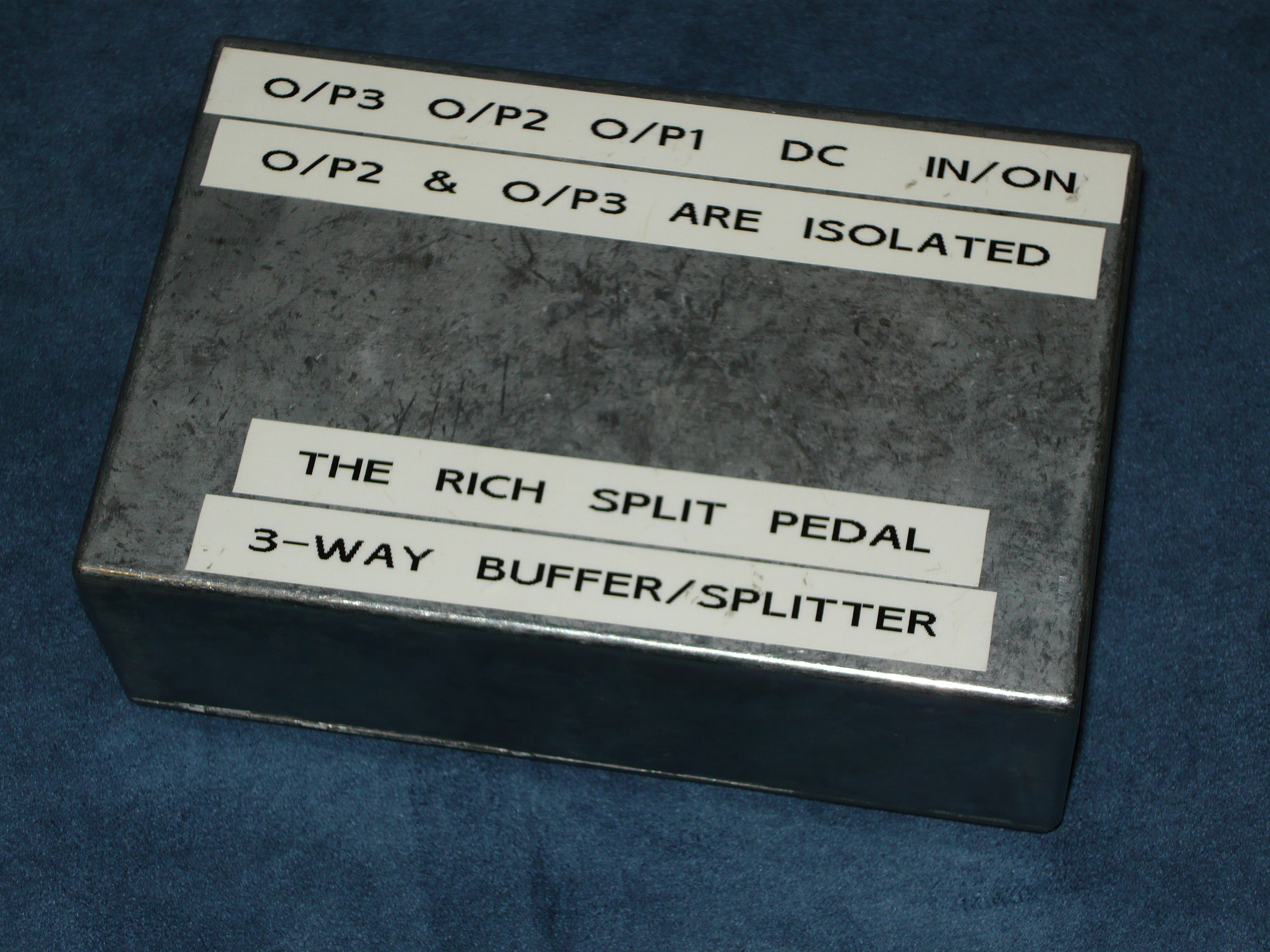
This blog continues directly from the previous post where we discussed the Rich Switch (Active) A/B/Y pedal. The Rich Split is another of our functional, problem-solving pedals, which are intended to be as transparent as possible, rather than creating a specific sound. Not very glamorous or exciting, but in fact very important to the modern musician. This pedal doesn’t even have a fancy label (yet), but instead relies on good old Dymo tape lettering.

Bob Spencer is one of my long-time customers, and a loyal and trusted friend. Actually, quite a few of my customers end up becoming friends of mine, which is something I treasure. Bob probably bought the very first Rich Split, which actually had a fancy label, but it’s been redesigned since then. The Rich Split is custom-built to each order, but generally is built with 2, 3 or 5 splits and with 1 or 2 line transformers. The Harbuch broadcast/studio quality line transformer is quite bulky, and this dictates the size and weight of the pedal. However, the superior performance of this transformer justifies the extra size, weight and cost. See the previous post photos for a look at this transformer.

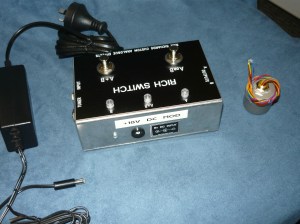
Originally the Rich Split and Rich Switch pedals were optimised for +9V DC operation, but now regulated power supplies of alternative voltages are commonly available. From June 2011, both pedals are shipped optimised for operation from a +18V DC regulated power supply (which we can supply you at cost). This provides greater headroom for the professional user. All pedals are still shipped loaded with a fresh 9V battery, for immediate use. All pedals are play-tested and functionality-tested by the builder before shipping.

So, therefore, Bob has sent his 3-way (with 2 x transformers) splitter back for the +18V DC mod and a power supply. I believe Bob has been using the splitter to facilitate live recordings of gigs of the Melbourne-based band (with singer Mick Pealing) – Raw Brit.

Well – here is the product description of the 3-way splitter shown in the photos. The Rich Split pedal is a 1-in/3-out active, buffered splitter, featuring a high input impedance and a low output impedance, which allows you to split your guitar signal, and run long cables, without sonic degradation ! The intention of this pedal is to facilitate the trend among guitarists to record and/or perform live with multiple amplifiers and/or effects chains – without impedance loading, ie sonic degradation – and resolve the problem of earth (ground) loops safely and professionally by incorporating broadcast/studio quality line transformers on outputs #2 and #3.

The Rich Split runs dead quiet and features low-current-draw circuitry with individual buffers for each of the 3 outputs. The non-signal-inverting design ensures against phase problems. Therefore, all signals routed to your chosen destination (amps, pedals, FX processors, recording desk, etc) will be perfectly in-phase, and when combined will not result in a ‘smaller’ out-of-phase sound. The pedal can be powered from either the internal 9V battery or via the external +18V DC adapter jack. For recording purposes, obviously battery operation will achieve 100% hum-free operation, but at the expense of headroom.

The transformer-isolated outputs #2 and #3 make it possible to use two or three amps simultaneously, without having to lift the earth (ground) on any of the amps. This potentially lethal ‘earth-lifting’ was the usual solution (in the bad old days) for eliminating hum introduced by earth (ground) loops when connecting two or three amps in parallel – definitely NOT recommended, plus its illegal. With the isolation provided by outputs #2 and #3, all earth (ground) loop problems are eliminated.

Thank you, Bob, for providing us with the subject for the 2nd of this week’s blogs. In another blog to follow, we might consider some of the issues that arise when hooking up multiple amps.

www.ivanrichards.com

www.bobspencer.com.au

www.greatergroovemusic.com.au

www.myspace.com/bobspencermusic

Head Gap Studio add the Rich Switch (Active) A/B/Y pedal to their equipment inventory.

July 16, 2011

Head Gap is a purpose-built recording studio located in Preston (Melbourne), Victoria. Head Gap was designed by renowned Australian acoustician, the late Richard Priddle. The principal producers/engineers are owners Neil Thomason and Brent Punshon.

We were recently contacted by Neil Thomason regarding one of our problem solving product offerings, the Rich Switch (Active) A/B/Y pedal.

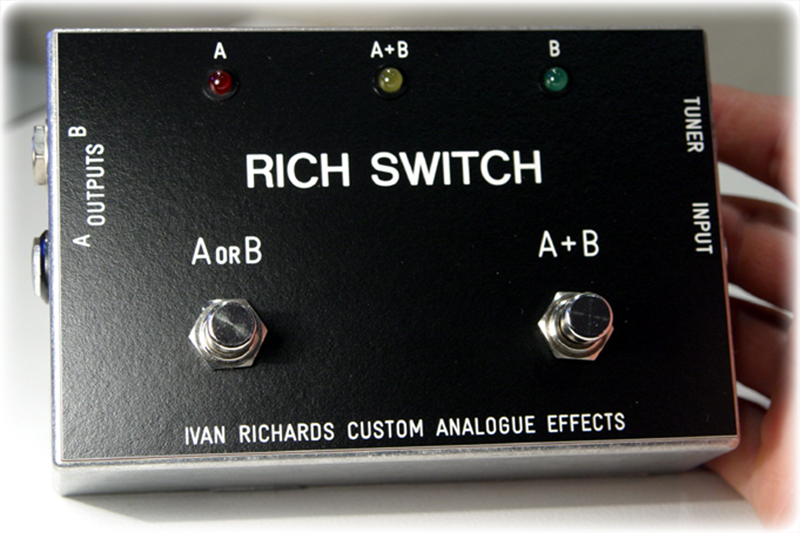
Far from being just another passive A/B box, the Rich Switch pedal utilises low-noise active (buffer) circuitry and a Harbuch broadcast/studio quality line transformer. The size of this transformer can be judged from the photos – it is definitely not a cheapo component sourced from the far east, but manufactured over a period of many years here in Sydney, Australia, by the fine Harbuch transformer company.
The pedal offers a pair of low impedance outputs to drive long guitar cables without degrading your tone. A pair of 3PDT metal footswitches changes the mode of operation between ‘A or B’ and ‘A + B’. Status is indicated by a blue LED for channel A, a green LED for channel B, and a red LED for A + B. The non-signal-inverting design ensures against phase problems. The Tuner jack provides a direct output enabling permanent connection of a tuner, regardless of whether ouput A or B is selected.

The transformer isolated channel A makes it possible to perform and/or record through two amplifiers simultaneously, without having to lift the earth on either amp. This potentially lethal ‘earth-lifting’ was the usual solution (back in the bad old days !) for eliminating the hum introduced by earth (ground) loops that occur when connecting two amplifiers in parallel (definitely not recommended, in fact it’s illegal !). With the isolation provided by output A, all earth (ground) loop problems are eliminated. Obviously, the transformer-coupled output A can also be used as a DI for recording.

**From June 2011, this pedal is shipped optimised for operation from a +18V DC regulated power supply, which can be supplied by us at our cost price. This provides greater headroom for professional situations. All pedals are still shipped loaded with a fresh 9V battery, for immediate use. All pedals are play-tested/functionality-tested by the builder before shipping.

Here is some feedback we received from Neil Thomason after delivery of the Rich Switch to Head Gap recording studio……..

Hi Ivan – package received at this end, great packaging and presentation, appreciate the supplied documentation. The unit is bigger and heavier than your website picture implies, it really feels great, and seems built to last. Look forward to giving it a run over the weekend. Thanks so much for putting it together for me in the time frame I requested, your service and communication has been excellent and it’s really appreciated. All the best, Neil.

and…….. Thanks again for the Rich Switch, it went straight into sessions over the weekend, and also this week, and has delivered on all accounts. Cheers, Neil.

www.ivanrichards.com

www.headgap.com.au

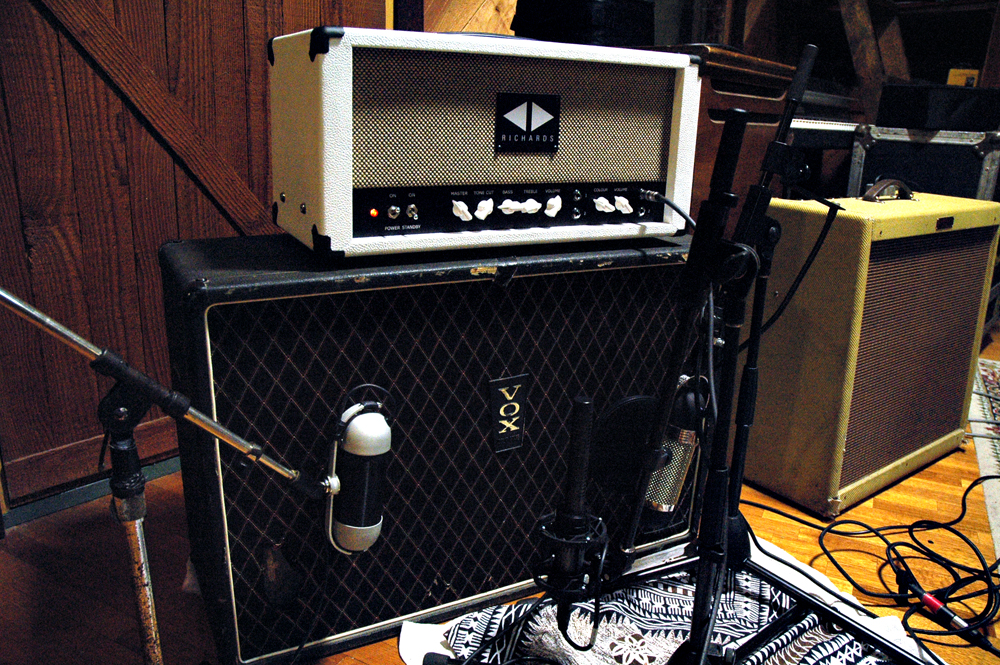
A Richards ‘Expressionist’ amp with very expensive mics in the studio.

July 10, 2011

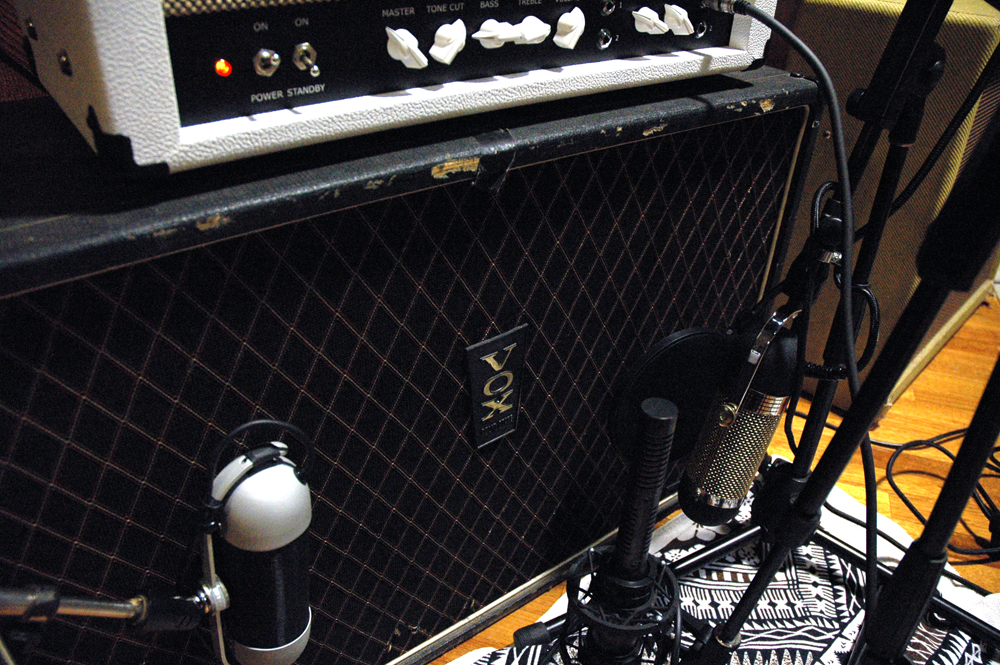
Here we have some photo’s of the 15-watt Studio Expressionist model amplifier (head), one of the range of hand-wired, all-valve (tube), custom musical-instrument amplifiers from the Richards Amplifier Company – Australia. The photo’s were taken by Adam Gresty, during the recording in Adelaide, South Australia, of the debut album by Slow Chase.

Slow Chase are a rock-band from Melbourne, Australia, featuring drummer Emily Shaw and singer/guitarist Adam Gresty. The band’s sound has been described as T-Rex meets The Pixies, but has also drawn comparisons to modern British rock-band Kasabian, and West Coast hard rock bands like Spinnerette, Sweethead and Eagles of Death Metal.

Recorded with ARIA award winning producer Jonathan Burnside (The Living End, The Sleepy Jackson, Fu Manchu, The Melvins, Grinspoon and more), Slow Chase are due to release their debut The Blind Spot EP during 2011.

This is what Adam had to say:

Ivan, I’ve just got back from recording my band’s debut album in Adelaide. I’ve attached some photo’s I thought you would like to see. Unfortunately I wasn’t able to take the Richards 1×12 Tone Cabinet with me, but the Studio Expressionist head did make the journey and I’m very pleased to tell you it was an absolute bloody triumph. The photo’s show the amp with, oh, y’know about $15k-$20k worth of microphones on it.

*Mic details:  AEA A840 large diaphragm powered ribbon mic, plus AEA R92 large ribbon studio mic, plus Royer SF24 phantom-powered stereo ribbon mic, plus a vintage Neumann U67 for room ambience !

The story continues:

My producer Jonathan (I think I told you he’s an American guy, worked with Nirvana, Faith No More, etc, but has also produced a lot of successful Aussie bands, and received the Aria awards for The Sleepy Jackson, plus Dallas Crane, Eskimo Joe, The Grates, The Living End, Dan Sultan, Whitley and loads more), well, Jonathan was completely enamoured with it. Couldn’t get over how easy it was to dial in a killer tone and the flexibility the different voiced channels plus the switchable output valves (tubes) in the power section offered. From vintage to modern. We even used it for doubling up DI’d bass parts. It was the only amp we used on the album. So thrilled I managed to get it to the studio and it’s now the heart and soul of the first Slow Chase album ! Jonathan christened the amp Jagger, which I thought was hilarious, ref Jagger/Richards. Can’t wait for you to hear the album, although it will be well into 2011 before it’s been mixed down and mastered.

Well – many thanks to Adam for that great story which now features as this week’s Blog. I’m sure that list of mic’s will make many a home-studio owner envious. In a forthcoming Blog, we will feature a testimonial from producer Jonathan Burnside, so watch out for that. Until next week, thanks for checking out the Blog and please feel free to contact me by email re any enquiries.

http://www.ivanrichards.com

http://www.slowchase.com

http://jonathanburnside.com

A tale of two “Champs”.

July 2, 2011

A pair of Fender “Champs” arrived at the workshop this week for servicing. Actually, one of them is a Silverface Bronco amp, which to all intents and purposes is a Fender Vibro-Champ. The other is a current manufacture (ie, China) Champion 600 amp. Both amps have very similar electronic design excepting that the Vibro-Champ has valve (tube) driven Tremolo, and a valve (tube) rectifier, whereas the Champion 600 has solid-state rectification, printed-circuit board construction and a preset tone-stack so there is only a volume control presented on the front panel. The Bronco has a much larger cabinet, which helps enormously to develop a bigger sound.

The Bronco needed a fairly comprehensive service. This not only included replacement of all valves (tubes), but also damaged pots (potentiometers), ageing electrolytic capacitors, and a 9-pin valve socket which was no longer providing reliable connection. Our usual electrical safety standards inspection and testing revealed that the 240V 3-pin plug was due for replacement, too.

The Chamion 600 was powering up but nil output, ie the lights are on but nobody’s home, as they say. The cathode-bias resistor for the 6V6 valve (tube) in this amp is a little under-rated for the job, especially if the 6V6 suffers a catastrophic failure, so I replaced it with a ceramic-body 7 watt resistor intended for the most demanding environments. I use these resistors where appropriate in my own Richards custom amps. The 2 x boards checked out OK, as did the jacks, interconnects, and so on, but the 2 x valves (tubes) were cheapo examples of Chinese origin, and the volume control was very scratchy indeed, so these items were replaced.

Both these amps have small, very cheapo speakers, so naturally the amps sound much bigger and better through a decent quality external speaker. However, many people love how compact and lightweight these amps are, and of course 1000’s of recordings over the decades have been done with the Champ amp. So in the final shoot-out, how did these amps compare ? The basic tonality is very similar. They common circuit design is quite low gain, so you have to turn up the volume control most of the way to get much of a vibe happening. The Bronco/Vibro-Champ has a bigger sound with greater prescence and throw, and the advantage of 2-band EQ, but most of all it has a great valve-generated tremolo which is superior to any stompbox tremolo that I have heard so far. The tremolo is of the direct-modulation configuration, which varies the bias and gain of the 2nd stage of the preamp 12AX7 valve (tube). For tremolo lovers, it doesn’t get much better than this.

For all owners of small valve (tube) amps such as those described above, I offer world-class professional amp repairs from my workshop located in Wyoming (Central Coast) NSW. We have couriers delivering and picking up to this site every working day, so please consider the level of service and value add that we can supply. That’s all for today’s BLOG, please check in every week or so for more news and info. regards – Ivan.