Archive for the ‘Amp Repair’ Category

More about Rivera amps: the ‘Ninja Boost’ MOD

December 16, 2011

Those of you who are regular readers of our blogs will know that we have visited the subject of providing quality service to Rivera amplifiers (USA) in a couple of previous blogs. This time, we are not discussing a fault as such, but addressing a design limitation with a (relatively) simple MOD.

As we have discussed previously, the classic Rivera amp models have two discrete preamp channels, one with ‘British’ voicing, and one with ‘California’ voicing, plus master reverb, FX loop and prescence controls. Both channels have gain boosts, activated from ‘pull-on’ functions on the front panel controls. On the USA (green LED) channel this is known as ‘Ninja Boost’.

The Ninja Boost feature when activated provides a substantial gain boost. In a live performance situation, activated from the footswitch unit, this gain boost is actually unmanageable, which is the whole point of this blog. We were recently approached by a local Central Coast (NSW) rock guitarist, Mr Greg Taylor, to provide a MOD so that the level of boost can be preset to a more appropriate level from a suitably located additional control.

The gain boost in the USA channel takes place between the 2nd & 3rd gain stages, where an interstage attenuator is partially bypassed by a fixed resistor when the boost is activated. Each gain stage uses one half of a 12AX7 twin-triode valve (tube). This attenuator and associated switching circuitry is located on the main board.

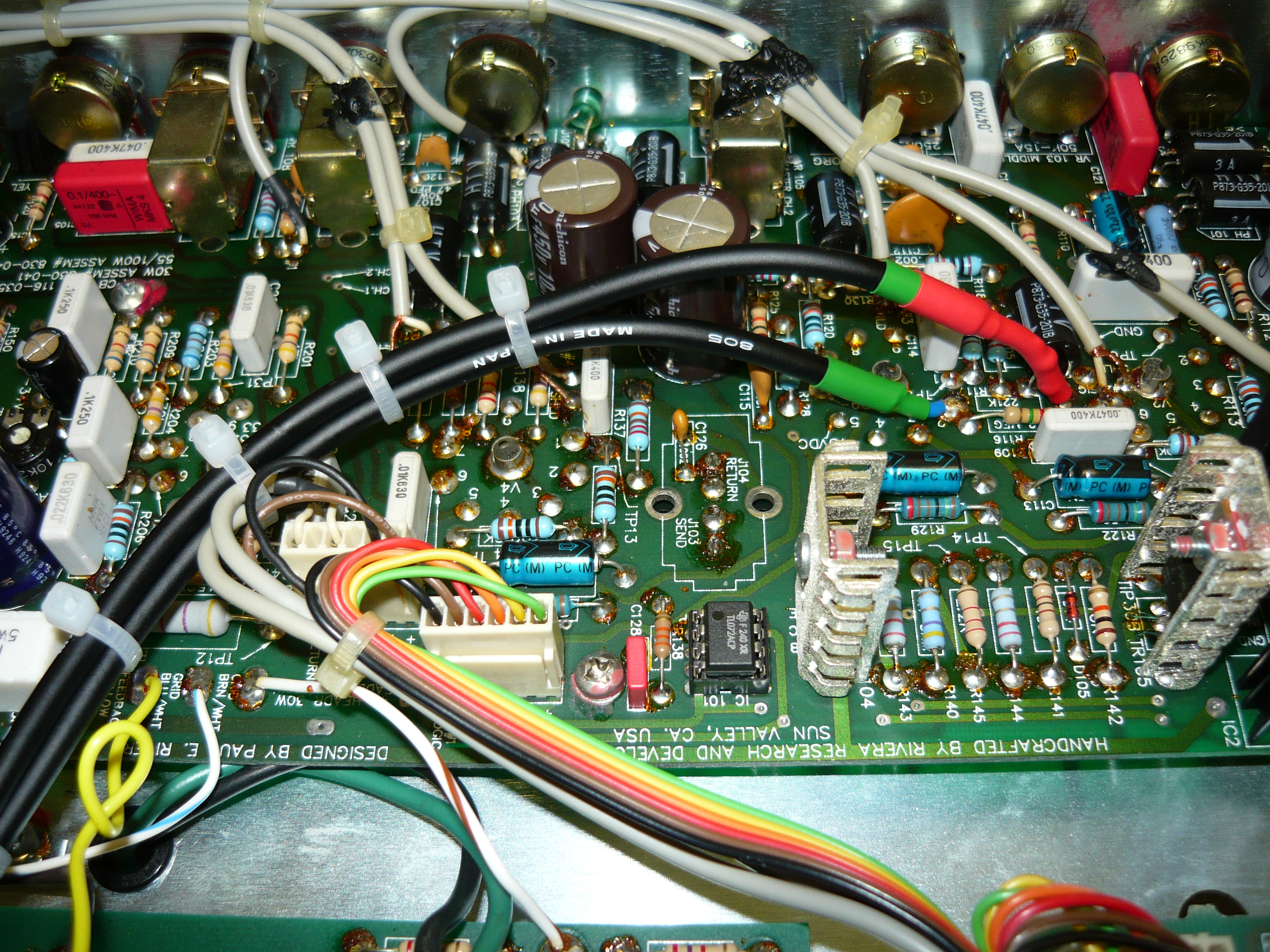
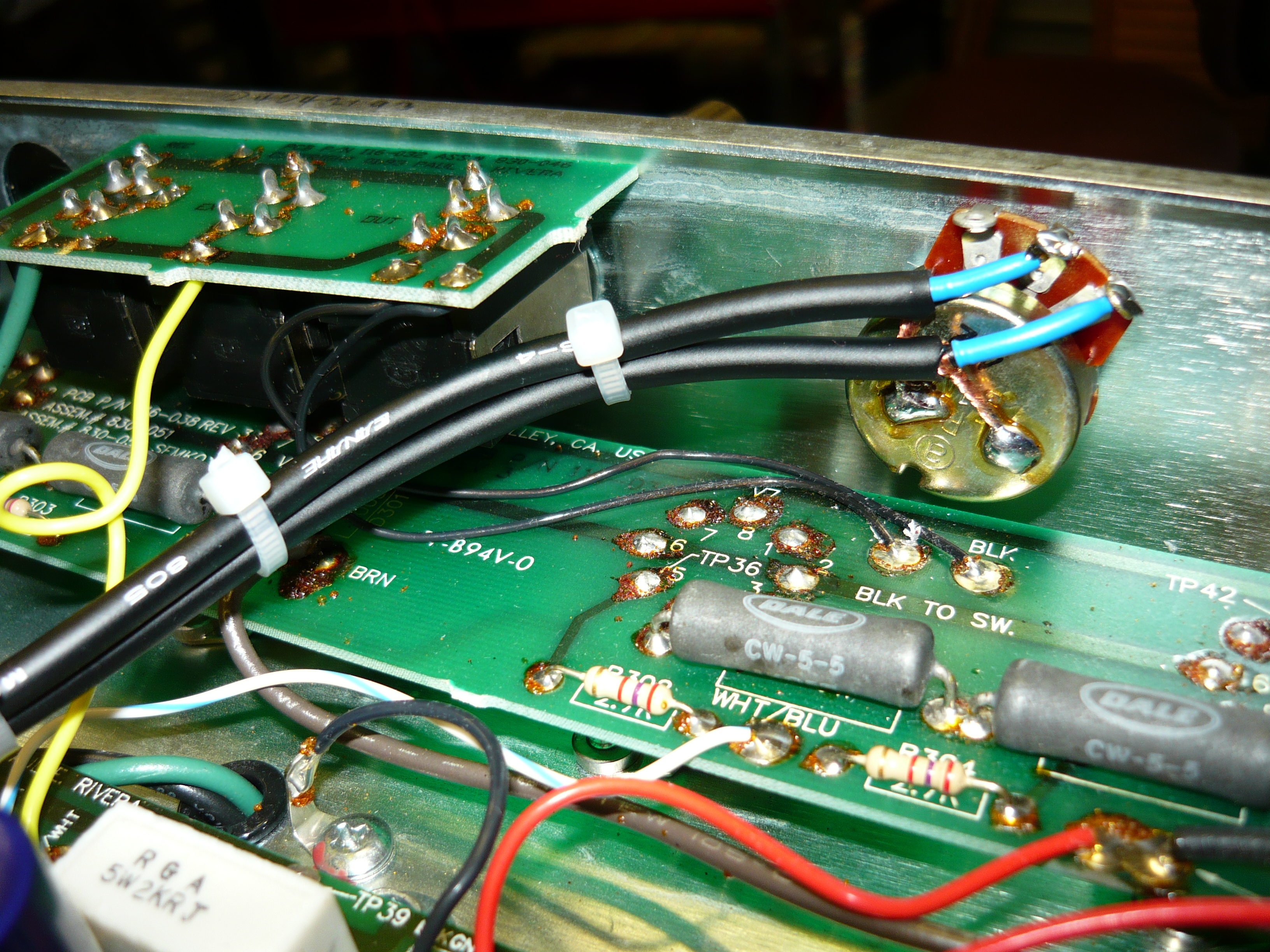
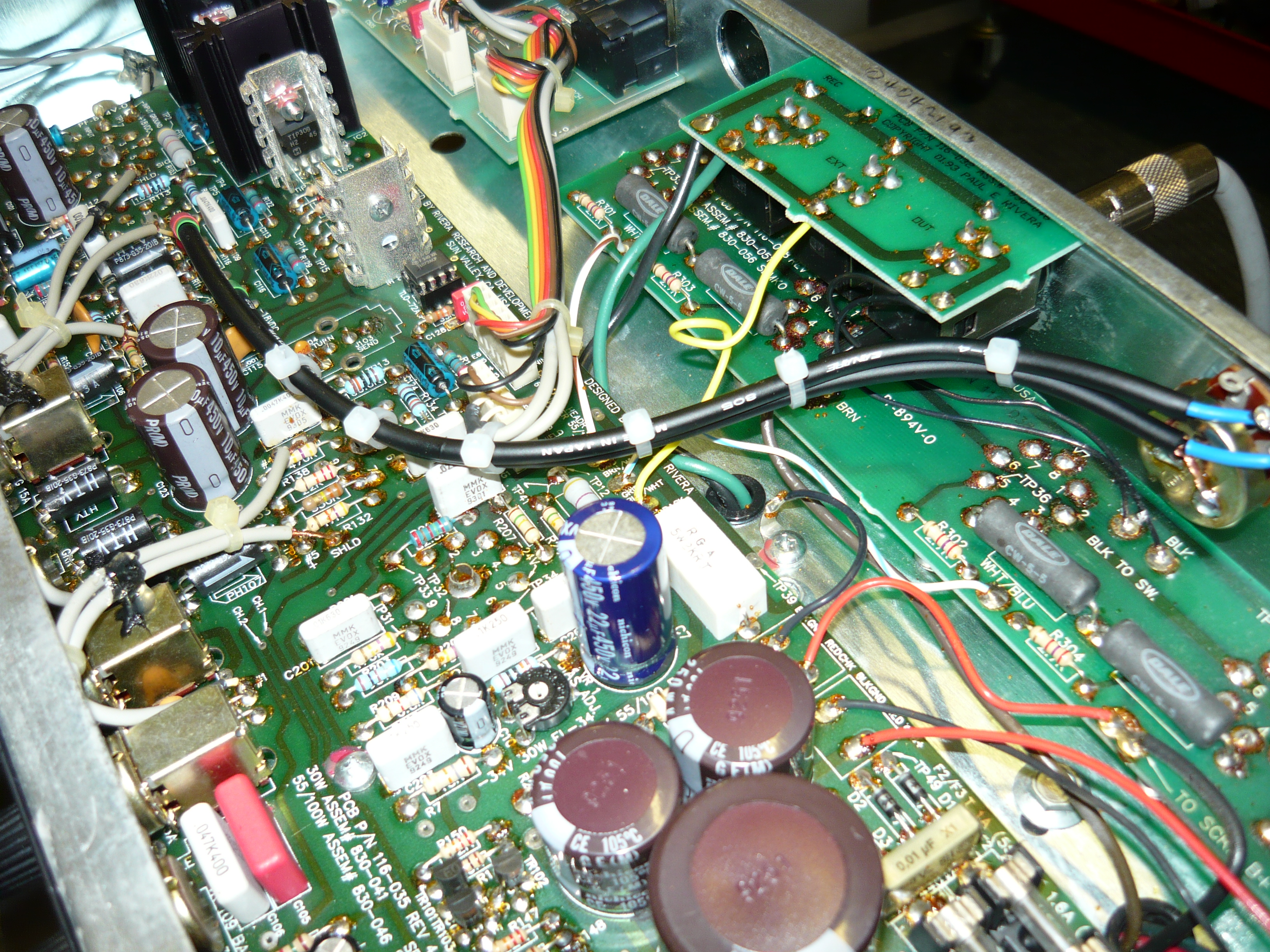
Inspection of the chassis and board revealed that we could snip one end of the abovementioned fixed resistor, close to the input grid of the 12AX7 gain stage. Having done this, we could run a pair of shielded cables to a pot located in a spare position on the rear panel. The pot is wired up as a variable resistance in series with the existing fixed resistor, meaning that only 2 of the 3 lugs are connected. Thus we control the amount of boost by varying the insertion loss of the attenuator circuit. Because this is a series attenautor, as opposed to a volume control, a pot with a linear or reverse-logarithmic taper is more suitable than a logarithmic taper, giving a smoother sweep.

We use a high quality shielded cable (eg, Canare), rather than ordinary hook-up wire, so as not to introduce any additional hum & noise when the boost is activated. The shields of both cables are earthed (grounded) at one end only, in this case to the body of the pot, to avoid creating an earth-loop (ground-loop). Heatshrink is used at both ends to prevent accidental short circuits, and also to create a stable connection to the resistor that we snipped at one end – the other end of this resistor is still connected to the board. The whole job is neatly routed into the existing wiring and held in place with nylon cable ties. Although we have performed an intrusive modification, the amp has not been degraded in any way, from the perspective of reliability or additional noise.

So how did the MOD perform in the final play test ?? The amount of boost is now variable from a just perceptable boost at minimum (anti-clockwise) setting, to the original level of Ninja Boost at the maximum (fully clockwise) setting, all in a smooth, linear sweep preset from the rear panel. Thanks to Greg Taylor for his continued custom and for the many challenges he has provided us over the years ! Coming soon we have a blog about the legendary Wasp amplifiers, modding current Fender amps for blues-harp players, and mods to the Fender Blues Junior amps.

Rivera Bonehead amp powers up but nil output !

November 4, 2011

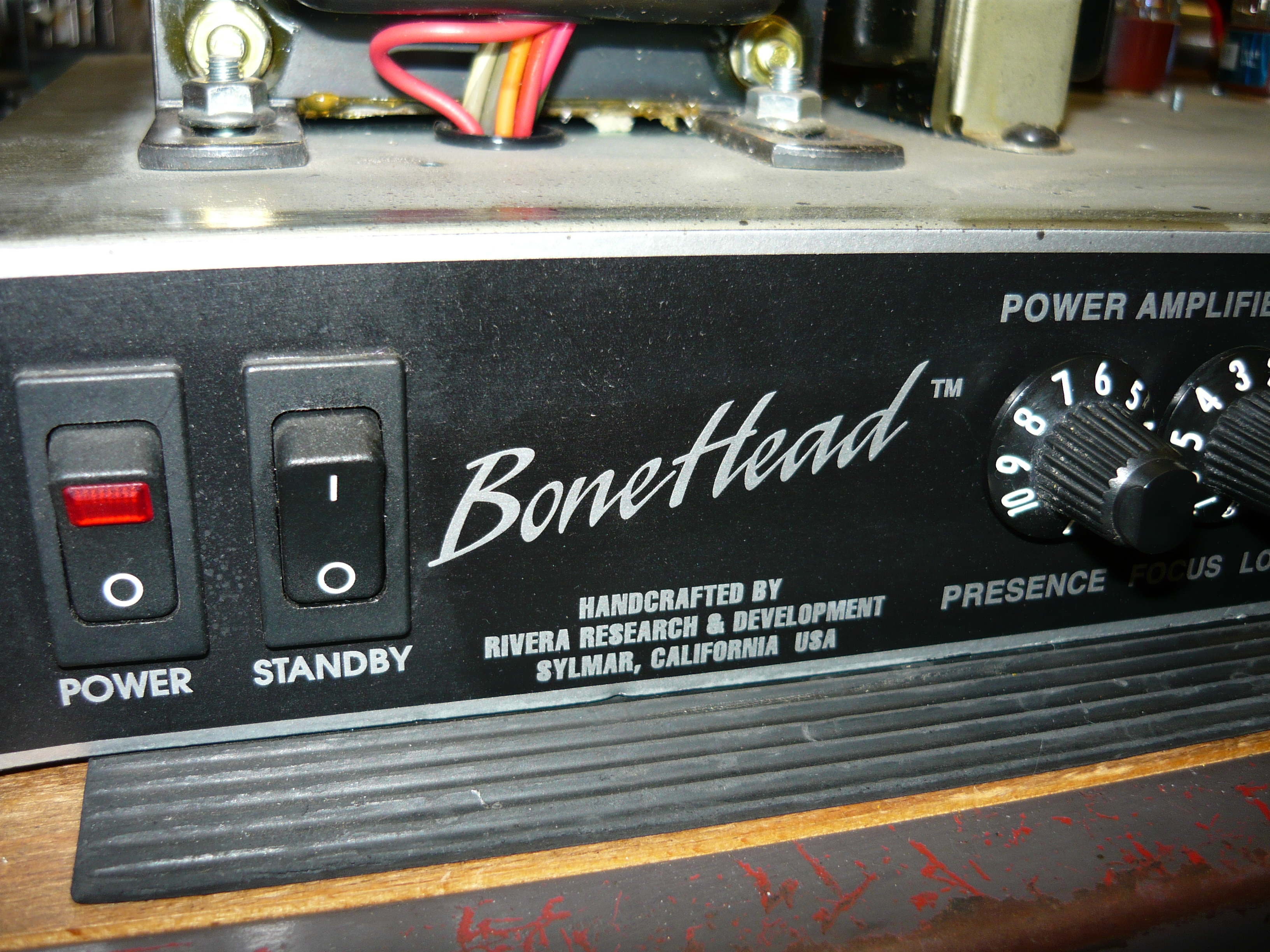
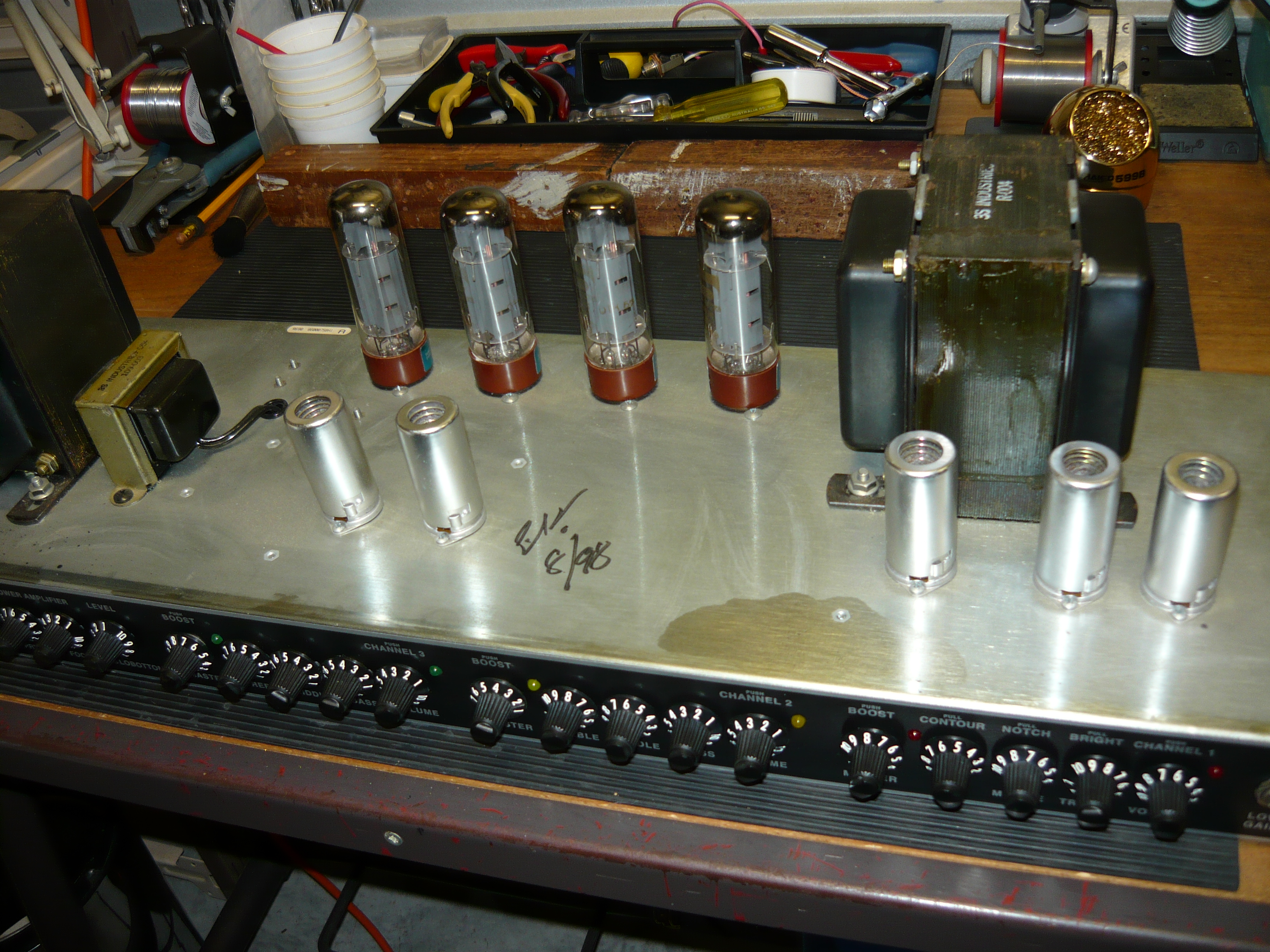
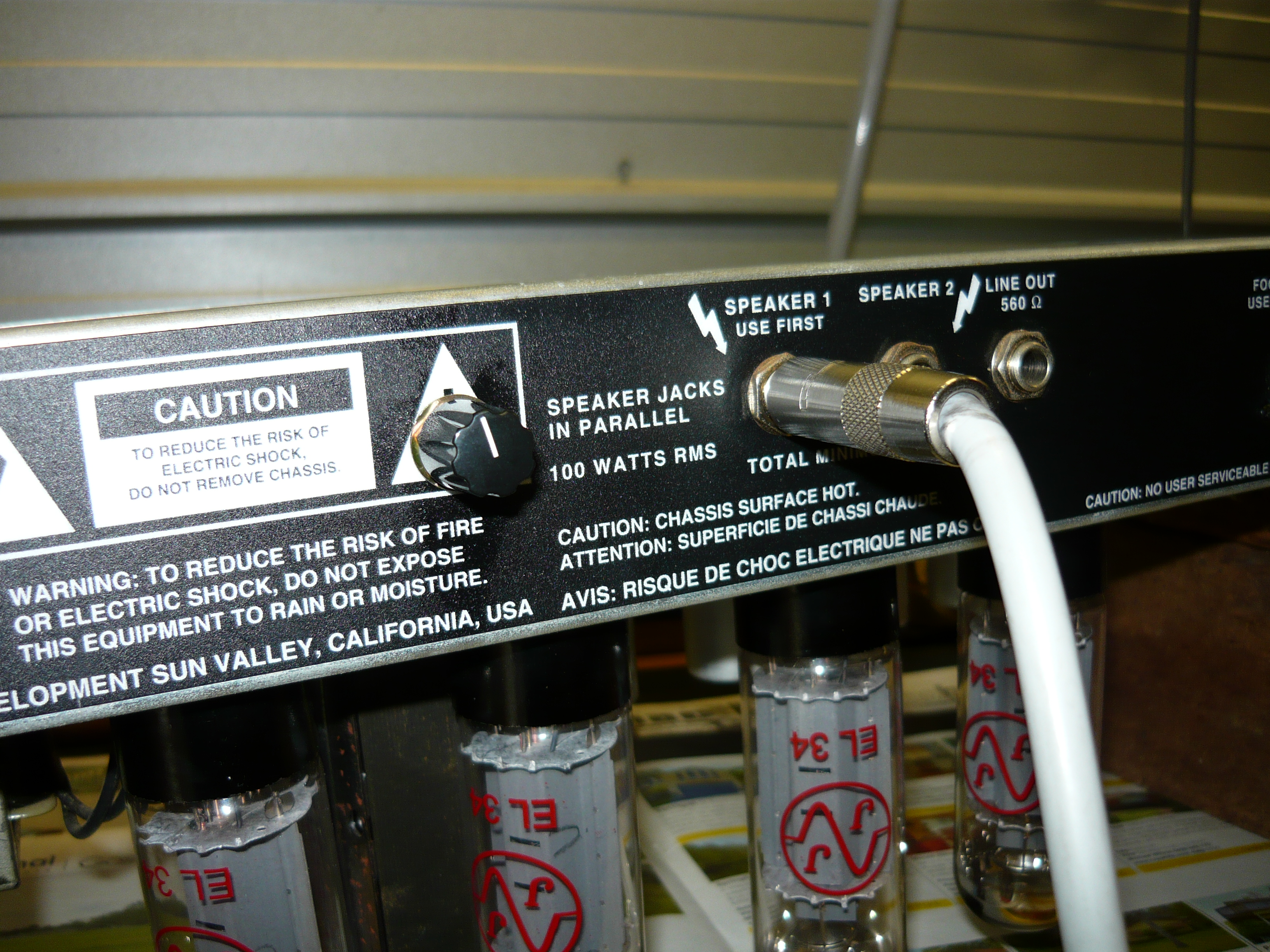
Hello guitar amplifier enthusiasts ! This week’s blog could easily be given an alternative title the lights are on but nobody’s home, as those were the classic symptoms we were confronted with when powering up the Bonehead for the first time. This is a relatively complex repair example to describe and photograph for a blog, which is why it’s taken us over two weeks to get it together.
The Paul Rivera Bonehead amp is a huge, rather heavy, 100 watt 4xEL34 valve (tube) head with three discrete pre-amp channels, and incorporating the Los Lobottom woofer output to drive a separate low-frequency amp/speaker system. The Bonehead can be (and normally would be in this case) operated without the Los Lobottom feature connected to anything. The design concept is attributed to guitarist Steve Lukather, formerly of the U.S. band Toto.
This Bonehead was shipped up to us some time back by Bondi Intermusic (Sydney), on behalf of one of their customers. At first appraisal, we had no idea what was going on – the amp powered up OK, and all the circuit conditions looked normal, power supply voltage readings were in the ball-park of what you’d expect in such an amp, both high-voltage and low-voltage supplies, and yet there was zero output from any of the three channels, and none of the front-panel status LED’s were active.
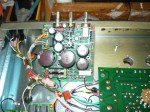
Discussion of the amp’s history with the customer, Paul, revealed that this same fault had occured a number of times in the past, with the fault condition returning almost immediately after the customer received the amp back from repairs (previous repair attempts undertaken by a Sydney based tech not personally known to me). This is a pretty rare amp in Australia and the first time we have ever seen an example of this model, so the first thing was to try to track down some official service info/schematics from Rivera USA, via their Australian distributor. This took quite a while and finally we received a faxed copy of the schematic, which was a little lacking in resolution compared to a soft copy, however much better than nothing at all !
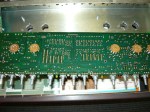
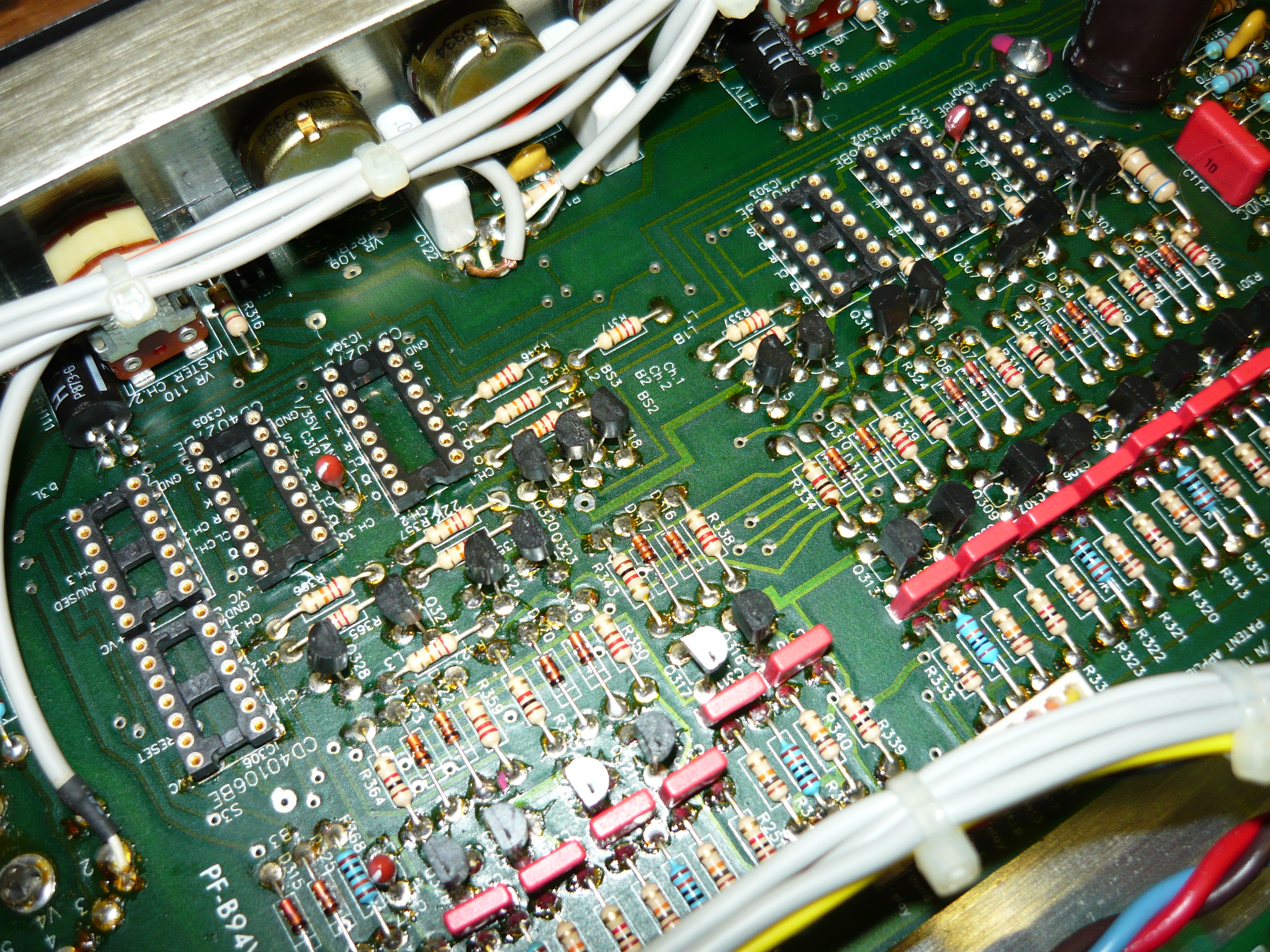
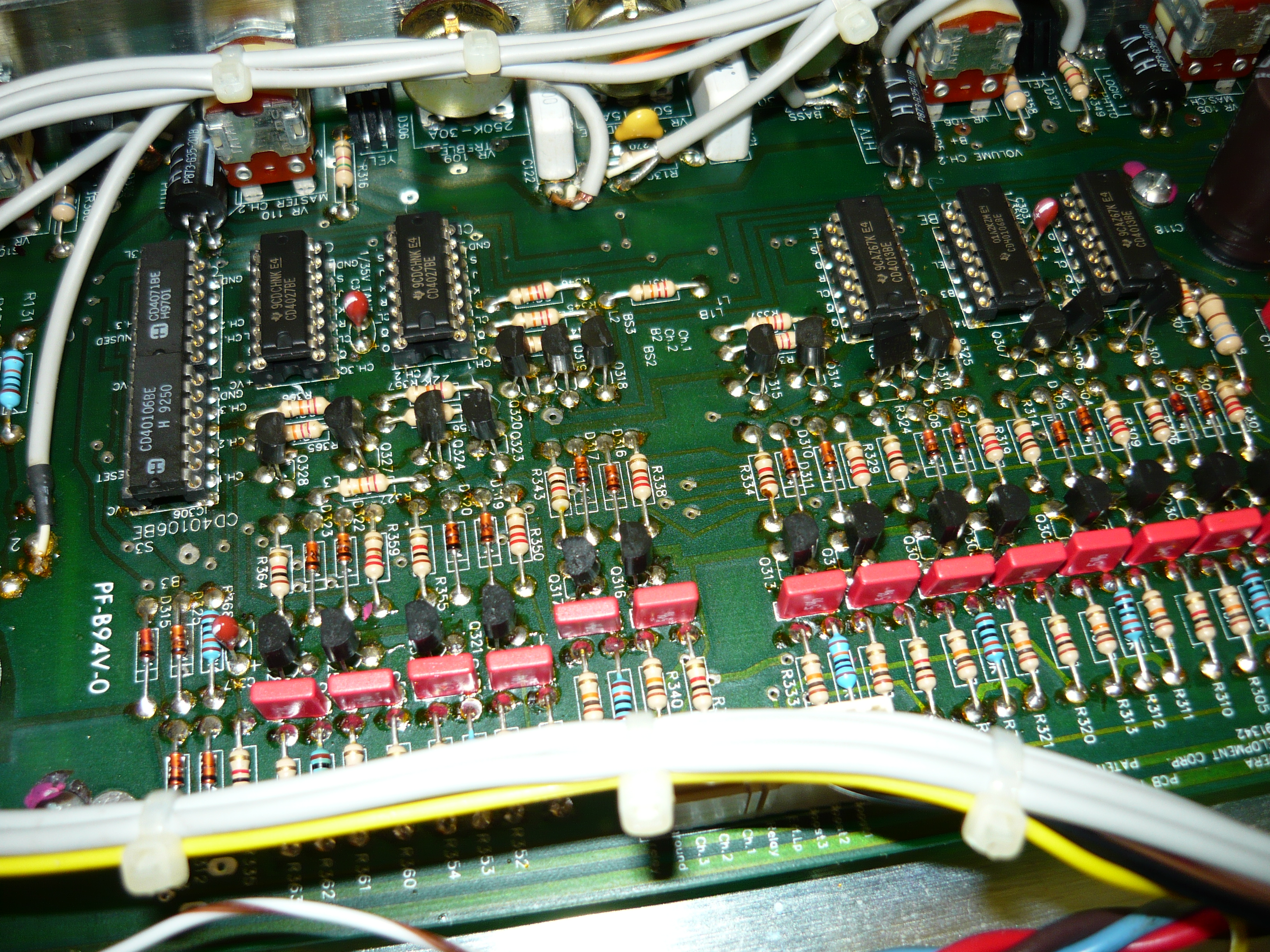
All the switching in the Bonehead, including for LED status indication, originates in a complex circuit of seven CMOS logic IC’s, mounted in 14-pin and 16-pin IC sockets. There is other discrete circuitry as well, to drive the LED’s and the opto-couplers. It would be very difficult to service this amp without a schematic diagram. Thankfully, Rivera chose to install the IC’s in sockets. BUT, the quality of the sockets they used was NOT professional user standard. I remember from my earlier career in the Telecommunications industry, when Telecom circuits went from electro-mechanical to 1st generation digital/solid-state, we had endless faults caused by the fact that IC’s weren’t seated properly in cheapo sockets.
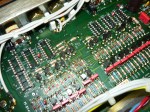
It was now obvious that the fault causing nil output was not in the valve (tube) cicuitry at all, but was the result of a non-functioning switching circuit. Due in part to my history of bad experiences with cheapo IC sockets, and also due in part to the complete lack of voltage and logic test points on the schematic diagram, it also was now obvious that I should replace all seven IC’s and most importantly, the IC sockets, using only industrial quality machined pins sockets. Interestingly, the previous service “tech” had chosen to carry out a quick fix, basically just trying to hold the IC’s in their sockets with some kind of goop, rather than actually cure the problem once and for all.
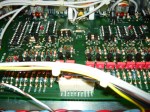
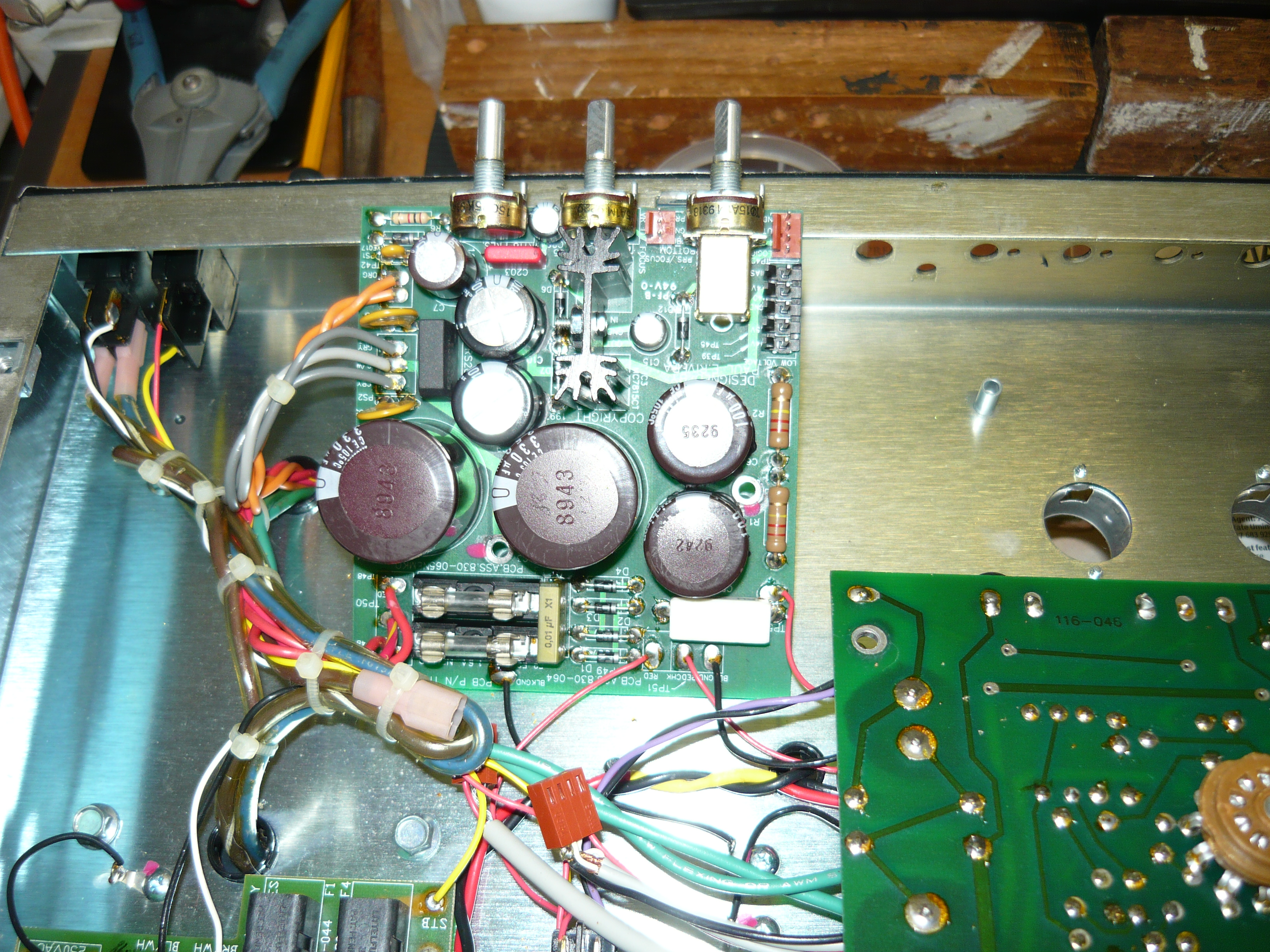
The main board now had to be stripped out of the amp chassis, which involved removing all control knobs and pot nuts, etc, as all pots are p.c.b. mounted in Rivera amps. The IC’s were removed then the old IC sockets were removed from the board – this required desoldering  the socket pins on a double-sided, plated through hole board. Rather laborious and tedious and a task requiring a great deal of care so as not to damage any of the pads and through plating, otherwise we would be up shit-creek, basically. Having cleaned up all excess solder the next task was to install these new, industrial quality 14-pin  and 16-pin sockets. Once again, applying enough heat to make sure the solder ran through to both sides of the board, but not so much heat that we damage the board.
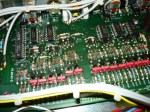
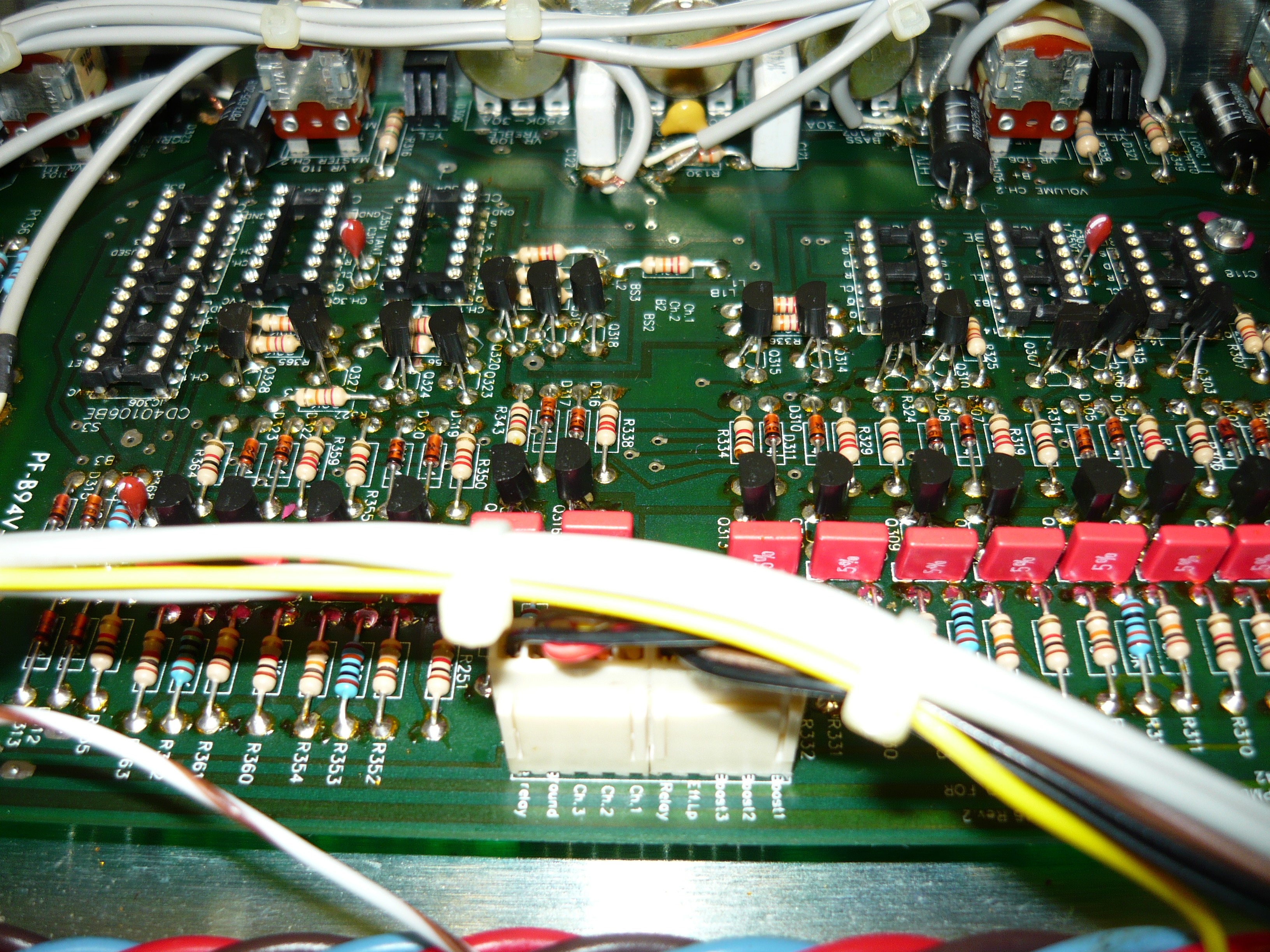
You can see in the previous three photos the underside of the board with the soldering of the IC sockets in the foreground, and two views of the component side of the board with the new sockets installed successfully. The next two photos show views of the board with IC’s installed in the new sockets, with the complete switching circuitry in the foreground.
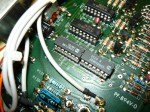
But now we hit a snag ! Look at the photo on the left. The IC’s designated IC306 and IC307 are positioned too close together on the board, which means that the two IC’s cannot be inserted fully into their respective sockets. HUH ?? No wonder the previous tech resorted to using goop to hold the whole thing together – trouble is, it only worked for about 5 minutes that way. I had to use secret Aussie male ex-Telecom Australia technical workforce service techniques to get both IC’s into their sockets. But seriously folks, this kind of design boo-boo should not be happening in this level of equipment.
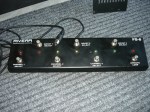
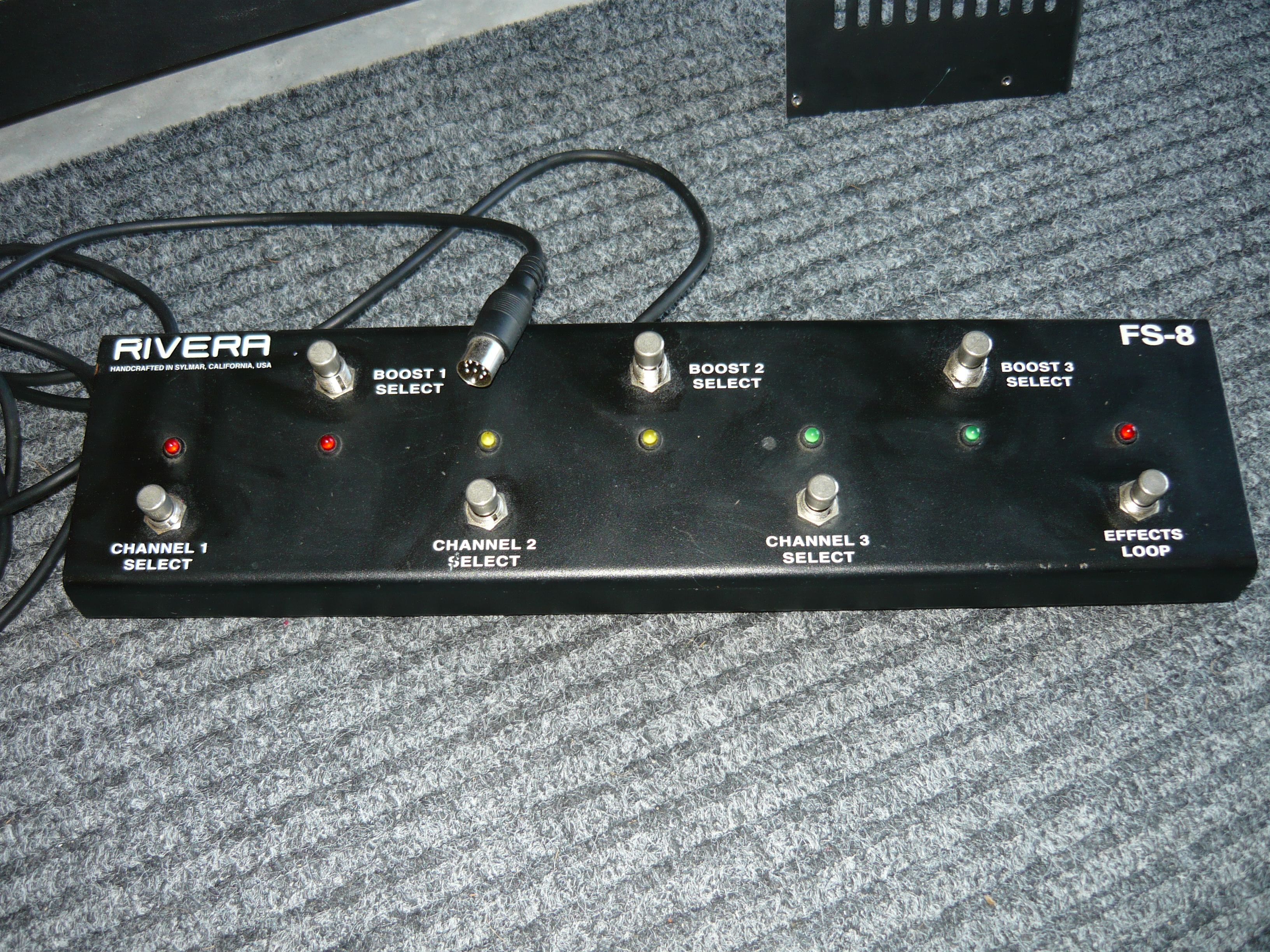
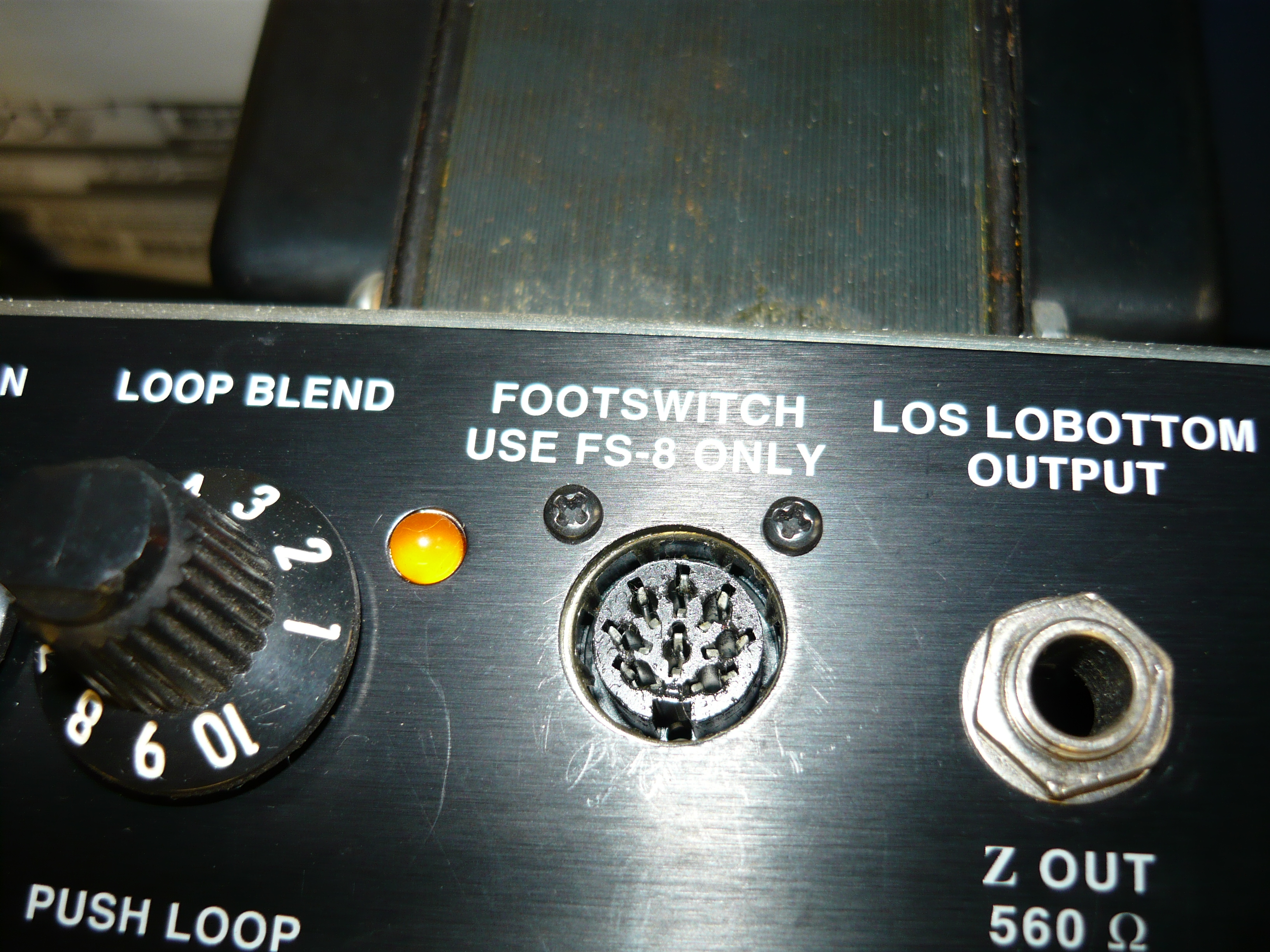
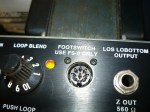
The repair job was finished with some routine tasks, including rebias of the EL34 output valves, and cleaning of jacks with DeOxit and pots with FaderLube. Power output test and electrical safety test were both fine. The Bonehead is probably the least successful amp from the Paul Rivera range, judging by Rivera user forums. How did it shape up in the final play test ? The three channels, clean, crunch and full-on distortion for want of a better description worked well, allowing fine control adjustments as each channel has its own independent level and EQ, as well as “Ninja” boost and other features. The robust FS8 footswitching unit works well – the use of CMOS logic IC’s to control the switching enables Rivera to use simple momentary footswitches to activate channels and FX Loop. The only criticism we have here is the continued use of DIN plugs and sockets, which on the road are a constant source of problems – they are just too flimsy, resulting in intermittent connections. This criticism applies to many commercial manufacturers, not just Rivera.
Rivera amps usually have a “Fender” voiced channel and a “Marshall” voiced channel. I usually much prefer the “Fender” voicing on these amps, and that applies to the Bonehead model as well. The “Marshall” channels are just not that convincing to my ears, but it’s very much a personal thing. Paul Rivera is well known as having redesigned some of the Fender amps in the early 1980’s and turned that company’s fortunes around in the amp business. The Super Champ is my favourite model from that era. Bondi Intermusic’s customer was most pleased to have his amp back again after so long, working properly at last !!

In coming weeks we will have another major 1970’s Musicman refurbishment, this time a 4×10 combo (rare around these parts), an overhaul of a very rare early 1970’s Marshall 1×12 tremolo combo, a transformer replacement in a mid-1960’s made in Sydney Galaxie, by Vadis, ie Soundcraft Industries, went out of business back in the early 1970’s. We also have more amps and cabs from the Richards Amplifier Company nearing completion. Don’t hesitate to email me re any of this stuff – regards, Ivan.
Approved service centre for Orange amplifiers

October 3, 2011

Hello everybody ! Welcome to this week’s blog. It’s been a busy October long weekend 2011, with gigs for the 5-piece band plus the duo, so this will be one of the less detailed blogs, but hopefully still of interest.

Actually, we have been repairing Orange Amplifiers for years, but not the warranty claims. Bondi Intermusic (Sydney) have sent us quite a few over the years for servicing. With the possible exception of the made-in-China Tiny Terror series, the Orange amps have been consistently well made and have presented very few servicing issues. The modern Orange amp has a particular sound, which is quite different to the original amps from the 60’s/70’s, which had a huge clean sound, and baxandall EQ, which is not everybody’s cup-of-tea. The recent amps have more conventional passive/interactive EQ and a contemporary “British” sound that is more appropriate for grungier styles ( to our ears anyway).

If you are the lucky owner of an original Orange or Matamp from the 60’s/70’s (and most definitely the current Matamps, which are an excellent boutique-grade amp from the UK), and you want your amp serviced/overhauled/restored by someone who knows what they’re doing and has a genuine passion for this kind of work, then please contact Ivan Richards Audio.

Orange amplifiers are distributed in Australia by the same people who distribute Gibson & Epiphone guitars. If you have a warranty service claim there is a procedure to be followed. First thing is to contact the dealer who sold you the product. They will book it in with the distributor. A repairer to resolve the warranty claim will be nominated by the distributor on the basis of both competency and geographical location.

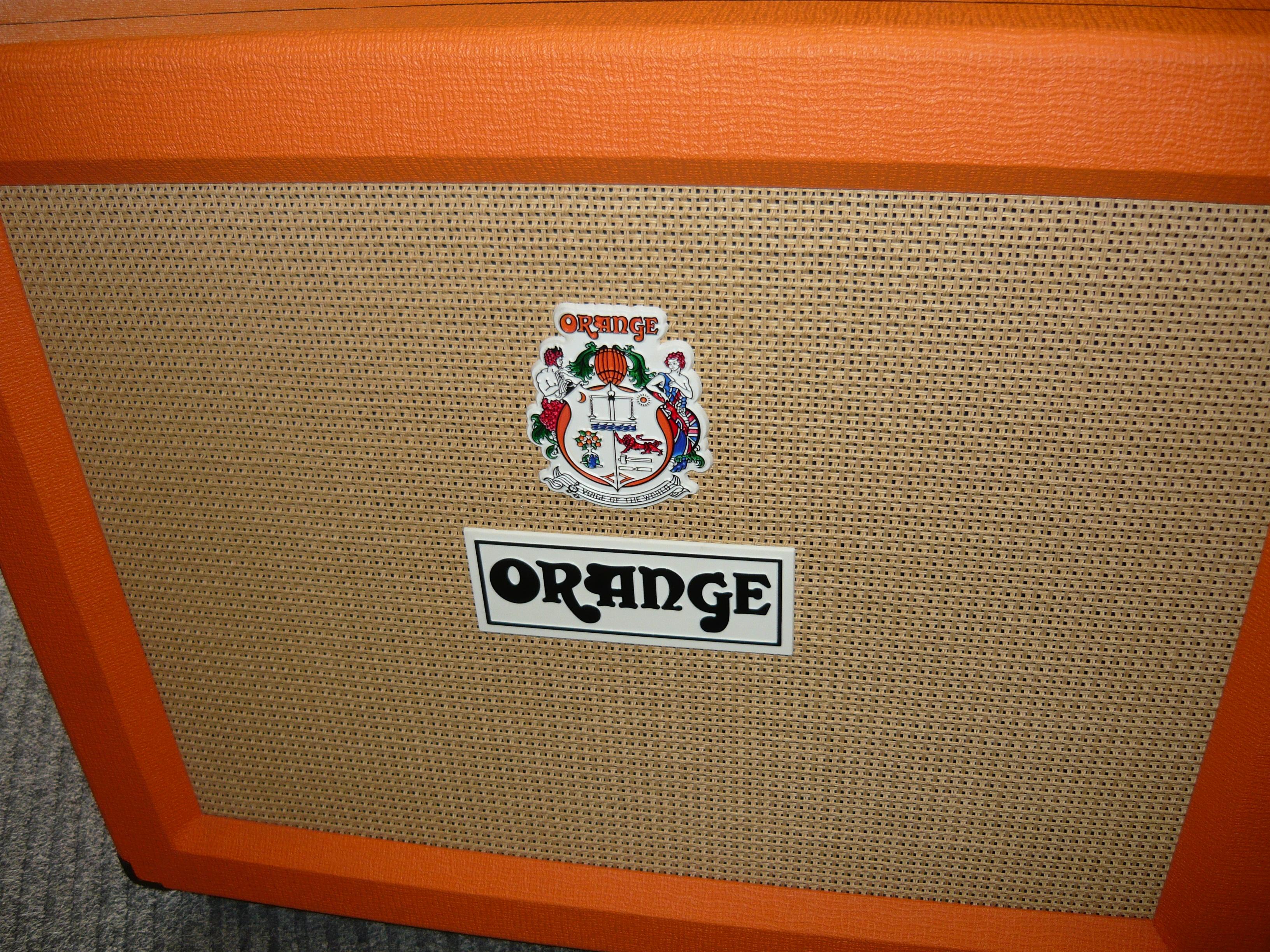
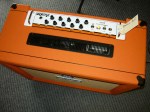
The AD30TC 2×12 combo amplifier in the photos belongs to a regular customer of ours, a working muso (with a day gig), based on the Central Coast of NSW. The almost brand new amp just “stopped”, and the warranty repair was referred to us via Turramurra Music (Sydney). The reason soon became clear after removing the chassis from the cab (not a quick job, by the way) – one of the internal fuses was “blown”. The fuse protecting the 6.3V AC heater supply to the valves (tubes), to be precise. However, in this case the blown fuse was not indicative of a bigger problem, it was just one of those things that happen, usually at the most inconvenient time. We replaced the fuse and subjected the chassis to a power output test, burn-in test, electrical safety test, and final play test/functionality test. All OK !

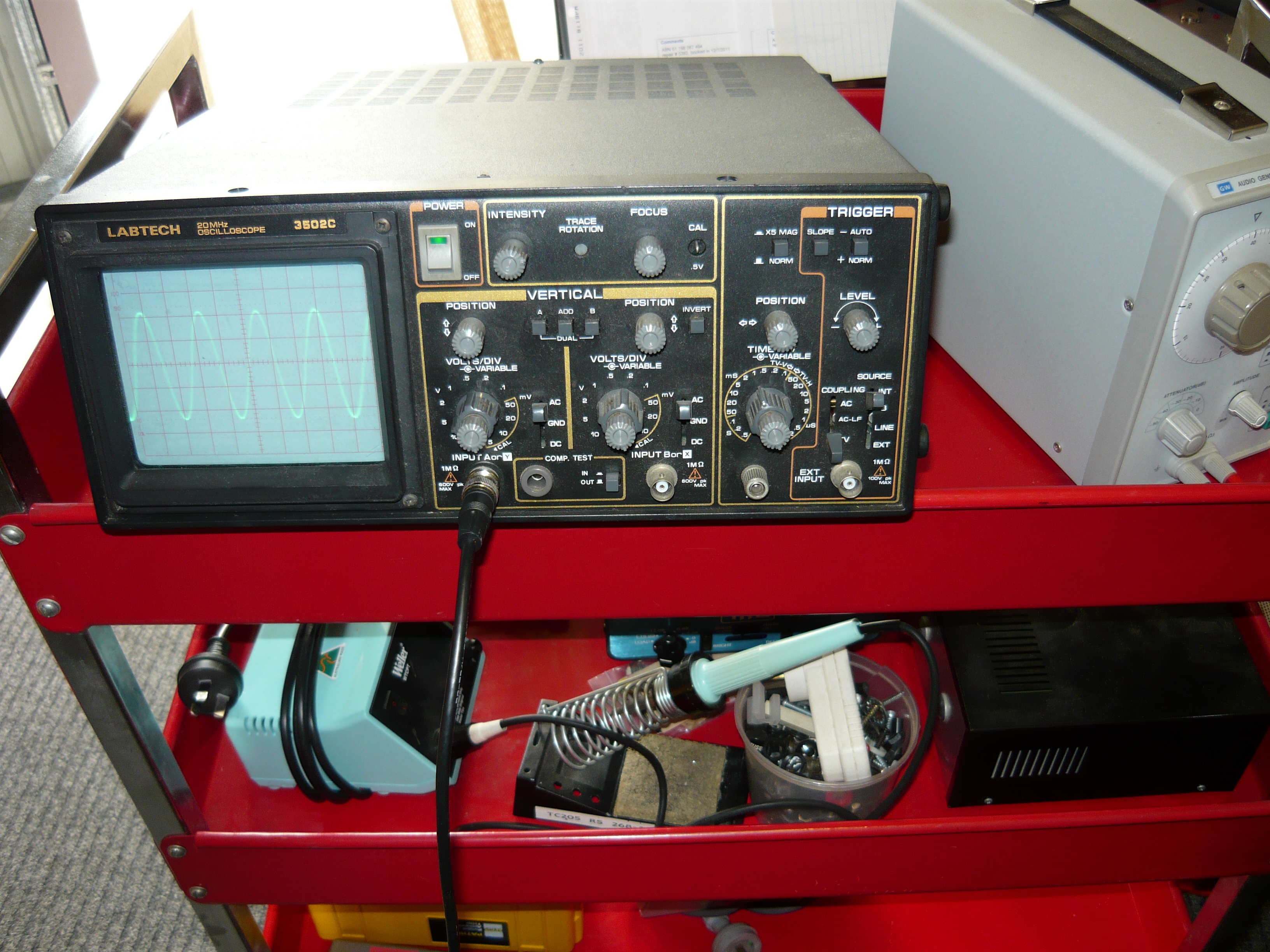
In the final photo, it may not be very clear from our crap photography in workshop lighting conditions – but we are observing a sine wave on the oscilloscope, as part of the power output test for this amp. This is one procedure for checking for abnormal amplifier behavior under load and also accurately measuring the audio power actually delivered to a nominated load, for example – 8 ohms.

By the way, just a suggestion – if you have a bad back – don’t invest in one of these 2×12 combo’s ! They are seriously heavy. More next week – Ivan R.

Major overhaul for a 1970’s MusicMan 130W amp

September 25, 2011

This week’s blog examines a major repair completed this week to a MusicMan 130W 2×12 combo, purchased brand new from Harry Landis Music in Sydney (Australia), and still owned by this customer. These 1970’s manufactured MusicMan amps were among the best of the American amps of that time, and were certainly built to last the distance. They were built to a very high standard by people who knew what they were doing. Probably the most popular and most collectable model was the 65W 2×10 combo.

The highly reliable and great sounding MusicMan chassis was let down to some extent by pretty average speakers, especially in the bass guitar models. You will often see that the original speakers have been replaced, sometimes quite early in the working life of the amp, or in the case of the amp heads you will almost always see them hooked up with a different brand of speaker cab. Not surprisingly, the MusicMan amps strongest appeal was their great “clean” tone, reminiscent of the very best of the Fender tones. When it comes to overdriven sounds………..forget it !  You will need your pedals for that.

What style of guitarists love their MusicMans ? Most probably those playing country rock, rockabilly, old-school rock and blues and any traditional roots music styles. The 130W model is clean enough for keyboards, too. This particular example was damaged some years back at the Goulburn (NSW) Blues Festival. It was quickly patched up to get through the gig, but this amp as is would never pass an electrical safety inspection that meets Workcover NSW compliance.

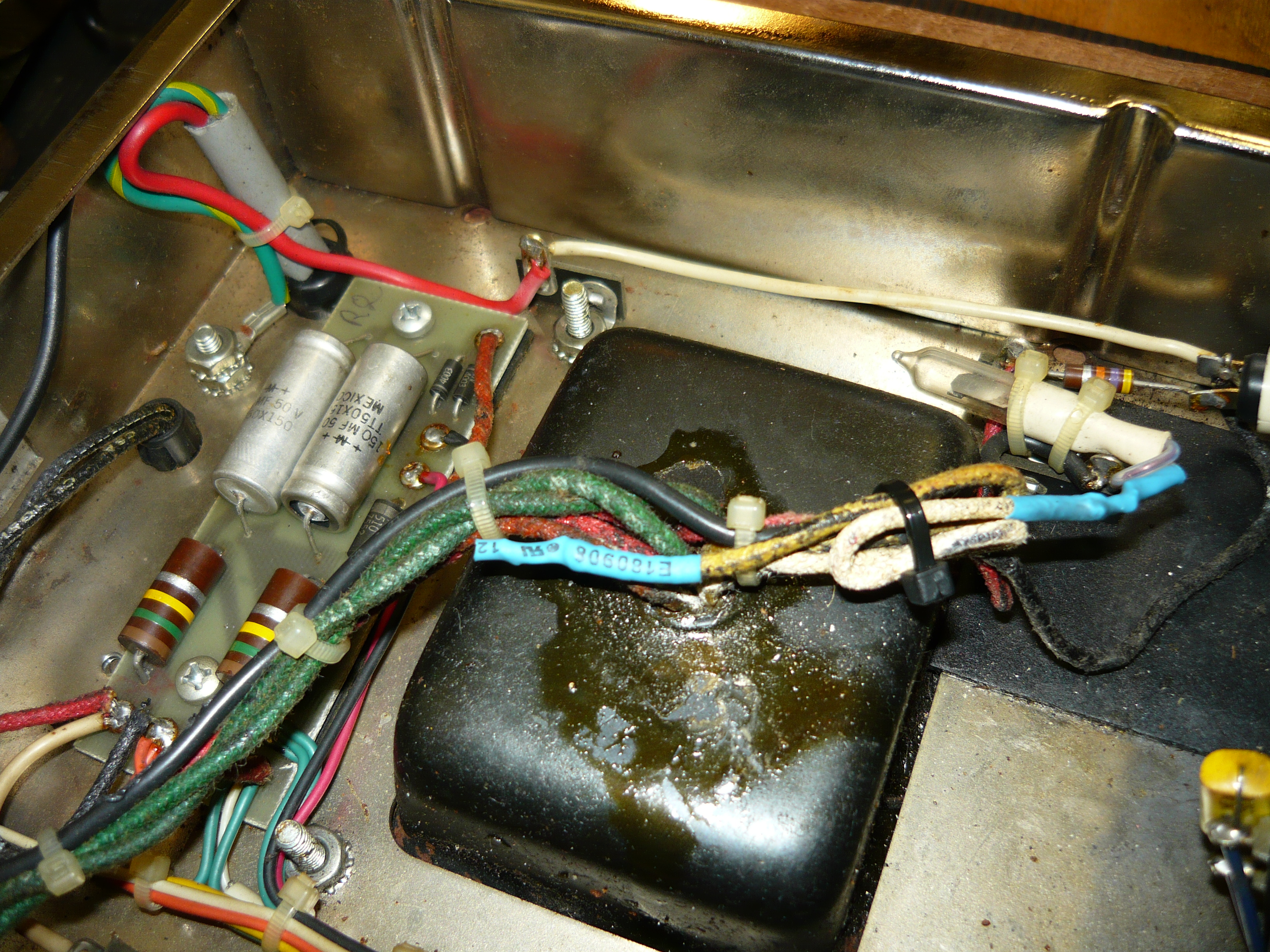
You can see from the thumbnails there are quite a number of outstanding service issues to be resolved. Firstly, there was some doubt as to whether the power transformer itself was 100% functional, as it had temporarily been rewired for half-power only. The wiring and general internal appearance of the transformer looked pretty crusty. I had to suss out the colour code for the primary connections in order to make any sense out of the situation.

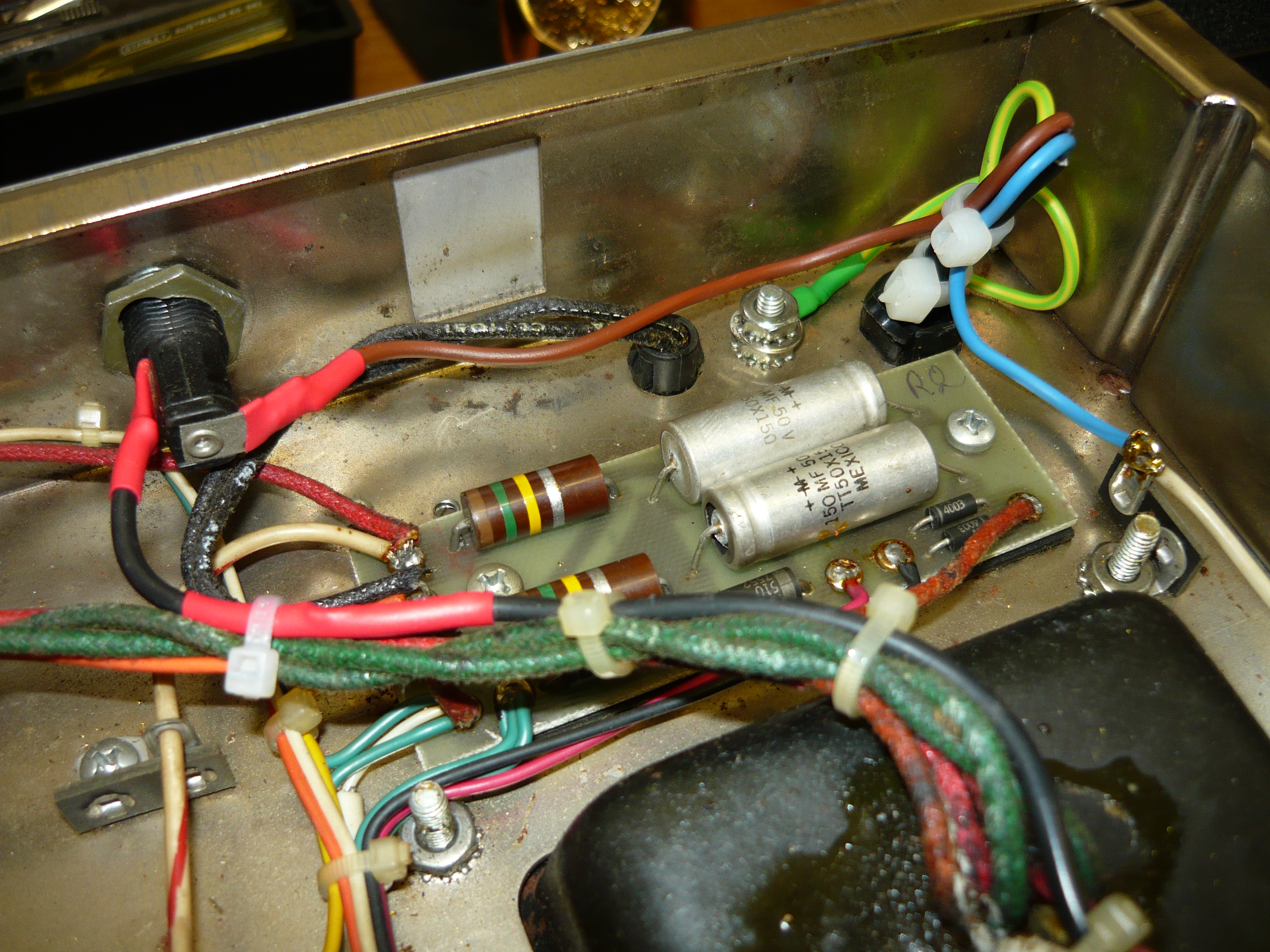
Having achieved that, the first step was to replace the damaged 3-core 240V flex and 3-pin plug, and to make a new chassis earth connection which would achieve compliance testing. This involved rewiring the fuseholder as well. Beware: the fuseholders in some older amps are not wired in a way that meets electrical safety standards, ie they are wired so that the outer part of the fuse remains active, even if the fuse is blown. If this is the case, the wiring should be reversed. The fuse should also be wired in series with the 240V active (brown), NOT the neutral (blue). Refer all such issues to an experienced and trusted technician !

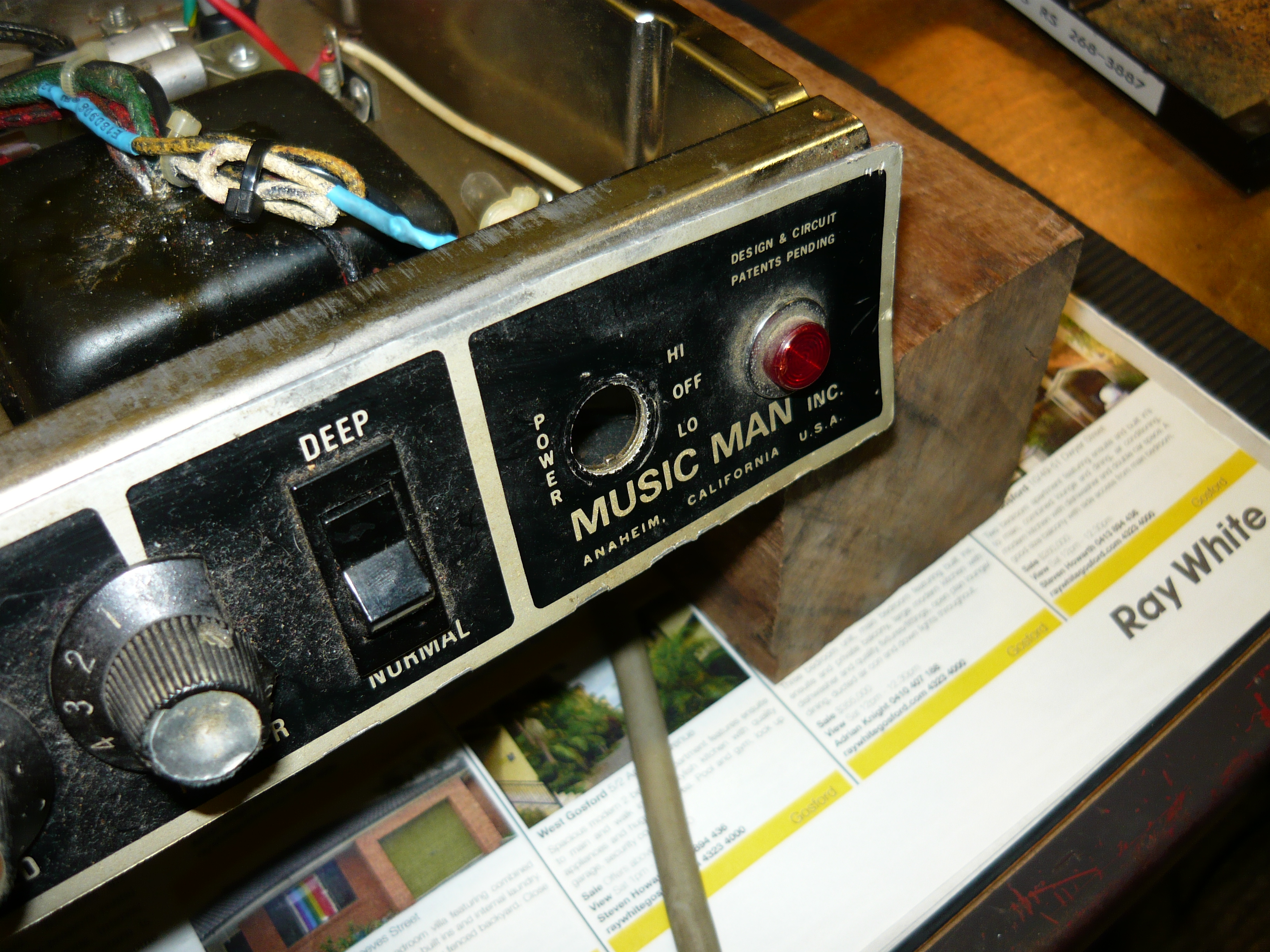
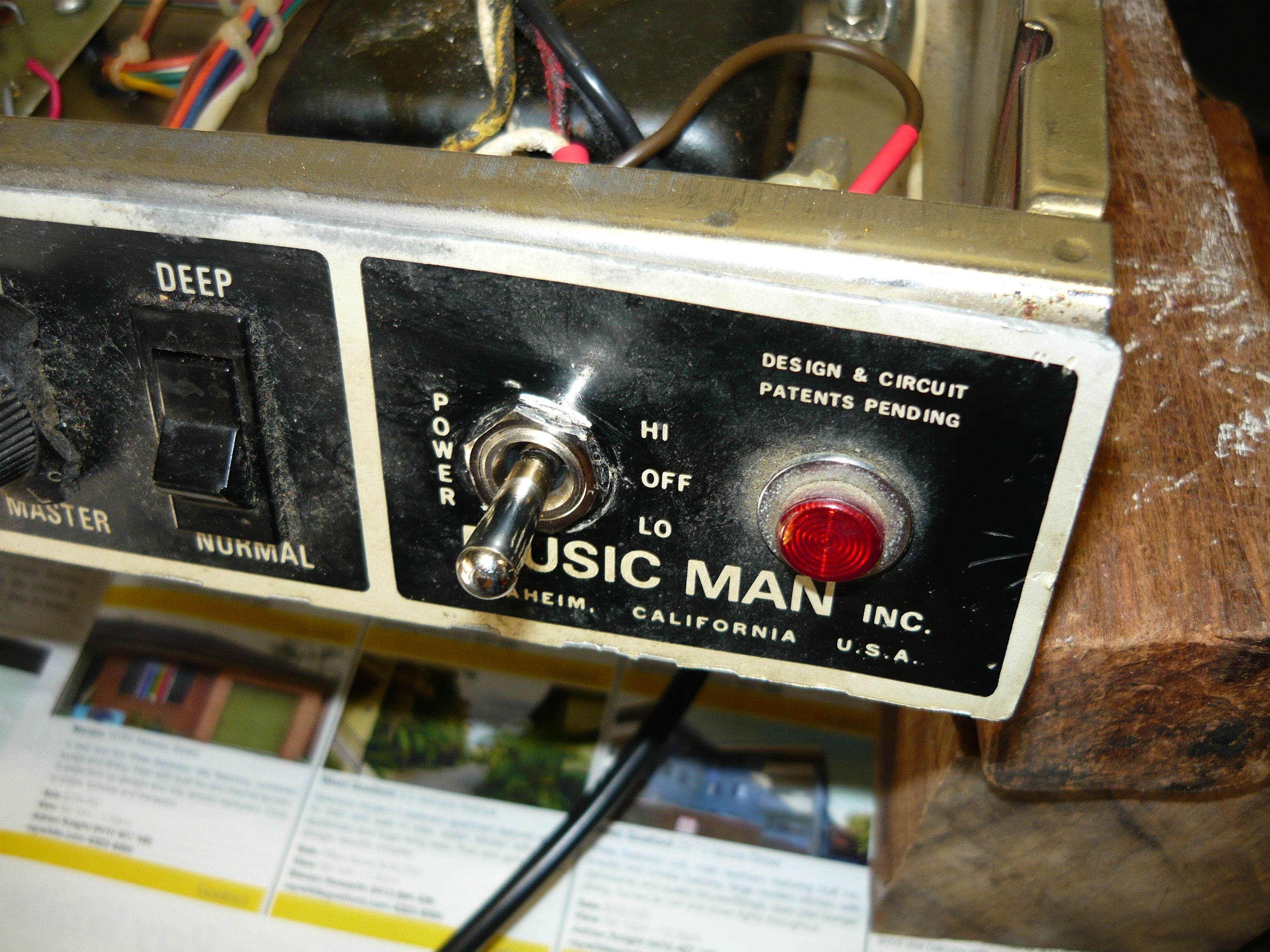
The next step was installing a new power switch on the front panel. This is actually a 3-way SPDT toggle switch with a centre-off position, labelled HI/OFF/LO. What is actually happening is the incoming 240V AC can be switched to either one of two primary voltage taps, which gives higher or lower internal DC voltages to power the EL34 output valves (tubes). In all cases we insulate the high voltage connections with heatshrink.

The unusual design feature of these amps, apart from a completely solid-state preamp, is the fact that on the HI power setting, the EL34 output valves have +700V DC on their anodes, and +350V DC on their screen grids. You cannot install cheapo valves in this amp and expect them to last very long ! Stick with brands that have a proven track record in reliability, for example JJ are a good choice for this amp. The next step was to replace a number of electrolytic capacitors in the high voltage (HV) and low voltage (LV) power supplies, all of which were still original and starting to look very crusty indeed.

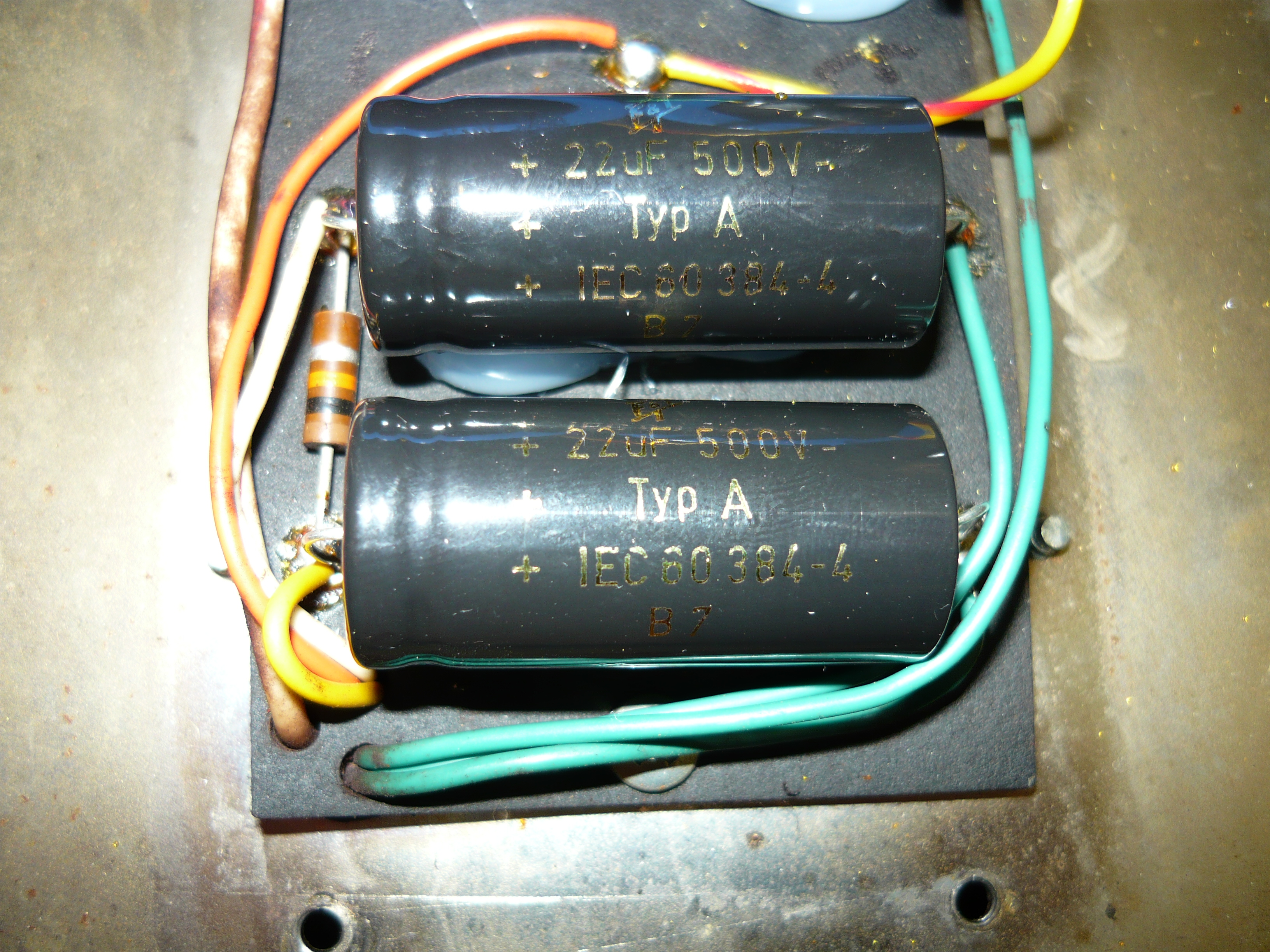
The HV supply requires a pair of 100uF/500V capacitors in a voltage-doubler configuration for the 700V supply, and a pair of 22uF/500V capacitors after the filter choke for the screen grid and phase-splitter supplies. For the bias voltage supply we needed some 100uF/100V capacitors. The HV supply caps are mounted in their own “can” on the top side of the chassis.

All the capacitors were bedded down in some silicone to keep them secure and to take the strain off the leads. For DIY people out there, always make sure that you use “neutral cure” silicone, ie non-corrosive, or you might be in for a nasty surprise in the long-term.

Equally as important as the HV supply capacitors, is the replacement of the LV supply caps, which in the case of the MusicMan amps, shares some common circuitry with the bias voltage supply for the EL34 output valves (tubes). Rock-solid biasing of the output valves will depend on the quality of the bias voltage supply.
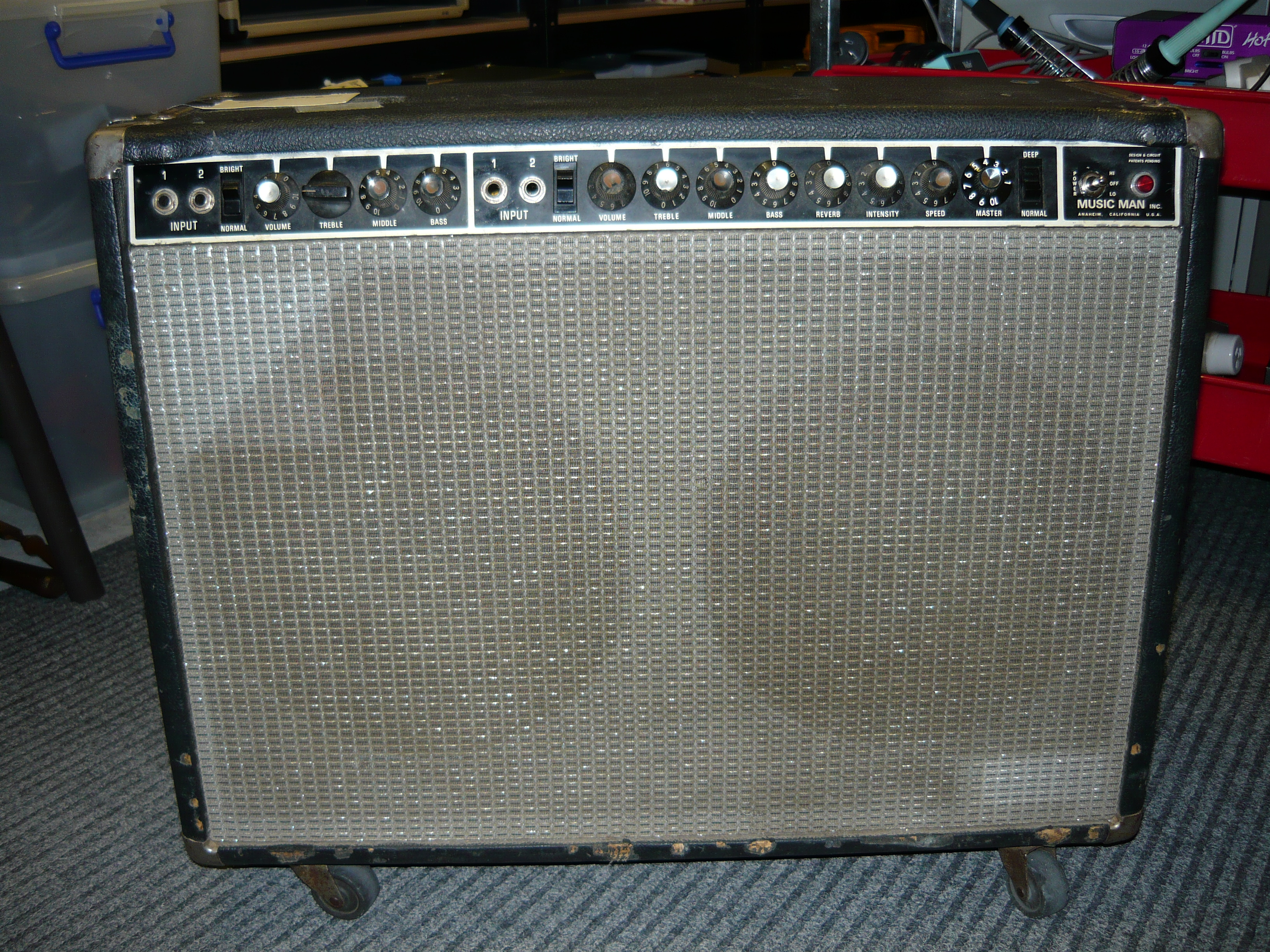
Well, to wrap it all up, I cleaned up the input and output jacks with DeOxit, and installed a JJ 12AX7-S in the phase splitter valve position, and installed a matched and burned-in quad of JJ EL34 valves in the power amp sockets. I set the bias for the EL34’s for 25ma cathode current each at 700V HT, as per the original spec. This is quite adequate at 700V. A power output test and burn-in test is then carried out – the amp is hooked up to an 8 ohm dummy load and a signal generator connected to the input jack. Observation of the sine wave output into 8 ohms reveals a clean signal and a power amp that reaches the onset of clipping at approx 120 watts rms. The power amp drops into “class-B” as we get closer to maximum power output, as expected.

The final play test was fine – the reverb and tremolo both work OK, although the solid-state reverb is not comparable to the valve-driven reverb on a Fender Twin, of course. You may notice the customer had removed the MusicMan logo (which was a bit toy-town looking), and the top strap handle, which he didn’t trust to carry the weight. The original speakers were replaced long, long ago with a pair of Etone 12-inch speakers, manufactured in Sydney. As a proud Aussie, I would like to say that the Etones sound great, but the reality is these speakers do absolutely nothing for this amp. They sound rather flat and overly bright. In order to demonstrate this to my customer, I played a TELE through the amp as is, then hooked up my workshop speaker cab, which is loaded with a 100W 12-inch Jensen NEO, and the difference in tone, complexity, and sheer volume was quite obvious. Perhaps this will be the subject of a future amp/speaker upgrade ?? See you next week – Ivan.

Bob’s “Lil’ Buddy” amp returns to HQ for a complete overhaul

September 17, 2011

This is actually the very first amp I designed and built for Bob Spencer, a much loved and admired Aussie rock guitarist formerly of such bands as Finch, Skyhooks, The Angels, etc, and more recently RAW BRIT, as well as facilitator/coach on the Weekend Warriors programme in Melbourne. This amp was built back in 1997. We actually met in 1995, when Bob was recording the Temple Gods album, in a studio somewhere on the Hawkesbury River. He showed up at my house in Gosford at about 11 o’clock at night, to get a modification done to his AC30 clone amp (built by Ross Nichol in Melbourne, I think ?). This is how you meet guys like Bob !!

This was at the time when I was working from the kitchen/family room of our house in Wyoming (NSW) – there were amps waiting repair from one end of the house to the other, and amp parts stored in every room of the house – even under the kids’ beds, etc etc. Not the ideal way to live, and eventually I rented my current workshop space. Anyway, Bob made himself at home in the kitchen, my wife made us cups of tea, and I got on with the job. Bob obviously liked what he saw and heard, and kept making the trip up to the Central Coast whenever he needed something done to his amps and pedals.

Bob was living in Katoomba (NSW) at the time, in a charming house built 100 years ago or so. Once he discovered I built amps/pedals/power supplies, he started getting stuff custom-built. First up, he ordered  two rack-mounting preamps – the first enabled him to switch between a Hiwatt voiced preamp and an Ampeg voiced preamp. The second one enabled him to switch between two AC30 voiced preamps. Bob was the first customer to purchase my first two successful pedal designs in 1997 – the Rich Drive and the Rich Fuzz. We kind of agreed on what we were looking for in a pedal, as well as what was missing from commercial pedals, and a lot of collaboration went into those two pedal designs, especially the Rich Fuzz. I love that kind of stuff ! Both pedals are still available today (2011), and the designs have not been altered in any way, although the cosmetics continue to change.

Bob was building a home-studio in the house at Katoomba, and ordered a low powered amp (6V6 output valves) to drive a 1×10 cab housed in an isolation box. I originally built a switchable 8W/4W push-pull amp, based on the designs I was using at that time. This was well before the current craze for low powered amps. We soon realised, however, that a mere 8 watts wasn’t driving the chosen 10-inch speaker hard enough to achieve the optimal recording results when mic’d up ! There is definitely a lesson there for everyone. The power output was increased to 12 watts, and then 15 watts, substituting different transformers. The circuitry itself stayed the same. Why is the amp called the Lil’ Buddy amp ? It’s because at that time I was calling everybody my little buddy – regardless of how tall they were. Something to do with a 70’s TV situation comedy called Gilligan’s Island. Thankfully, I have stopped doing that.

This amp was used for recording of course, but also gigs, rehearsals and teaching. I recall seeing Bob’s blues band in a pub at Crow’s Nest (Sydney) years ago, using the Lil’ Buddy driving a Wasp 250 watt/4 x KT88 amp used as a slave, into a pair of 2×12 cabs, loaded with Etone speakers (from Peakhust/Sydney, no longer manufactured). What a sound ! Some noise complaints, though. How rude ! At the beginning of this millenium, Bob & missus relocated to Melbourne and also ordered firstly an 85 watt/4 x KT66 amp which is currently Bob’s stage amp, and secondly a 28 watt KT66 amp. Both amps were custom designs employing baxandall EQ, and other features unique to Bob. The Lil’ Buddy amp fell into disuse for many years.

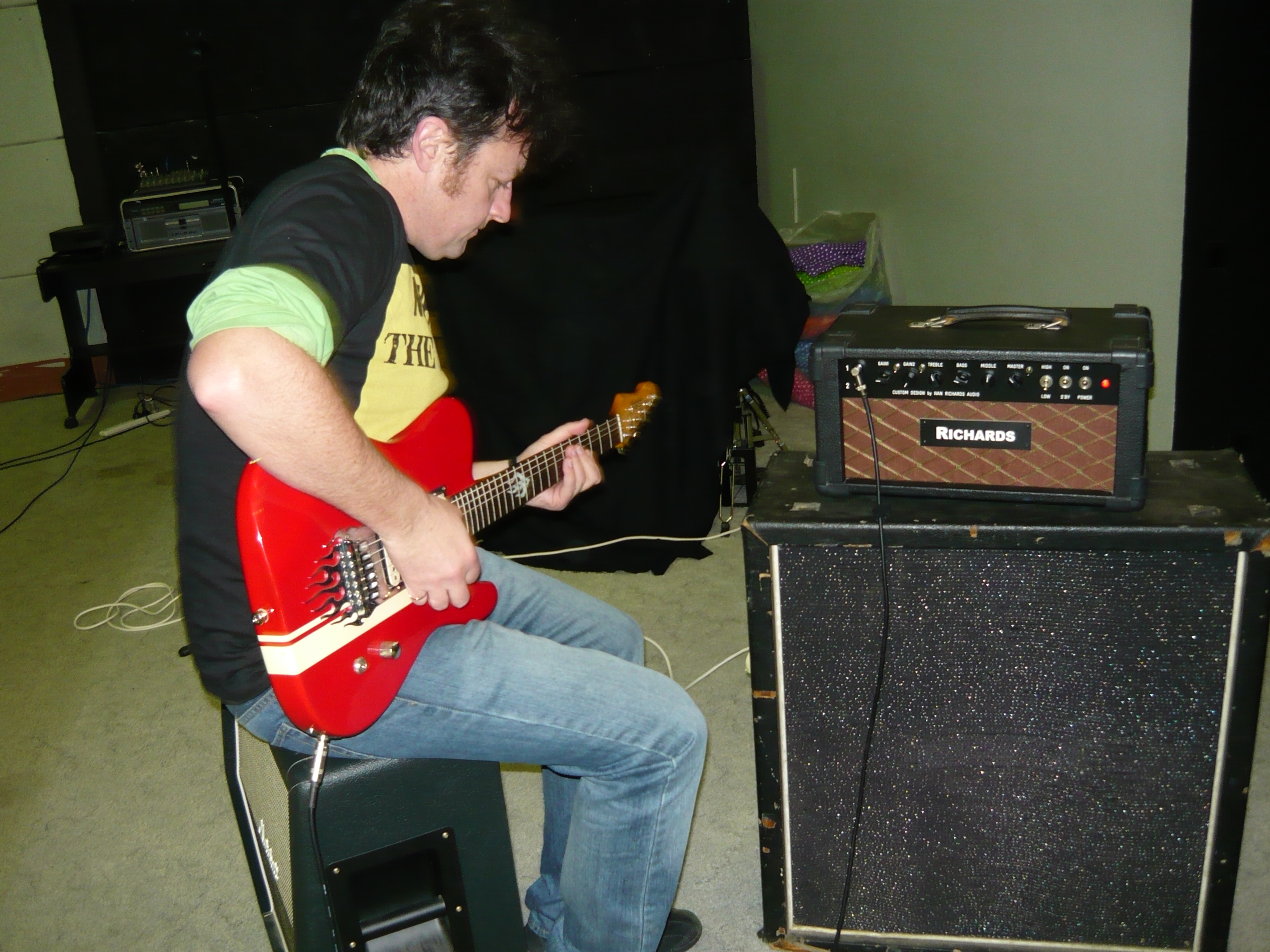
So where do we stand right now ? Well, Bob and Paulene are in their new residence in Melbourne, and Bob is setting up a new home studio and is preparing to do some recording, so there is a valid reason to refurbish this amp and bring it into line with the current Richards amp range. Although this is still a custom amp, it will be somewhat similar to our Blue Mood models. As you can see from the photos, new component panels have been pre-wired to install in the chassis. The amp also has received a new output transformer (a critical component in any valve amplifier), new pots/jacks/capacitors, and so on, plus a bit more attention to electrical safety issues, in line with today’s compliance environment. The power transformer on the chassis was the third such unit, this one giving us slightly over 15 watts rms.

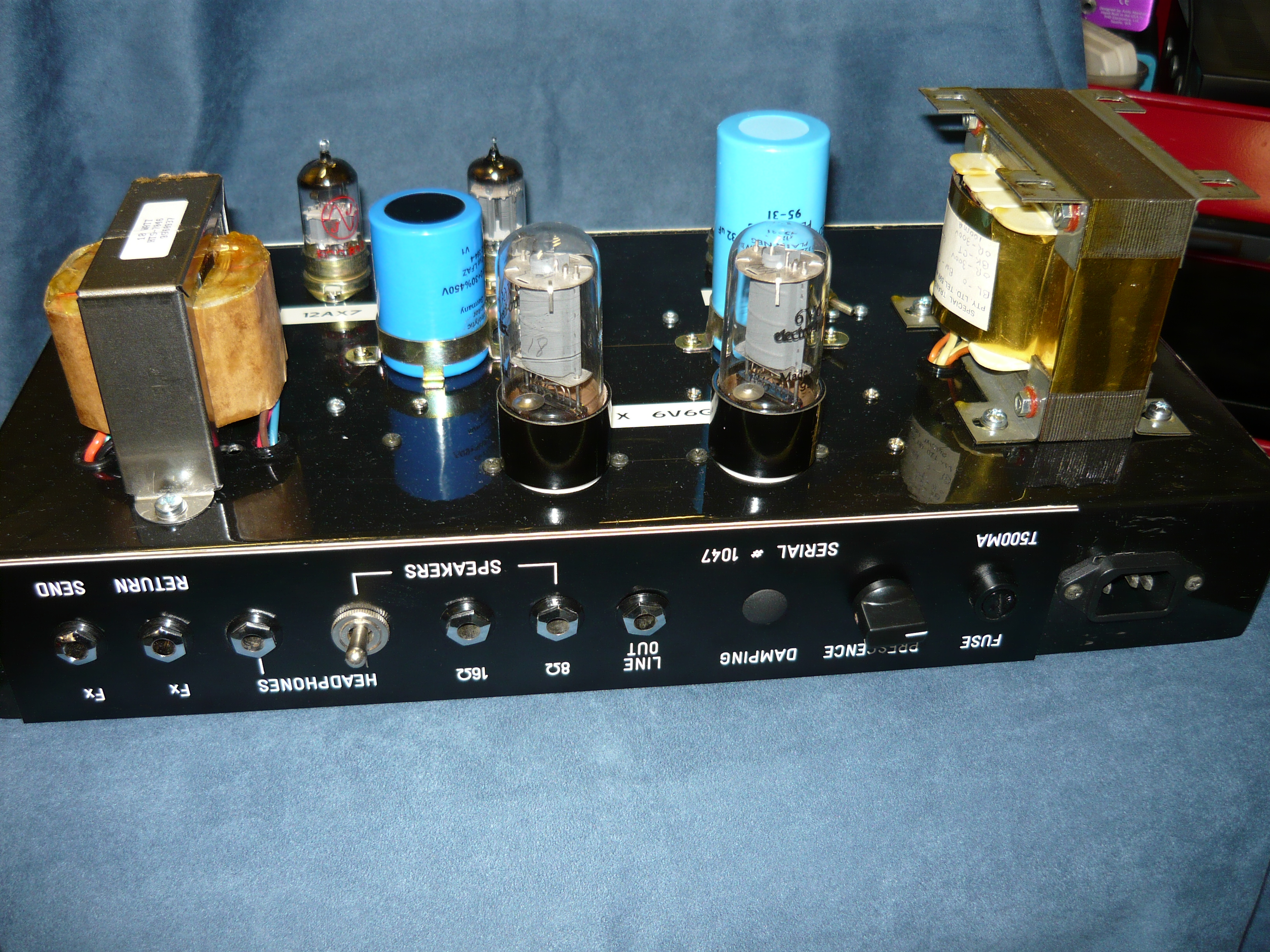
Some of you will have noticed a Headphones switch on the rear panel – unusual in a valve amp – this switches the ouput to a resistive load and attenuator, so the amp can be operated safely but at headphone levels. The Headphone jack can still be connected to a speaker in this mode of operation. So who is the guy playing the Craig Upfold custom Tele in the first photo ? This is Jonny Gardiner, creator of the Rock God Music School here in Wyoming, and also the singer/guitarist with successful Sydney-based band The Nevilles.

Jonny was kind enough to give us his review of this amp after the update was completed. These are his impressions:-

“this amp has the warmth of a Vox but with more clarity (and also more gain), ie the individual notes really ring through ! this amp’s forte is those delicious sounds inbetween clean and dirty, ie the crunch sounds ! a satisfying aspect of the amp’s performance is that you can control your dynamics with pick attack ! (ie the amp has great touch sensitivity)”

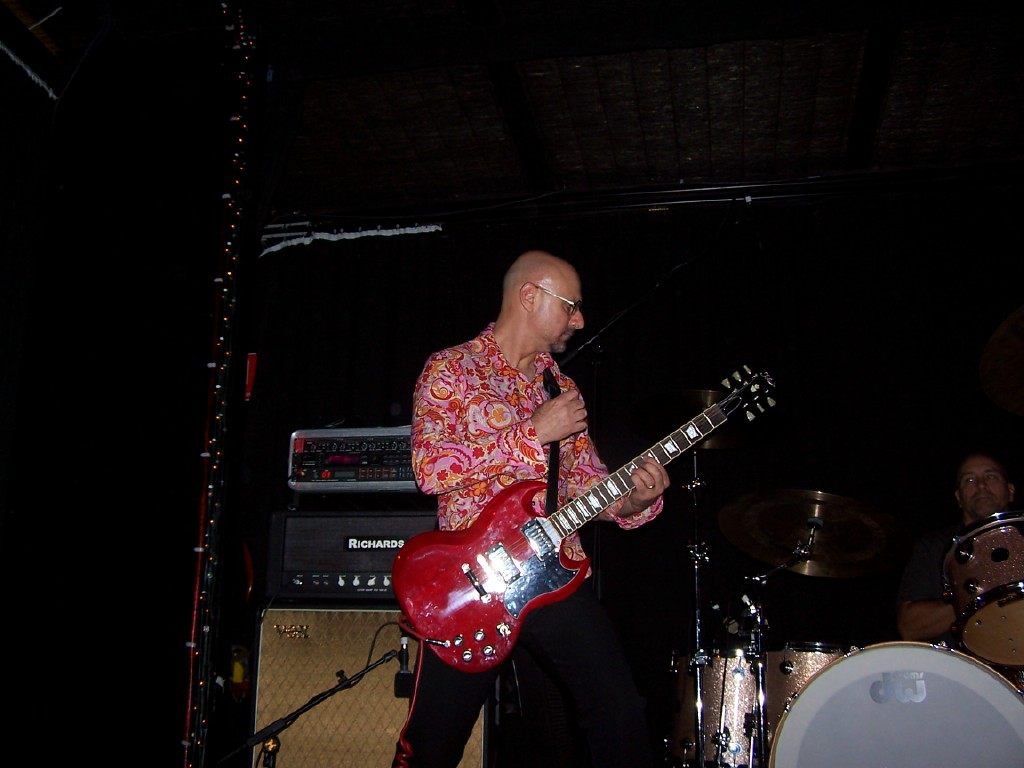
To finish off the blog, we have a photo of Bob playing with RAW BRIT in Melbourne with his Richards 85W/4 x KT66 amp head. Some great live videos of RAW BRIT in action have been uploaded to youtube.com, so you can check out these great players doing their thing.

Do we cater for the metal head ?

September 11, 2011

Yes !  We offer our repair services and custom-design/custom-build services to every type of musician who is reliant on musical-instrument amplification, and in particular amplification that is based on vacuum-tube (thermionic-valve) technology. As it happens, there is also a breed of amplifiers out there, marketed at the heavy-metal guitarist, that is primarily solid-state in design. We will also service many of these products. Check with us first, if in doubt.

As you can see from the photos, the inspiration for today’s blog is a recent repair to an Engl 50 watt (all-valve) head. My general impression of the Engl amps is that the standard of construction is a bit cheap and there have been some reliability issues along the way. This is all the more surprising considering they are designed and manufactured in Germany. Every Engl repair we get seems to require a mod to the power supply and/or the bias supply, in the latter case this is because usually you can’t get a wide enough range of adjustment to bias up an amp with new output valves properly (normally Engl’s are loaded with 6L6GC valves, or equivalent). I have found the JJ 6L6GC to be the ideal replacement output valve for these amps. If you have more money to spend, a great sounding alternative is the Winged-C 6L6GC (formerly SED), from St Petersburg, Russia.

The single biggest problem impacting on long-term reliability is the fact that the power output valves are printed circuit board mounted. Given that the Engl chassis is top-mounted in the cab, and the power output valves hang down from the chassis, then the heat from the valves naturally goes up into the chassis, and in particular into the printed circuit board. The output valve board can get so hot that critical components actually desolder themselves ! This was a common fault when these amps were first introduced into Australia a few years back – the screen grid resistors would desolder themselves, possibly even falling off the board, and the affected valves would stop working. The good news is we can do our best to bullet-proof your amp to improve reliability.

Some other brands of amps that we have serviced that are appropriate to this genre of music woud include (in no particular order):- MESA, Blackstar, Laney, Hughes & Kettner, Randall, Crate Blue Voodoo (serious reliability issues), Bugera (serious reliability issues), Egnater (serious reliability issues), Cornford, Marshall JCM800, JCM900, JCM2000 (some models of JCM2000 reliability issues), and also the JCM600 (serious reliability issues). There are others, this list was just off the top of my head.

No discussion of amps for the metal player would be complete without the mention of the Peavey EVH120, known variously as the 5150, 5150 II, 6505, 6505+ amps. The 5150 II model seems to have got the thumbs up from any of my customers that own this amp. In response to customer demand, from young metal bands recording their own material and wanting to achieve the best recorded performance from these amps, we have been offering a range of mods and upgrades to these models.

Any upgrade would obviously include valves (tubes). There is such an excess of gain in these amps that valve (tube) microphony becomes a major issue. Therefore we have put the replacement 12AX7 valves through our own selection test. On the short list of valves are the JJ 12AX7 and 6L6GC, also the Winged-C 6L6GC, the Tung Sol reissue 12AX7, and we are about to trial a new 12AX7 valve (tube) released by TAD, specifically intended for such demanding applications.

Other requested upgrades include power supply capacitors, bias circuit modification for greater range of bias adjustment, and the installation of a Mercury Magnetics MC10 power choke in the power supply, in lieu of the standard resistor. One last upgrade for those of you resident in the land of Australia who have purchased their amp via the internet – we can install the factory supplied 240V AC mains transformer, so you don’t have to lug around that heavy and inconvenient step-down transformer.

That’s it for tonight’s blog – please feel free to submit suggestions re other amps that you feel should have been mentioned, and/or contact us re your specific amp problemos. Perhaps we can make a big difference. By the way, for those of you who are into 70’s and 80’s metal, we do build amps to special order which are inspired by the great Marshall JMP amps of the mid 1970’s. We can nail that sound plus no more reliability issues.

Service Centre for David Eden and Nemesis bass amplification

August 8, 2011

Hey folks – just a reminder that we also service the needs of working and recording bass players, which includes not only valve (tube) amplification, which always has been and always will be our specialised area of interest, but also solid-state amplification. We have long been an authorised service centre for Ampeg and Peavey amplification, and also Marshall, Laney and Hartke. We provide non-warranty repairs to many other brands of bass amps, for example Fender, Orange, SWR, Labsystems, and more recently the products of David Eden and their budget off-shoot brand, Nemesis. We do not provide service to amps with switched-mode-power-supplies (SMPSU), or switching amps in general. Check with us first, if in doubt.

Recently a David Eden WT800C bass amp was delivered to our Wyoming workshop for repair by Grove Studios, a Central Coast (NSW) recording facility formerly owned by Gary Beers of INXS fame. Grove Studios have become a regular customer in recent times, as amps quite often choose the worst possible time to develop a fault, ie in the middle of a recording session. We always strive for the best possible turn-around time in these situations, depending on availability of parts, as required.

The WT800C in question was blowing fuses, which after initial investigation was found to be a melt-down in the left-hand power amplifier. The power amp board had some short-circuit (S/C) output devices plus some other smaller collateral damage, and worst of all there was damage to the printed circuit board (PCB), with some destroyed tracks and solder pads. This PCB damage appeared to be from a previous unknown repair and not from this particular incident. Another example of heavy-handed soldering/de-soldering technique (or lack thereof).

I had to order in the output devices which were 3 each of the Sanken 2SA1492/2SC3856 complementary pairs, which unfortunately held up progress of the repair for a few days. To ensure equal load sharing between the output devices, I never mix and match new and old devices, or different brands of the same device. That way, I know the repair will hold up under rawk’n’roll conditions. It’s also important for the same reasons to clean up the forced-air cooling system. After replacing the output and driver devices, plus diodes, etc, and repairing the damaged PCB the best way I could, ie, with wire links to replace the blown tracks, etc, etc, we powered up and readjusted the bias setting as per the sevice manual. The amp passed its power output test, burn-in test and electrical safety test with flying colours ! With one channel only driven at a time, this amp puts out approx 500 watts into a 4 ohm load, and therefore potentially delivers over 800 watts with both channels driven.

Many thanks to Markus Salisbury of Grove Studios, and Eric Grothe of Shinobi.

A Dr-Z MAZ38 (Senior) major repair completed

August 6, 2011

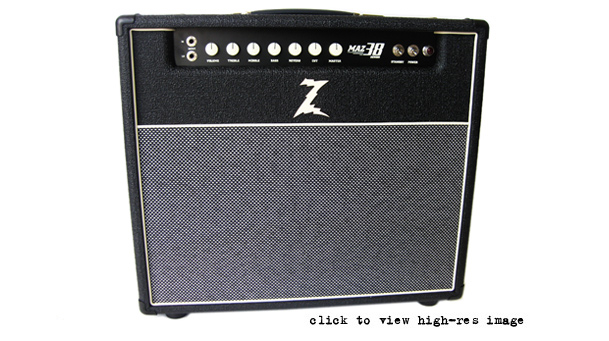
Yes, we specialise in the service & repair of boutique, ie hand-wired, all-valve (tube) musical-instrument amplification, including Dr-Z from the USofA. The subject of this week’s amp repair blog is a Dr-Z MAZ38 (Senior) 2X12 reverb combo, shipped up to our Wyoming (NSW) workshop from Sydney by a regular customer.

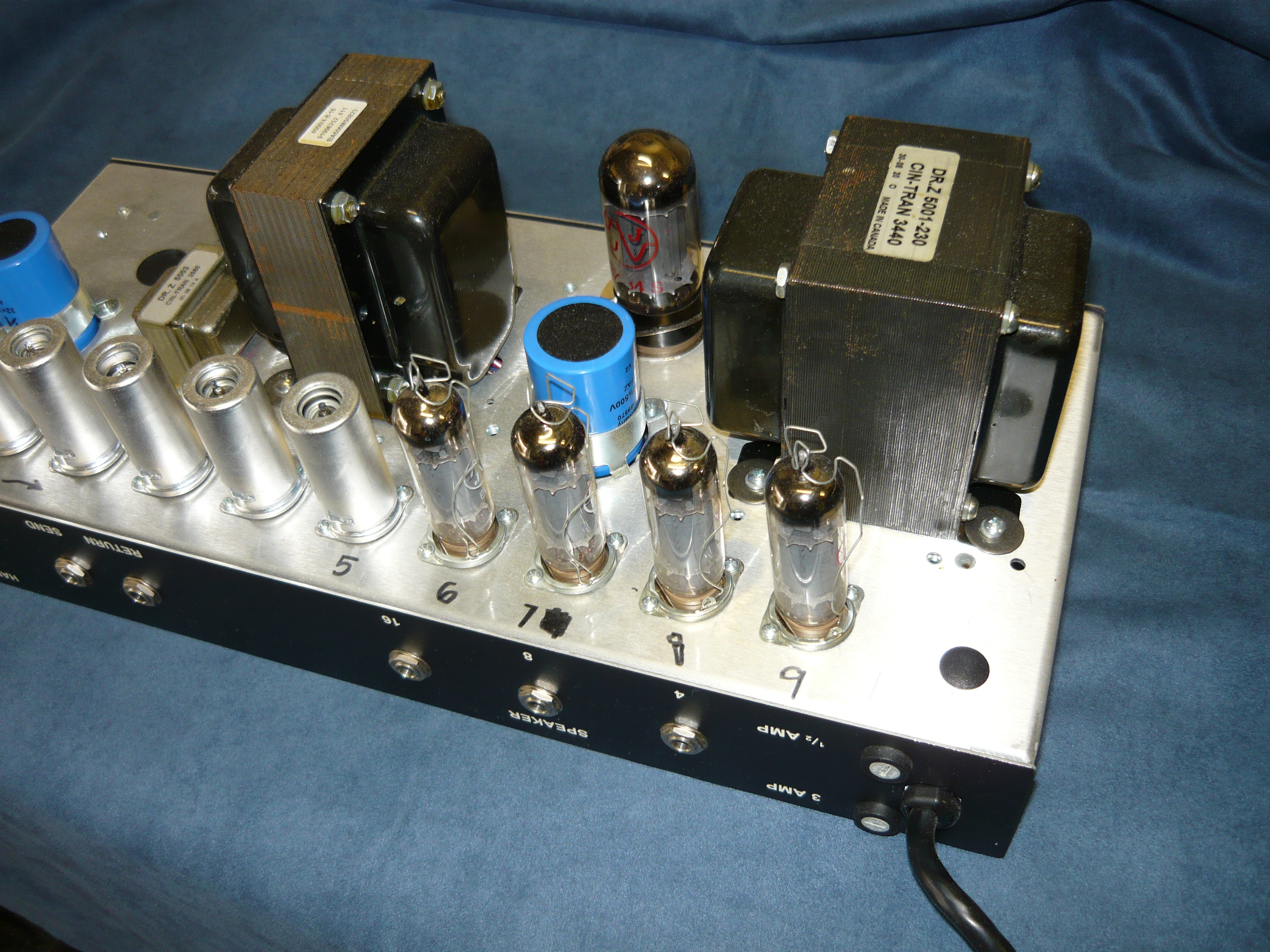
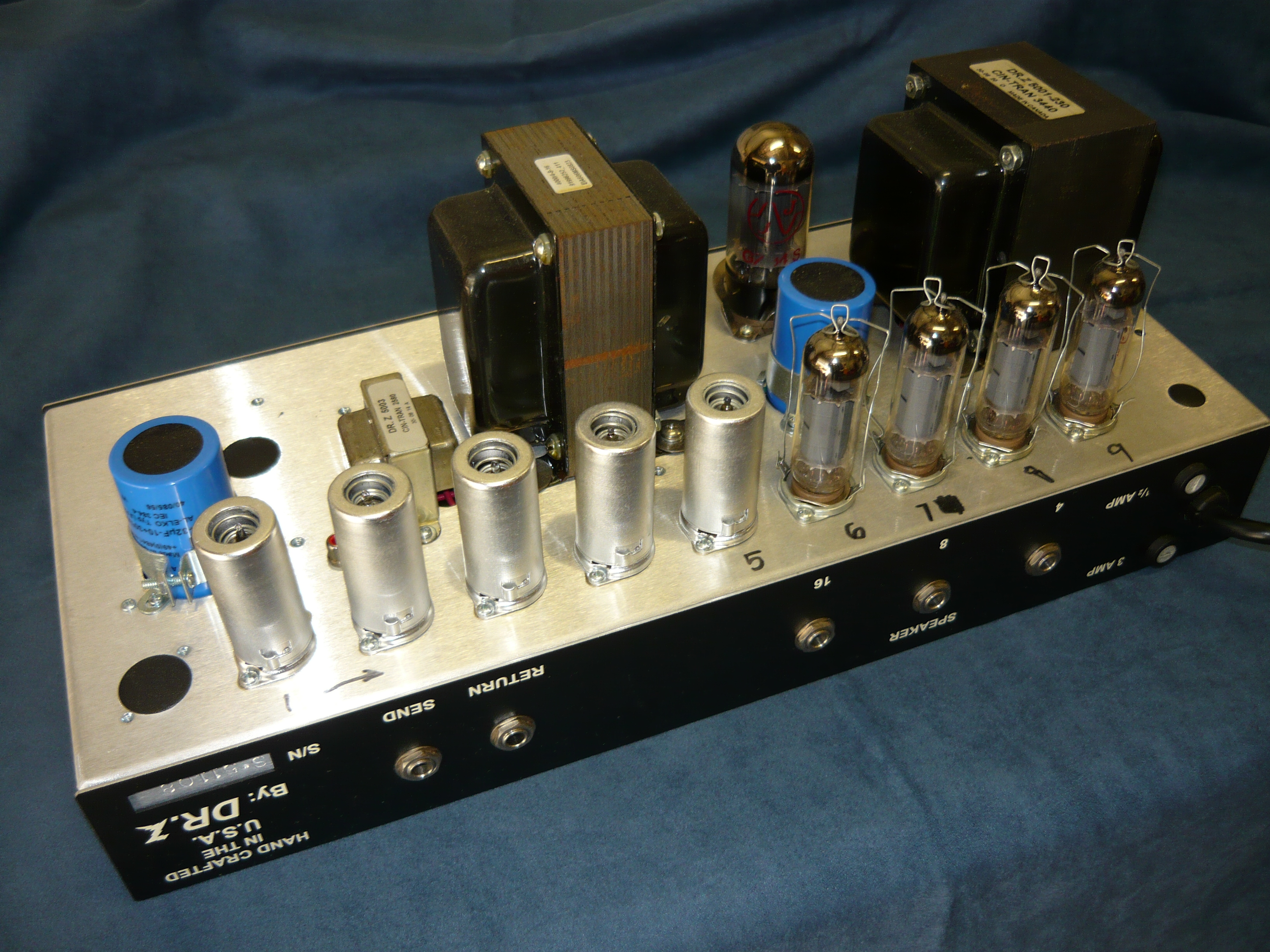
This particular MAZ38 was blowing fuses. There are actually two fuses fitted on the rear panel, one is the 240V mains fuse, the other is a secondary fuse for the high voltage supply, and would normally be around the 0.5A (500ma) value. In this case the mains fuse was blowing, although when I examined the HT fuse I found an 8A fuse rather than a 0.5A fuse, which would result in negligable protection.

The fact that the mains fuse was blowing tends to suggest a fault in the power supply, and this proved to be correct. The fault was isolated in a series of diagnostic steps to the power transformer itself, which had developed an internal short-circuit. The quad of EL84 output valves was still serviceable, but the GZ34 rectifier valve was definitely short-circuit. Was the GZ34 the original problem, or the transformer ? We shall never know, but this was developing into an expensive repair job for the customer.

Removing the faulty transformer and installing a replacement was going to be a tricky operation, as access to where wires need to be disconnected and subsequently reconnected is limited. Most of the internal space within the chassis is taken up by a single large board holding the majority of the resistors and capacitors, with hand-wired connections from both sides of the board. The standard of construction as well as components is high, as you would expect, but access to some components for service is poor.

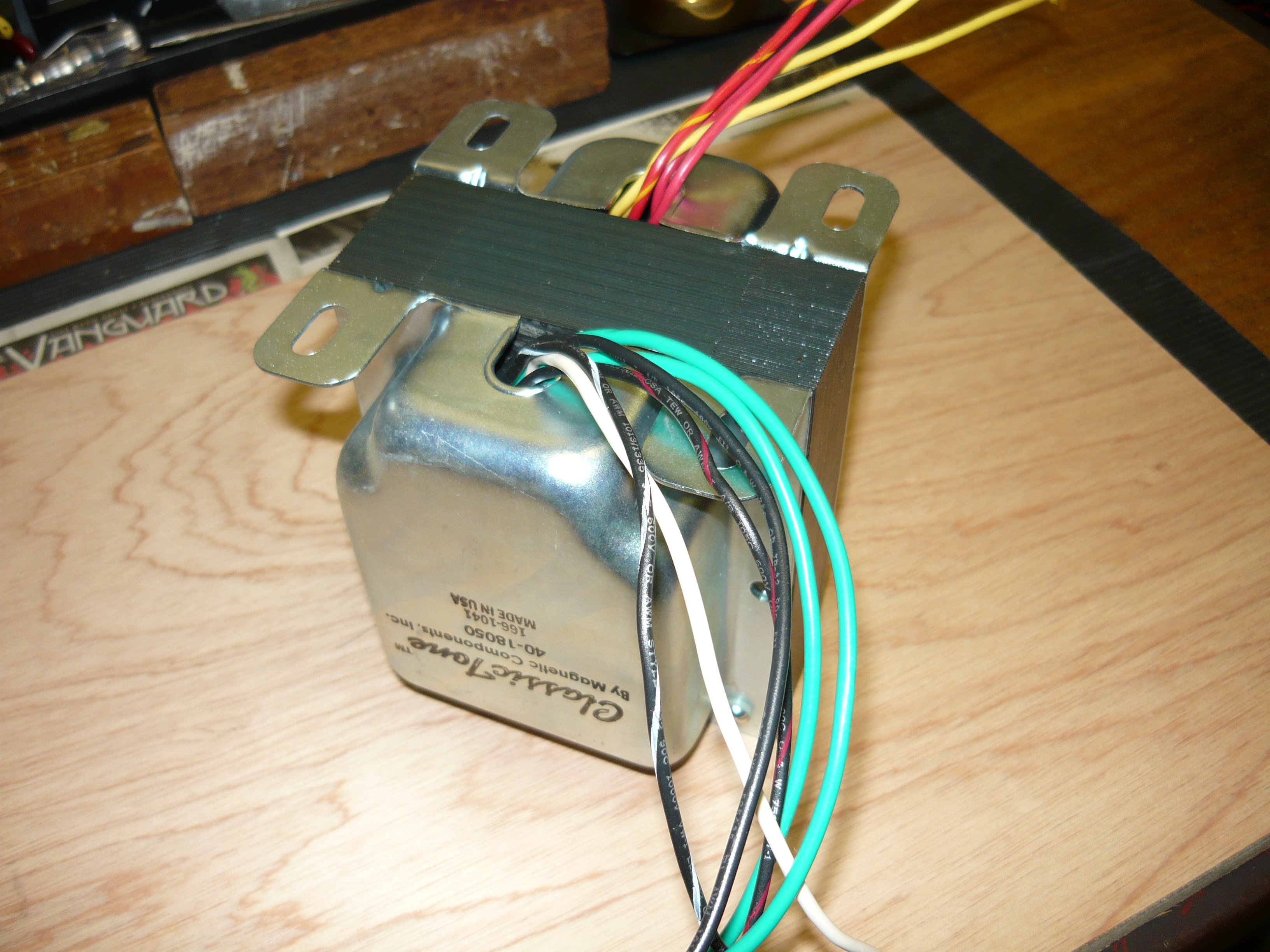
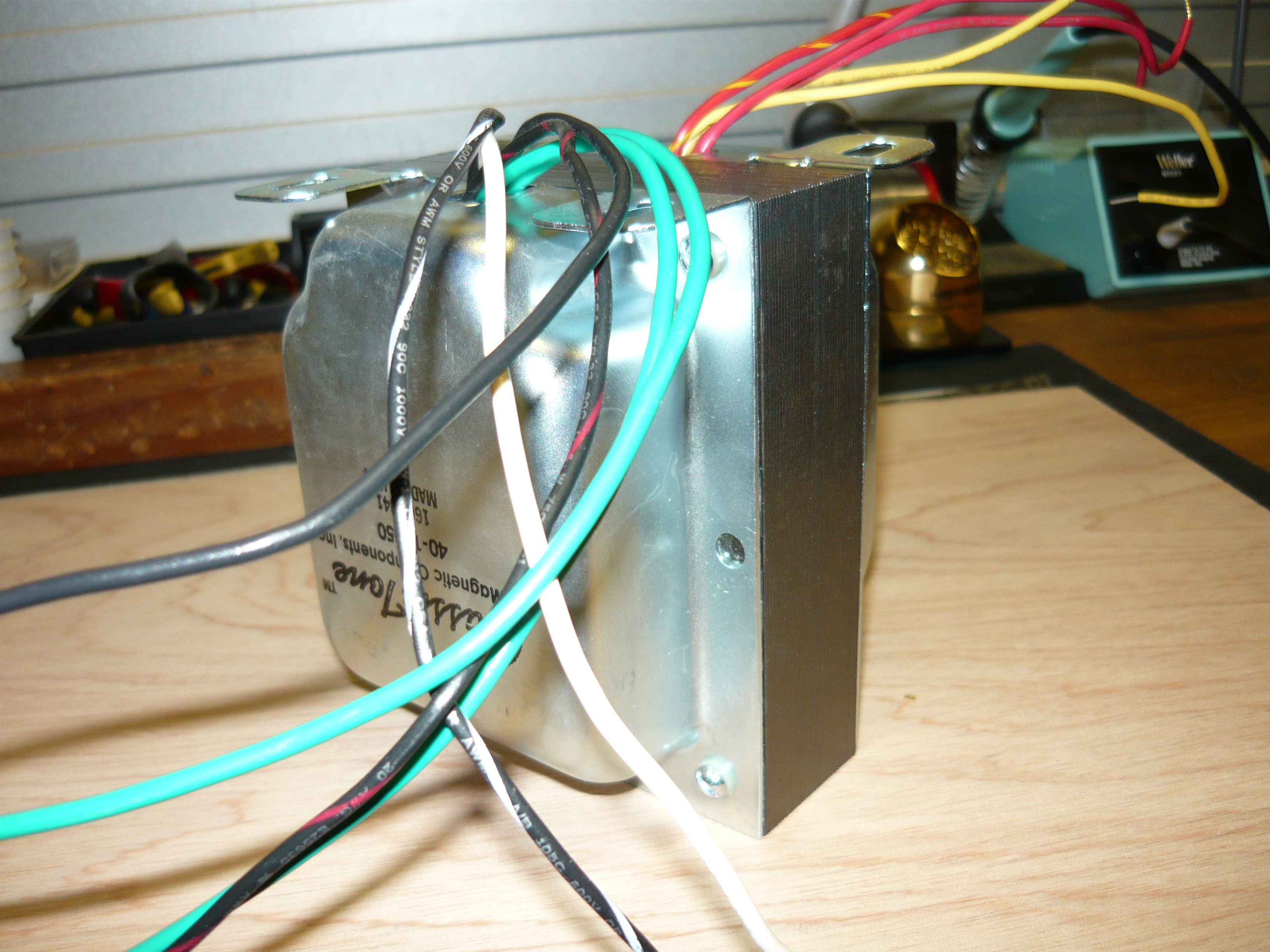
It turned out upon investigation, that the power transformer is rated at 230V AC. But, here in OZ our mains voltage is actually 240V nominal, but is often quite a bit higher than that, especially over in W.A. There was going to be a delay sourcing the original transformer from the factory anyway, and we wanted to move quickly on this job, so at the customer’s suggestion I selected an after-market replacement power transformer. I chose to install a Vox AC30 replacement manufactured in Chicago, Illinois USofA, by Magnetic Components Inc, and marketed under their “Classic Tone” series. I have sourced a transformer from this manufacturer previously with success, so I had no hesitation to use them again.

I originally read about Magnetic Components in TQR, by the way. Check out the transformer photos ! This monster is spec’d as per the original Vox AC30’s, but most importantly it is rated for 240V AC, by means of connecting the two 120V primary windings in series. In spite of the imposing bulk of this transfmr, I was able to locate it on the existing MAZ38 chassis, with a couple of additional mounting holes, and nylon grommets to feed the wires safely through the access holes. After making all the necessary connections, which included adding a pair of 100 ohm resistors to provide a centre-tapped ground connection for the 6.3V AC heater supply, and also installing a new JJ GZ34 rectifier valve (tube), we powered up the amp without any further dramas.

The amp chassis was subjected to the usual range of quality-control testing: power output test into a resistive load, burn-in test, electrical safety test (to Workcover NSW standard), and final play test into the amp’s own speakers. I was pleased to find that the new power transformer remained relatively cool during all this, one obvious advantage of bulky 50’s/60’s spec’d units with a lot of iron !

Many thanks to Shane for his continued custom and for providing us with this week’s amp repair blog. Please visit us again soon for more amp and pedal blogs, we try to create a fresh blog every week, time permitting.

Regards, Ivan.

A tale of two “Champs”.

July 2, 2011

A pair of Fender “Champs” arrived at the workshop this week for servicing. Actually, one of them is a Silverface Bronco amp, which to all intents and purposes is a Fender Vibro-Champ. The other is a current manufacture (ie, China) Champion 600 amp. Both amps have very similar electronic design excepting that the Vibro-Champ has valve (tube) driven Tremolo, and a valve (tube) rectifier, whereas the Champion 600 has solid-state rectification, printed-circuit board construction and a preset tone-stack so there is only a volume control presented on the front panel. The Bronco has a much larger cabinet, which helps enormously to develop a bigger sound.

The Bronco needed a fairly comprehensive service. This not only included replacement of all valves (tubes), but also damaged pots (potentiometers), ageing electrolytic capacitors, and a 9-pin valve socket which was no longer providing reliable connection. Our usual electrical safety standards inspection and testing revealed that the 240V 3-pin plug was due for replacement, too.

The Chamion 600 was powering up but nil output, ie the lights are on but nobody’s home, as they say. The cathode-bias resistor for the 6V6 valve (tube) in this amp is a little under-rated for the job, especially if the 6V6 suffers a catastrophic failure, so I replaced it with a ceramic-body 7 watt resistor intended for the most demanding environments. I use these resistors where appropriate in my own Richards custom amps. The 2 x boards checked out OK, as did the jacks, interconnects, and so on, but the 2 x valves (tubes) were cheapo examples of Chinese origin, and the volume control was very scratchy indeed, so these items were replaced.

Both these amps have small, very cheapo speakers, so naturally the amps sound much bigger and better through a decent quality external speaker. However, many people love how compact and lightweight these amps are, and of course 1000’s of recordings over the decades have been done with the Champ amp. So in the final shoot-out, how did these amps compare ? The basic tonality is very similar. They common circuit design is quite low gain, so you have to turn up the volume control most of the way to get much of a vibe happening. The Bronco/Vibro-Champ has a bigger sound with greater prescence and throw, and the advantage of 2-band EQ, but most of all it has a great valve-generated tremolo which is superior to any stompbox tremolo that I have heard so far. The tremolo is of the direct-modulation configuration, which varies the bias and gain of the 2nd stage of the preamp 12AX7 valve (tube). For tremolo lovers, it doesn’t get much better than this.

For all owners of small valve (tube) amps such as those described above, I offer world-class professional amp repairs from my workshop located in Wyoming (Central Coast) NSW. We have couriers delivering and picking up to this site every working day, so please consider the level of service and value add that we can supply. That’s all for today’s BLOG, please check in every week or so for more news and info. regards – Ivan.

Do we cater for the jazz guitarist ?

June 19, 2011

Yes !  It’s not just about rock’n’roll, we offer our repair services and custom-design/custom build services to every type of musician who is reliant on some form of amplification/sound-reinforcement. This would include jazz, jazz/rock/fusion, country, alt-country, folk-rock, pop, blues, soul, rhythm & blues, roots music/world music………………..the list goes on and on.

Actually, the Richards family has always been into jazz, swing, big bands, hawaiian steel guitar, etc,  all the way back to the 1930’s. I am the black-sheep of the family, I am the one who was seduced by the music of the British Invasion bands from the mid-1960’s onwards. I just couldn’t get enough of The Beatles, The Yardbirds, The Animals, Cream, Hendrix, The Who, The Small Faces, Led Zep, Jeff Beck Group, Jethro Tull and many more, and I’m still hooked !

However, getting back to the jazz musicians out there – we pretty much have the cream of the Australian contemporary country music scene resident here on the NSW Central Coast, but we also have a few jazz orientated players here as well. What kind of equipment issues do they have ? Getting a warm, satisfying tone is a prerequisite as is having enough headroom to voice those complex chords with clarity and authority. Getting a balanced tone and levels across the 6-strings and in fact the entire guitar spectrum is another major issue, particularly if you are playing a hollow-body instrument, eg an arch-top.

Most jazz guys would probably favour a guitar amplifier that is light and compact. A valve amp of something in the order of 20 watts with a single 10-inch or 12-inch speaker would seem a logical choice. For whatever reason that I don’t yet understand, there is a trend among jazz guitarists towards the Rivera amps from California, USA. Perhaps an influential player chose one of these amps and then others followed his example.

A customer recently brought a Rivera Clubster 20 watt 1×10 combo to the workshop. The amp had certainly been reliable and is commendably light and compact. However, the tone was very thin and also lacking in headroom. The overdrive channel was really too high gain to be useable, and did not lend itself to modification, so I concentrated on the improving the clean channel in whatever way I could. I substituted another brand of output valves which gave slightly later break-up, ie more headroom. However, the biggest limitation of this amp is the speaker unit itself. If you are going to have a 1×10 combo, then that 10-inch speaker needs to be a good one ! The stock speaker does not have a good, balanced tone across the guitar spectrum, in fact it is rather thin and generally lacking in tone and dynamics. The biggest possible improvement to this amp was always going to be upgrading the speaker.

I have had some experience with the Jensen NEO speakers, which unlike some of the various Jensen alnico and ceramic magnet reissues, have a very full balanced tone, without particularly favouring any frequency over another, and also good sensitivity. In other words, both the 10-inch and 12-inch Jensen NEO models are well suited to low powered amps, even though they are rated for 100 watts. After installing the NEO-10, both the customer and I agreed the tone of the amp was greatly improved as also was the sensitivity and headroom.

I would like to also remind jazz players that I custom design and build valve amps for guitarists of all persuasions. Not as light and compact as the amp described above, I must admit, but designed and built to last the distance and achieve the desired tonality and performance levels. Possible design criteria might include the use of 6V6 power output valves for their very sweet tones, optional valve-driven reverb, and baxandall e.q. for a more balanced frequency response.

For distortion tones that complement those jazz/fusion explorations, you won’t find a better overdriver than our Class-A Distortion pedal, which achieves a very natural, very organic quality of distortion, with fine control over both level and tone. It never sounds harsh ! In fact, one of the first guitarists to purchase this pedal was Carl Dewhurst, a player and teacher well known on the Sydney jazz scene.

Please take the time to check out our website: www.ivanrichards.com and please feel free to contact us if you have any suggestions and/or useful comments about any issues in the preceding paragraphs. Your own experiences in the world of jazz guitar amplification may well assist other players.

Regards,

Ivan.