Archive for the ‘Amp Repair’ Category

A tale of two RIVERA amps

February 2, 2013
Rivera Jake Studio 1x12 combo

Rivera Jake Studio 1×12 combo

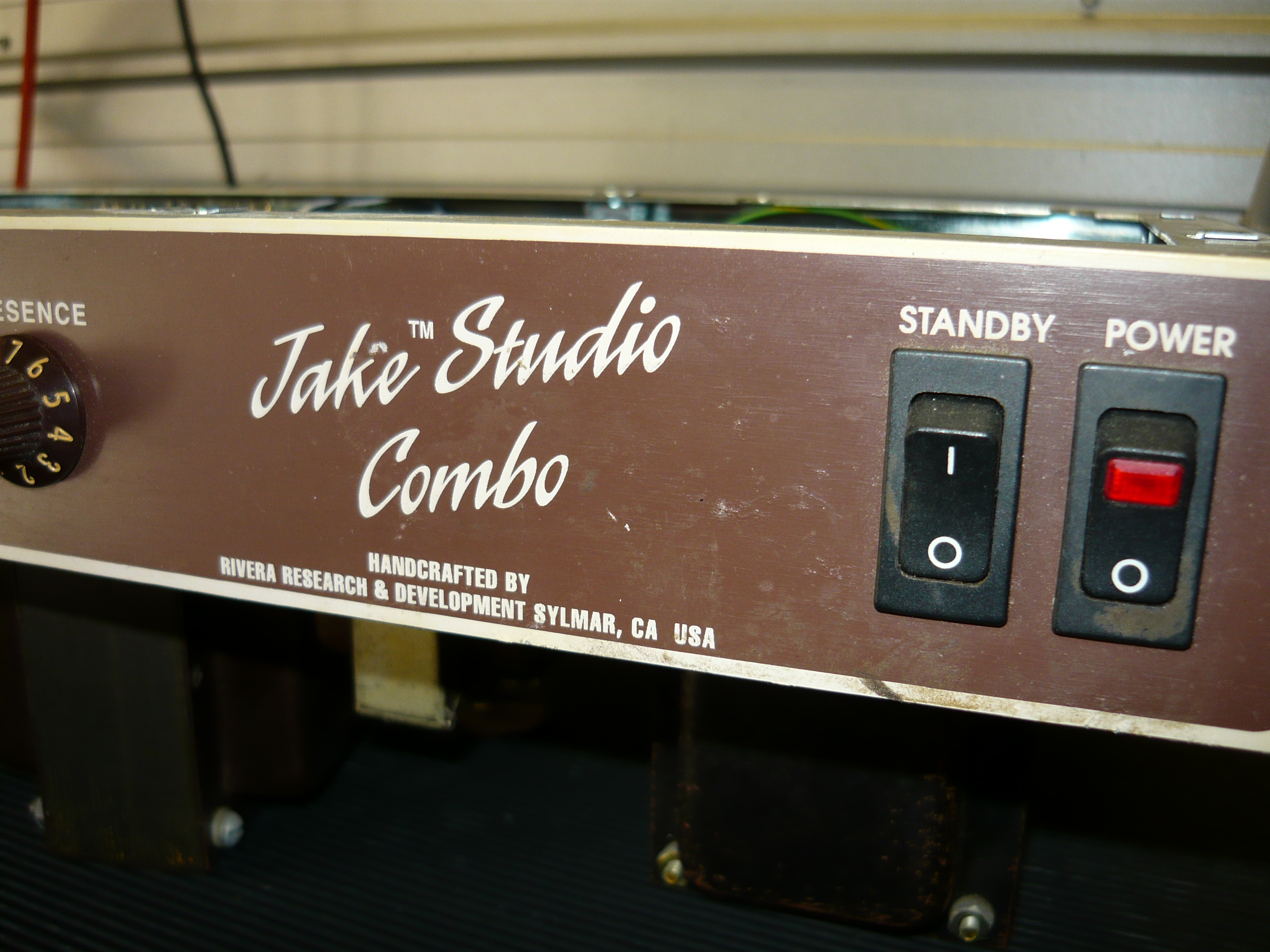
Hello again. In this week’s blog we revisit the amps of Paul Rivera. We previously published blogs re Rivera amps on Dec 16, 2011 (more about Rivera amps: the Ninja Boost MOD), Nov 4, 2011 (the Rivera Bonehead amp), and Jun 19, 2011 (do we cater for the jazz guitarist ?). There are now 65 blogs published, so there’s something there for all amp & pedal enthusiasts. The two amps we are discussing are the Rivera Jake Studio Combo, which we assume is named after a prominent American session player, and the Rivera Thirty Twelve, which is also a 1×12 combo.
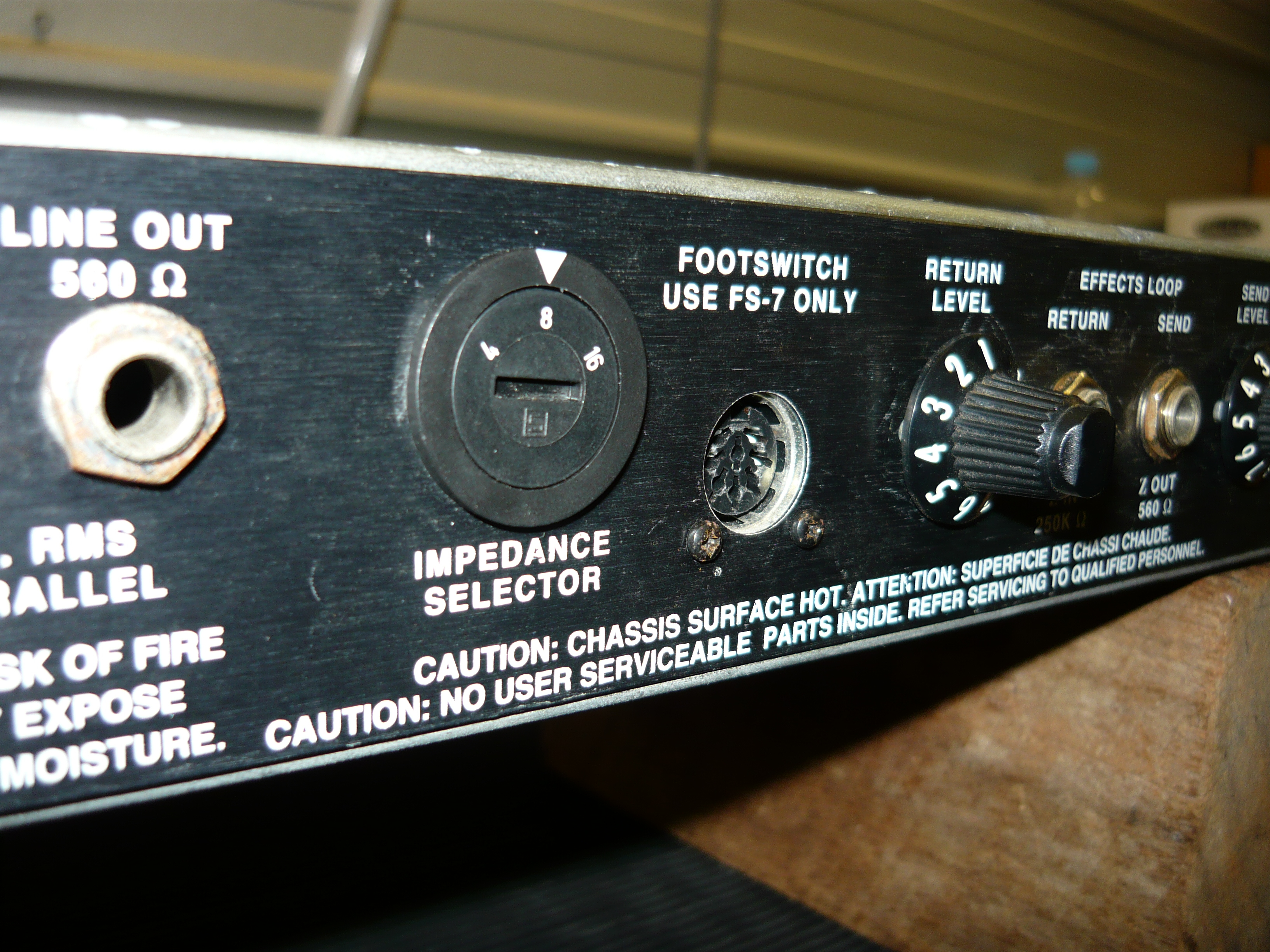
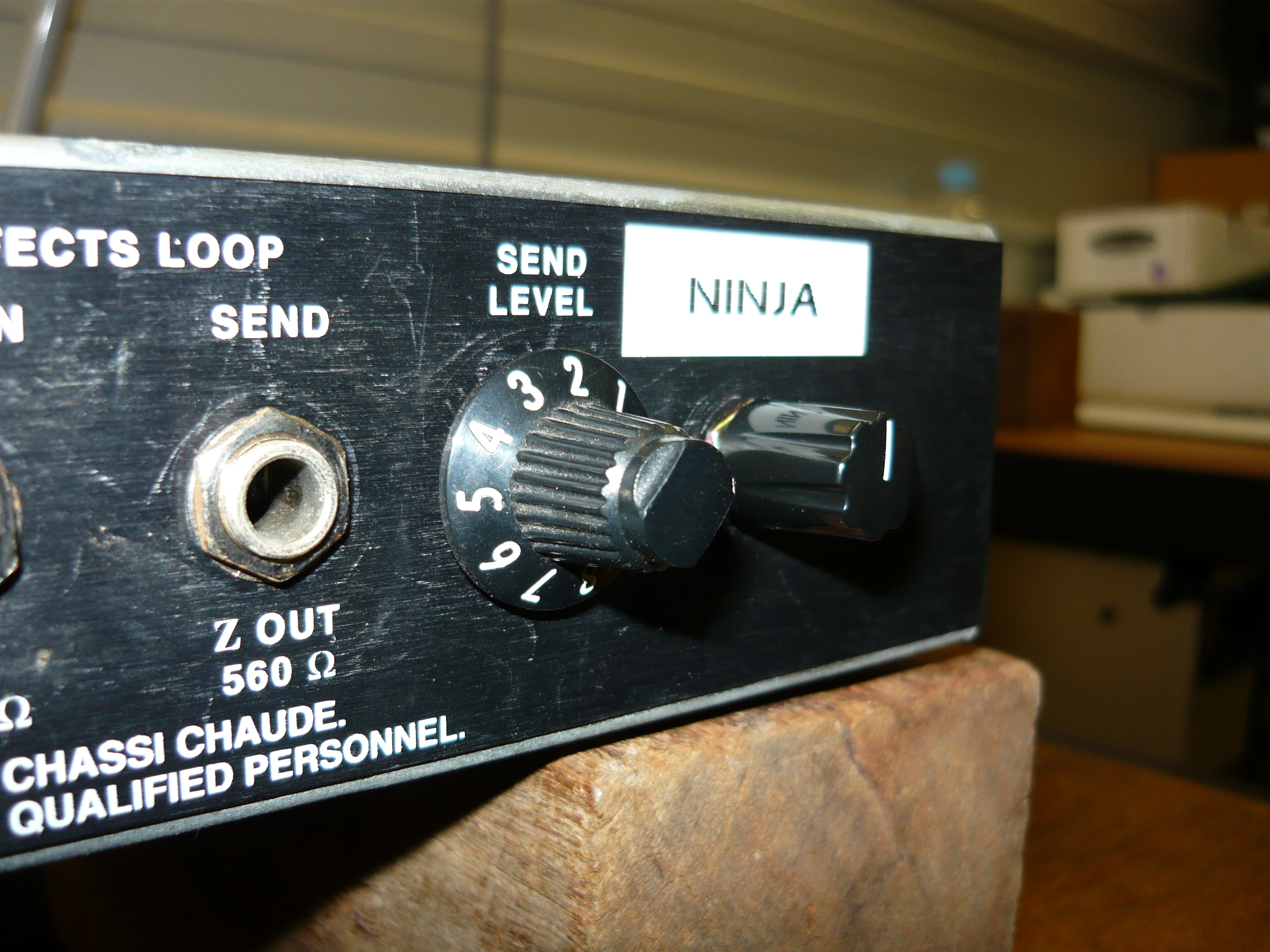
Rivera Jake Studio 002Our mission statement with the Jake was to replace the broken impedance selector switch, and install our now almost famous Ninja Boost MOD. You can see that the impedance selector is a rotary 3-position switch situated on the rear panel. Replacing the switch was pretty straightforward, but unless you want to MOD the rear panel, you have to source the exact switch from Rivera, via one of their distributors.
Jake Studio Combo Ninja MOD

Jake Studio Combo Ninja MOD

You can also see from the photos that there isn’t a whole lot of spare room on the rear panel of the Jake model, so we had to install the variable boost pot (potentiometer) in the remaining space betweeen the FX Loop and the end of the chassis. We are getting more proficient at implementing this MOD now, having now installed a few, in various models from the range. We always use highest quality shielded cable, in this case bedded down in a blob of silicone, to keep microphonics to an absolute minimum.

Ninja Boost MOD

Ninja Boost MOD

Apart from a different location, this MOD was implemented in exactly the same way as in the other Rivera amps we have done, with the same very smoothly controllable boost function as the end result. The strap handle was dangerously worn so we automatically replaced that. The exposed metal strip could easily slice someone’s hand open.

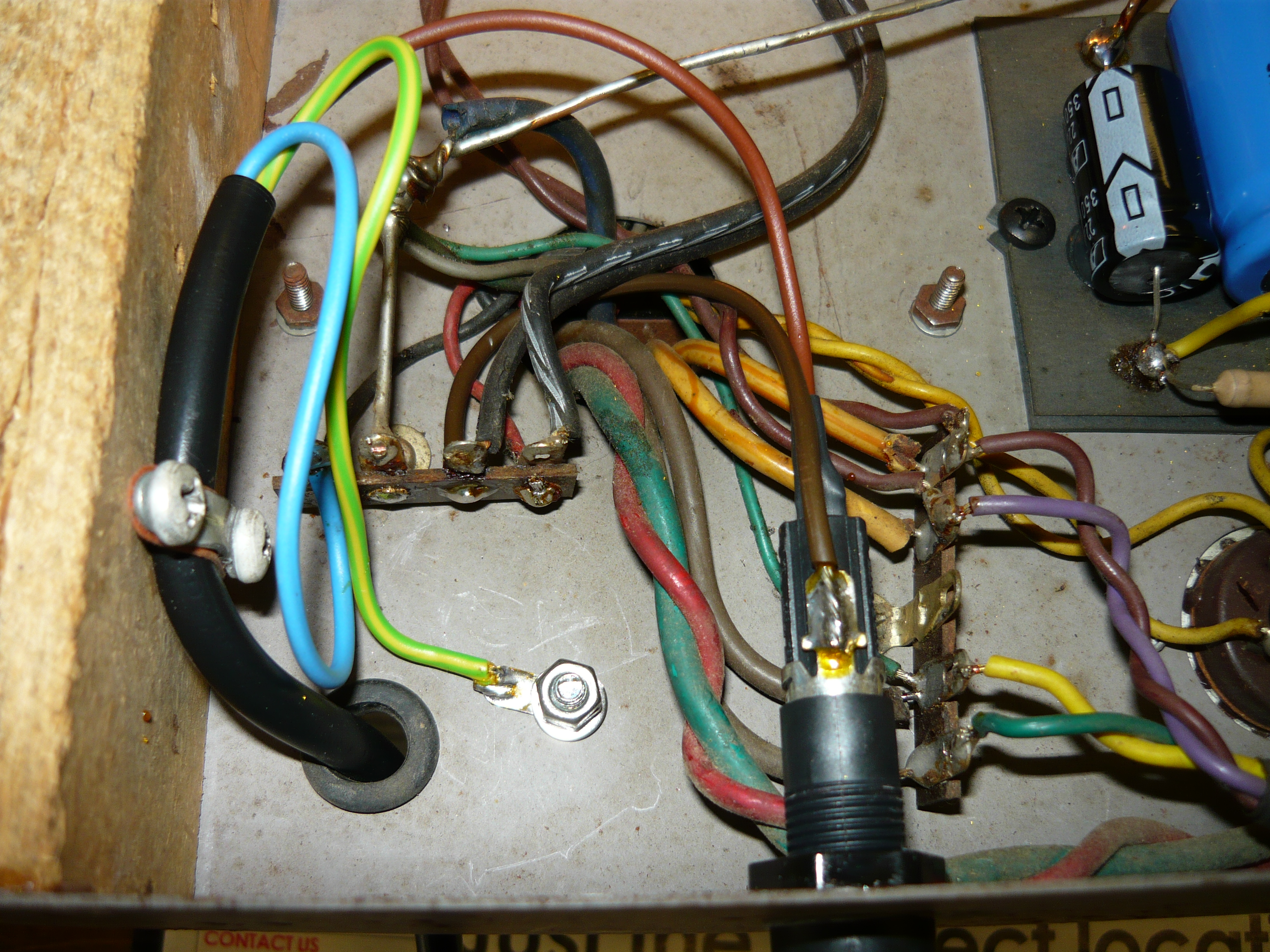
Rivera Jake Studio 005To finish off the job, the pots needed cleaning with Faderlube and the input jacks (x2) were R/S, cutting in & out pretty badly. The best option was to replace them altogether. Unfortunately, the jacks are a printed circuit board (p.c.b.) mounting type, specific to Rivera amps. The jacks are earthed to the chassis as well, ie non insulated.

the slightly road worn Rivera Jake Studio Combo

the slightly road worn Rivera Jake Studio Combo

We wanted to install the traditional heavy duty Switchcraft open construction jacks, as per vintage Fender amps, so we dispensed with the input jack p.c.b. altogether and hand-wired the new jacks. Perfect ! Both these combo’s feature the standard Rivera features of a USA-voiced preamp, a British-voiced preamp, a pull-boost on each preamp, an FX Loop and a reverb tank. It seems that there are relatively small differences in the circuit that differentiate the various models.

the Rivera 30/12

the Rivera 30/12

Our second example is the Rivera Thirty Twelve combo, and in this case a much more complex set of problems to resolve. The stated fault from our customer was the amp had gone low level, generating miscellaneous noises, plus the reverb & volume pots had suddenly gone very noisy ! Initially quite a bewildering set of symptoms. When we powered the amp up, we found nil output from either preamp, but some very low level output via the FX Return jack.
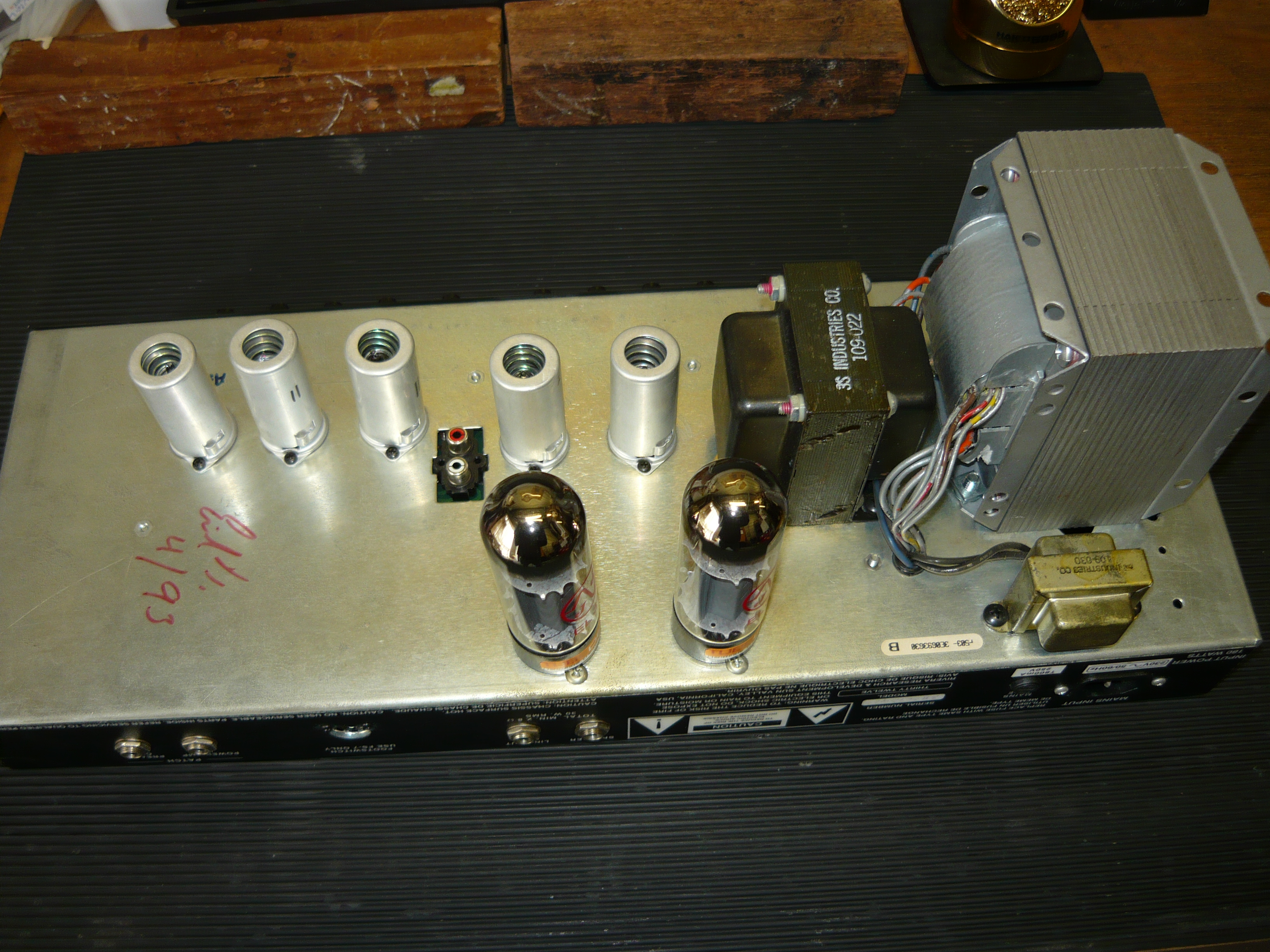
Rivera 30/12 chassis but not the correct power transformer

Rivera 30/12 chassis but not the correct power transformer

The 12AX7 preamp valves tested substandard and would have to be replaced, but this was not the main problem. The first thing we noticed after removing the chassis from the cab was the non-original power transformer ! It was huge, and presumably an Aussie-made unit that was installed by persons unknown after the original factory unit went faulty. There was evidence of considerable damage to the power supply end of the main p.c.b., with lifted pads & tracks, so there had been some sort of meltdown that went along with (or maybe caused) the transformer failure.

Rivera 30/12 main board

Rivera 30/12 main board

Some p.c.b. repairs had been attempted, but the results were not what you could describe as professional. We see some extremely inept repair attempts and this one is not the worst, but is well up there. The replacement power transformer actually looks more suited to a 100 watt amp. Remember, this is a 30 watt EL34 power amp and we are expecting to see a high voltage supply in the range of 380V to 400V DC maximum. This particular transformer was delivering over 500V DC, and yet no attempt had been made to upgrade the capacitor voltage ratings in the power supply circuitry, or configure pairs of capacitors in series to achieve the necessary voltage rating, plus the bias supply needed to be rejigged to give the wider range of bias adjustment required to compensate for the higher operating voltages. In other words, the amp was permanently under biased, resulting in very hot running output valves.

Rivera 30/12 low voltage power supply

Rivera 30/12 low voltage power supply

The EL34 output valves were at the end of the road, as you would expect, so we supplied a new matched pair, as well as some selected 12AX7 preamp valves. We set about rebuilding the high voltage supply and the bias supply, within the constraints of a permanently damaged board. Installing series pairs of 350V DC caps is the simplest way of achieving a higher voltage rating. None of this exlains the complete lack of output from the preamps. The low voltage supply was also damaged – the regulated +18V supply rail was down to only a few volts. Replacing the +18V regulator IC did not make a huge improvement, so the next step was rebuilding the regulated and unregulated low voltage supplies.

rear view of reassembled amp

rear view of reassembled amp

In case you’re wondering the significance of the low voltage supplies to a Rivera amp, the 12AX7 preamp valve heater filaments are powered in a relatively complex arrangement of series connections to the low volts supplies, as opposed to the more conventional parallel arrangement from a 6.3V AC supply. Each 12AX7 should read approx 12V DC across pins 4 & 5. Therefore losing the +18V DC rail was the reason for nil output from the preamps, ie several 12AX7’s were not functional under these conditions.

the Rivera 30/12 repairs completed !

the Rivera 30/12 repairs completed !

Well, at the conclusion of several hours of work, we were able to bias the amp for a reasonable operating point @ 515V DC anode supply. Initially, on sine wave test into a dummy load, the output waveform was unstable, but we installed a 100pF/1kV cap across the anodes of the phase-inverter stage and that settled things down. The amp now delivers 20V into 8 ohms = 50 watts. Colin will have to take care not to blow the stock speaker which is only rated @ 35 watts. All functionality on this amp is now restored, we just hope the board holds up in the longer term for the customer.

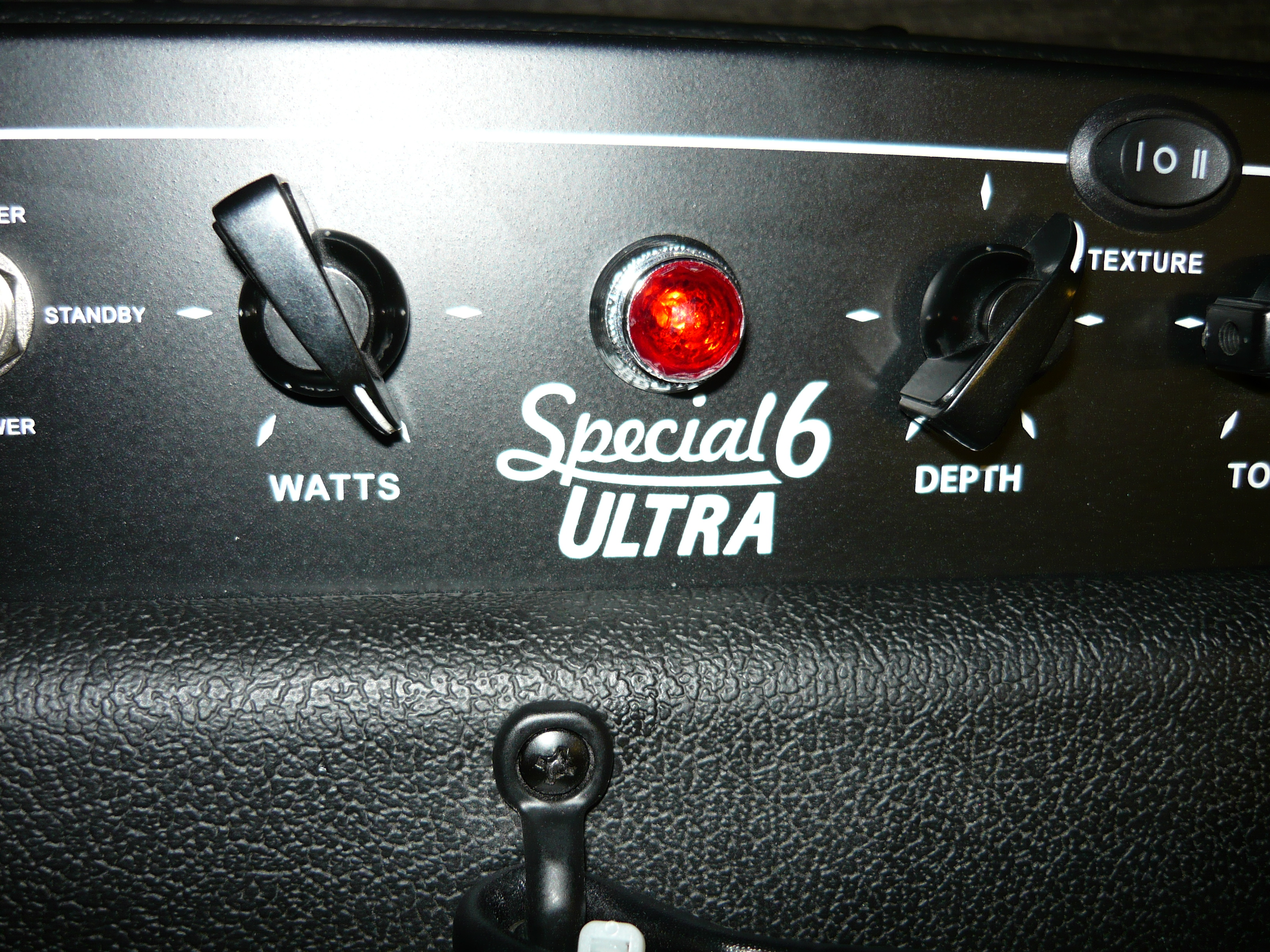
The VHT Special 6

January 22, 2013
the VHT Special 6

the VHT Special 6

Welcome back to the blog ! Back on December 7th 2012, we published a blog describing repairs to a VHT Pittbull Classic valve (tube) guitar amplifier. The Pittbull was a 3-channel, 100 watt monster built about 20 years by the original VHT amplifier company in the USofA. Since then, the original owner sold on the rights to the VHT name, and the modern VHT amp is made in China, and is generally a much lower powered amp.

the VHT Special 6

the VHT Special 6

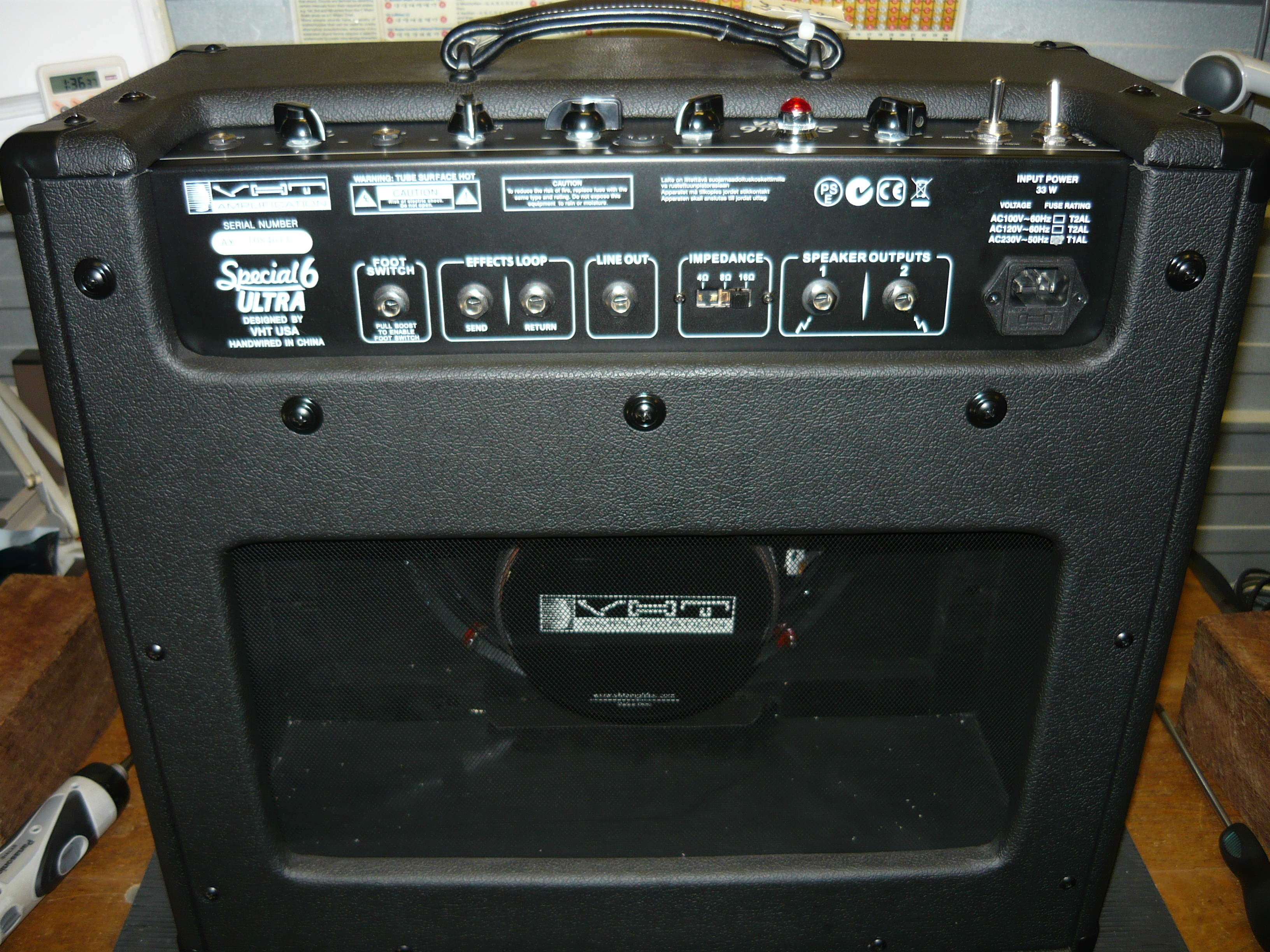
We recently repaired a VHT Special 6 ULTRA for Steve, a regular customer. This amp is loosely based on the well known Fender “Champ”, but features an additional 12AX7 gain stage, with the inclusion of  separate low-gain & high-gain input jacks, so the player can bypass the high gain stage, and also an output attenuator and additional tone shaping switches. The power amp is the traditional single-ended 6V6 valve output stage, employing cathode-bias, ie the amp is self-biasing. Power output is 5 watts @ the onset of clipping.

the VHT Special 6

the VHT Special 6

The speaker is unfortunately only a cheapo Chinese unit, but the cabinet is much more generously proportioned than many other similar amps, so we would assume that upgrading to a quality replacement speaker would result in much improved performance, particularly ref the lows & low mids. Another obvious upgrade would be the valves themselves, which is where this blog is heading.

rear view

rear view

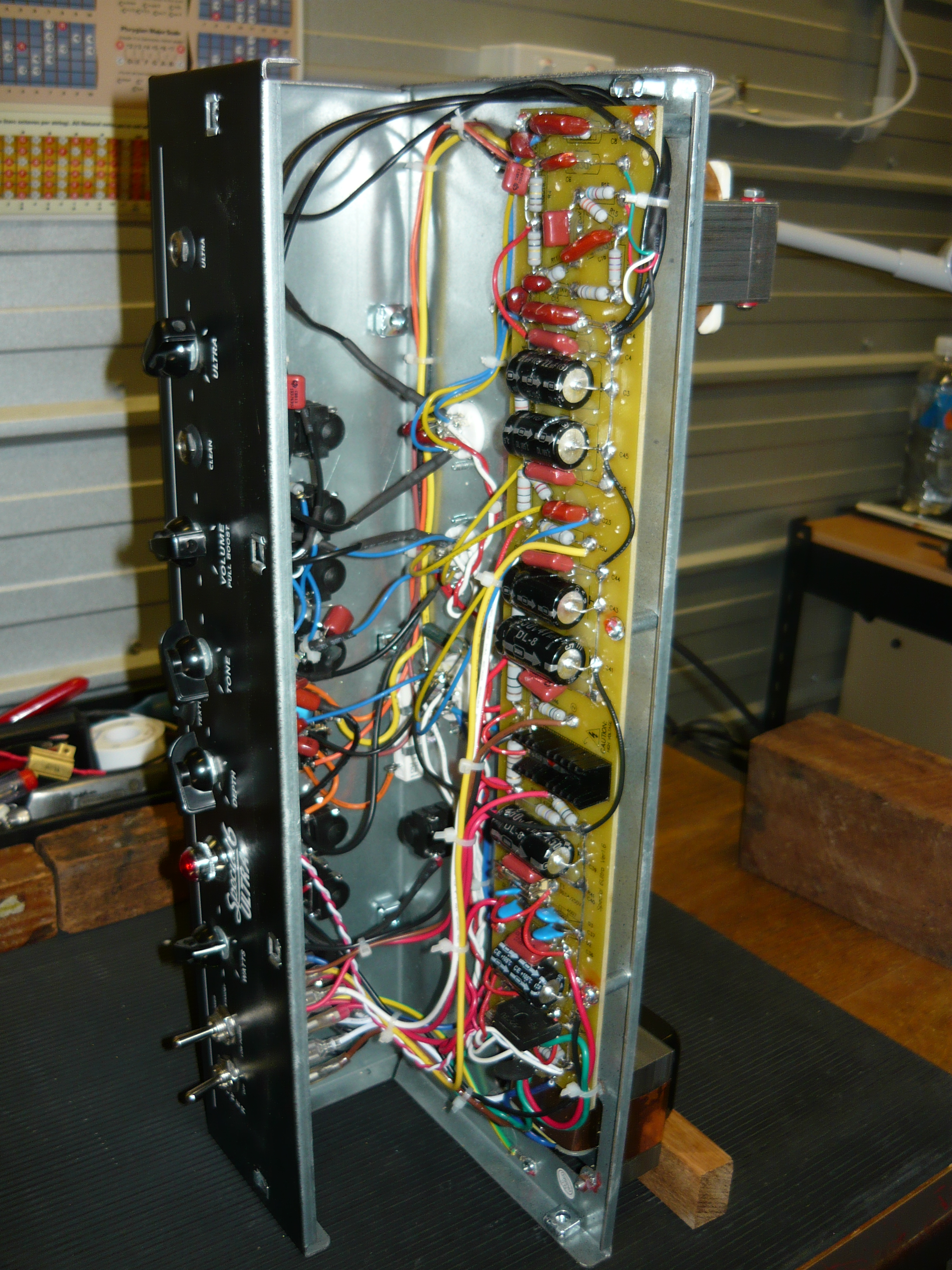
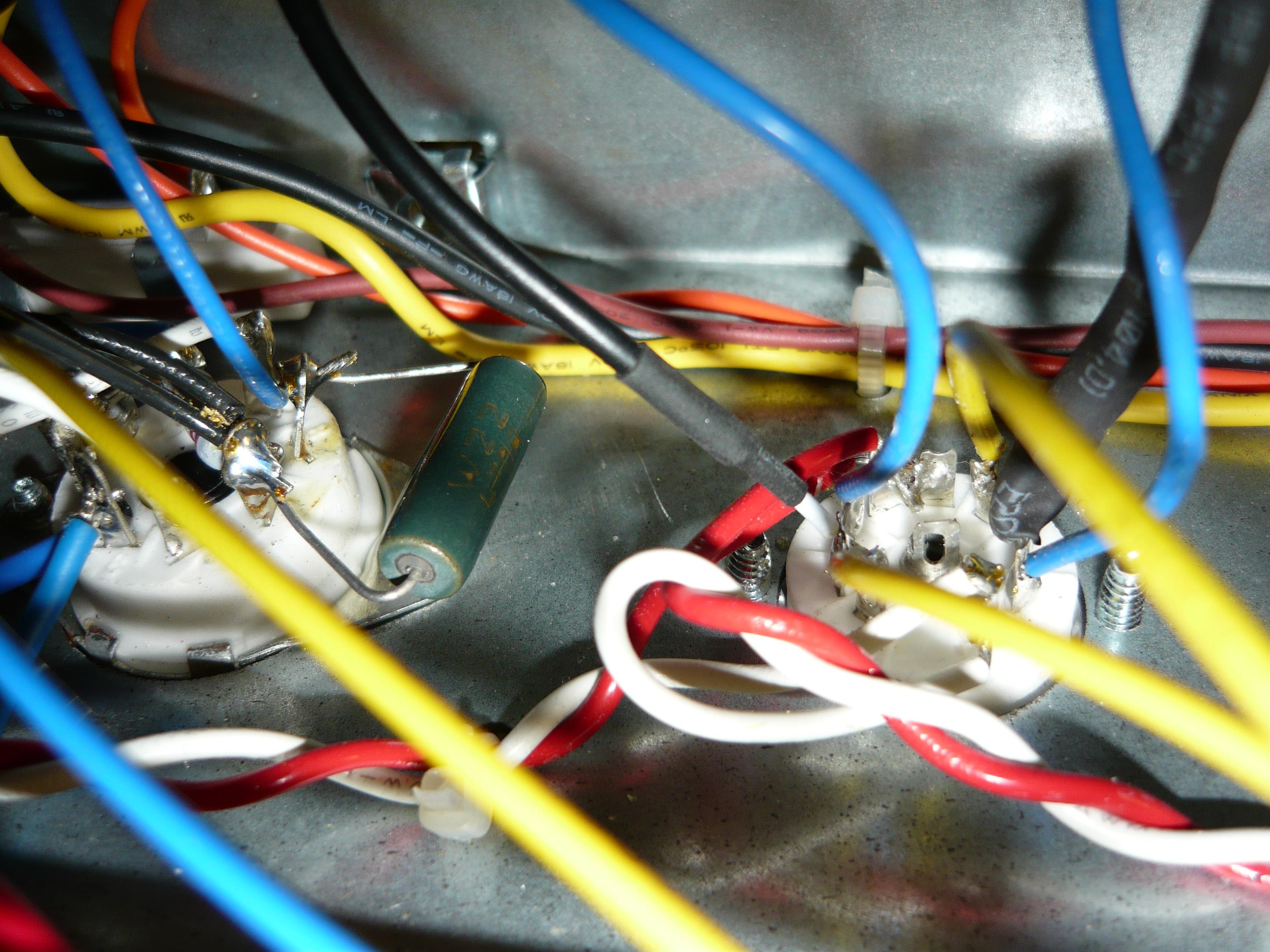
The stated fault on this amp was “it just stopped”. The external & internal fuses were not blown, and the DC voltage conditions appeared normal, but the output stage was non functional. We soon realised why. The Chinese 6V6 had gone S/C (short-circuit) internally, destroying the 470 ohm cathode-bias resistor in the process, which acted like a fuse. The chassis in this model is folded in a U-shape so getting to the parts of the circuit you need to get to with a soldering iron is time consuming, adding to the cost of repairs. However, by dropping out the octal socket and twisting its position we could remove the blown resistor and install a replacement W22 series 7 watt ceramic body 470 ohm, our preferred type for demanding conditions.

the chassis is removed & on the workbench

the chassis is removed & on the workbench

While we had the chassis out we took the time to correct a few “dry” solder joints, which would have caused intermittent problems in the long-term. We can confirm that these amps are actually “hand-wired” in China, and the quality of assembly is no worse than what we are seeing from the major guitar amp manufacturers. Naturally, the larger hardware items such as transformers, speaker, etc, are cheaper units, but this is only what you would expect from a budget amp.


we have replaced the cathode bias resistor

we have replaced the cathode bias resistor


To complete the repair, we installed a new (re-issue) 6V6GT output valve by Tung Sol, one of the best of the current production 6V6’s, plus at Steve’s request we replaced V1 with a 5751 preamp valve. This reduces the preamp gain by about half, allowing a much wider range of clean to crunch tones to be easily obtained. Steve was very happy with the end result. So there we have an example of the contemporary VHT guitar amp. Many thanks to Steve Molenaar for his continued custom & loyalty. IR.

Service Centre for Morgan Amplifiers in Australia

January 16, 2013
the Morgan SW50 head

the Morgan SW50 head

Many of you will already know that for many years now we have specialised in the repair, service & restoration of hand-wired valve (tube) musical instrument amplification, including many of the “boutique” grade amps that have appeared on the scene since the 1990’s. This is our first customer repair job for a relative newcomer to the “boutique” scene, the Morgan amp from California.

rear view - Morgan SW50

rear view – Morgan SW50

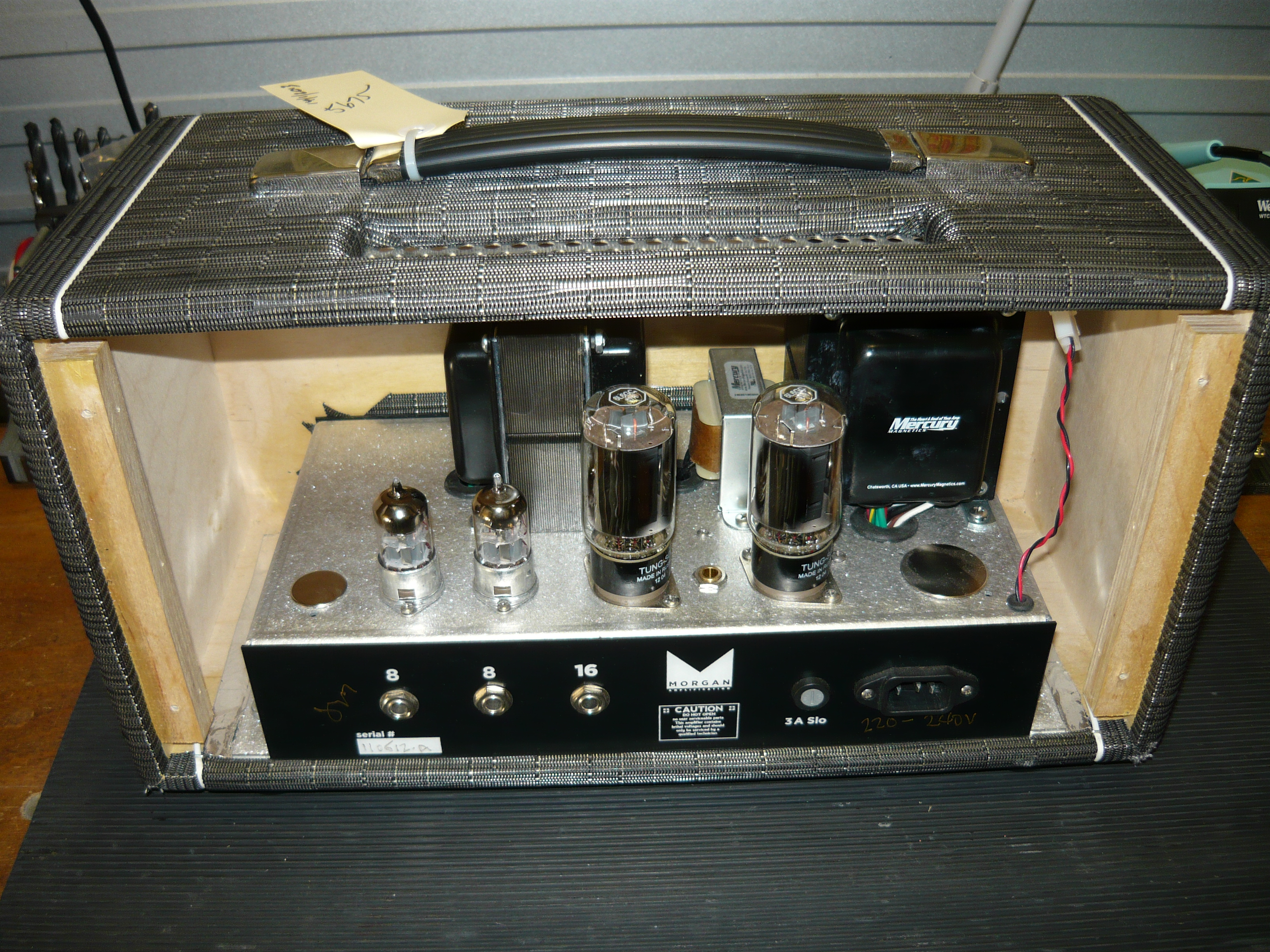
The Morgan amps have enjoyed an increased profile in recent times, and have appeared in numerous YouTube demonstrations. This particular model is known as the SW50, and is a stripped-down, single channel dual 6L6 powered amp delivering approx 45 watts @ the onset of clipping. The power supply is quite conventional, employing silicon diodes for rectification. The transformer & filter choke set is by Mercury Magnetics.

rear panel removed

rear panel removed

The Morgan website implies that the design of this model is loosely based on the clean channel of a customer’s early 1970’s Dumble amp. Clearly, the design was revoiced & refined quite significantly to become the SW50, which is primarily a clean, percussive amp with very late break-up. The 2-band EQ is more interactive than a “Blackface” Fender, for example. The bright switch is very effective at low settings of the volume control, the bass switch is obviously Dumble inspired but unfortunately primarily boosts very low frequencies and is best left off.

top/rear view of SW50 chassis

top/rear view of SW50 chassis

The SW50 is actually quite dark running with the volume control set high and the level (ie, master volume) set low. Conversely, the SW50 is quite bright with the volume control set low, and the level set high – this is when the bright switch is most effective. There is more than enough bottom-end with the bass switch off. The preamp employs a single JJ 12AX7 valve (tube), plus a 2nd JJ 12AX7 for the phase-inverter stage.

chassis interior view 01

chassis interior view from front

This particular Morgan was creating some weird resonances on selected notes being played. We discovered that V1 was microphonic, and the pair of SED 6L6GC output valves (tubes) was in very poor condition, with a much weakened internal structure vibrating at selected frequencies. The amp was under-biased, meaning that the 6L6’s were running far too hot for long term reliability.

chassis internal view from rear

chassis interior view from rear

We installed selected replacement valves & rebiased for a more reasonable current draw. On power output test there was no crossover distortion evident and we measured 19V/8 ohms which is 45 watts, @ the onset of clipping. Mains voltage here in Wyoming NSW is approx 245V AC. I should point out that at this point in time we have no official relationship with Morgan amps, we are not an authorised warranty agent. However, we are now offering world-class non-warranty service/repairs to all Morgan amps for Australian customers. Regards – Ivan Richards.

VHT Pittbull Classic

December 7, 2012

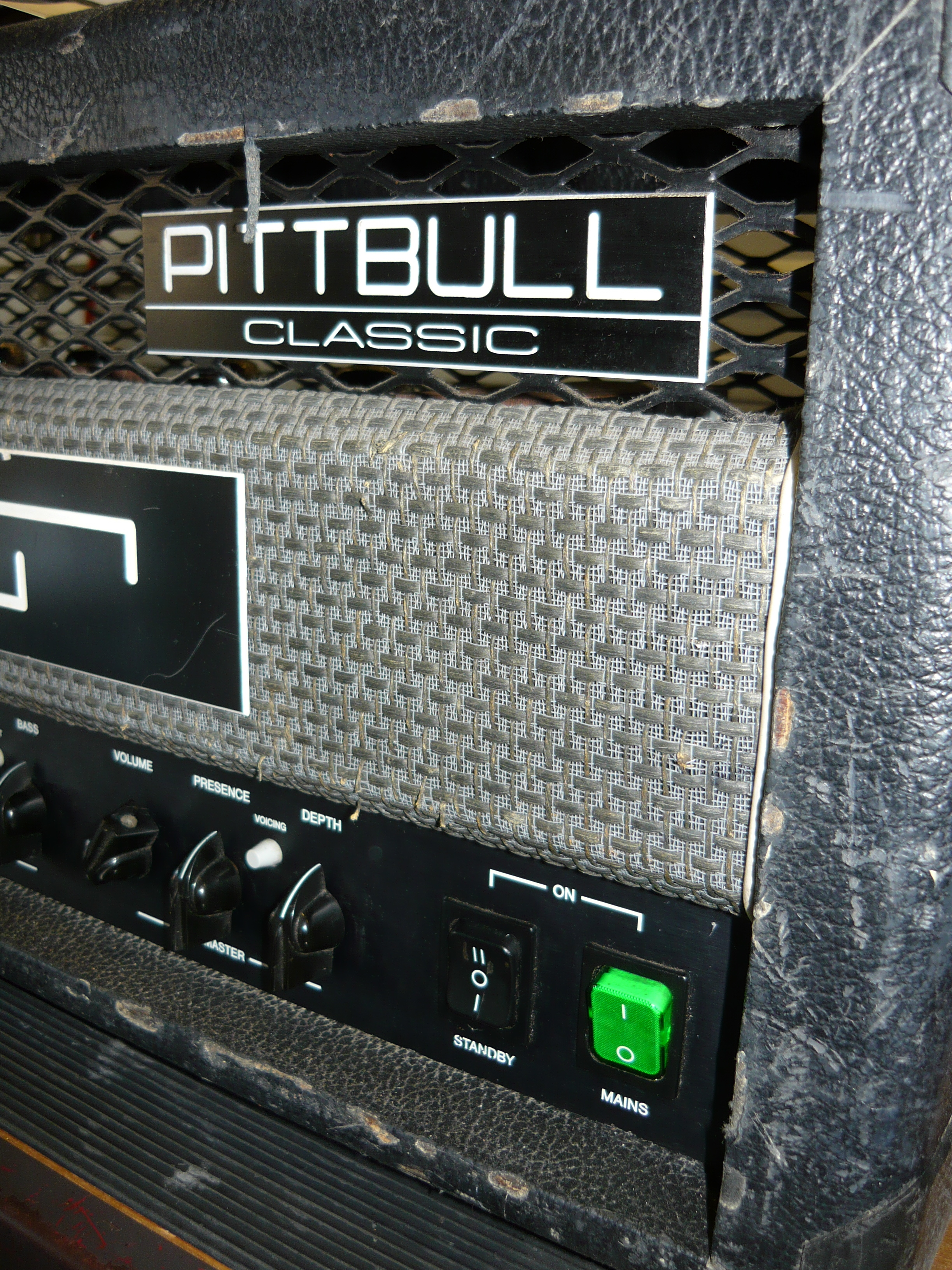
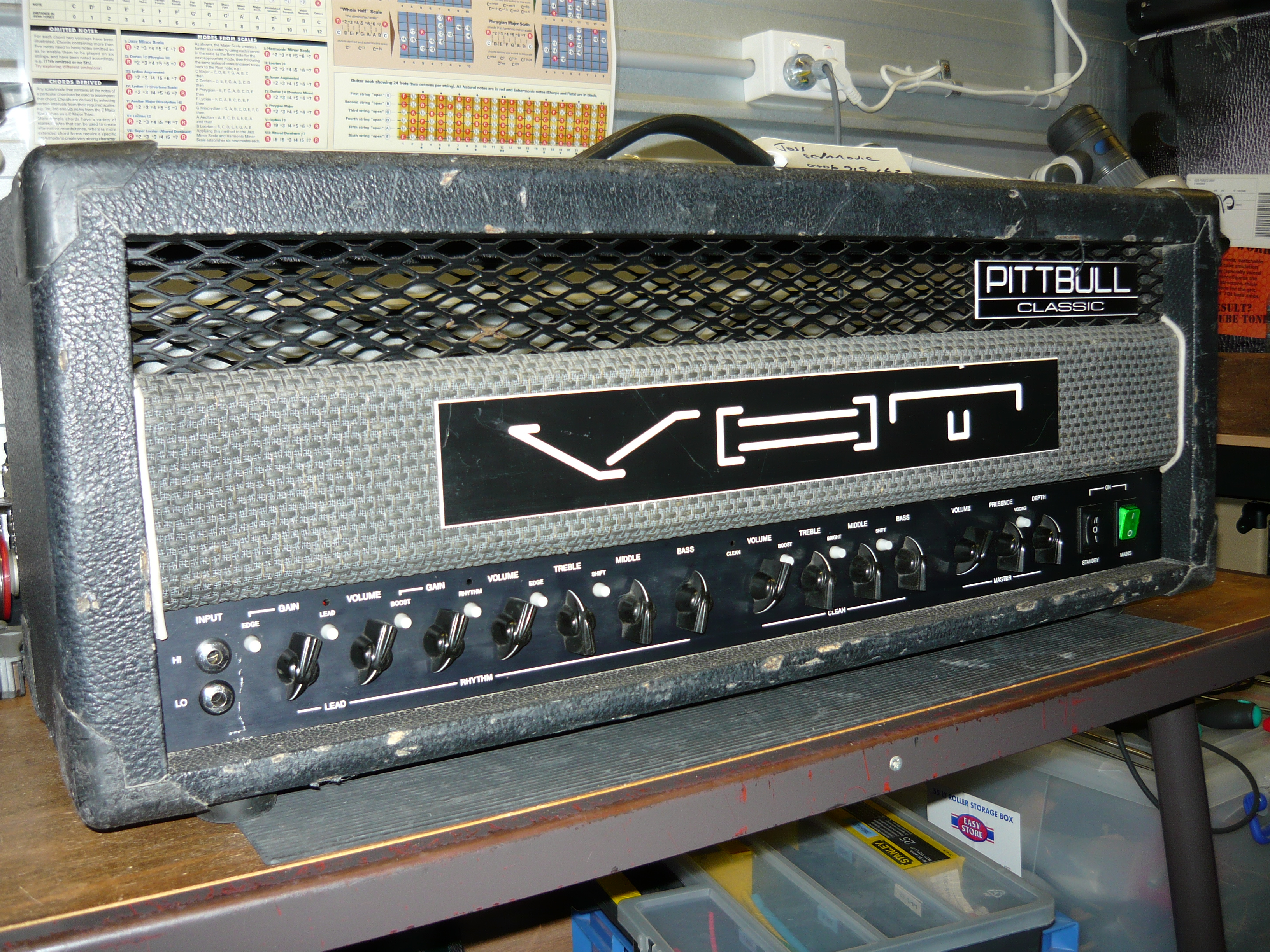
Hello and welcome back to the blog after a break of several weeks. This time we are looking at a classic hard rock guitar amplifier from the USA, manufactured back in the early 1990’s: the VHT Pittbull amp. This example has obviously had a hard working life, and our repairs actually started with the cabinet, which was beginning to fall apart. The stated fault from our customer was there was a pop, then nil output. No fuse had actually blown, and all the valves tested OK, so the problem was in the circuitry itself.

All of the circuitry in the Pittbull is mounted on two large printed circuit boards (p.c.b.’s) which run pretty much the width of the chassis. Unfortunately, they overlap and things are complicated by the board mounting arrangements, so it is a very time consuming job removing these boards for repairs, plus it’s fiddly, with the ever present danger of introducing additional faults that weren’t there in the first place. Even worse, the status LED’s that indicate which channel is active, are mounted below the boards where your fingers can’t get to them to line them up with the holes in the front control panel.

Examination of the boards didn’t reveal any obvious component failure, but a check of the DC conditions with a DVM indicated problems with the low-voltage (LV) power supply, ie the +/- 18V DC rails (regulated). Apparently the signal path includes some solid-state circuitry, hence the complete loss of signal, and there is also some switching/control circuitry which is IC based. Unfortunately all the device identifiers have been intentionally rubbed off the IC’s ! The original VHT company definitely didn’t want to make servicing their products any easier than necessary. This is a design approach that we have never ever understood or endorsed.

VHT Pittbull 004A silicon diode, part of the bridge rectifier for the LV supplies, had gone short-circuit, also causing the failure of filter capacitors and a regulator IC. We replaced the identified components, and also upgraded a few electrolytic capacitors while we had the board out. The LV supplies were now completely functional. As part of our routine electrical safety checkover, we noticed the mains fuseholder was wired incorrectly – strange to find such a basic error in a modern amplifier. We reversed the fuseholder connections and carried out a PAT test, and this amp now complies with Workcover NSW electrical safety standards.

VHT Pittbull 005Having reassembled the chassis and reloaded the valves as supplied (with a very necessary rebias of the output stage – running too hot), the amp was given a power output test. This amp is quite a monster, with 540V DC supplied to the anodes of the EL34 output valves (like some very old Marshalls). We measured 35V into an 8 ohm dummy load which equates to 150 watts ! This is pretty impressive, considering the amp claims to be 100 watts. A burn-in test revealed no further problems, and the final play test showed this amp to be a much more versatile beast than you might have assumed.

VHT Pittbull 006As a sweeping generalisation, we have found the “clean” channel in multi-channel switching amps to be a real disappointment, with all the emphasis placed on the high-gain performance at the expense of clean and crunch tones. In this Pittbull Classic model, the three channels each offer two modes or gain levels and all the settings are useable. The “lead” and “crunch” channels do admittedly share the same EQ, but the very useable “clean” channel, with its own dedicated EQ, more than makes up for this compromise. Rock on ! Many thanks to Joss for supplying us with the subject matter for this blog. IR.

MOD for the David Eden WT800 bass amp

October 9, 2012

We discussed in a much earlier blog that we provide service & repairs for the David Eden brand of bass amplification. In today’s blog we are showing the “World Tour Series” WT800 model as an example, but this blog probably applies to most of the range at this time.

We recently implemented a MOD to this amp at the request of our good customer, Mr Paul Disspain. We can’t claim any originality for this as the idea came from an example on the David Eden user forum. Initially we thought the idea was a bit overkill, but now wholeheartedly agree this is a MOD that greatly enhances long term reliability.

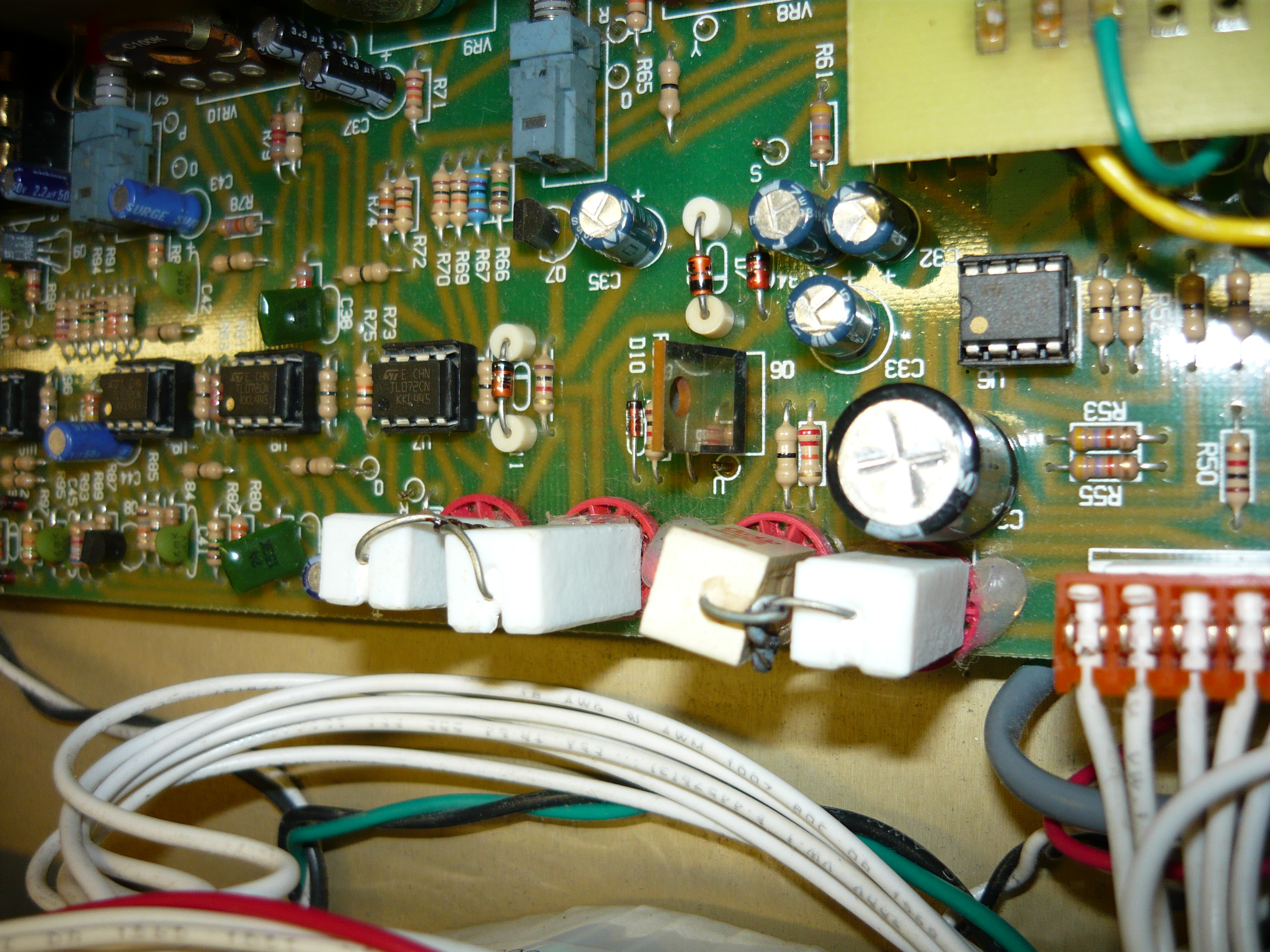
Commercially made amplifiers often have little design short cuts or oversights where the design team momentarily dropped the ball, and David Eden is no exception. Specifically, the low voltage power supply in this model has been done “on the cheap”. Rather than design dedicated low volts supply rails from their own transformer winding, the design simply drops the power amp volts supply rails by way of inserting series resistors, designated R62 & R64.

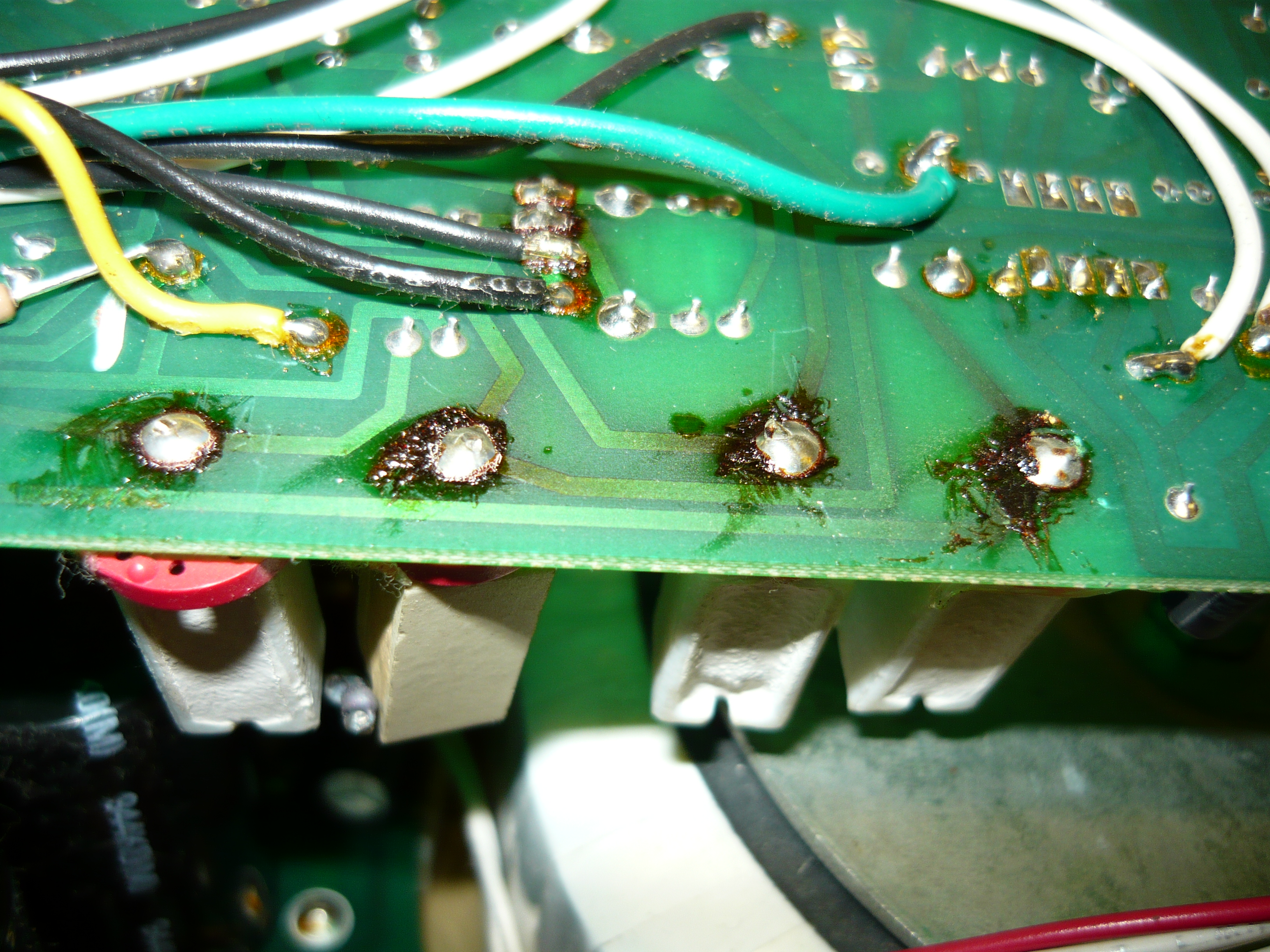
The end result of this technique is that the voltage dropping resistors generate a LOT of heat, even though R62 & R64 each comprise a pair of 5 watt ceramic body components. We are talking about enough heat to desolder the connections over a period of time. This heat is constant, the whole time the amp is powered on. The resultant poor connectivity gives rise to intermittent faults – not necessarily a total loss of signal, but unpredictable drops in signal level and functionality which mysteriously correct themselves.

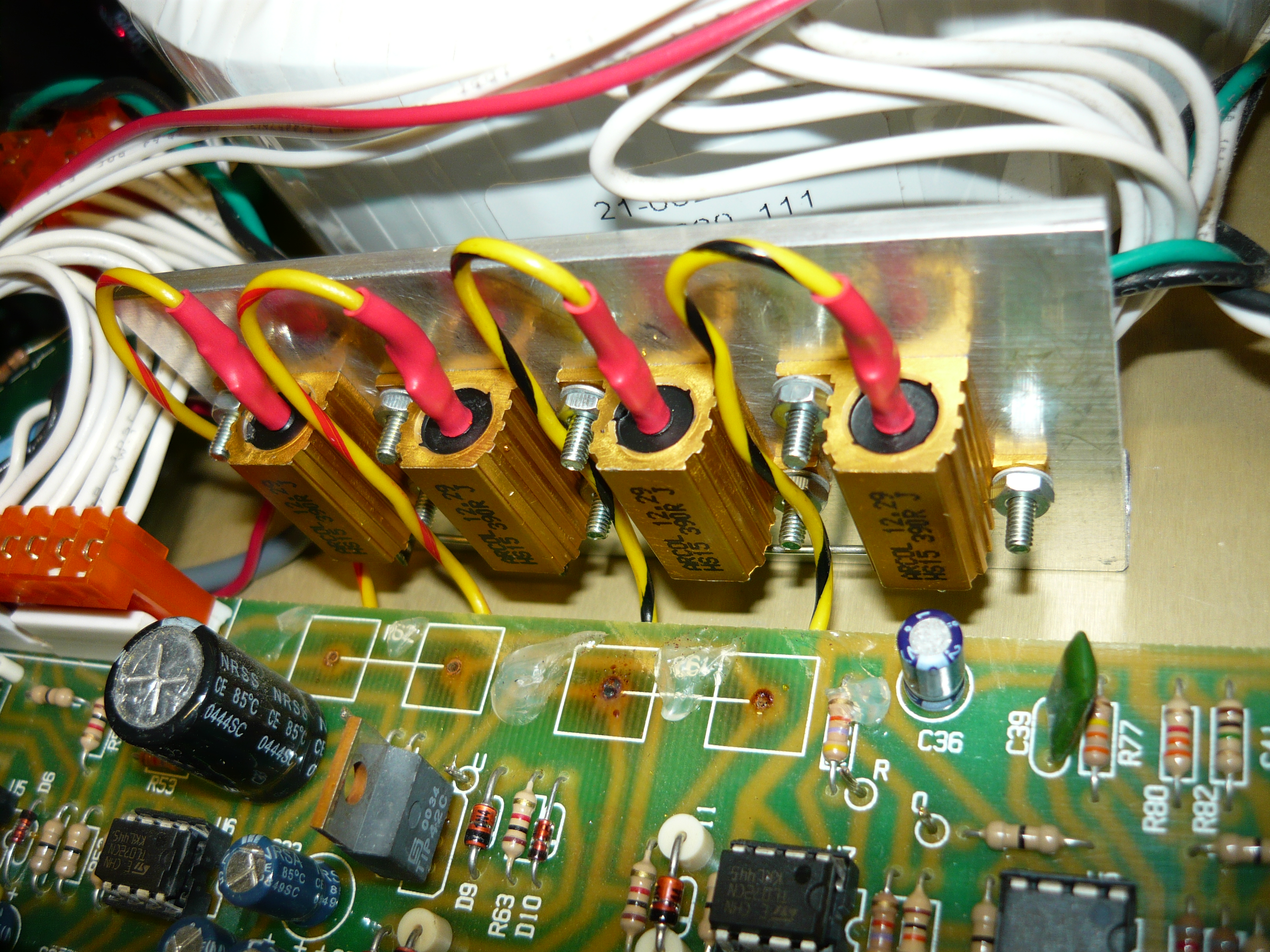
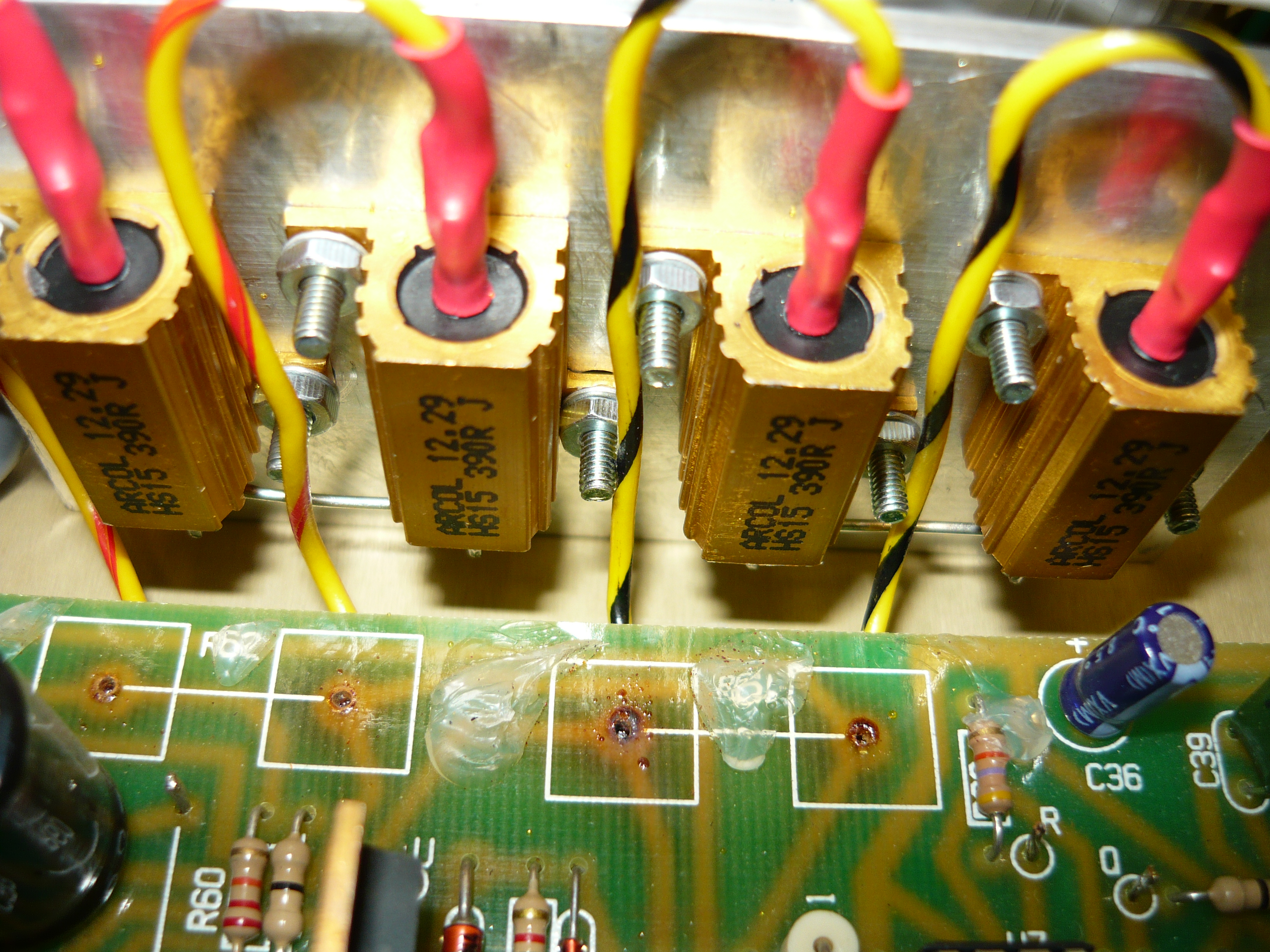
The intention of the MOD is to get the low voltage supply dropping resistors off the printed circuit board altogether. No more heat being absorbed into the board represents a big improvement in reliability. The next obvious step is to up the power dissipation rating of the resistors. If we use aluminium clad resistors, then these by design are suitable for mounting onto a heatsink. A pair of 15 watt resistors each for R62 & R64 (ie, four in total) mounted to an aluminium heatsink, suitably mounted to the bottom section of the amp chassis, in the space between the front board and the toroidal transformer will require only short lengths of hookup wire to connect back to the board.

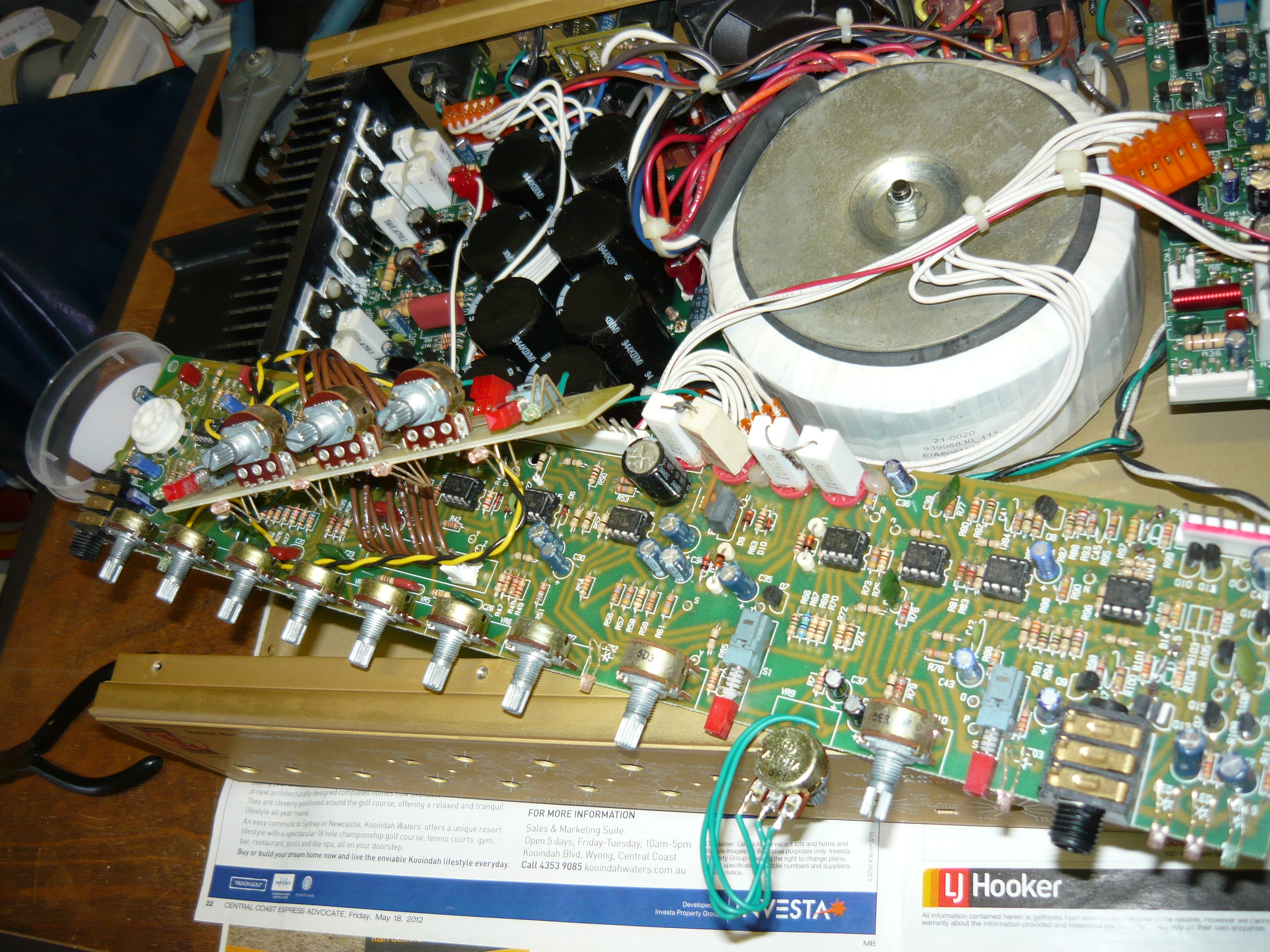
You can see in the photos that we have to strip out the front board completely from the chassis. Removing & replacing the printed circuit board without introducing any additional problems is a time consuming element of this work. We need access to the solder side of the board to clean up any problems, remove the old solder and possibly repair any heat damaged tracks & pads.

While we have the board out of the way, we can mount the heatsink, taking care to leave enough clearance to actually be able to reinstall the board. This task is fiddly enough as it is, without the resistors in the way. We don’t want the heatsink hard up against the transformer or the interconnecting wiring.

The final photos show the board reinstalled and the interconnections between the aluminium clad resistors and the former positions on the board for R62 & R64 completed. The final arrangement still creates some heat, but nothing at all like the original design. With one channel only driven into a 4 ohm resistive load at a time, the power amps deliver 480 watts, which translates into a nominal 400 watts per channel with both channels driven into 4 ohm loads.

The whole job takes at least 2 hours to complete. It is a worthwhile improvement in reliability for those owners of the original David Eden amplifiers who intend to keep their amps for the long term.

Brent’s vintage DIASON amp

September 16, 2012

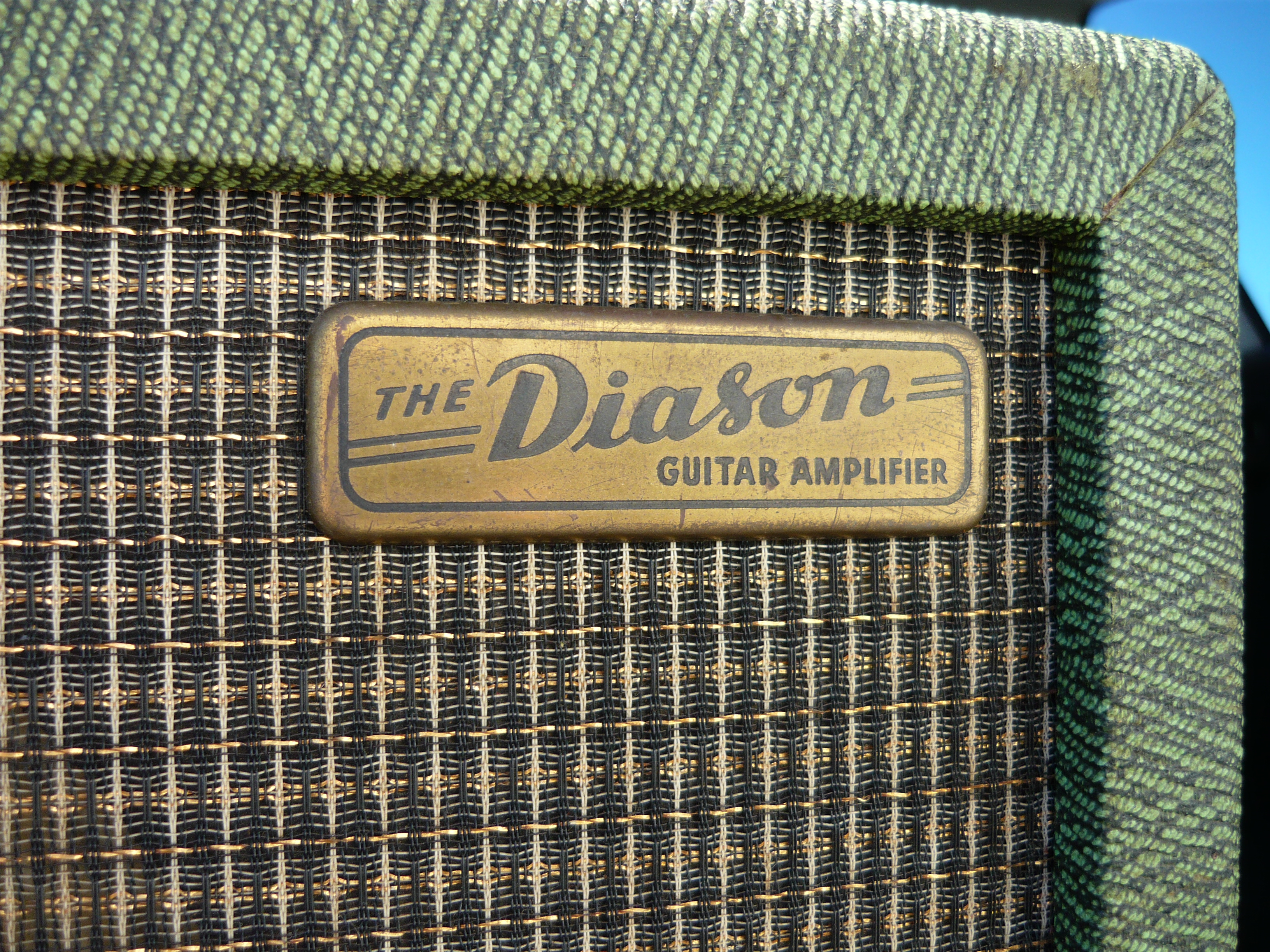
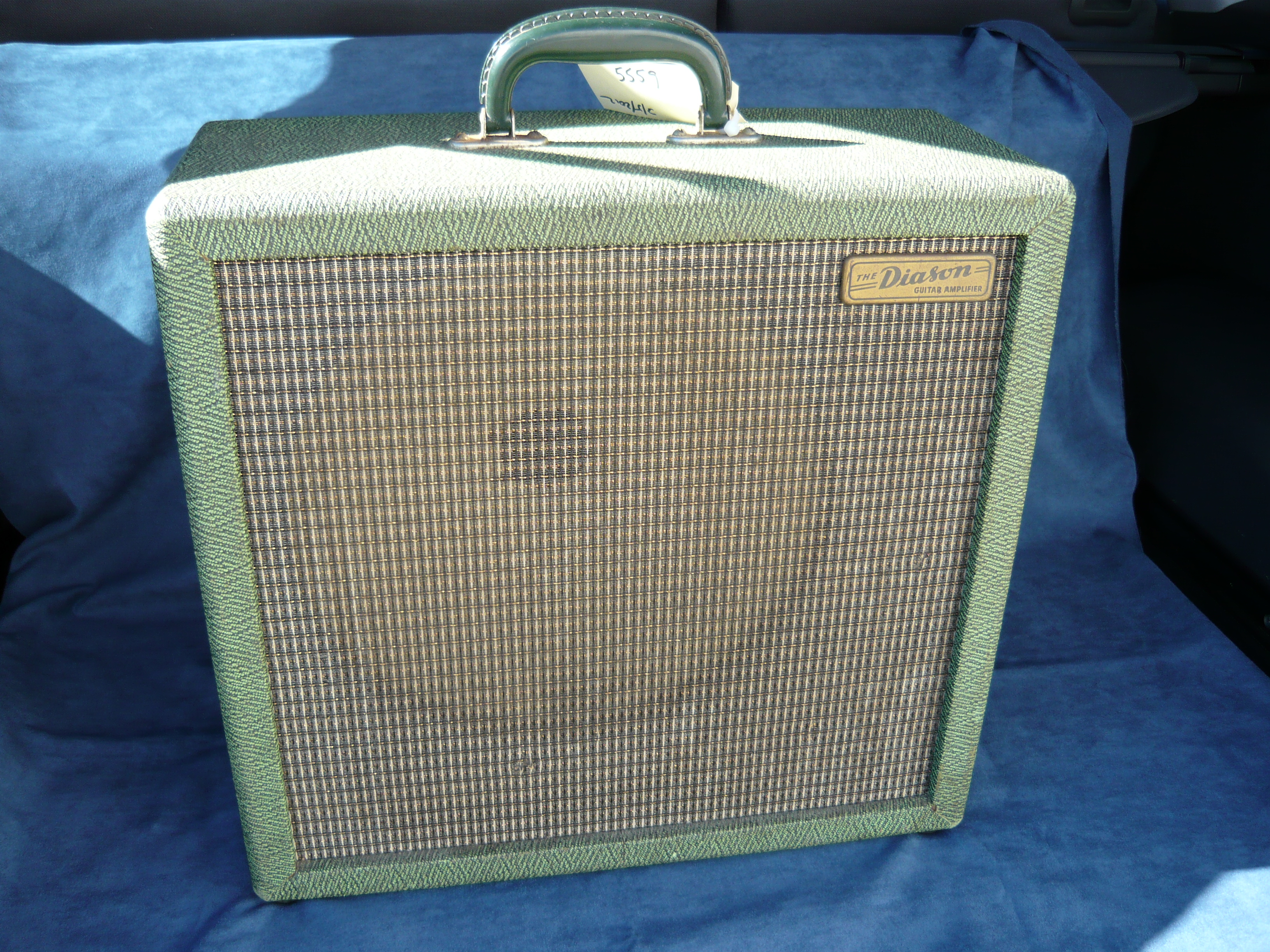
Welcome back ! This week we have another curiosity item from the distant past. We are discussing a vintage Diason 15 watt guitar amplifier, serial # C1048, belonging to Brent, from Bondi Intermusic, our favourite Sydney boutique guitar store. We know very little about Diason amps, we’re not even sure how to pronounce “Diason”, but we know they were manufactured in Melbourne Australia, back in the 50’s and 60’s.

Once again, if anyone out there has any knowledge regarding the manufacture of the Diason amp, please contact us so we can present this information to our readers. Our primary concern always is that the history of the Australian music industry is not lost forever. We have repaired Diason amps previously, usually from the mid-60’s, and always 1X12 combo’s of less than 20 watts output.

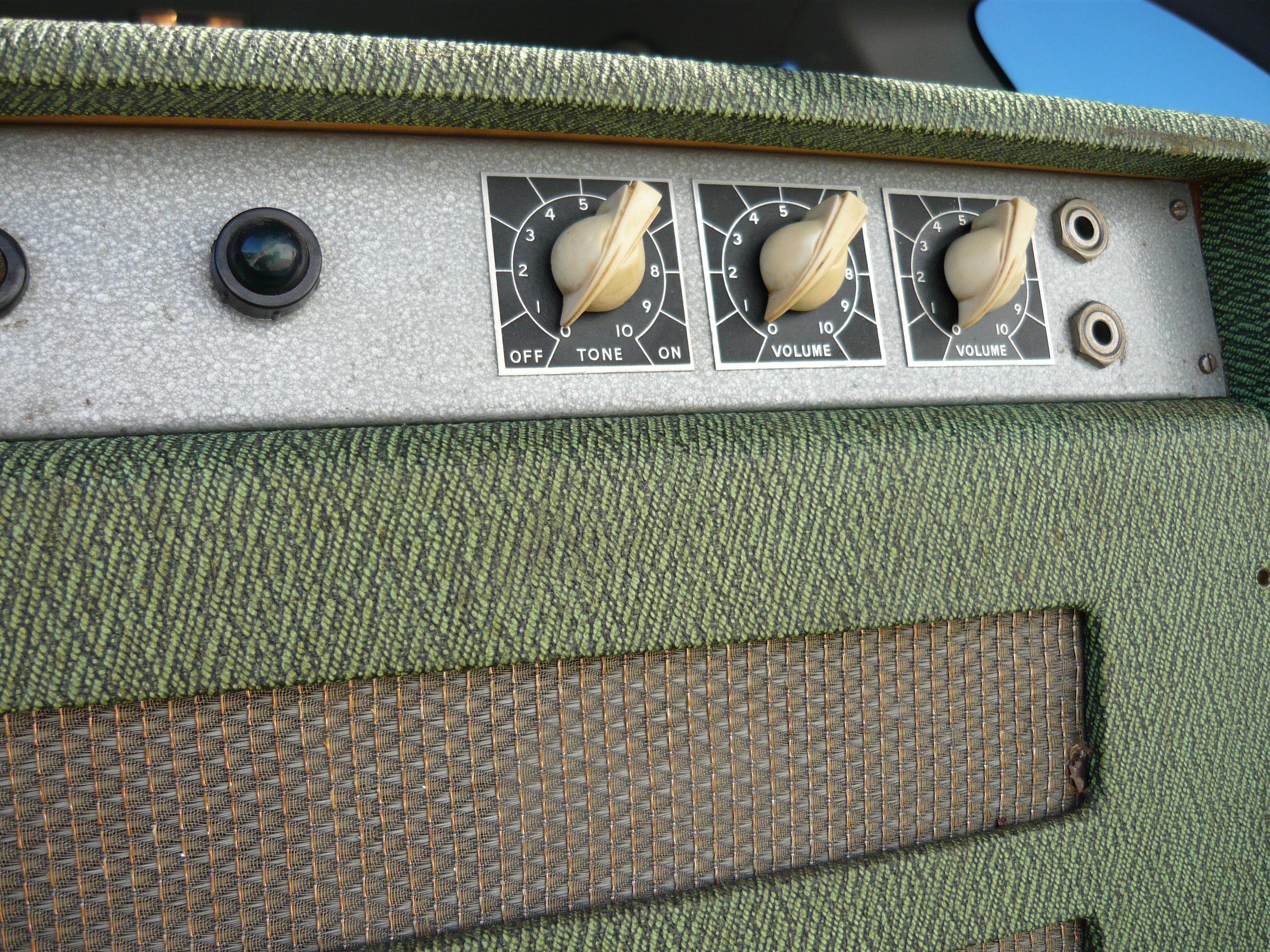
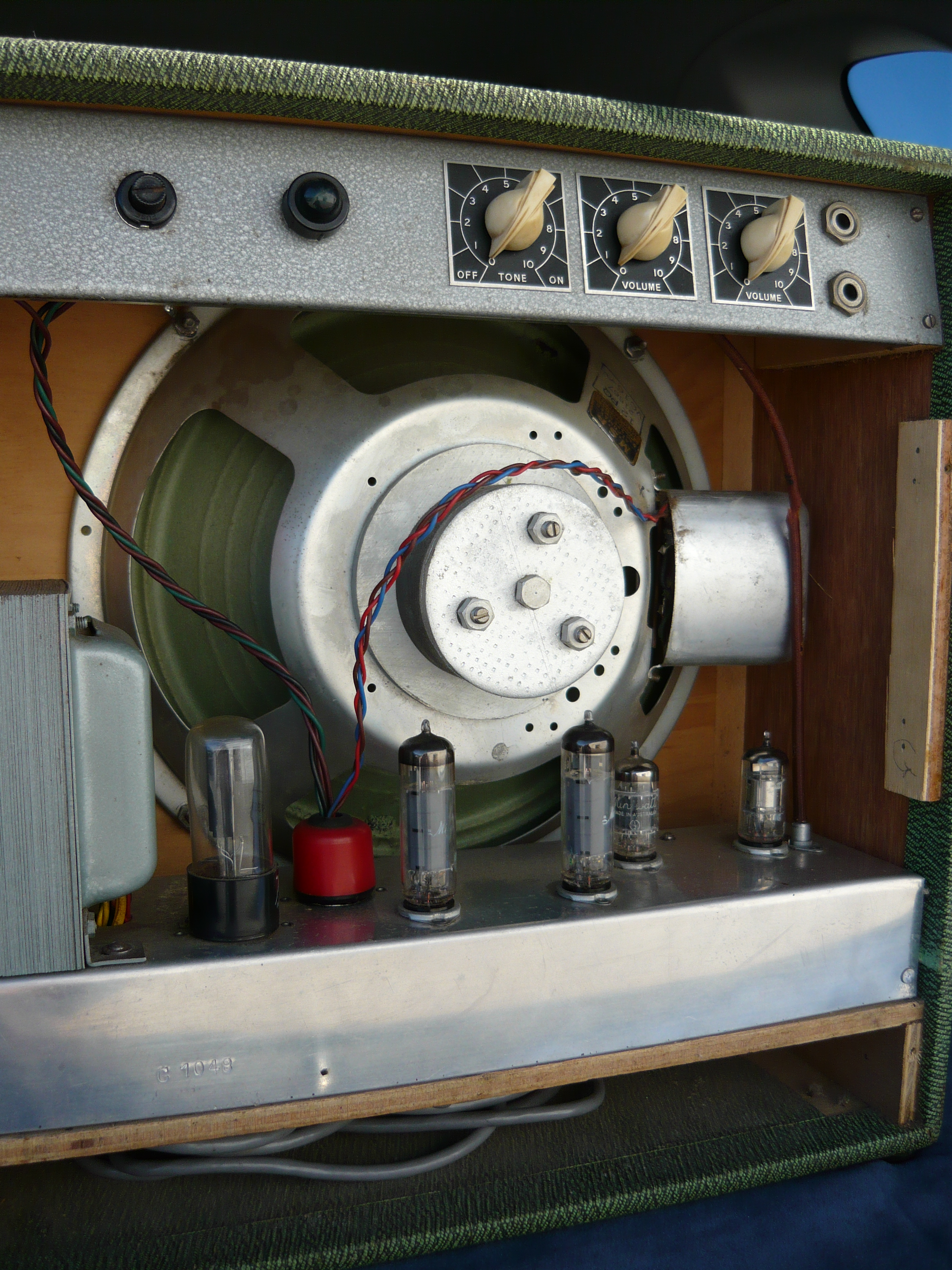
This stunning example is presented in a very attractive green covering material with contrasting speaker grille. Judging by the approach to construction of this amp, it is a fair guess that date of manufacture is in the late 1950’s, or early 1960’s at the latest. There are two channels with individual volume controls and a common tone control, a fairly standard format back in the day. There are separate chassis for the preamp and the power amp, also a standard format at the time, usually connected together by an octal plug and socket, but also by other methods.

The input jacks and controls face to the rear, which was perfectly fine at the time when dance band guitarists often played seated, with their amp in front of them. Fifteen watts was more than adequate for the job. We recall seeing amps just like this from Maton, Vadis and Moody, to name just a few, plus Fender, Gibson and Ampeg from the USA. The amp sounds quite good, by the way. Brent was intending to put this amp in his special room upstairs at Intermusic, with all the nice acoustic guitars.

Well, there wasn’t actually a great deal wrong with this amp – just a general service required. All the electrolytic capacitors were replaced of course – they were still the originals ! Plus a resistor that had drifted way off value. Electrical safety issues included the 240V 3-pin plug, and the fuse. The single biggest problem was the pots were so scratchy, the amp was barely useable. A good squirt with Caig Faderlube restored them to good working order, replacement not required. They made things to last in the old days !

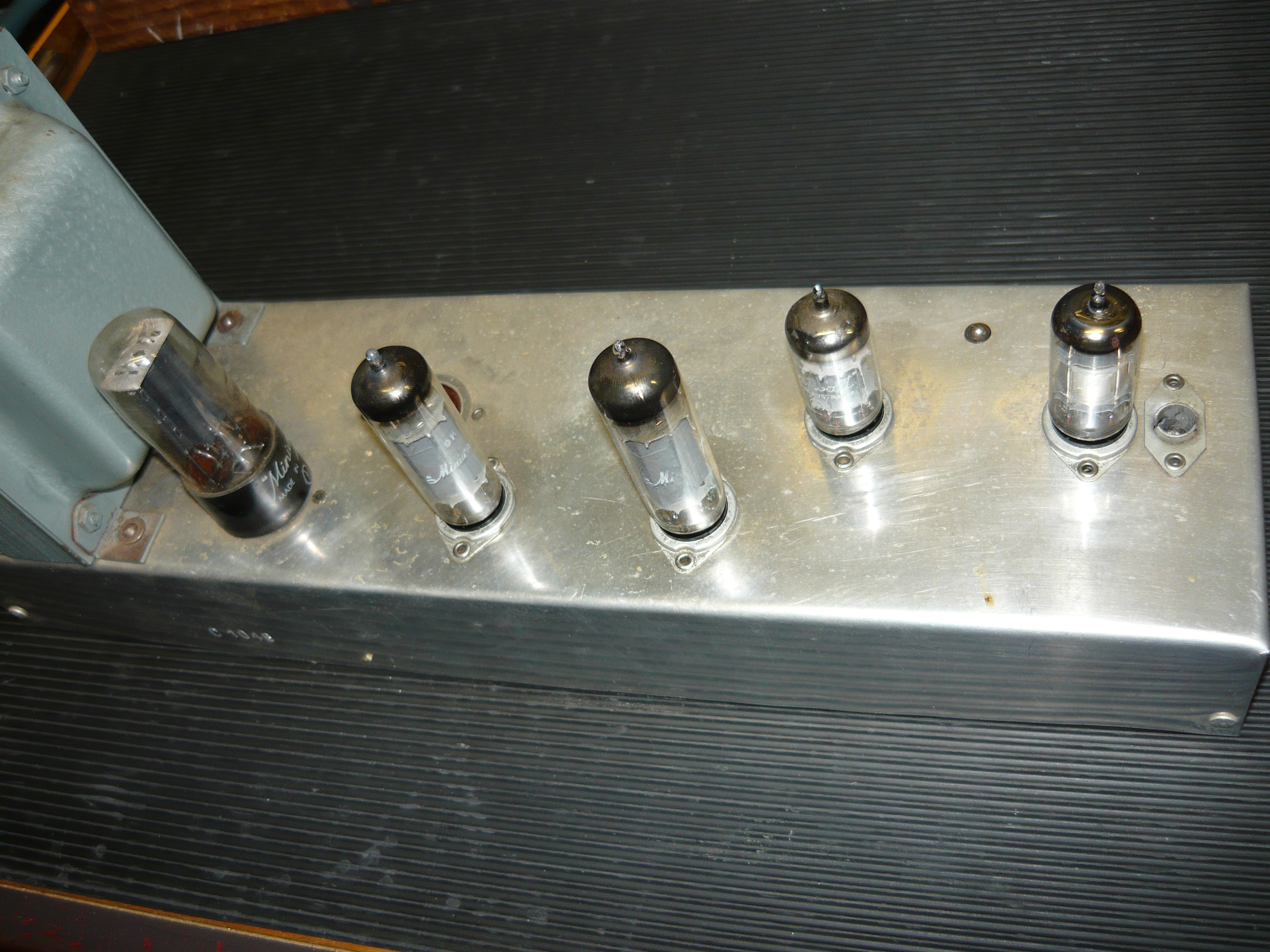
You can clearly see from the photo on the right the arrangement of the two separate chassis. The hefty Aussie power transformer is mounted at the end of the chassis, well away from the 12-inch speaker which takes up most of the internal space within the combo. The audio output transformer is mounted to the chassis of the speaker itself, also a common arrangement back in the day. The captive 240V power lead usually has a space to be curled up underneath the power amp chassis.

The speaker is mounted slightly offset, possibly to balance the weight and also possibly to create space for the power transformer. You can see on the left that the speaker manufacturer’s label and the stamp for model number and impedance have survived. The alnico-magnet speaker was manufactured by MSP, a division of AWA in Sydney. MSP = Manufacturers Special Products. The MSP speakers were standard equipment in many Australian-made guitar amps. AWA also manufactured valves (tubes) in another division called AWV (Amalgamated Wireless valve).

Most, if not all the valves (tubes) in this Diason appear to be original. Apart from the made-in-Holland EL84 output valves (labelled 6BQ5), they were all made-in-Australia. The photo to the right shows the 5Y3 rectifier valve, labelled Philips Miniwatt. Miniwatt was the division of Philips that manufactured electronic components, for example capacitors, as distinct from consumer products. All these valves are still working fine after 50+ years !!

Obviously we were manufacturing very high quality valves (tubes) right here in Sydney, at the manufacturing facilities of both AWA and Philips. That’s another Aussie manufacturing skill that’s disappeared, unfortunately. We remember buying a carton of 12AX7’s from AWA in Ashfield at the beginning of the 1970’s, which lasted most of that decade. Each and every one of them was excellent, and they didn’t require individual testing and grading, which is what we have to do now.

Anyway – back to the Diason general service, we completed the job and invoiced Brent for 1.5 hours labour plus a handful of components. Not a huge investment required to get this amp running at its best, with a check on electrical safety as well. Whether or not anyone actually plugs an instrument into this amp, it will look just fabulous in the Intermusic acoustic guitar room.

The remaining photos are before and after shots, inside and outside of the power amp chassis. They are typical of the layout and construction style of the amps of that time. We hope you enjoyed this appraisal of yet another quite obscure vintage Aussie guitar amplifier. We have a bit of a backlog of material to publish, so please check in with us on a regular basis. Regards, IR.

Silverface Fender Champ

September 4, 2012

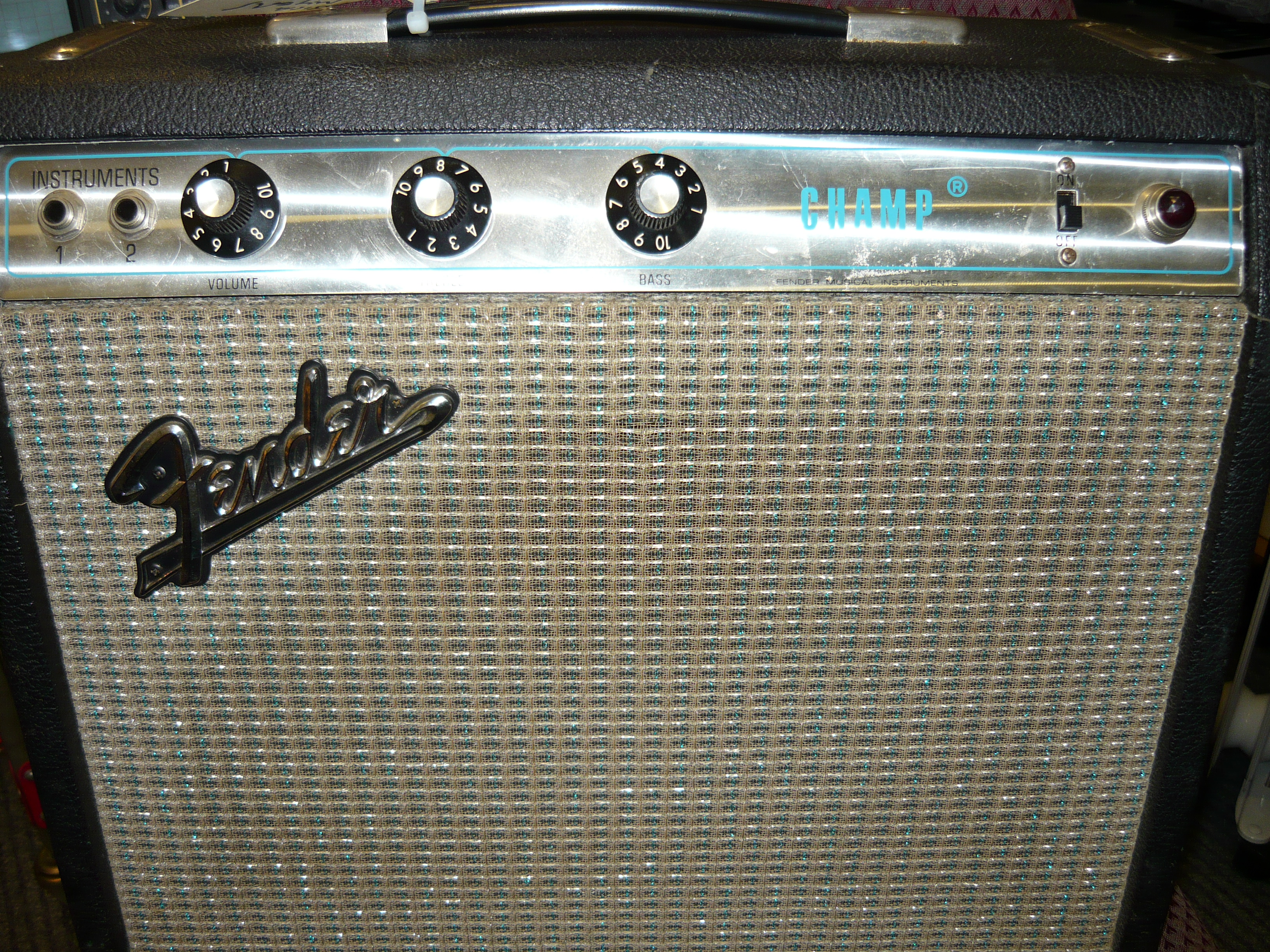
A Silverface Fender Champ amp, serial # A34003, date of manufacture August 29th 1972, was purchased on Ebay by Jessica, a young lady just starting out in the music industry here on the NSW Central Coast, and is the subject of this blog. This was a smart purchase on Jessica’s part, but required a major overhaul to bring the amp up to performance standard, which of course we were happy to do.

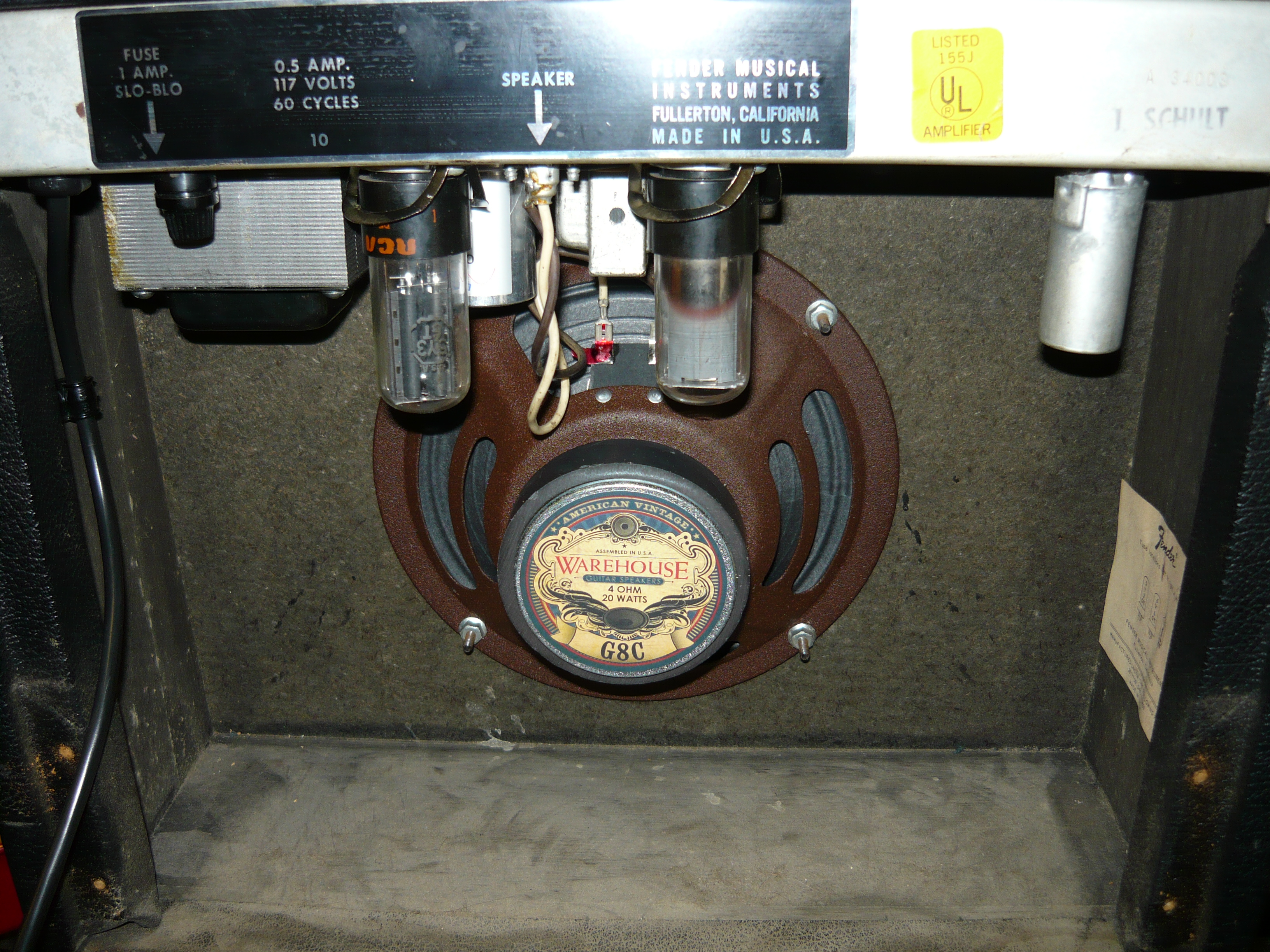
This amp was purchased off Ebay from the USA, so first and foremost we needed to replace the 110V power transformer with a 240V primary replica Champ transformer, plus install a 240V 3-core power cable and a 3-pin plug, including the installation of a dedicated chassis earth connection. The fuse also needed to be changed to a suitable value for 240V operation.

Next item on the agenda was the speaker – the original 8-inch alnico magnet speaker was doing this amp no favours at all. There are replacement/upgrade speakers for the Champ available from Jensen, Weber & WGS. We chose the WGS model, which is a significant upgrade compared to the originals. Seriously folks, WGS are making some great replacement and/or upgrade speakers at very competitive prices. We did have to enlarge the speaker mounting holes somewhat, to mount the new speaker on the existing bolts.

The Champ was now much louder and more toneful than the day it left the factory. There were just some relatively minor issues remaining to be corrected, ie noisy electronics. The pots and jacks were cleaned, as always, with Caig FaderLube and DeOxit. The power supply capcitors were actually 4 x 20uF/475V DC in a single chassis-mounting metal can. Fortunately, these capacitors are being manufactured again by CE Distribution (USA), so we were able to replace this unit, and maintain the original power supply design and appearance.

The photo on the left shows a capacitor that should be automatically removed before running these amps on the 240V mains. All that remained now to complete the overhaul, was to install spring clips to the octal valve sockets (to prevent upside-down valves from falling out), and to carry out power output and electrical safety tests. The amp delivered 4 watts into 4 ohms, at the onset of clipping.

The photo on the right shows you how we could date this amp so precisely – a Fender factory worker named J. Castillo date stamped the amp AUG 29 1972 ! regards, IR.

Another ZJM amplifier in our workshop.

August 31, 2012

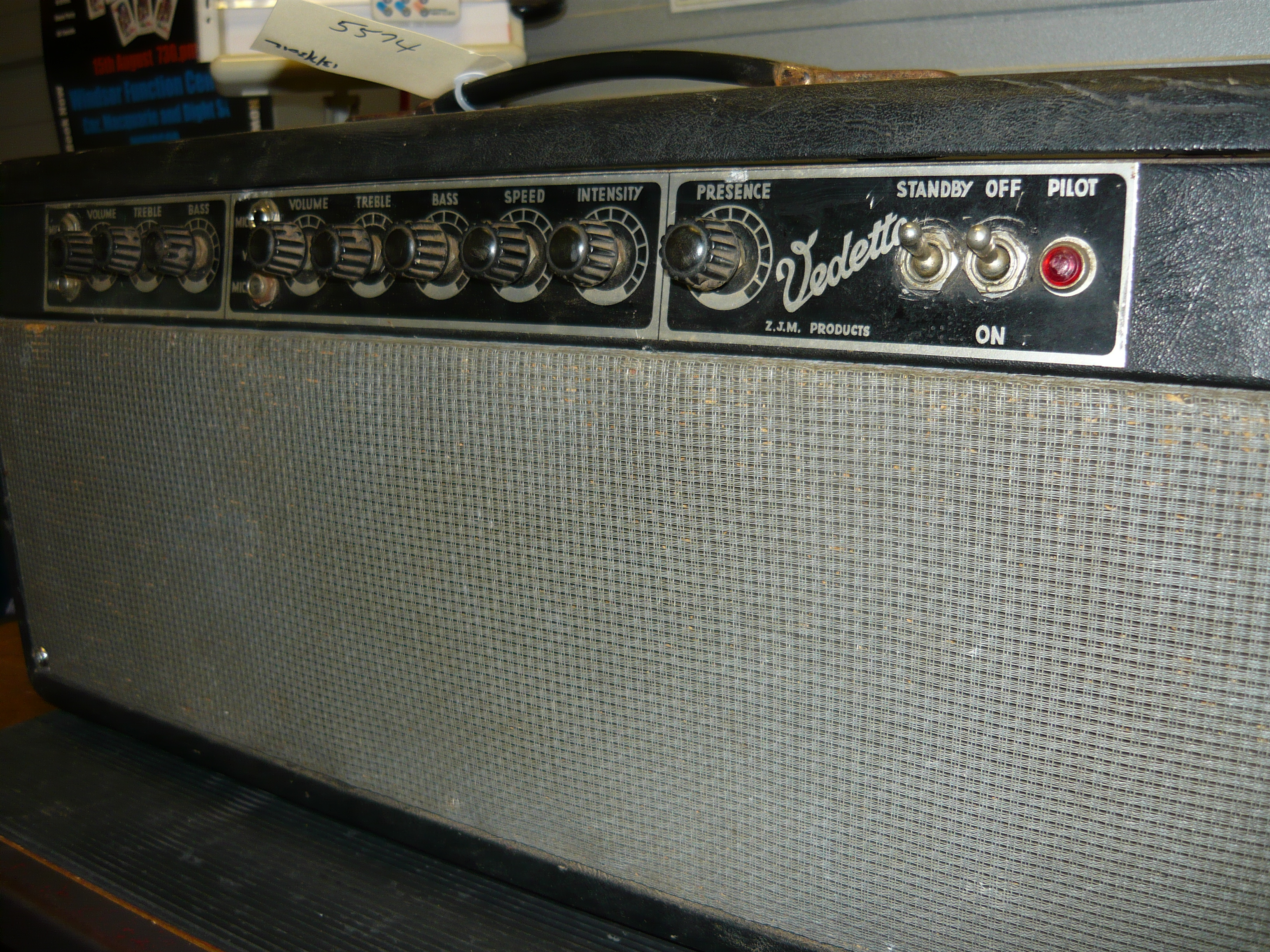
Welcome back to the blog, everybody ! We haven’t published a new blog for about 6 weeks, but things have been rather busy at the Richards Amplifier Company – Australia. Well, it was quite a surprise when we were recently contacted by our very good customer Victor, to say that he had acquired a Vedette EL34 amplifier, built back in the 1960’s in Sydney by ZJM Industries.

This is the first ever Vedette amplifier that we have encountered, and only the third amp by ZJM, so not many appear to have survived. For a more detailed discussion of ZJM Industries, please check our blog dated June 26th 2012, titled the Challenge guitar amplifier.
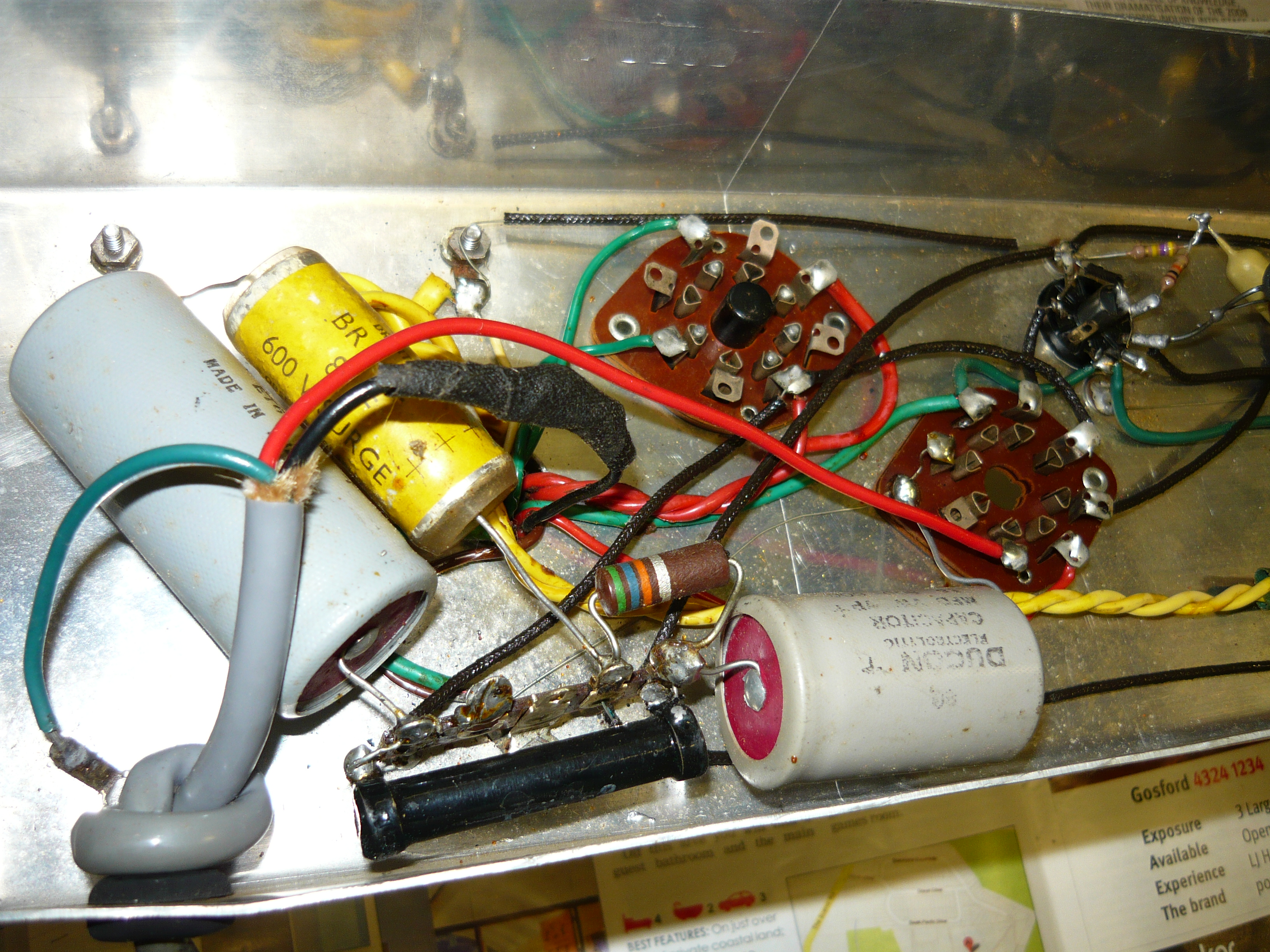
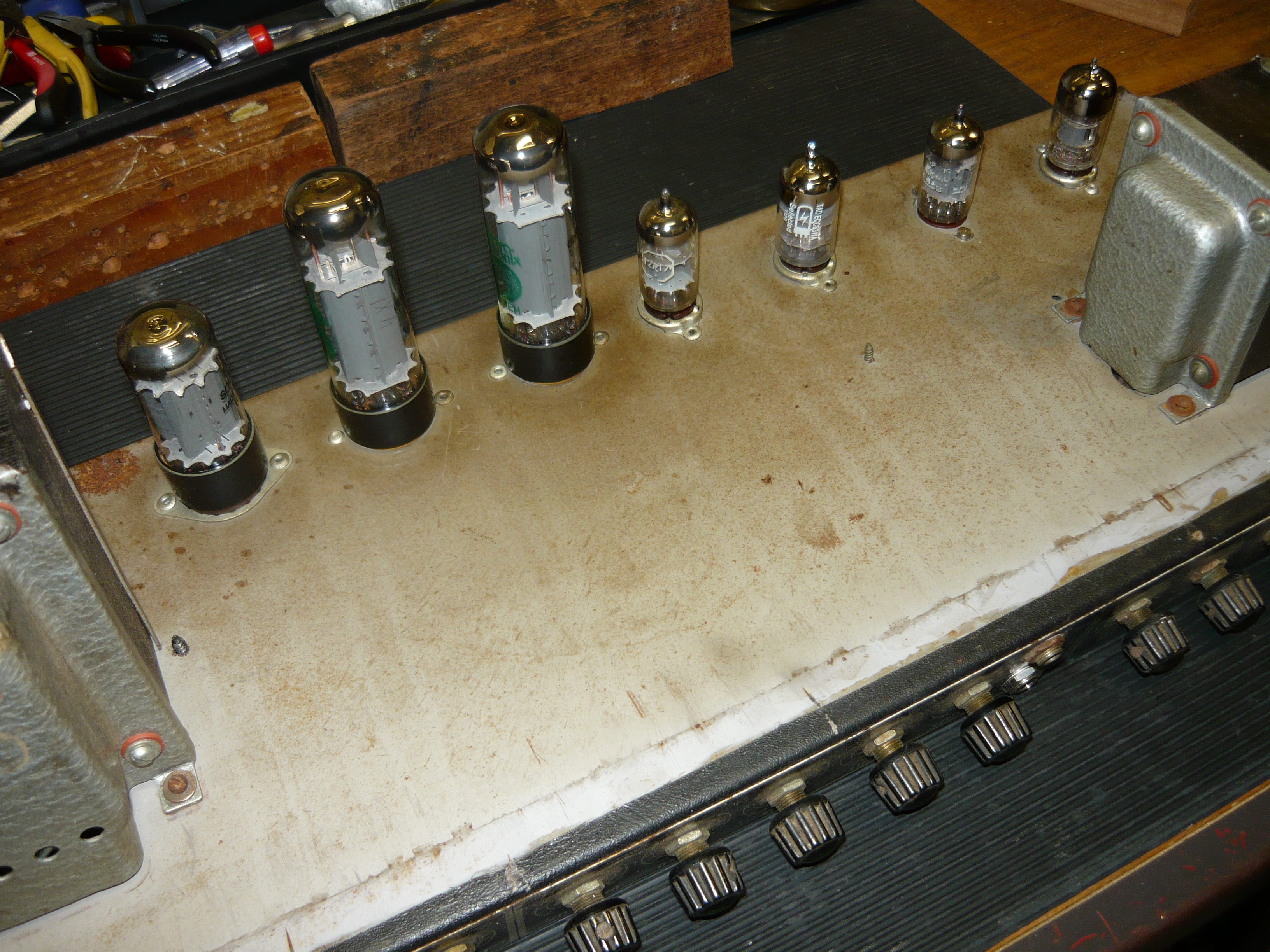
The Vedette is loosely based on the FenderBlackface” amp designs, pre-reverb, but with EL34/6CA7 output valves and those big Aussie transformers that we noted with the Challenge amp. The sweep of the controls on the Vedette is a bit different, and the midrange is a bit bigger. The standout feature is probably the valve-driven tremolo, which gives the amp a lot of character.
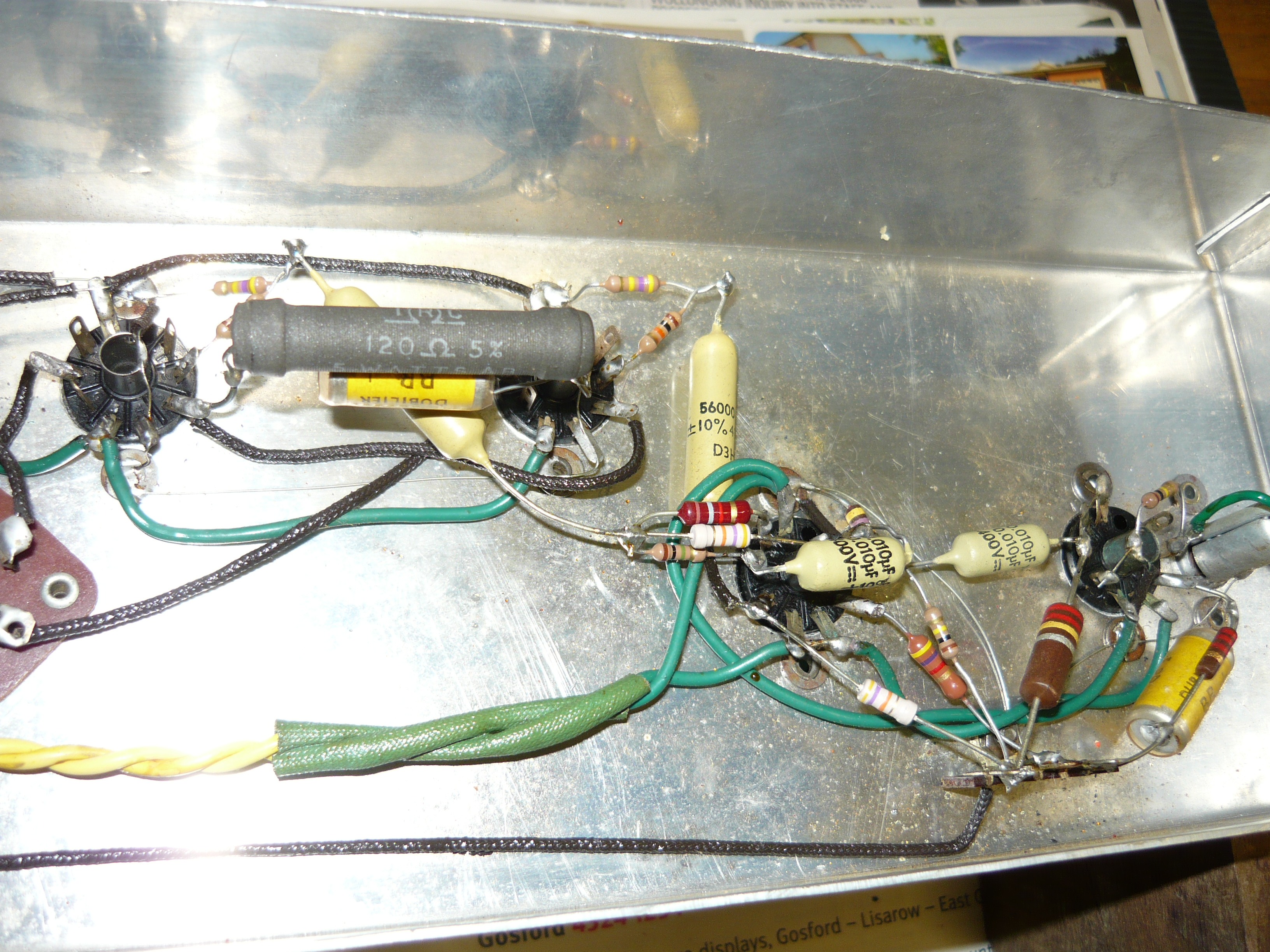
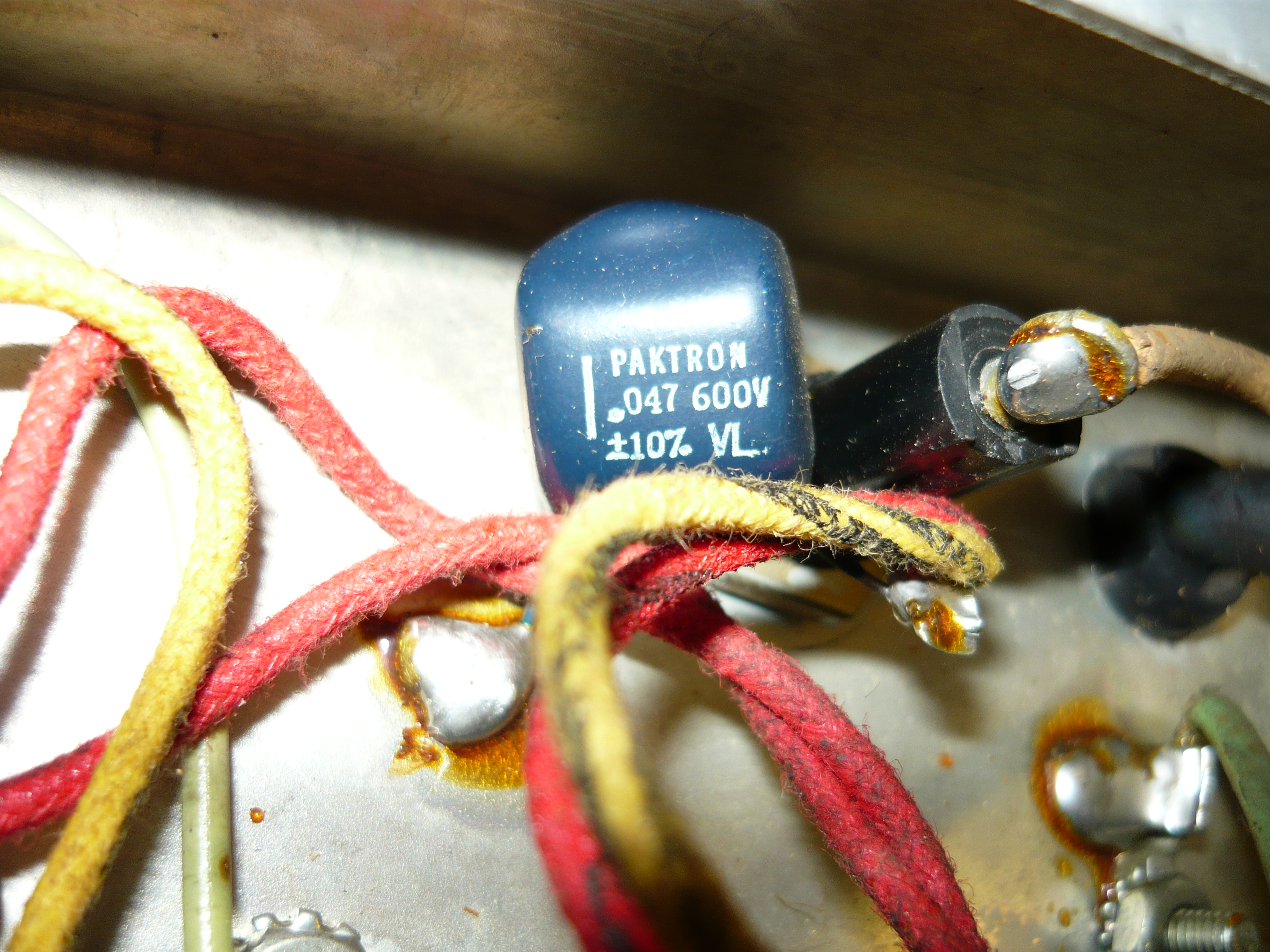
While the EL34 & GZ34 valves had been replaced at a previous service, many important service issues had been completely overlooked. The photo to the right shows we replaced a couple of power supply caps that were well past their use-by date. The speaker jack & #1 input jack on the tremolo channel also required replacement. The tremolo didn’t work at all, which required a new 12AX7 plus a cathode bypass capacitor. The prescence control was no longer functional, as a result of someone’s experiment, and required rewiring.

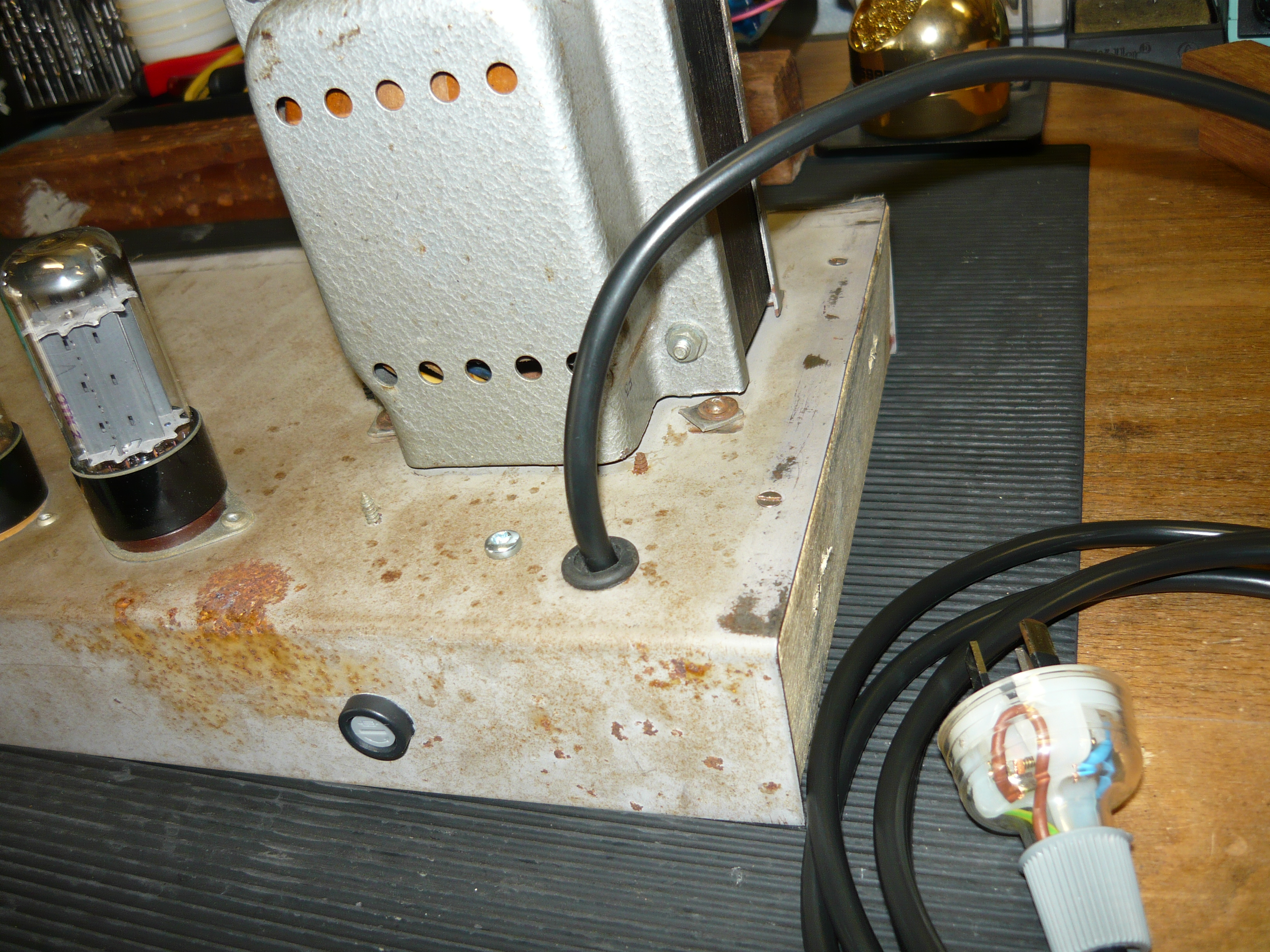
But the most significant outstanding problem was that this amp was electrically unsafe to use ! We installed all new 240V 3-core cable & 3-pin plug, plus a fuse in series with the active (brown) lead, installed on the chassis rear panel, and also a dedicated chassis earth connection (not a shared connection). Now the amp is safe to use.

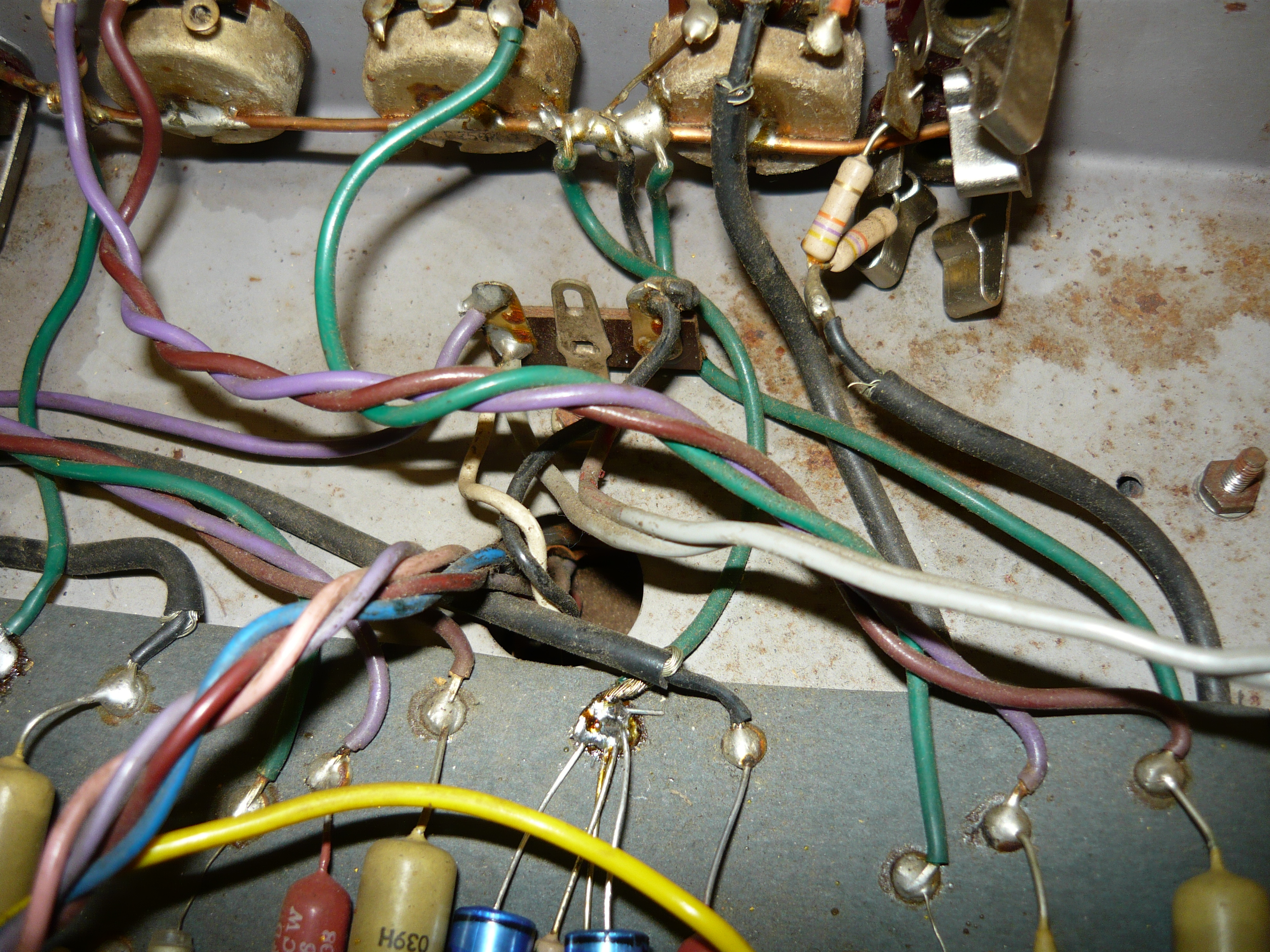
The wiring in the Vedette is pretty rough in places, and the sweep of the tremolo and eq pots is a bit frustrating for the user, with most of the action compressed into a few degrees of rotation. But, actually the amp works fine and also background noise is quite low, in spite of the random routing of wiring, which pretty much breaks all the rules for audio electronics.

Once again, we appeal to anyone out there who has some knowledge of the ZJM guitar and amp building enterprise in Sydney back in the 1960’s, to make contact and perhaps we could publish a more complete history. We will be back soon with a new blog publishing some photo’s of Victor’s new Richards Blue Mood series 12W 6V6 amp.

A Modification to the Laney LC30-II

July 10, 2012

A new customer for us, Peter Timperley, delivered his Laney LC30 II 1×12 combo to the workshop for a general service, but with a special request. Peter wanted to restore the sweet tone that previously existed with this amp, but also wanted to know if we could install a full power/half power switch. The obvious way to implement this mod would be to switch out one pair of the quartet of EL84 power output valves, and correct the impedance mismatch that this introduces by utilising the impedance selector switch on the rear panel.

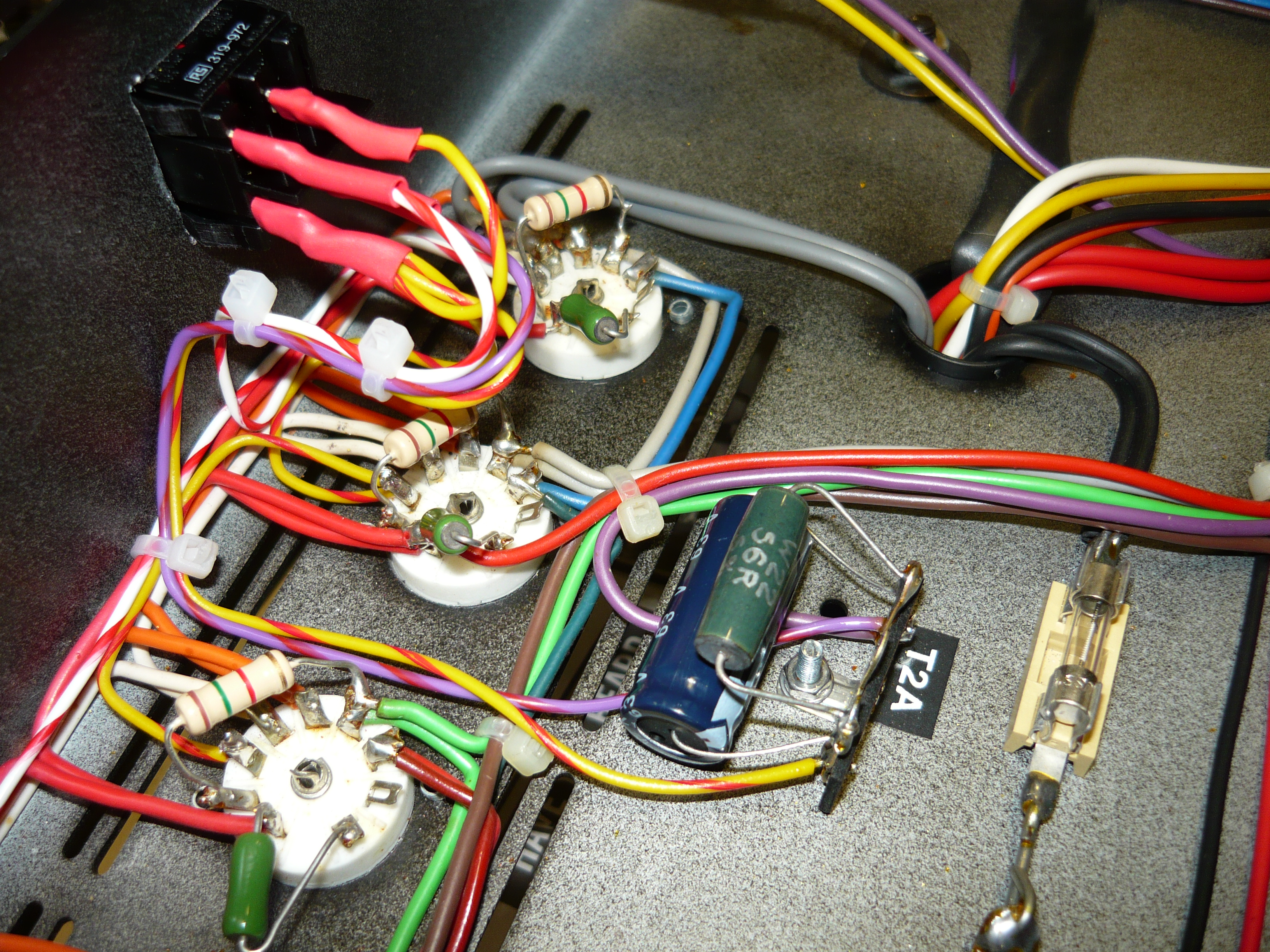
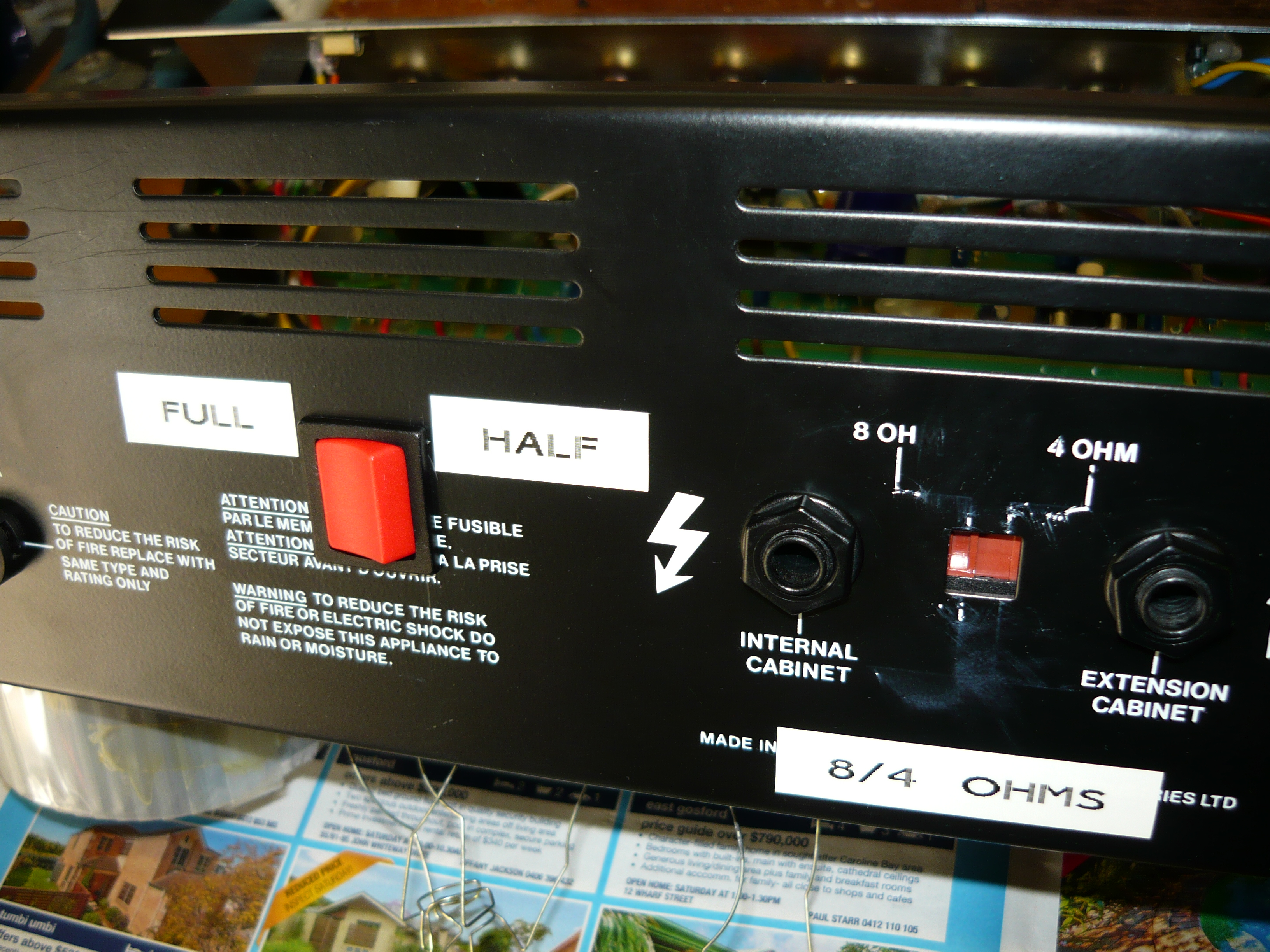
In other words, we need to increase the primary impedance that the EL84’s require from 4000 ohms a-a (anode to anode) for a quartet, to 8000 ohms a-a for a pair. We can achieve that by driving the internal 8 ohm speaker from the 4 ohm connection to the output transformer (see photo #5). That is not the full story, however, as this amp employs a cathode-bias configuration for the EL84’s, so when we switch to half-power we also need to change the bias circuitry appropriately, otherwise the EL84’s will be quite seriously under-biased, resulting in certain destruction.

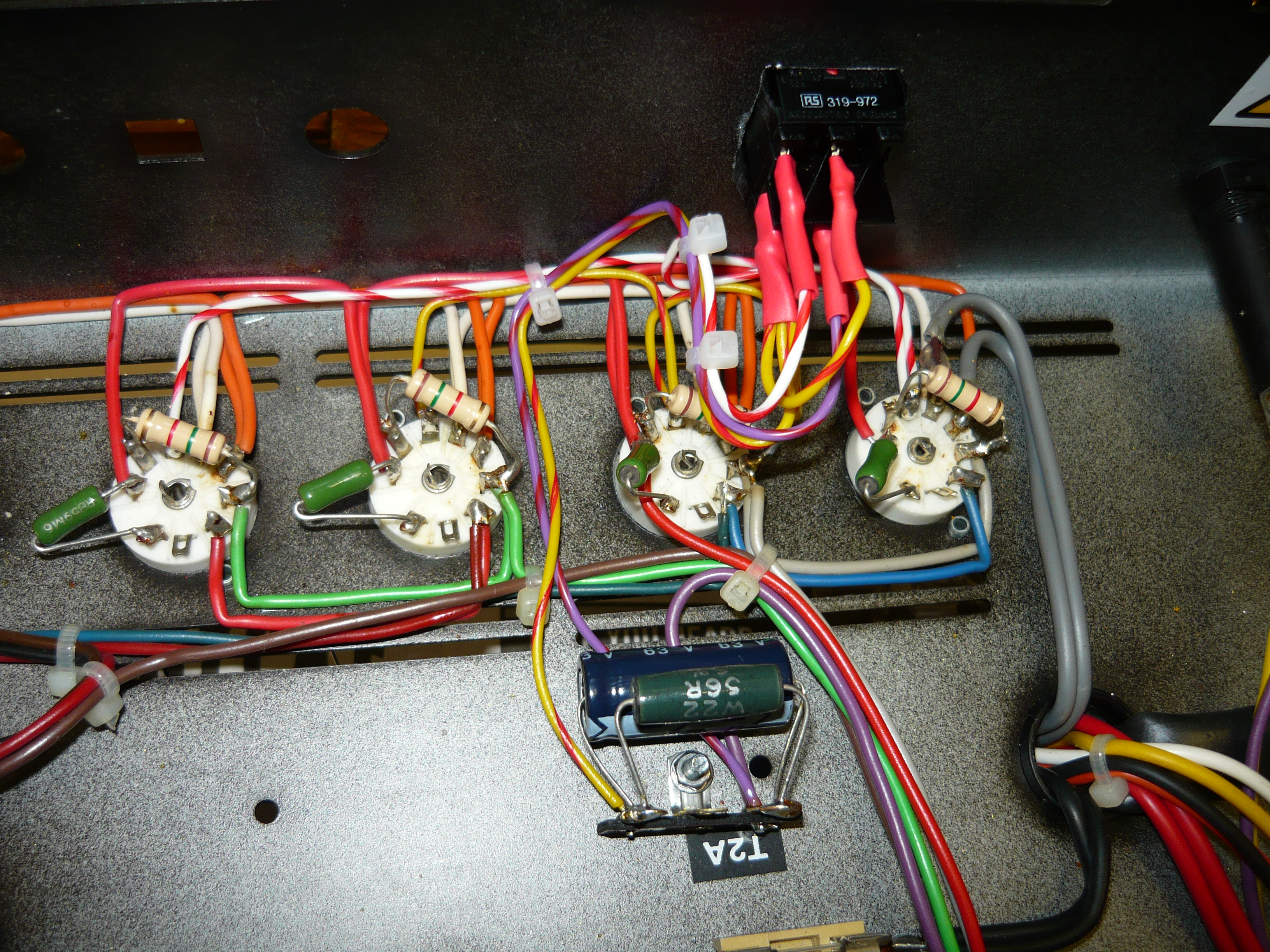
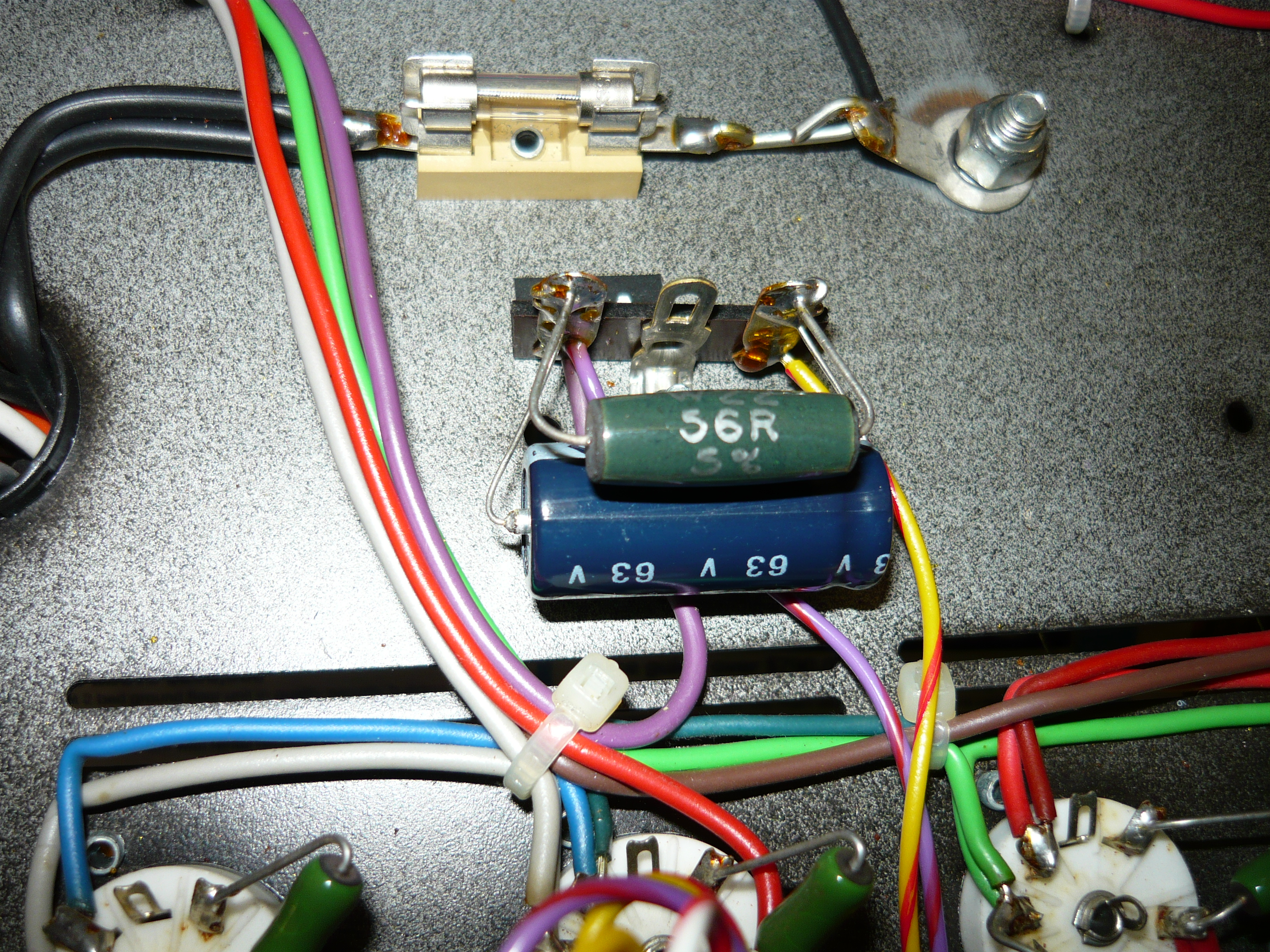
There is not much depth from the rear of the cab to the rear panel of the amp chassis, so we selected a low profile DPST (double-pole, single-throw) rocker switch to mount on the rear panel. One pole is used to switch out (in this case) the outer pair of EL84’s in low-power mode, leaving the inner pair activated for both scenarios. The second pole is used to switch in an additional cathode-bias resistor (plus cathode bypass capacitor) in series with the existing p.c.b. mounted bias components. By this method, the bias voltage is maintained exactly the same, regardless of mode of operation.

Creating a 19 x 22mm hole for the rocker switch on the rear of the chassis really isn’t much fun at all, unless you happen to own a hydraulic hole punch. The cathode pins (pin 3) on the EL84 9-pin sockets were rewired, with the inner & outer pairs now having separate paths to the switch. You can see from the photos, the additional cathode-bias components are wired on a small tagstrip installed conveniently near the valve sockets. One end of these components will be wired back to the original cathode bias resistor, on the main board, and from there to ground (earth).

We added some Dymo labelling on the rear panel to finish the job. How successful was the mod ? The final power output test resulted in 32 watts/8 ohms full-power, and 17 watts/8 ohms half-power. The tonal quality in half-power mode was in no way inferior to full-power, in fact it might have been a tad sweeter ! Peter contacted us after taking the amp home to confirm he was very pleased with the result. As part of a general service, prior to implementing the mod request, we replaced corroded input & output jacks, cleaned all pots with FaderLube, replaced a dodgy Standby switch, and replaced some high voltage electrolytic capacitors with selected upgraded caps. IR.

Vaughan’s JCM2000 TSL100 major repair

July 1, 2012

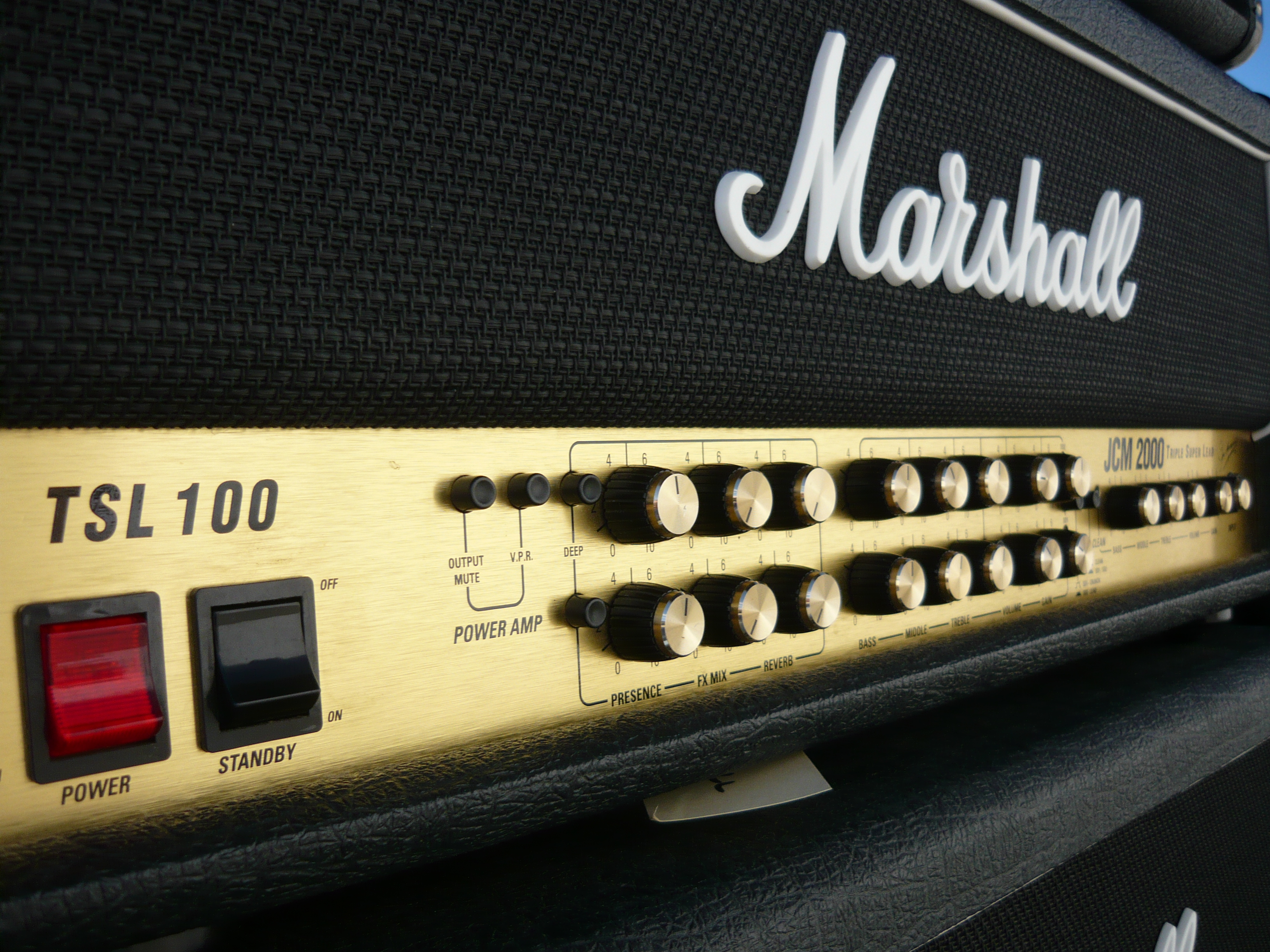
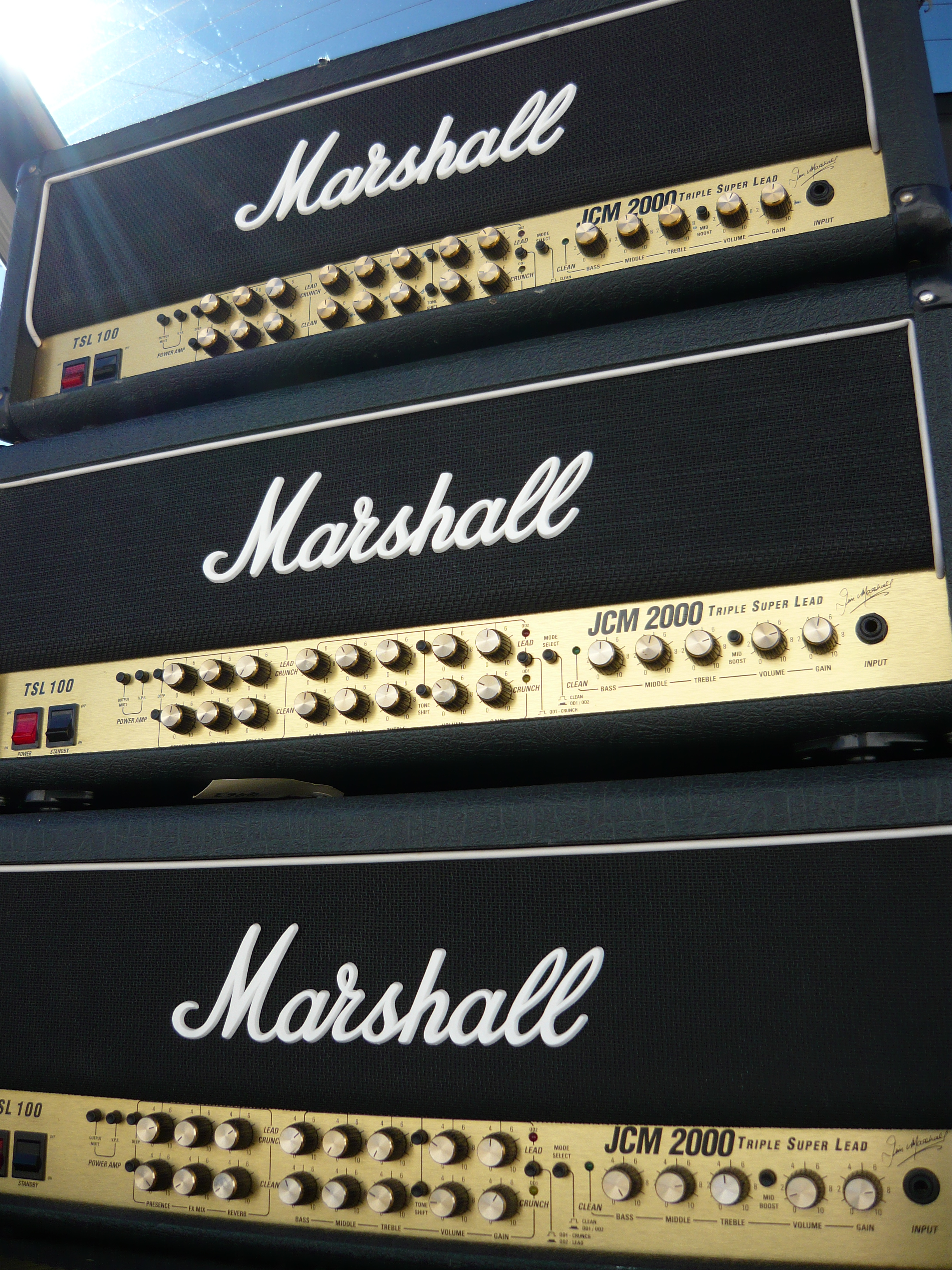
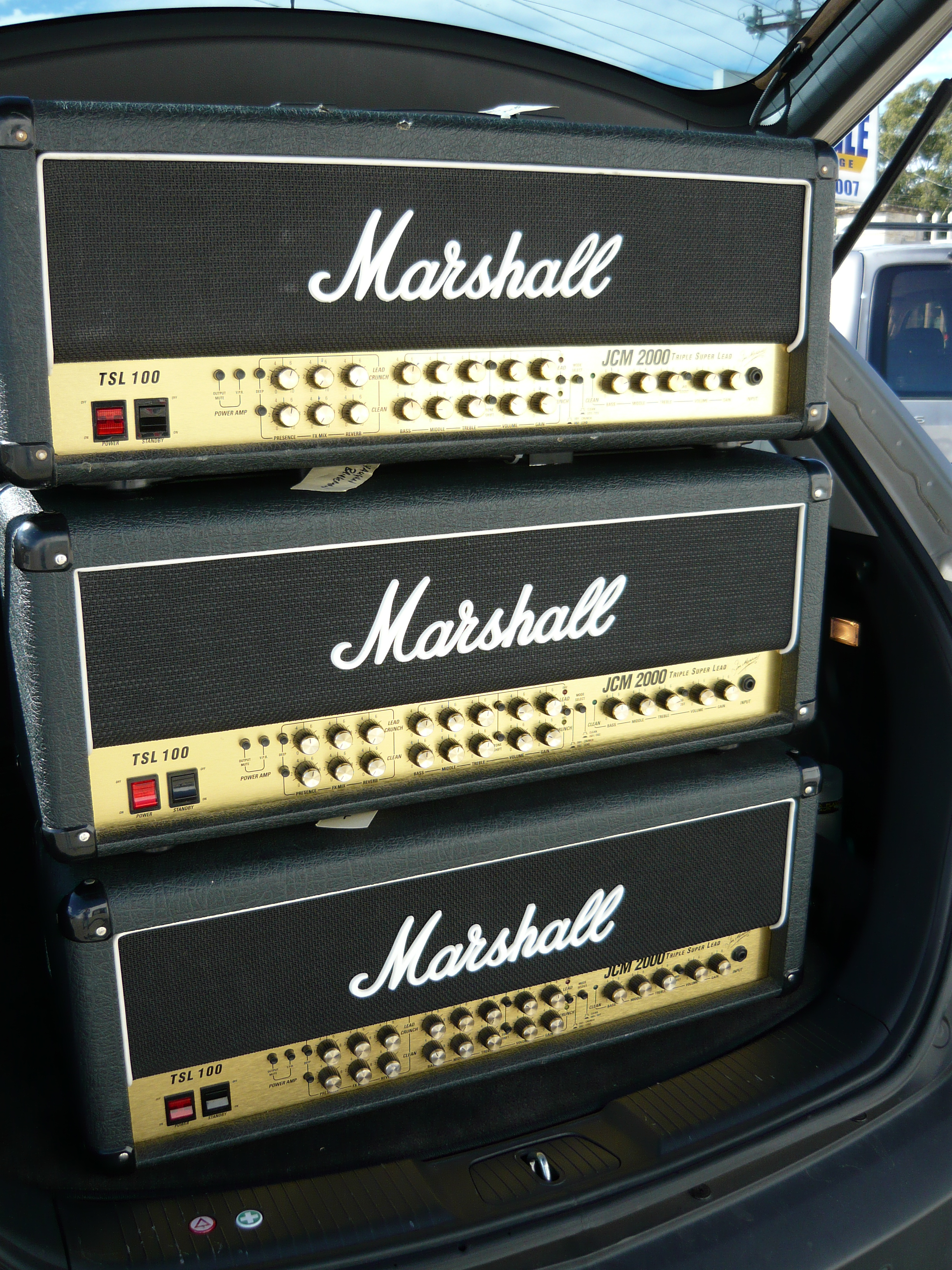
Vaughan B. is a loyal regular customer on the NSW Central Coast since way back when he was using a Rocktron rig. In more recent times he updated to a Marshall JCM2000 TSL100 head, which we also have been servicing for him. A couple of months ago the amp “just stopped” for no apparent reason, so back to the workshop it came.

We already had a few TSL100’s in the workshop with similar symptoms, so we had a pretty good idea what might be wrong. Preliminary examination of Vaughan’s amp revealed that the 2 amp slow-blow mains fuse was blown and one pair of the existing EL34 output valves had experienced some kind of melt-down. In other words they had begun to draw more & more current, increasing out of control until finally the fuse blew.

Unfortunately, the fuse didn’t blow quickly enough to save the amp from further (expensive) damage, as further testing revealed that the primary winding of the Dagnall power transformer had gone S/C (short-circuit). So far we will have to replace the quad of EL34 output valves, plus the power transformer. What could have caused such a scenario ? From past experiences with this specific model we have learned (the hard way) that some of the main boards have left the factory with inappropriate components loaded, and/or some boards have developed leakage paths which significantly upset the normal DC voltage conditions.

Before you all start panicking, this scenario does not apply to every single TSL100, just some of them, and they are likely to have been manufactured earlier in the life cycle of this model, rather than later. Looking at the photo to the right, you can see that the main board is the one that all the valves (tubes) plug into, ie the valve sockets are p.c.b. mounted. Most of the valve circuitry is mounted on the board, in particular all of the phase-inverter and power amp valve circuitry.

The problem with Vaughan’s board is that a leakage path developed between the high voltage tracks & pads and the bias supply to one pair of EL34’s in particular. We have previously proven this to be true by powering up a faulty amp with the EL34’s removed, and a DVM (digital voltmeter) connected between pin 5 of one of the EL34 sockets & earth (ground). Over a period of time it was easy to observe the bias voltage to one pair of the EL34 sockets gradually drop quite significantly. This would result in a runaway condition for that pair of valves, just drawing more & more current.

You can see from the photo to the right that components/tracks/pads are packed tightly together in this design, regardless of the design rules concerning high voltage on p.c.b.’s. Nevertheless, in the numerous TSL100 amps where we have replaced the main board altogether, the repair has been successful, so the latest issue of this board appears to have had the problem corrected. But – back to Vaughan’s amp: we therefore ordered in a new power transformer, a new main board, and a matched quad of the very nice Mullard (reissue) EL34’s from New Sensor.

To sum up, we replaced the transformer, board & output valves in that order, with a successful rebias of the EL34’s and conducted the usual power output tests (30V/8 ohms = 110 watts), burn-in tests & electrical safety test. The final cost of this major repair was significant – almost the resale value of this amp in the current economic climate, but at least Vaughan now has a reliable TSL100 to gig with. Vaughan B. is a very decent guy, and was happy to pay the estimated cost of repairs in full prior to commencement, so that we wouldn’t be out of pocket. We truly appreciate that !