
Steve Edmonds (official) promo
Steve Edmonds is a well established and much admired guitar player on the Australian music scene, based in the Sydney area. Steve has put a lot of hard work into carving out his own niche as a blues guitarist, a straight ahead rock guitarist, ie the Steve Edmonds Band, and is also well known for his Jimi Hendrix Tribute shows, eg Hendrix and Heroes.
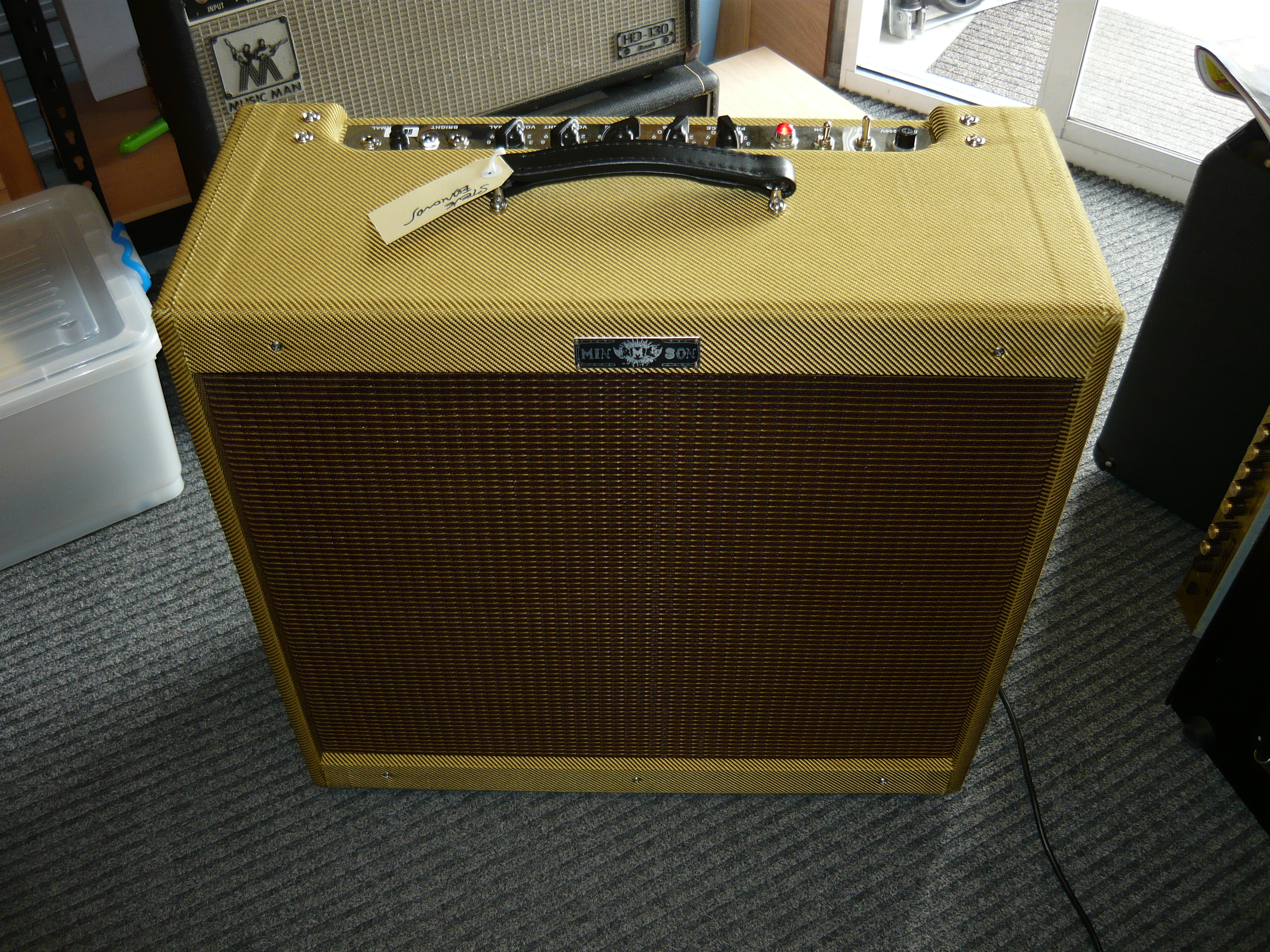
’57 Tweed Twin replica blowing fuses
More recently, Steve has come up with a fresh concept and a new band by the name of Mescalero. With Esteban (Steve) on guitar/vocals, Antonio on drums and Alejandro on double-bass, Mescalero are described as a Roots Rock band, which incorporates Rockabilly, Surf, Western Swing, Bop, Big Band, Ska, Mambo and Country influences ! The new band is already gigging and recording.
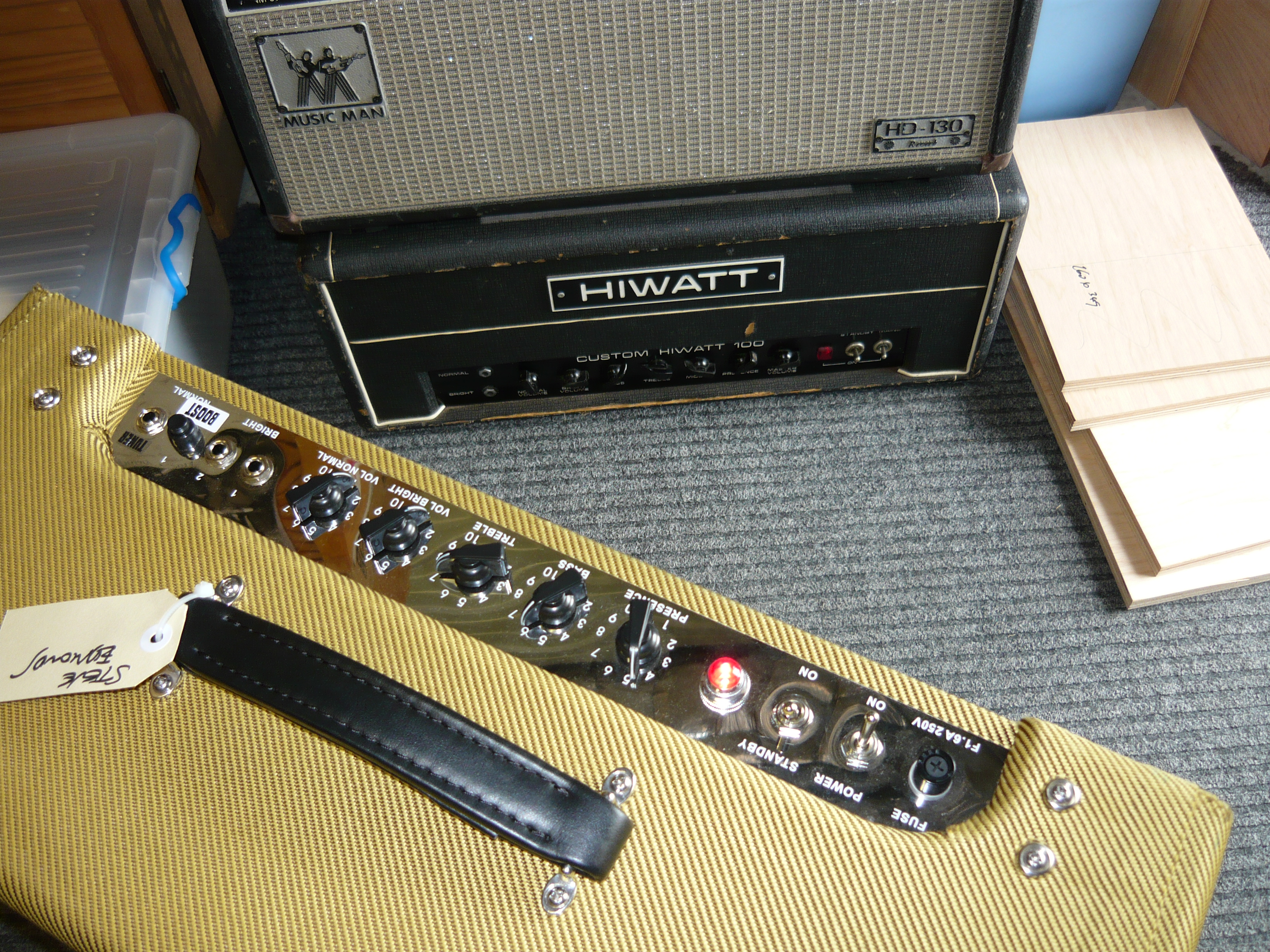
’57 Tweed Twin replica (with a couple of vintage amps in the background)
Which brings us to the subject matter of this blog – both Steve and Alex had amp mishaps last week which required immediate attention as there were gigs booked from Thursday night onwards. Firstly, there was Steve’s amp. This is a replica of the ’57 Tweed Twin Amp, made in China, and distributed locally by Lawrie Minson in Tamworth, New South Wales. These are the models that famously (in the Fender line-up) introduced separate Treble and Bass controls, rather than a single Tone control (the addition of a Midrange control was still a year or two away), along with the Bandmaster, Super and Pro amp models (apologies to Fender enthusiasts if we’ve left out any details).

the culprit !
Steve’s amp was repeatedly blowing the mains fuse – if this happens more than once clearly something is seriously wrong ! At first we all assumed that one or both of the 5U4 rectifier valves had developed a short-circuit (S/C). This is quite a reasonable assumption, but it was not to be that simple.
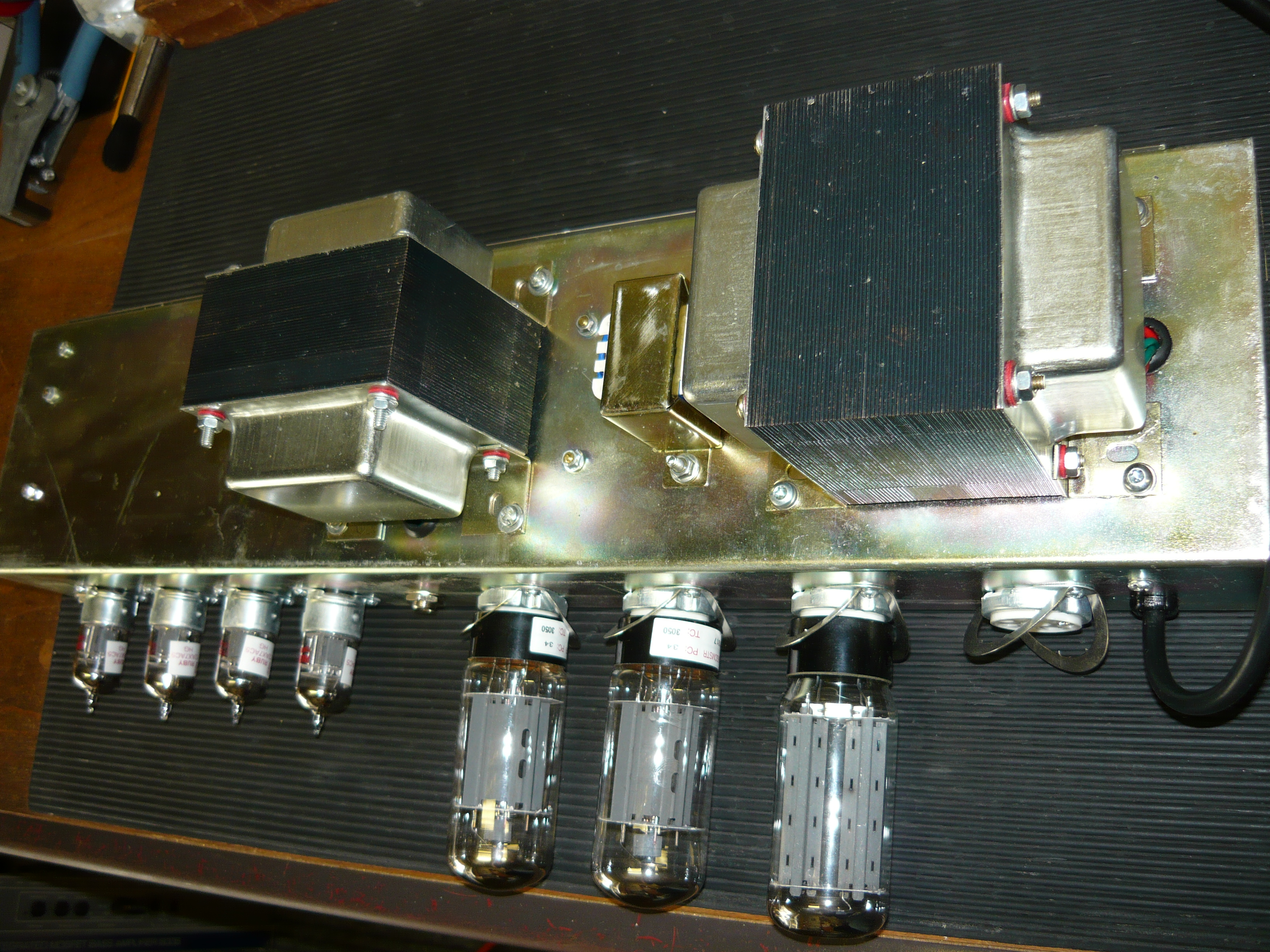
’57 Tweed Twin replica amp chassis
We first plugged the amp into the mains via a ballast light, so that we didn’t have to keep replacing blown fuses while troubleshooting the problem. We removed all valves (tubes) from their sockets but the S/C was still there. Obviously the problem was in the power supply, and potentially the power transformer was the culprit. One by one we removed the transformer secondaries, so that each secondary was unloaded, and retested.
Please don’t try this at home !!

under the chassis of the ’57 Tweed Twin (China)
Finally, we had the primary connected directly the the active and neutral wires and we still apparently had a S/C in the power transformer. So, we emailed Lawrie Minson who sent us down a replacement transformer which we installed, along with a bit of tidying up of the 240V primary wiring. With all valves reinstalled and tidying up of the disturbed wiring with nylon cable ties, we could successfully test Steve’s amp for electrical safety and power output. Back in the day, even with a pair of 5U4 rectifiers, these amps only delivered around 30 watts rms, and this replica of course delivers similar performance.

Installing a pair of Celestion ‘Greenbacks’ into Steve’s amp
Steve actually requested slightly earlier break-up, so we installed a single 5U4 by Electro-Harmonix, our favourite sounding current production 5U4, which also has a good reputation for reliability. The factory loaded speakers with this amp were a pair of the budget model Celestion G12-65 (not the ‘Heritage’ model), which were letting the amp down quite noticeably. At Steve’s request we upgraded these to a pair of Celestion G12M25 ‘Greenback‘ speakers, at 8 ohms each, wired for the system impedance of 4 ohms.

still one of the sweetest sounding guitar speakers !
This upgrade improved the tone and response of the amp 100 %. The woody, somewhat midrange-scooped tone of the Greenbacks balanced better with the flat midrange response (at most settings) of the ’57 Tweed Twin amp, and introduced a warmth and sweetness that wasn’t really there before. When Steve came to pick up the completed repair/upgrade he gave the amp a good workout with our Fender ’52 Tele Reissue loaded with the Pete Biltoft Vintage Vibe pickups (see blog NOV 24, 2013).

Steve’s amp reassembled !
Part-II of the story: Mescalero bass player Alex Campbell brought his amp to the workshop – a Hartke 500 watt bass amp head. A mishap when moving the bass rig caused a jack plug to break off inside a speaker jack on the back of the amp, and worse still the master volume control was smashed and unuseable. Aside from those two issues the amp appeared to be unharmed.

Alex’s Hartke 500W bass amp head
We removed the broken speaker plug from inside the amp, wired Alex a new heavy-duty jack-jack speaker cable, and stripped out the preamp/power supply PCB to replace the 10K Lin 16mm master volume pot. This involves unscrewing many, many screws and removing the front panel – the complete job takes about an hour. While we had the amp apart we cleaned up accumulated dust from the power amp’s forced air cooling system – an important little task to keep the amp running reliably.

inside the Hartke bass amp
The design and assembly of the Hartke amp is completely conventional – there is no digital circuitry, no switching power supply. The amp is isolated from the 240V mains by a huge toroidal transformer. From the point of view of the service tech, this is a positive thing – the whole amp is accessible for ease of servicing. The only problems we’ve had with the Hartke amps over the years (with one or two exceptions) have been ‘dry’ solder joints and poor quality input jacks. The Hartke does not have a ‘signature’ sound, but this is a matter of personal taste.
Many thanks to Steve and Alex for their continued custom ! We wish Steve all the best for his new band – please check out Mescalero soon.





 ivanrichards