Archive for September, 2012

Gary takes delivery of his Blue Mood 18W combo

September 22, 2012

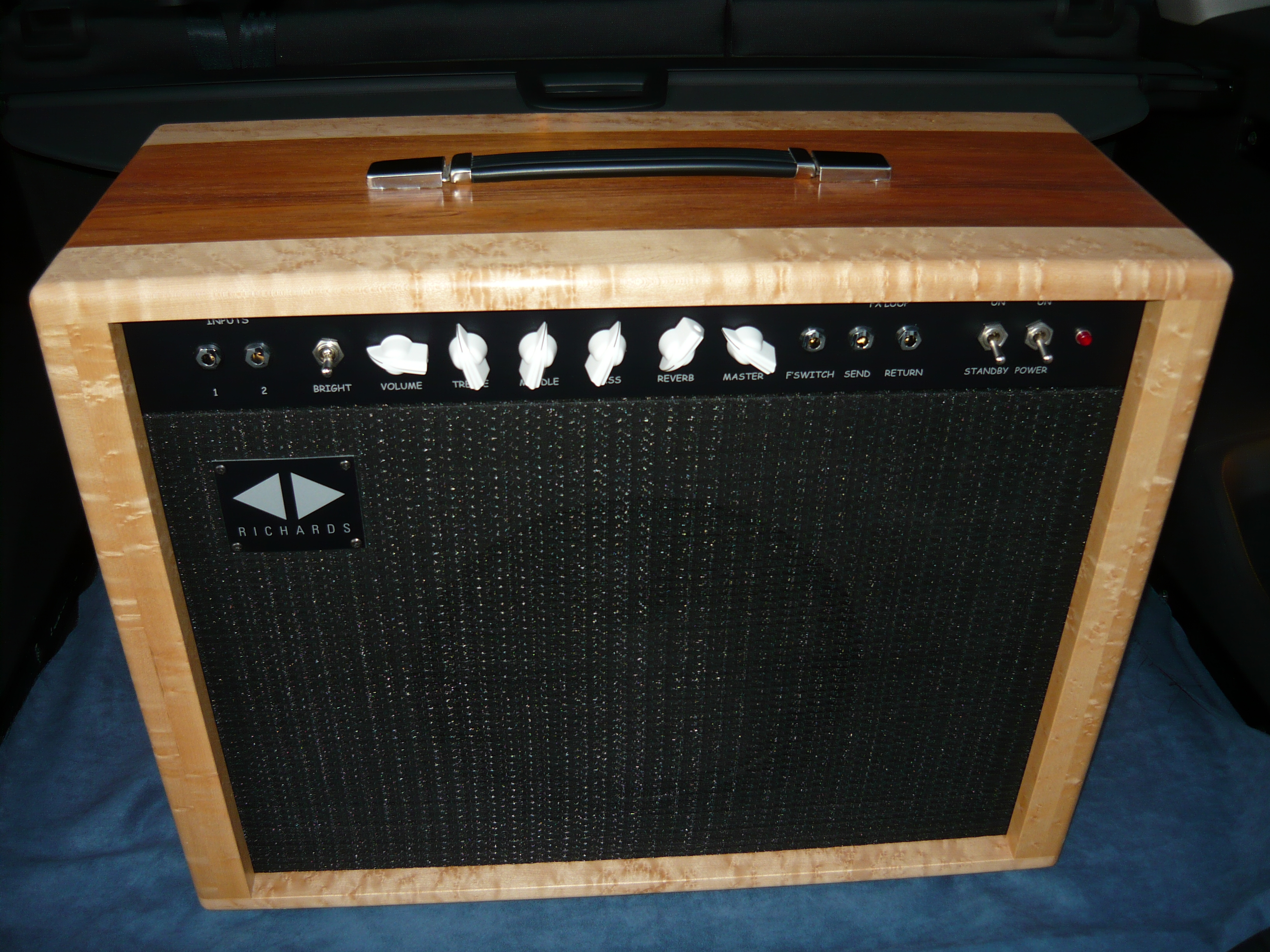
Our good customer Gary recently took delivery of his new Blue Mood Series 18 watt reverb 1×12 combo from the Richards Amplifier Company – Australia. As you can see in the photos, this combo is just stunningly presented in a cabinet built from a central section of Tasmanian Blackwood, with Bird’s Eye Maple edges. The 1×12 speaker baffle is furniture-grade Fiji Cedar ply, although this is covered in a plain black grille material for contrast.

The exotic timbers cabinetwork is done for us by our good friend and colleague, Mr Peter Davies, who is formerly of the NSW Central Coast, but now resides in Melbourne. This combination of Tassie Blackwood and Bird’s Eye Maple represents the most attractive combination for our amps we have achieved so far, although Peter tells us he is working on something even more eye catching !?!?
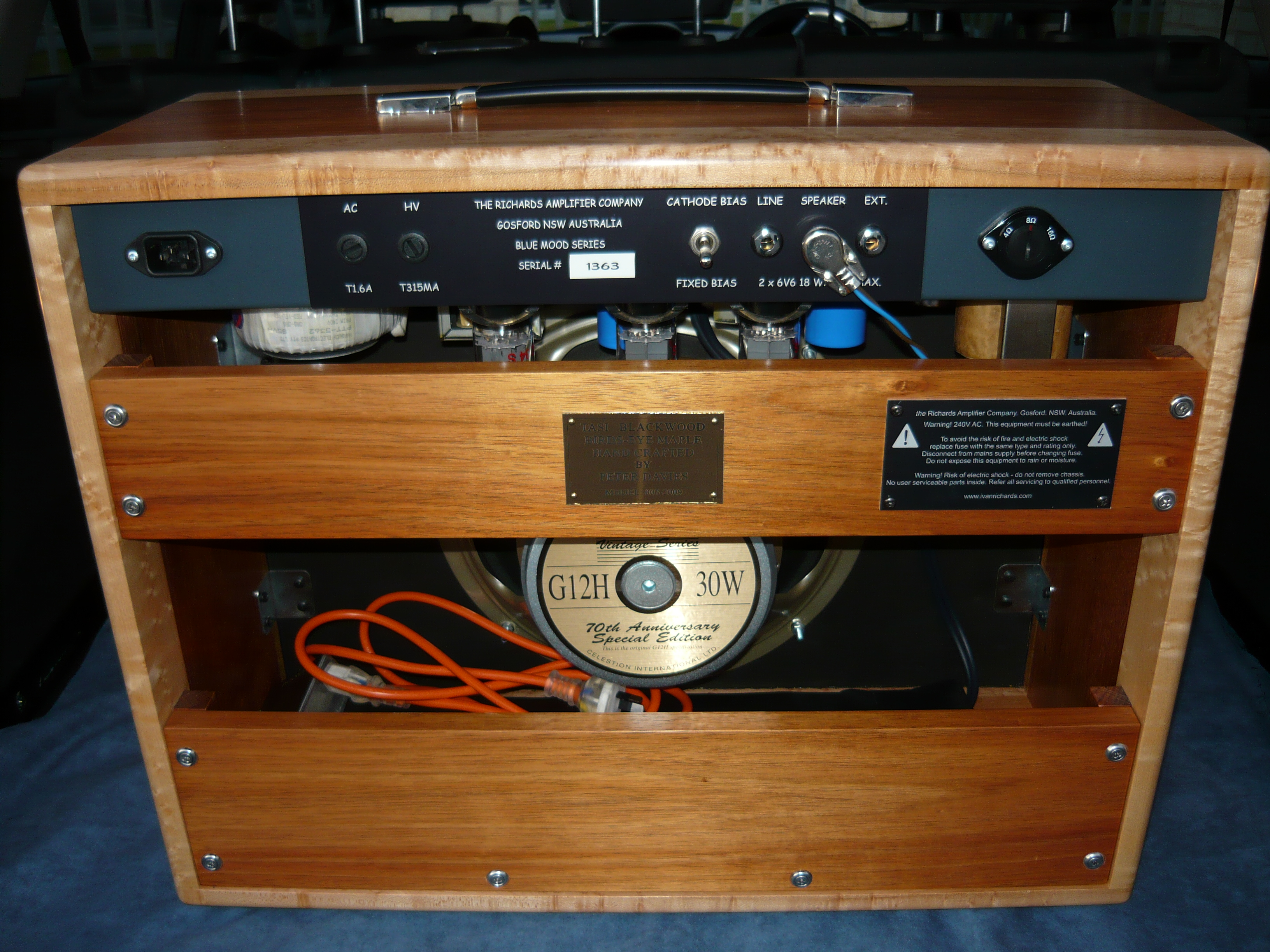
Any of the amps and speaker cabs that appear on our blog site can be ordered with conventional “tolex” coverings, available in a variety of styles and colours, over a furniture-grade plywood cab. This particular 1×12 combo was supplied loaded with a Celestion 70th Anniversary Series G12H30, a speaker that sounds very good with most amp designs.
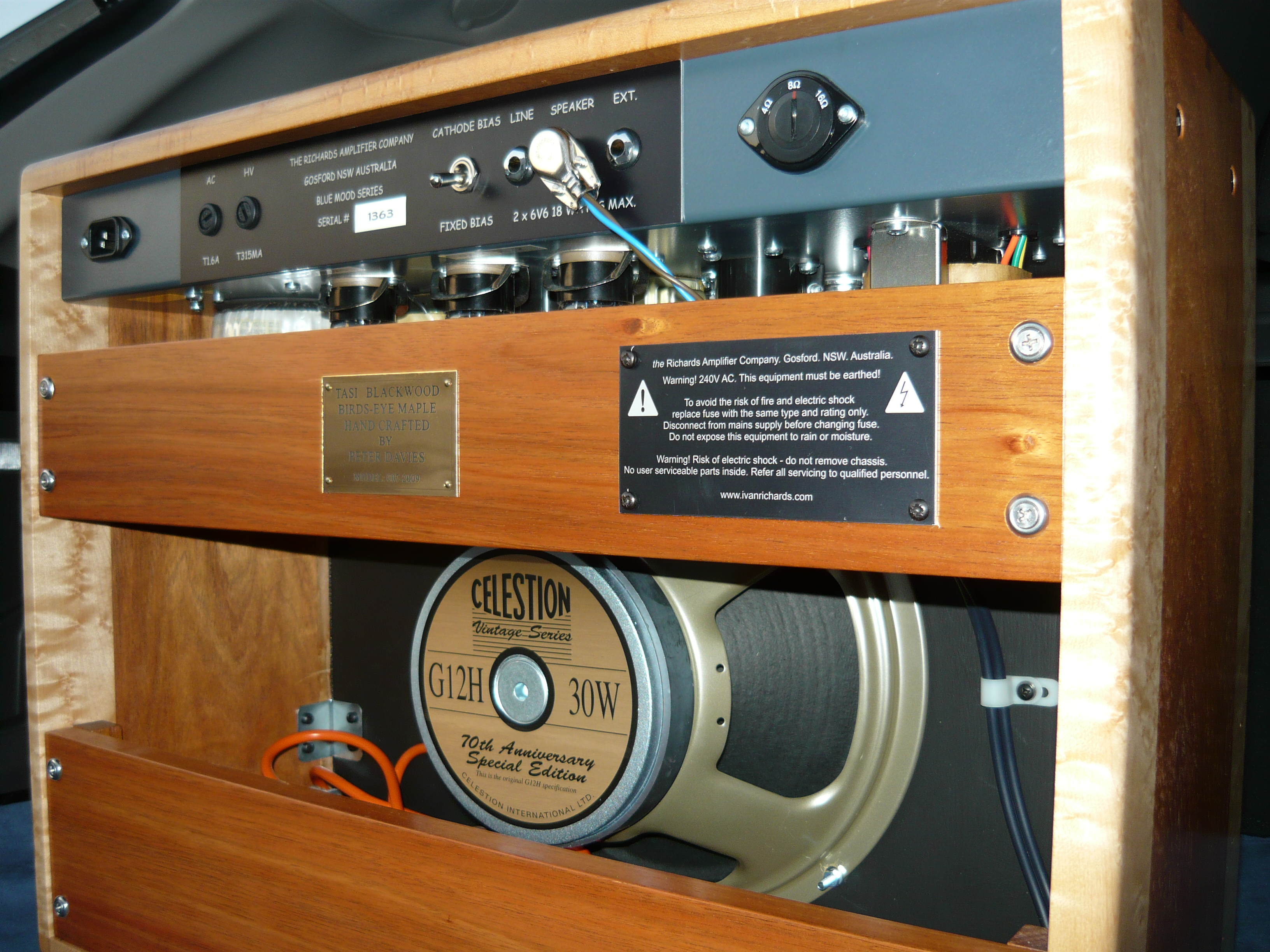
We don’t imagine that Gary will be taking this amp out on the road, it’s more the kind of amp that you enjoy in the privacy of your own home. The combo features a pair of high impedance inputs, a bright switch for guitars with humbucking pickups, volume, treble, middle, bass, reverb and master volume controls, footswitch jack and send & return jacks for the passive FX Loop.

So – what makes this 18W combo different from the other models in the Blue Mood range ? For one thing – this model is all about the reverb. The reverb is warm and lush, not the thin and insipid reverb that we hear in so many commercially made amps nowadays. Naturally, we employ a full size reverb tank, housed within a double bag to minimise coupling from the nearby speaker. The reverb does not add any hum, noise or power supply hash to the dry signal. The sweep of the reverb level control is useable from minimum to maximum – we don’t concentrate the entire sweep of this control into just a few degrees of rotation !

Primarily, this model is designed for transparency, with the added bonus of the warmth and harmonic complexity that only a well-designed valve amp can deliver. The master volume control is intended more to control the gain structure of the amp, and is less about overdriving the preamp easily. In other words, the player can find the desired sweet spot when setting the volume, treble, middle, bass & reverb controls, then set the appropriate playing level with the master.

The footswitch jack offers a boost facility for solos, etc, achieved by partially bypassing the passive EQ, ie the tone stack. A robust footswitch pedal is included. The FX Loop is positioned after the master volume, between preamp and power amp and is completely passive to maintain the transparency of the amp design. This will require the use of a professional quality (line level) time delay outboard FX, which offers a high input impedance plus input & output level controls with LED signal level indication.

Feedback from Gary so far – well, all of our customers love their Richards amps, but we have never before received such a warm & enthusiastic response as we have over this amp. Gary realises that this amp is making him a better player – the transparent nature of the amp means that it doesn’t hide any mistakes or sloppy playing, so you just end up playing better. The warmth and sheer tone of the amp means that you can play for hours on end and never want to stop. Even Gary’s wife has noticed the improvement. We think we have achieved something extraordinary here !

Well – we will probably only ever build just a handful of this particular model. Our most popular models are the British voiced Expressionist and Rich Tone amps, with good reason, but we have certainly proved a point with the 18W reverb combo. Many thanks to Gary for his enthusiastic response to this amp – IR.
Brent’s vintage DIASON amp

September 16, 2012

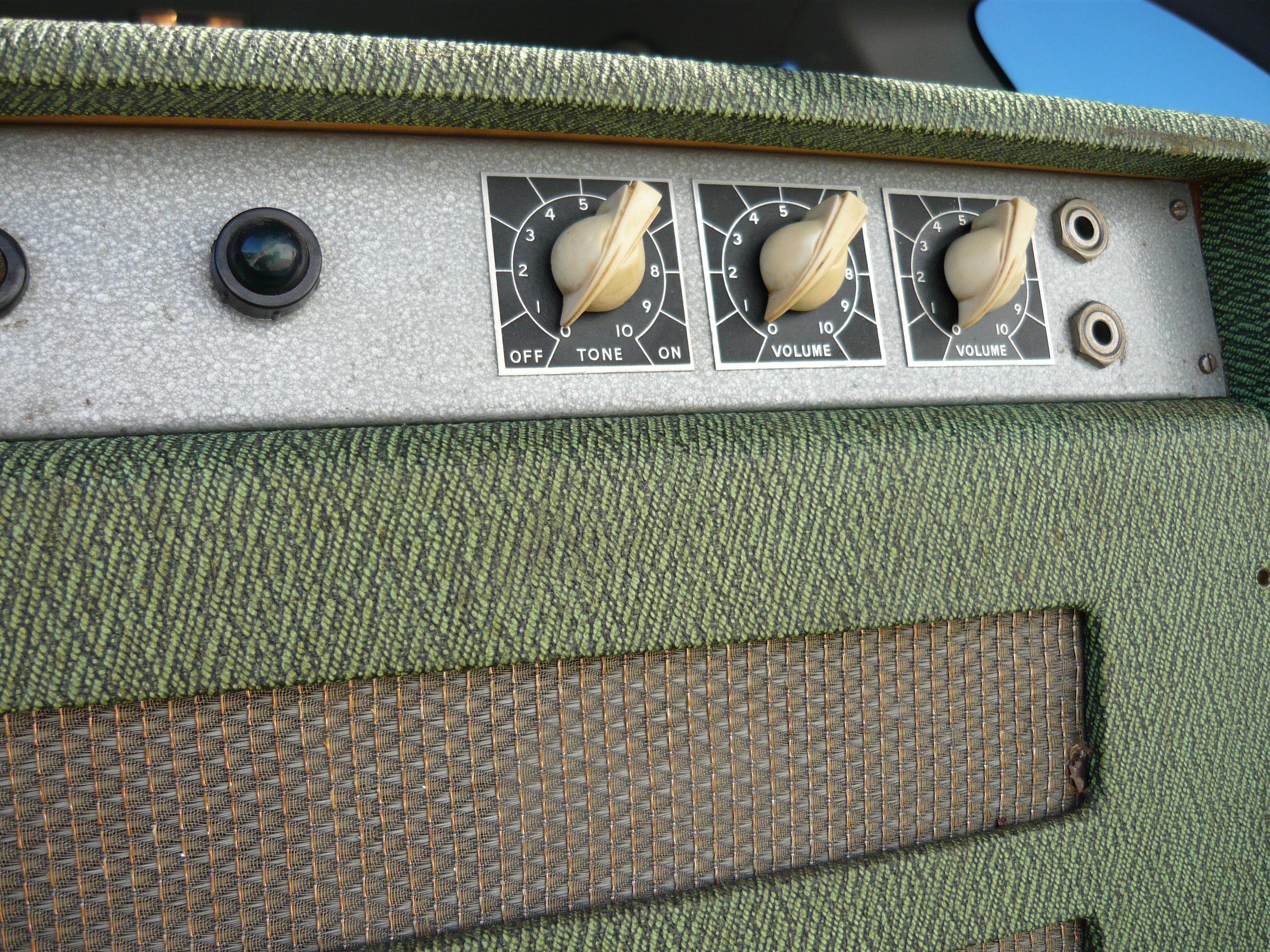
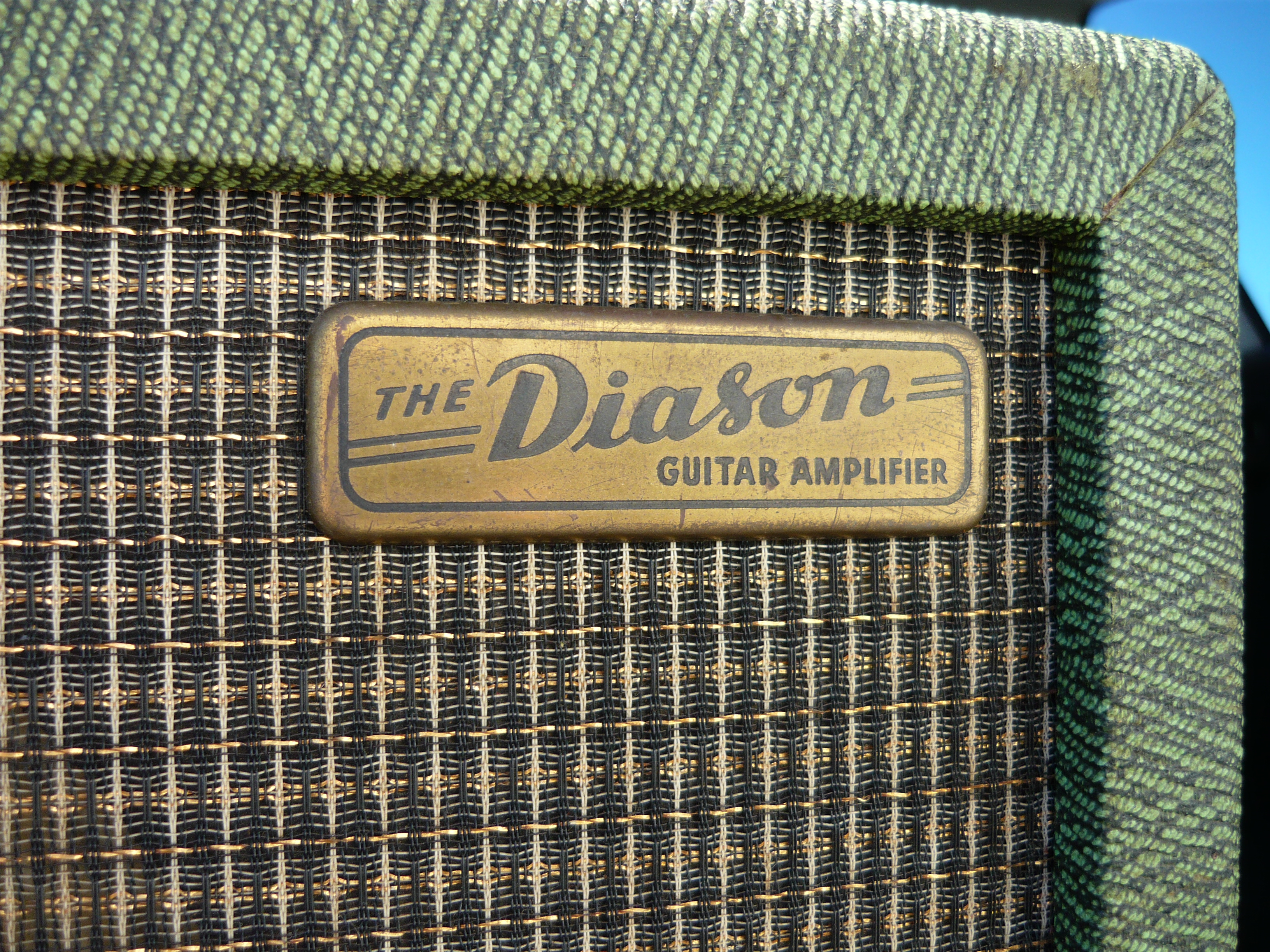
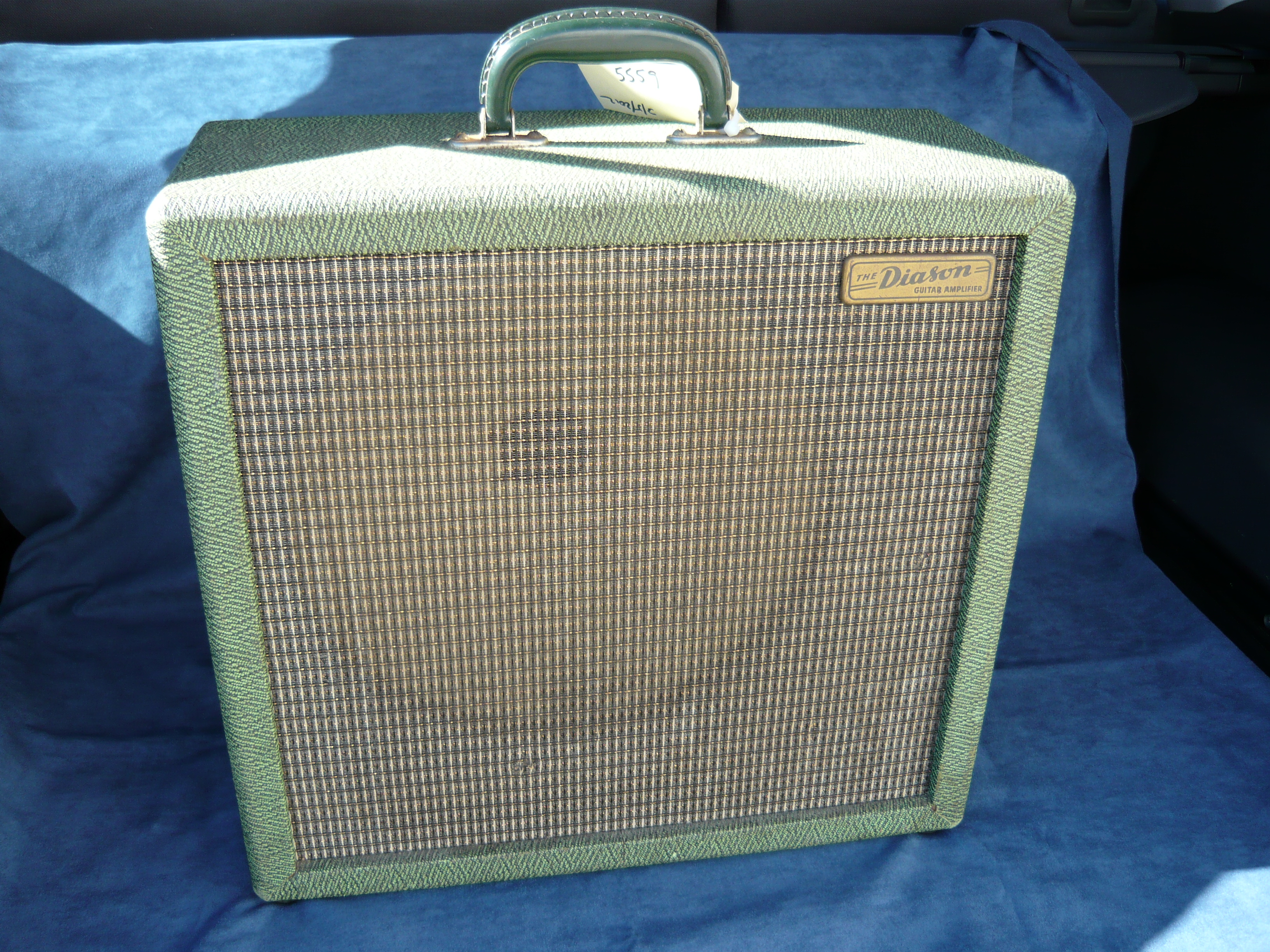
Welcome back ! This week we have another curiosity item from the distant past. We are discussing a vintage Diason 15 watt guitar amplifier, serial # C1048, belonging to Brent, from Bondi Intermusic, our favourite Sydney boutique guitar store. We know very little about Diason amps, we’re not even sure how to pronounce “Diason”, but we know they were manufactured in Melbourne Australia, back in the 50’s and 60’s.

Once again, if anyone out there has any knowledge regarding the manufacture of the Diason amp, please contact us so we can present this information to our readers. Our primary concern always is that the history of the Australian music industry is not lost forever. We have repaired Diason amps previously, usually from the mid-60’s, and always 1X12 combo’s of less than 20 watts output.

This stunning example is presented in a very attractive green covering material with contrasting speaker grille. Judging by the approach to construction of this amp, it is a fair guess that date of manufacture is in the late 1950’s, or early 1960’s at the latest. There are two channels with individual volume controls and a common tone control, a fairly standard format back in the day. There are separate chassis for the preamp and the power amp, also a standard format at the time, usually connected together by an octal plug and socket, but also by other methods.

The input jacks and controls face to the rear, which was perfectly fine at the time when dance band guitarists often played seated, with their amp in front of them. Fifteen watts was more than adequate for the job. We recall seeing amps just like this from Maton, Vadis and Moody, to name just a few, plus Fender, Gibson and Ampeg from the USA. The amp sounds quite good, by the way. Brent was intending to put this amp in his special room upstairs at Intermusic, with all the nice acoustic guitars.

Well, there wasn’t actually a great deal wrong with this amp – just a general service required. All the electrolytic capacitors were replaced of course – they were still the originals ! Plus a resistor that had drifted way off value. Electrical safety issues included the 240V 3-pin plug, and the fuse. The single biggest problem was the pots were so scratchy, the amp was barely useable. A good squirt with Caig Faderlube restored them to good working order, replacement not required. They made things to last in the old days !

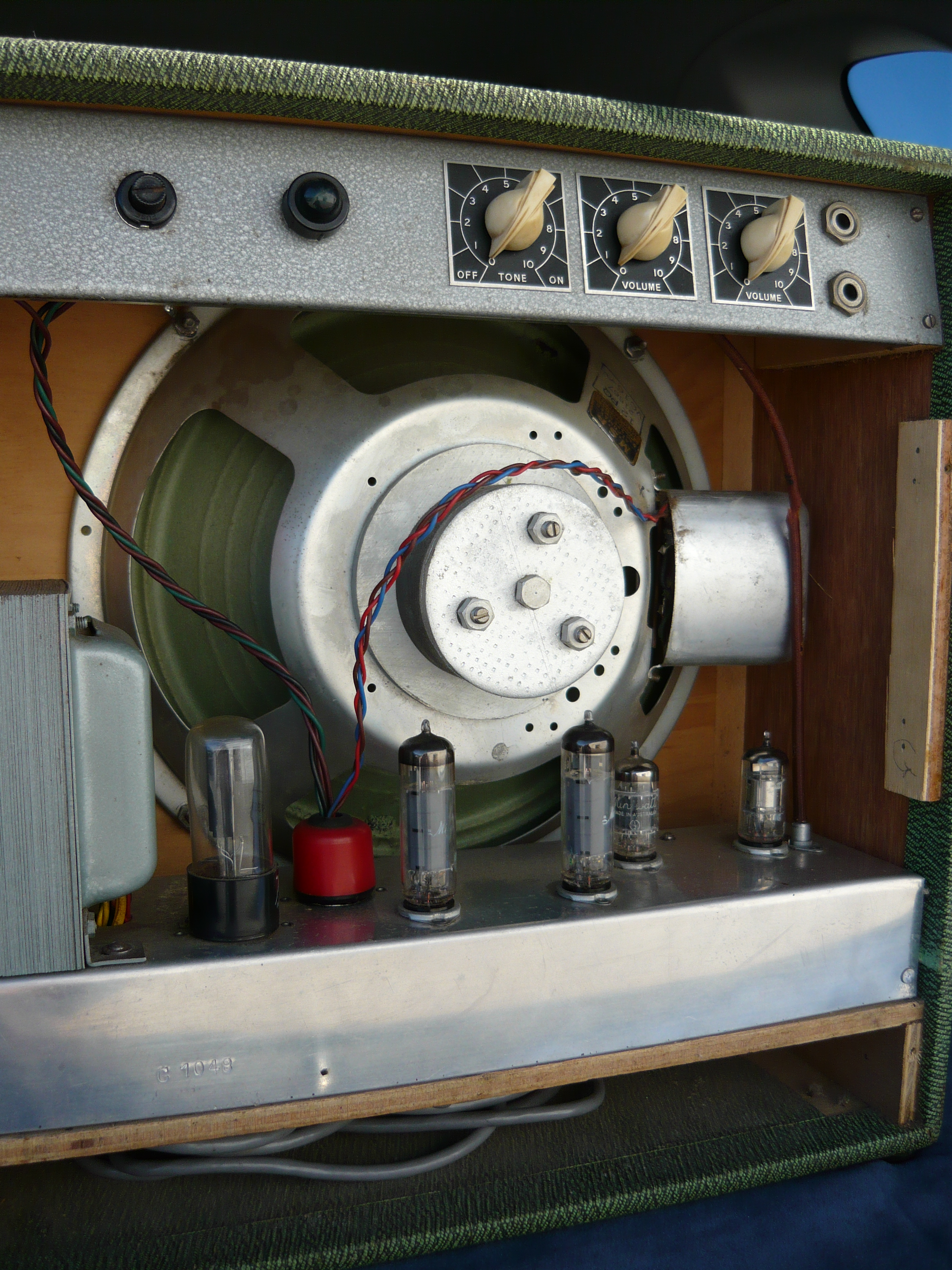
You can clearly see from the photo on the right the arrangement of the two separate chassis. The hefty Aussie power transformer is mounted at the end of the chassis, well away from the 12-inch speaker which takes up most of the internal space within the combo. The audio output transformer is mounted to the chassis of the speaker itself, also a common arrangement back in the day. The captive 240V power lead usually has a space to be curled up underneath the power amp chassis.

The speaker is mounted slightly offset, possibly to balance the weight and also possibly to create space for the power transformer. You can see on the left that the speaker manufacturer’s label and the stamp for model number and impedance have survived. The alnico-magnet speaker was manufactured by MSP, a division of AWA in Sydney. MSP = Manufacturers Special Products. The MSP speakers were standard equipment in many Australian-made guitar amps. AWA also manufactured valves (tubes) in another division called AWV (Amalgamated Wireless valve).

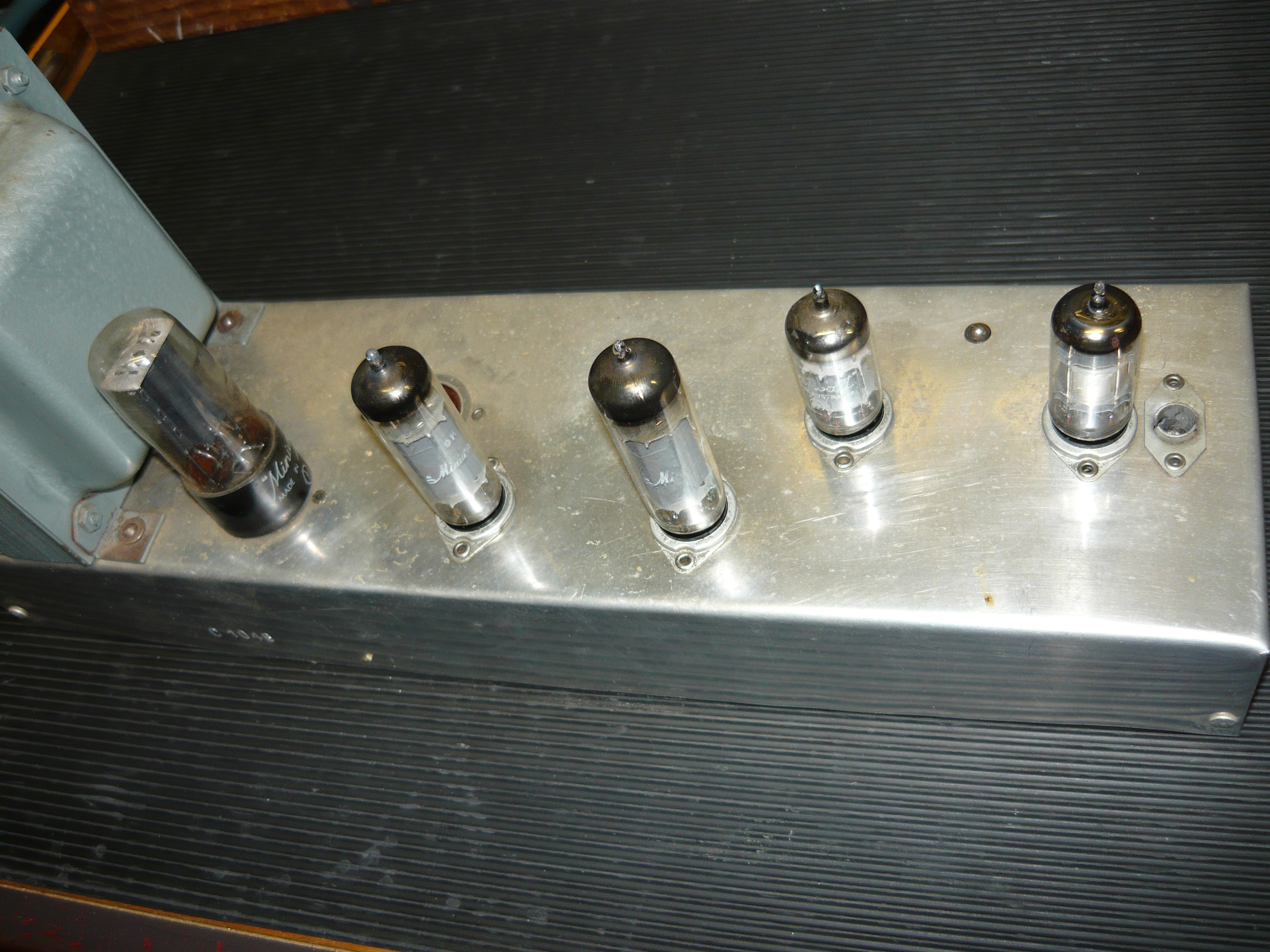
Most, if not all the valves (tubes) in this Diason appear to be original. Apart from the made-in-Holland EL84 output valves (labelled 6BQ5), they were all made-in-Australia. The photo to the right shows the 5Y3 rectifier valve, labelled Philips Miniwatt. Miniwatt was the division of Philips that manufactured electronic components, for example capacitors, as distinct from consumer products. All these valves are still working fine after 50+ years !!

Obviously we were manufacturing very high quality valves (tubes) right here in Sydney, at the manufacturing facilities of both AWA and Philips. That’s another Aussie manufacturing skill that’s disappeared, unfortunately. We remember buying a carton of 12AX7’s from AWA in Ashfield at the beginning of the 1970’s, which lasted most of that decade. Each and every one of them was excellent, and they didn’t require individual testing and grading, which is what we have to do now.

Anyway – back to the Diason general service, we completed the job and invoiced Brent for 1.5 hours labour plus a handful of components. Not a huge investment required to get this amp running at its best, with a check on electrical safety as well. Whether or not anyone actually plugs an instrument into this amp, it will look just fabulous in the Intermusic acoustic guitar room.

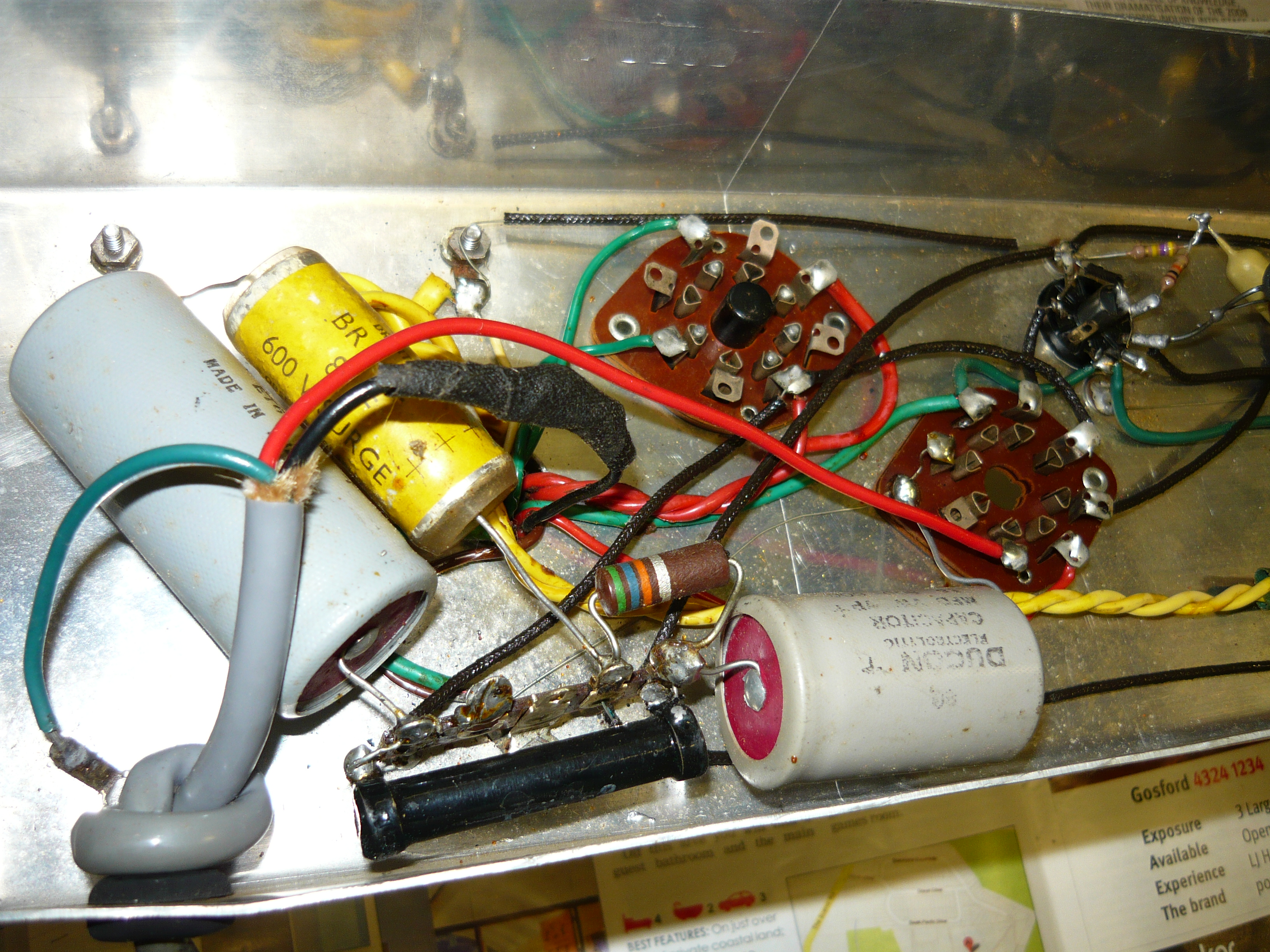
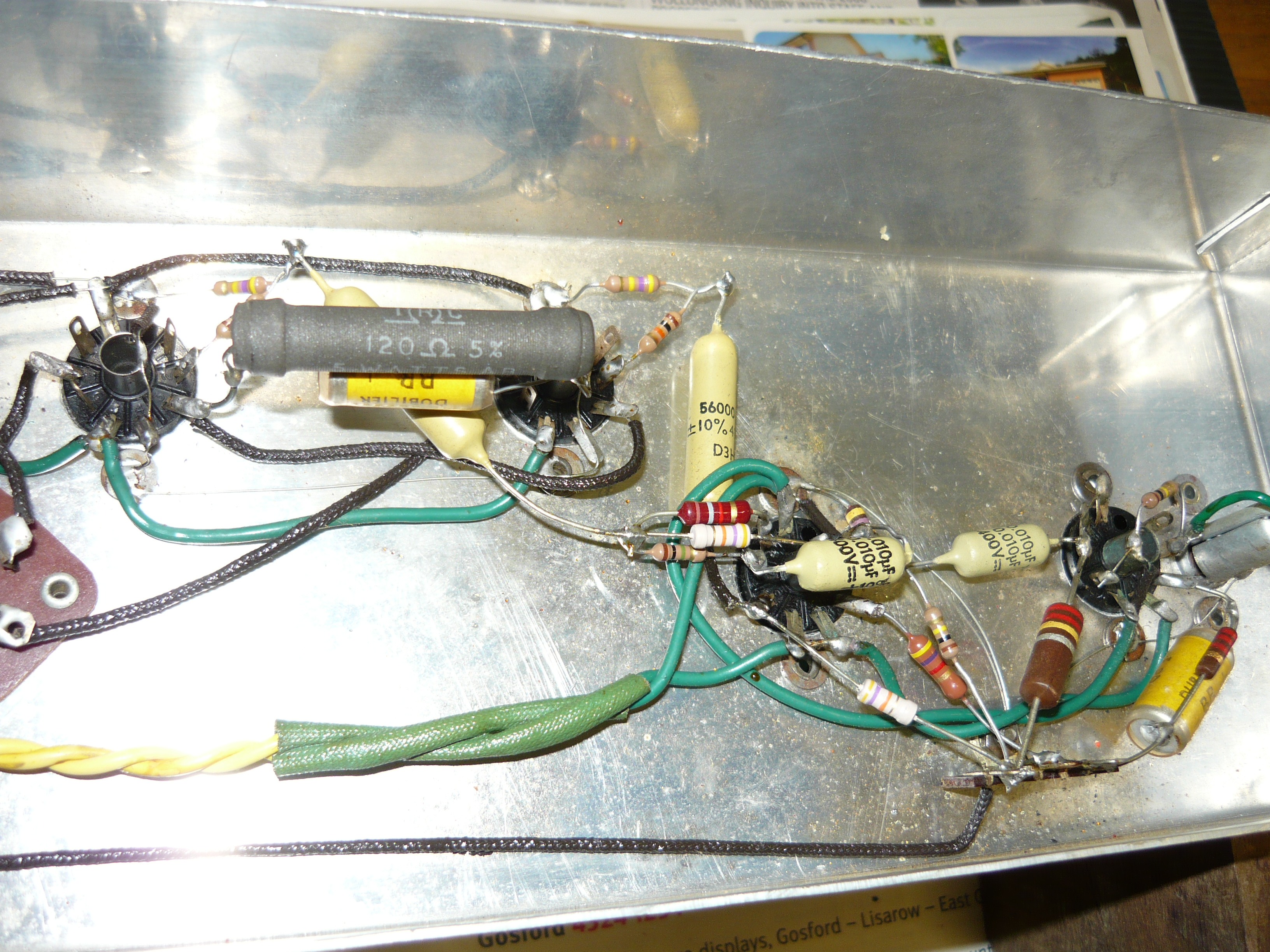
The remaining photos are before and after shots, inside and outside of the power amp chassis. They are typical of the layout and construction style of the amps of that time. We hope you enjoyed this appraisal of yet another quite obscure vintage Aussie guitar amplifier. We have a bit of a backlog of material to publish, so please check in with us on a regular basis. Regards, IR.

Silverface Fender Champ

September 4, 2012

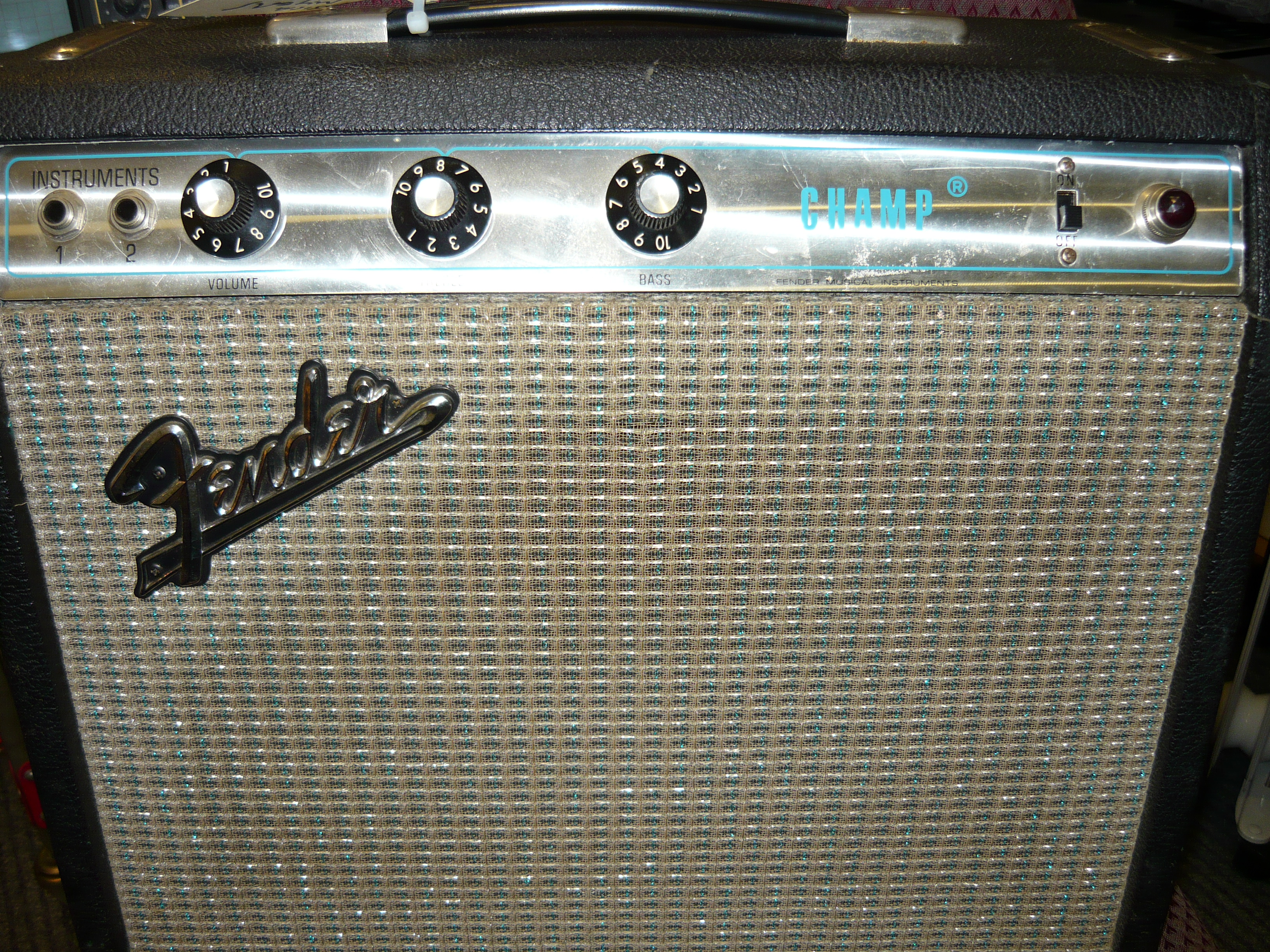
A Silverface Fender Champ amp, serial # A34003, date of manufacture August 29th 1972, was purchased on Ebay by Jessica, a young lady just starting out in the music industry here on the NSW Central Coast, and is the subject of this blog. This was a smart purchase on Jessica’s part, but required a major overhaul to bring the amp up to performance standard, which of course we were happy to do.

This amp was purchased off Ebay from the USA, so first and foremost we needed to replace the 110V power transformer with a 240V primary replica Champ transformer, plus install a 240V 3-core power cable and a 3-pin plug, including the installation of a dedicated chassis earth connection. The fuse also needed to be changed to a suitable value for 240V operation.

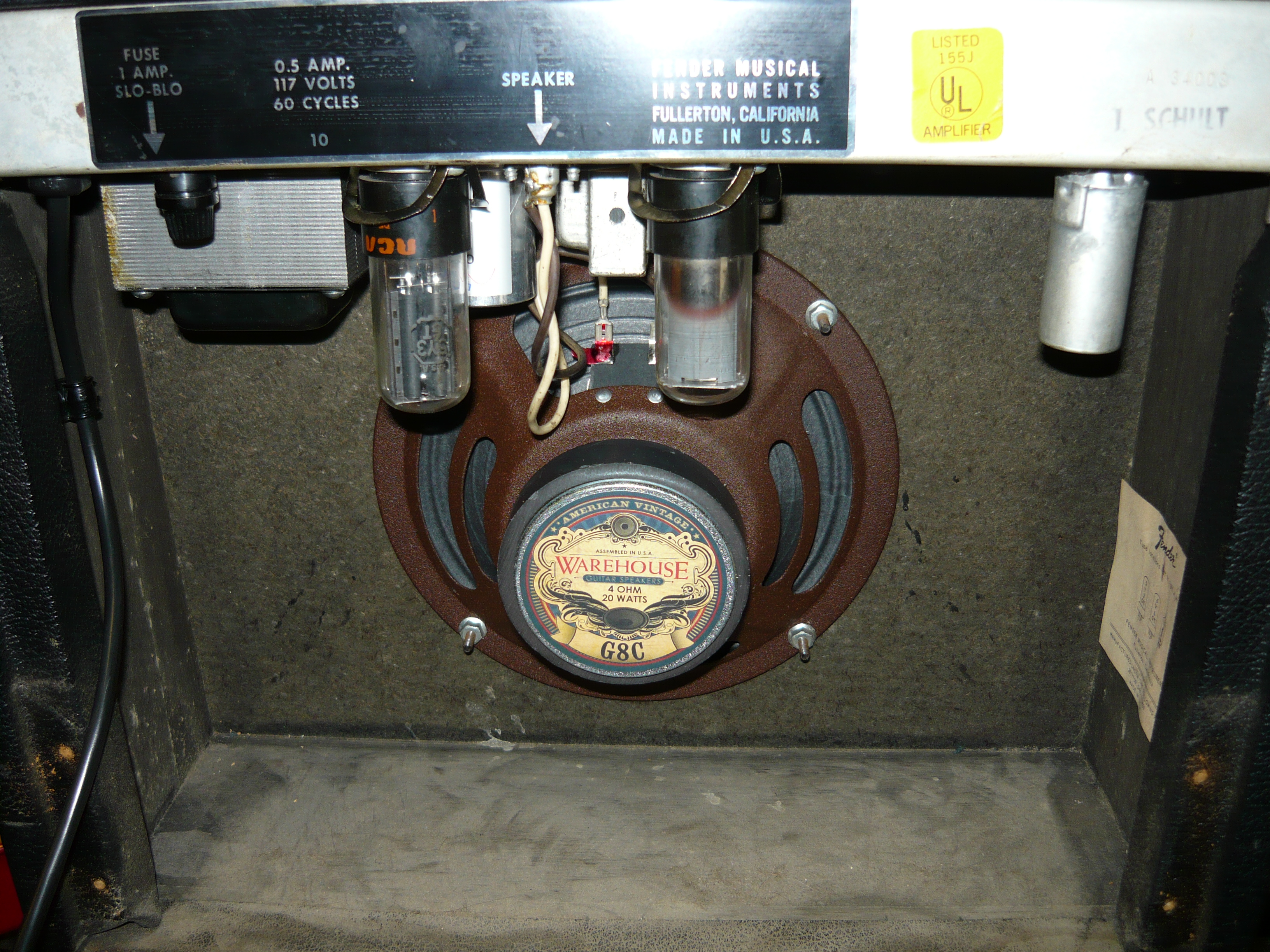
Next item on the agenda was the speaker – the original 8-inch alnico magnet speaker was doing this amp no favours at all. There are replacement/upgrade speakers for the Champ available from Jensen, Weber & WGS. We chose the WGS model, which is a significant upgrade compared to the originals. Seriously folks, WGS are making some great replacement and/or upgrade speakers at very competitive prices. We did have to enlarge the speaker mounting holes somewhat, to mount the new speaker on the existing bolts.

The Champ was now much louder and more toneful than the day it left the factory. There were just some relatively minor issues remaining to be corrected, ie noisy electronics. The pots and jacks were cleaned, as always, with Caig FaderLube and DeOxit. The power supply capcitors were actually 4 x 20uF/475V DC in a single chassis-mounting metal can. Fortunately, these capacitors are being manufactured again by CE Distribution (USA), so we were able to replace this unit, and maintain the original power supply design and appearance.

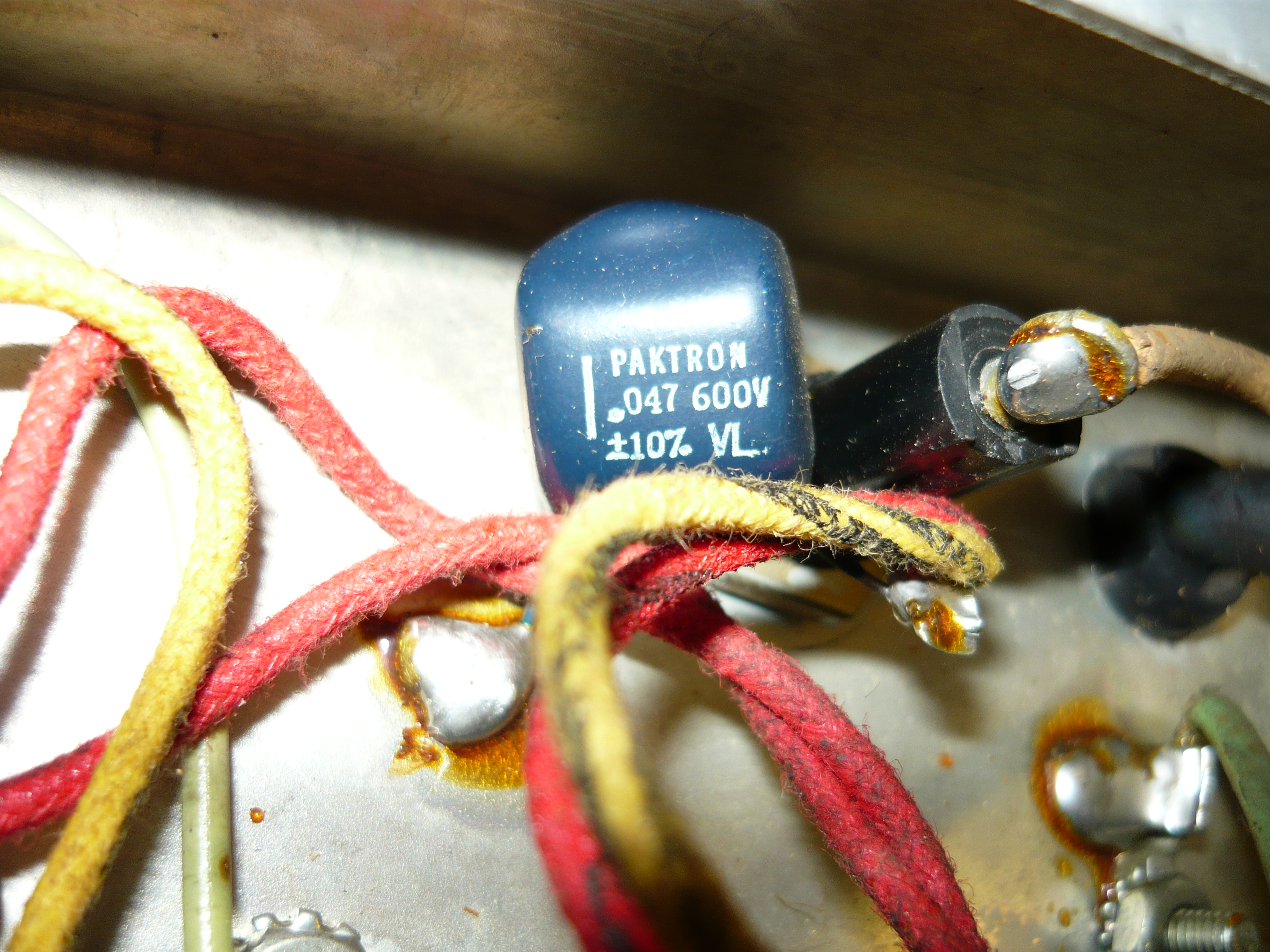
The photo on the left shows a capacitor that should be automatically removed before running these amps on the 240V mains. All that remained now to complete the overhaul, was to install spring clips to the octal valve sockets (to prevent upside-down valves from falling out), and to carry out power output and electrical safety tests. The amp delivered 4 watts into 4 ohms, at the onset of clipping.

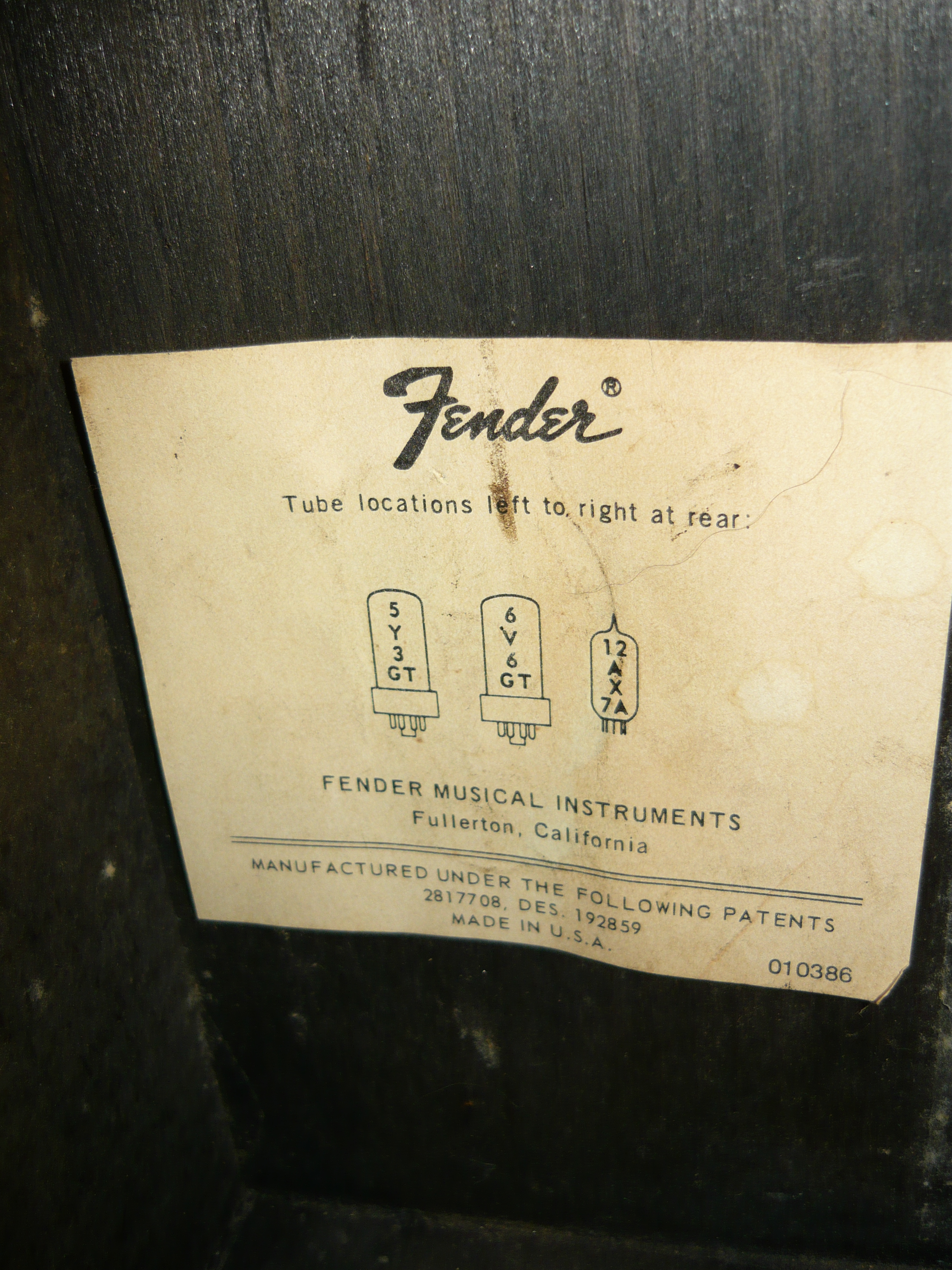
The photo on the right shows you how we could date this amp so precisely – a Fender factory worker named J. Castillo date stamped the amp AUG 29 1972 ! regards, IR.

Victor takes delivery of his Blue Mood 12W head

September 4, 2012

Here is a new model in the Blue Mood series of amps from the Richards Amplifier Company – Australia. Utilising our smaller chassis size, and powered by a pair of 6V6 output valves, the Blue Mood amp is now available as a 12W head. In spite of the seemingly rather modest power rating, this amp is quite capable of holding its own with a bass player and drummer.

This example is presented in a stunning combination of colours – vintage style (British) purple tolex, and a front panel made from a selected piece of exotic hardwood – purpleheart. Black hardware, control panels and control knobs complete the picture. Those of you who are familiar with our amplifiers will know that we are particularly proud of the presentation of our amps in such beautiful timbers as Tassie Blackwood, Bird’s Eye Maple, Bubinga, and others – now including Purpleheart.

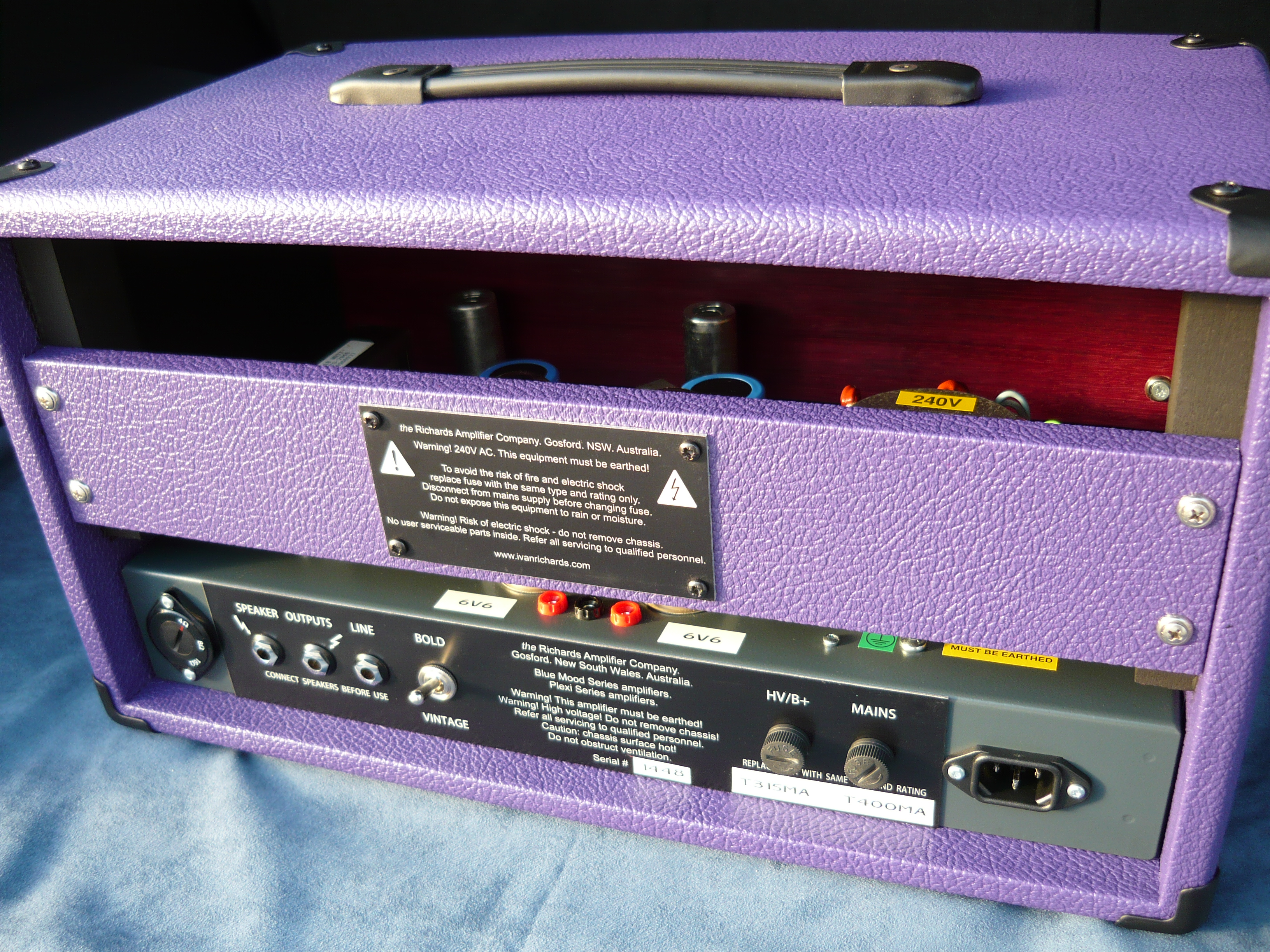
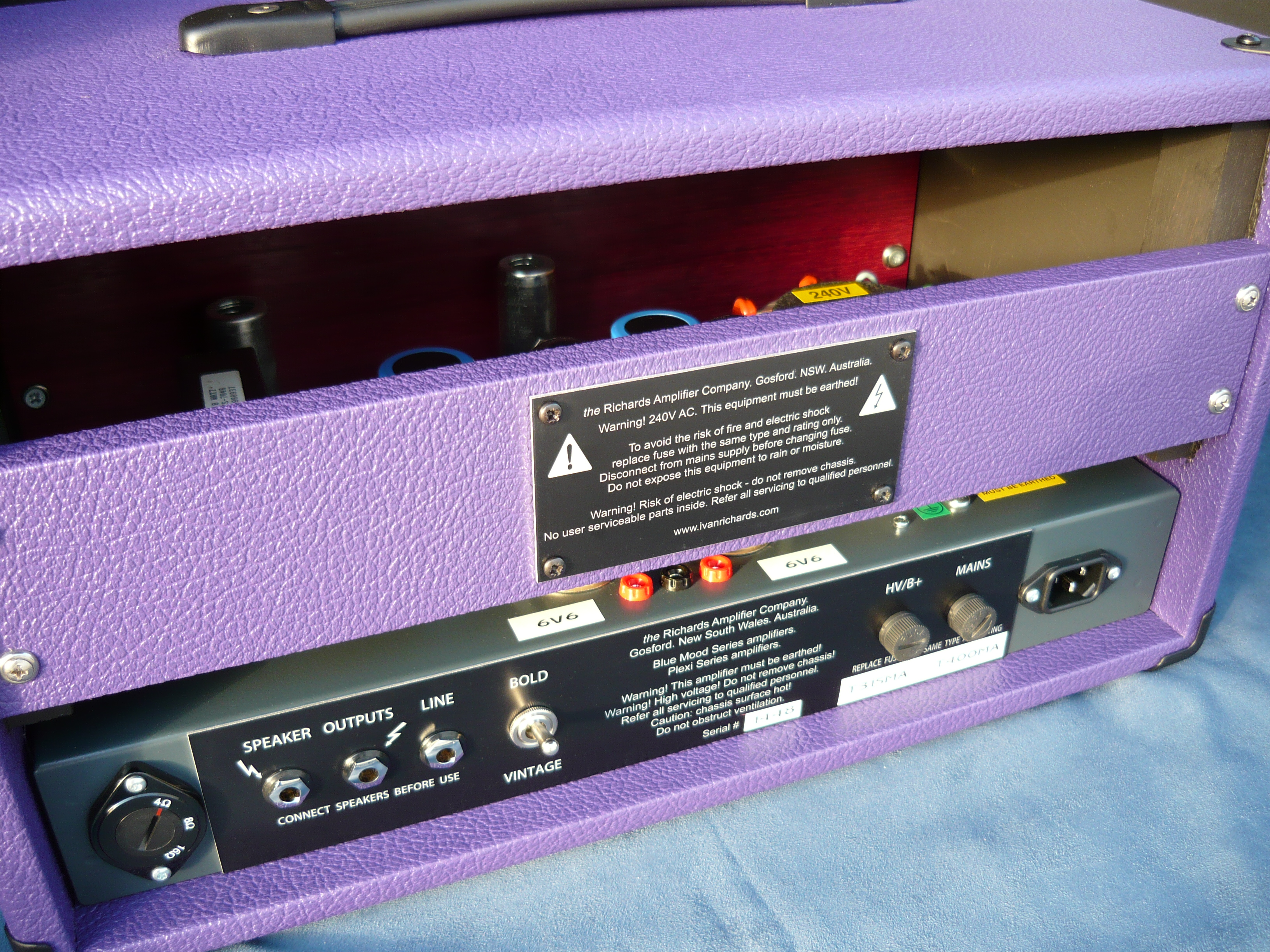
The basic Blue Mood format offers a stripped down circuit for purest signal path. A single high impedance input jack, volume control, passive treble/middle/bass controls, active prescence control, and master volume control with bypass. The bass control has a pull-shift function to shift the focus of the bass and midrange controls upwards by approx 1 octave, for an alternate vintage voicing. Rear panel offers 4/8/16 ohms impedance selection, a pair of parallel-wired speaker jacks, line/DI jack, a pair of fuses, detachable mains connection, plus a bold/vintage switch – in this amp the vintage setting reconfigures the 6V6 output valves for class-A/cathode-bias operation.

The basic tonality of the Blue Mood amp is inspired by everybody’s favourite early 1960’s amp from California, as exemplified by the Mark Knopfler’s, Stevie Ray’s and the Brian Setzer’s of the guitar world. We just go out of our way to make it a little fatter, a little warmer, and a little sweeter.

Each and every amplifier is individually hand-assembled, hand-wired, one at a time, by one person from beginning to end, to a specific customer order.