Archive for January, 2013

The VHT Special 6

January 22, 2013
the VHT Special 6

the VHT Special 6

Welcome back to the blog ! Back on December 7th 2012, we published a blog describing repairs to a VHT Pittbull Classic valve (tube) guitar amplifier. The Pittbull was a 3-channel, 100 watt monster built about 20 years by the original VHT amplifier company in the USofA. Since then, the original owner sold on the rights to the VHT name, and the modern VHT amp is made in China, and is generally a much lower powered amp.
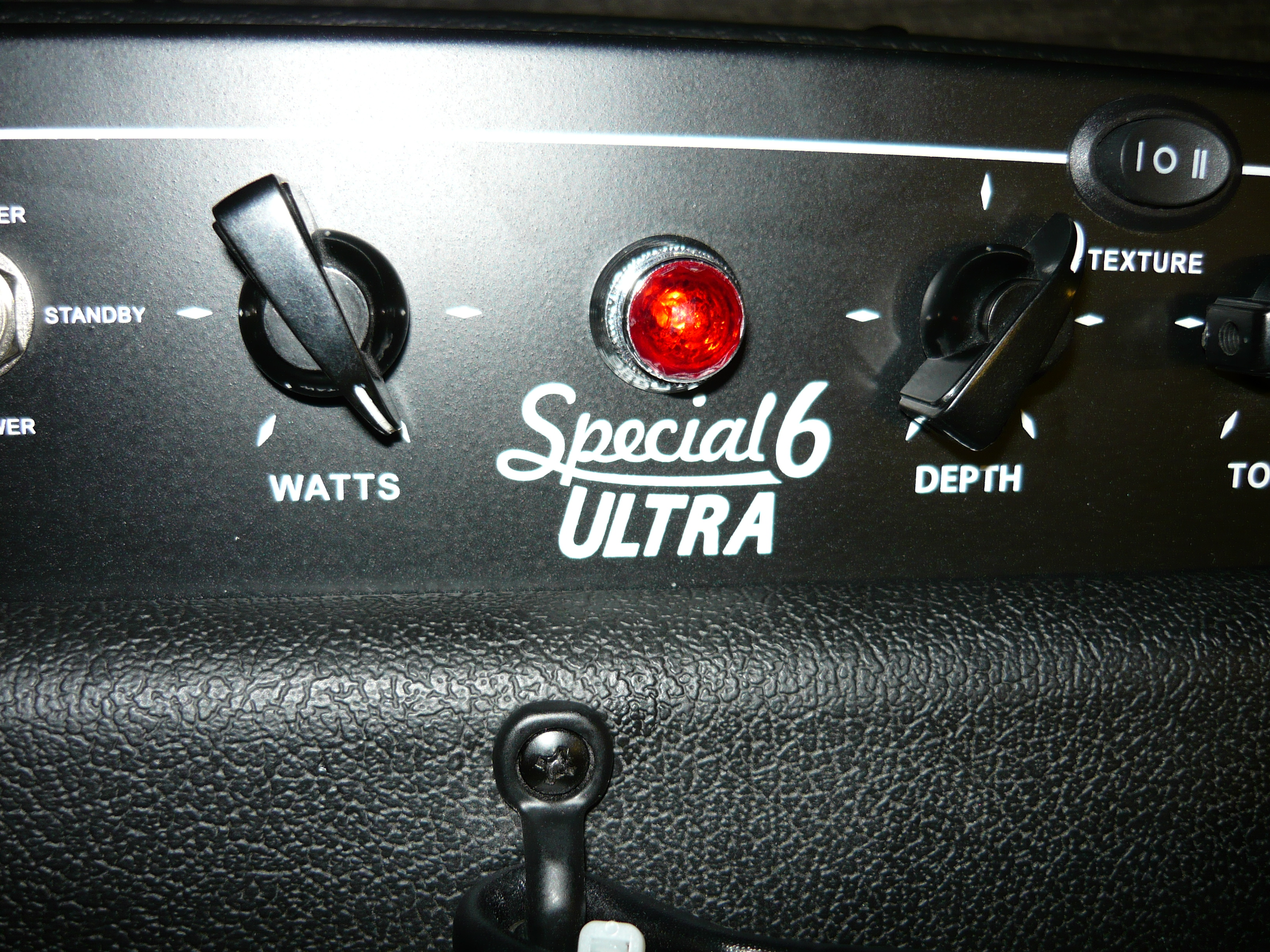
the VHT Special 6

the VHT Special 6

We recently repaired a VHT Special 6 ULTRA for Steve, a regular customer. This amp is loosely based on the well known Fender “Champ”, but features an additional 12AX7 gain stage, with the inclusion of  separate low-gain & high-gain input jacks, so the player can bypass the high gain stage, and also an output attenuator and additional tone shaping switches. The power amp is the traditional single-ended 6V6 valve output stage, employing cathode-bias, ie the amp is self-biasing. Power output is 5 watts @ the onset of clipping.

the VHT Special 6

the VHT Special 6

The speaker is unfortunately only a cheapo Chinese unit, but the cabinet is much more generously proportioned than many other similar amps, so we would assume that upgrading to a quality replacement speaker would result in much improved performance, particularly ref the lows & low mids. Another obvious upgrade would be the valves themselves, which is where this blog is heading.
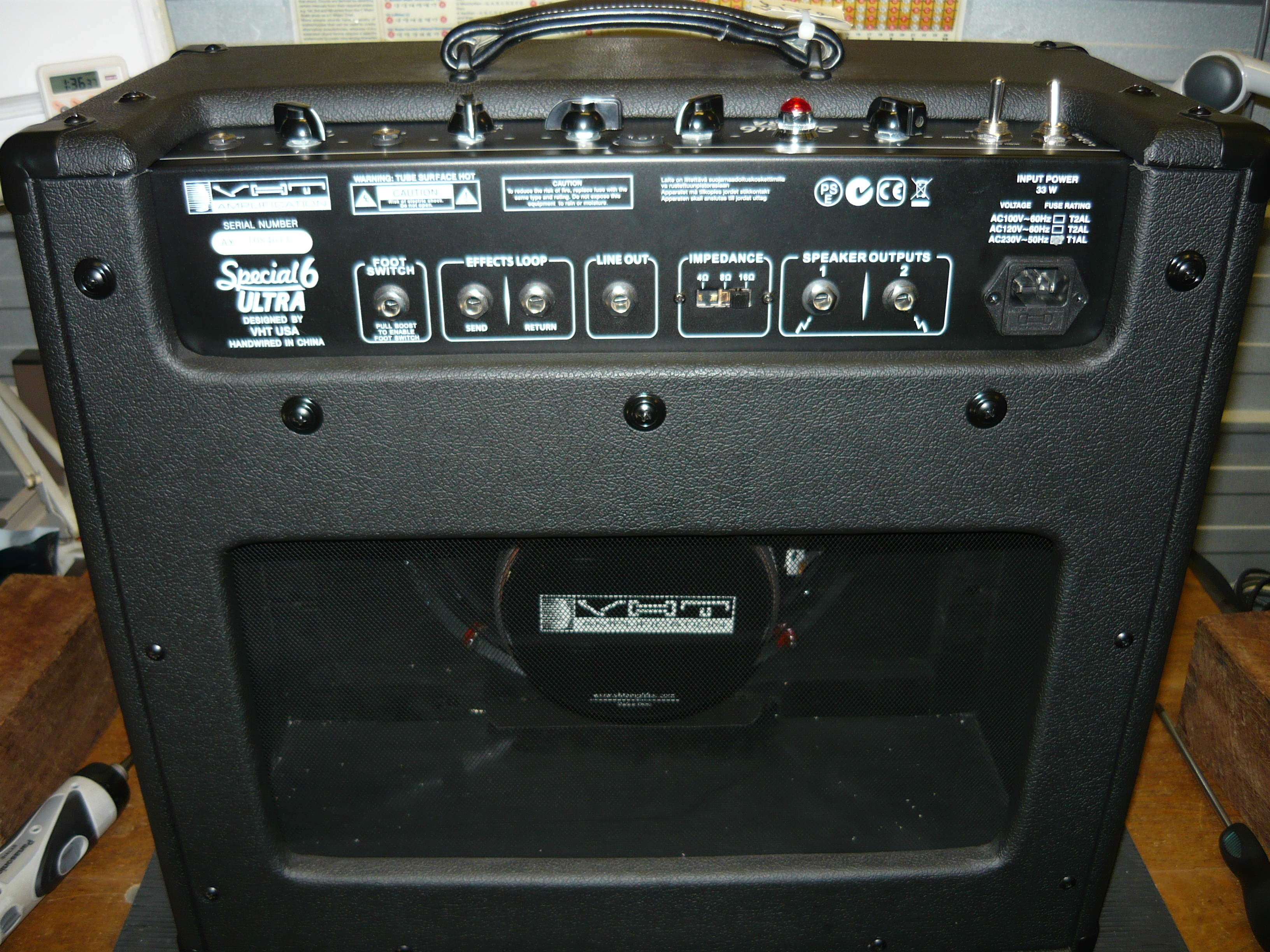
rear view

rear view

The stated fault on this amp was “it just stopped”. The external & internal fuses were not blown, and the DC voltage conditions appeared normal, but the output stage was non functional. We soon realised why. The Chinese 6V6 had gone S/C (short-circuit) internally, destroying the 470 ohm cathode-bias resistor in the process, which acted like a fuse. The chassis in this model is folded in a U-shape so getting to the parts of the circuit you need to get to with a soldering iron is time consuming, adding to the cost of repairs. However, by dropping out the octal socket and twisting its position we could remove the blown resistor and install a replacement W22 series 7 watt ceramic body 470 ohm, our preferred type for demanding conditions.
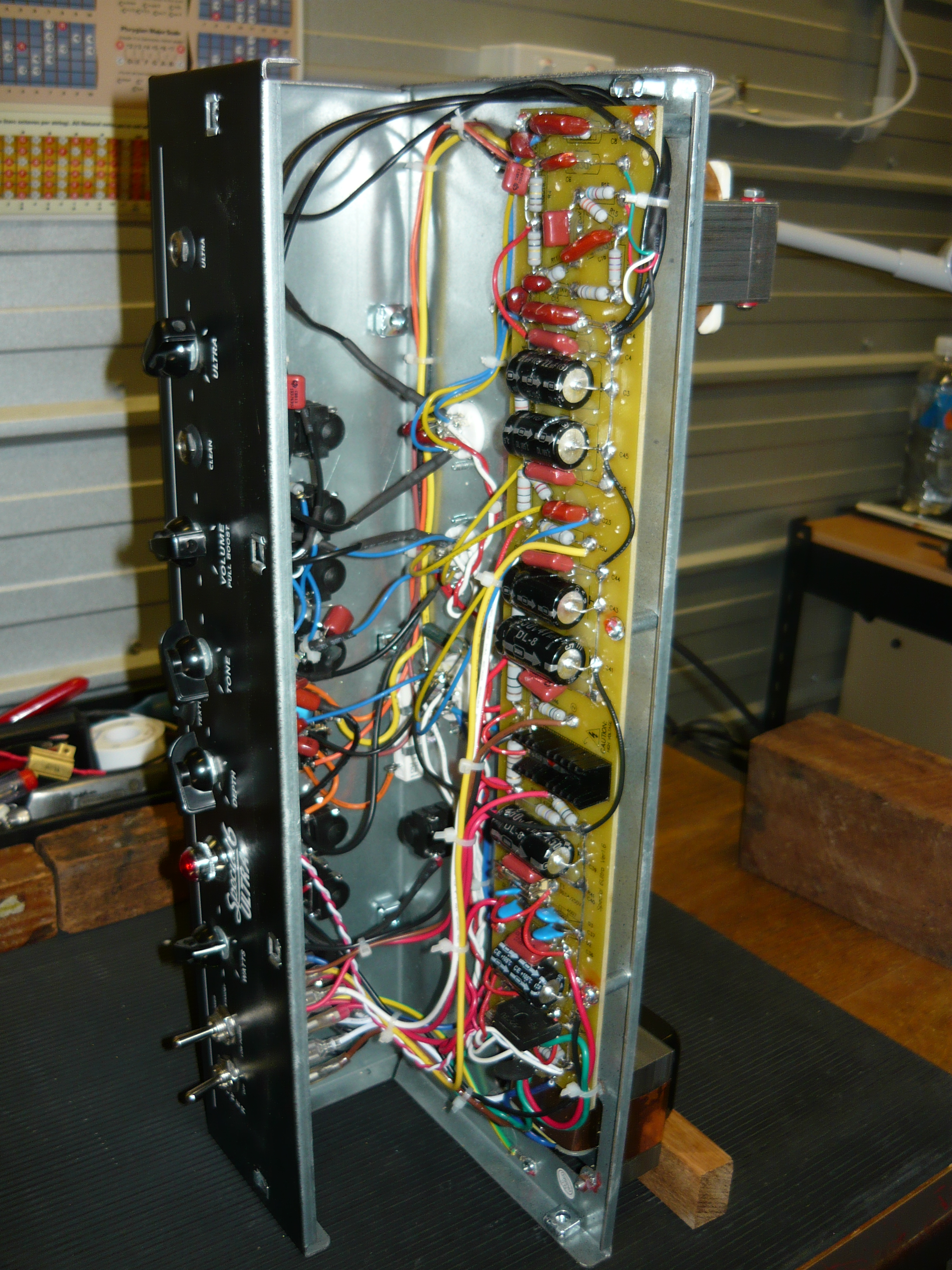
the chassis is removed & on the workbench

the chassis is removed & on the workbench

While we had the chassis out we took the time to correct a few “dry” solder joints, which would have caused intermittent problems in the long-term. We can confirm that these amps are actually “hand-wired” in China, and the quality of assembly is no worse than what we are seeing from the major guitar amp manufacturers. Naturally, the larger hardware items such as transformers, speaker, etc, are cheaper units, but this is only what you would expect from a budget amp.
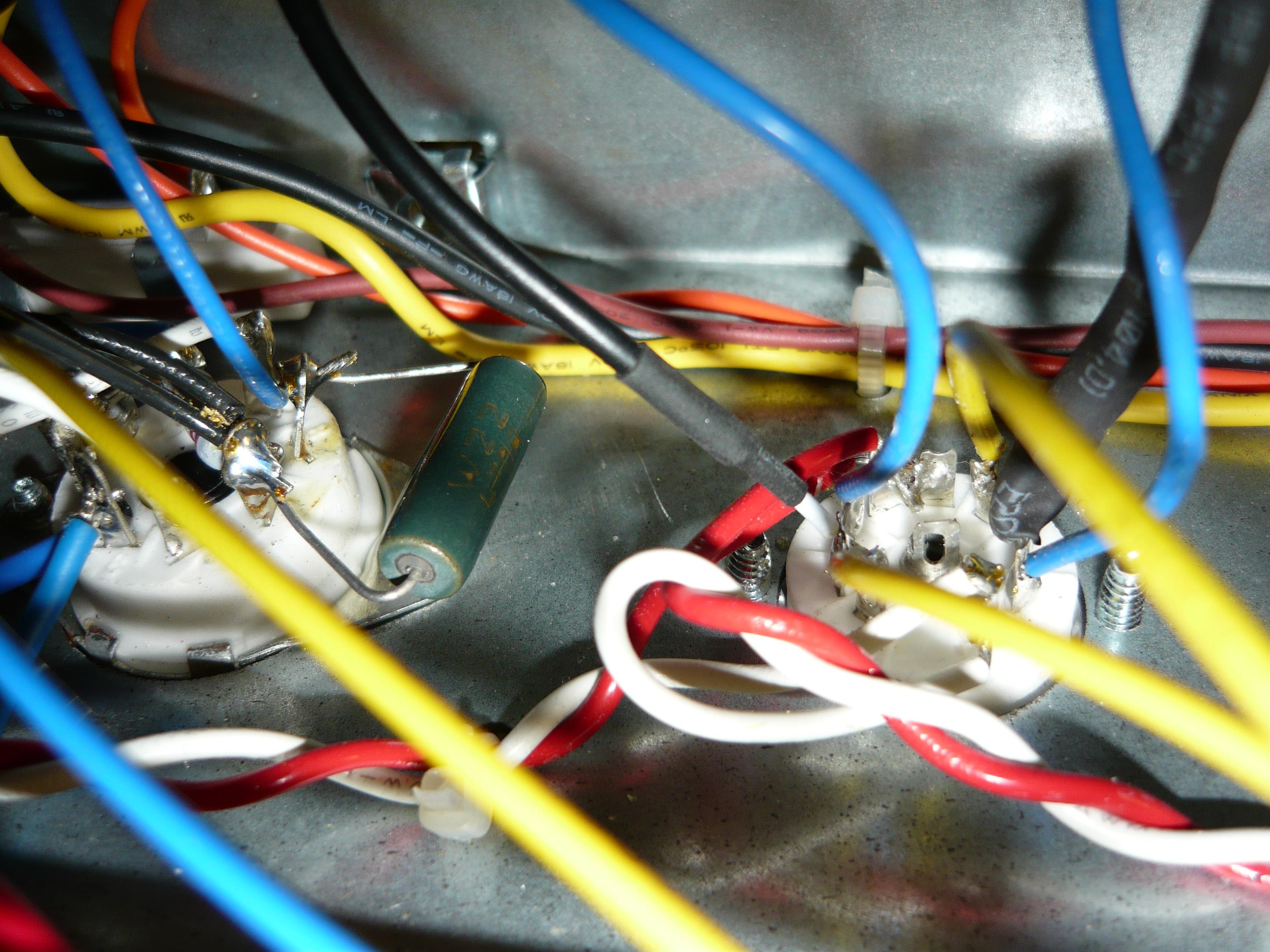
 

we have replaced the cathode bias resistor

we have replaced the cathode bias resistor


To complete the repair, we installed a new (re-issue) 6V6GT output valve by Tung Sol, one of the best of the current production 6V6’s, plus at Steve’s request we replaced V1 with a 5751 preamp valve. This reduces the preamp gain by about half, allowing a much wider range of clean to crunch tones to be easily obtained. Steve was very happy with the end result. So there we have an example of the contemporary VHT guitar amp. Many thanks to Steve Molenaar for his continued custom & loyalty. IR.

Service Centre for Morgan Amplifiers in Australia

January 16, 2013
the Morgan SW50 head

the Morgan SW50 head

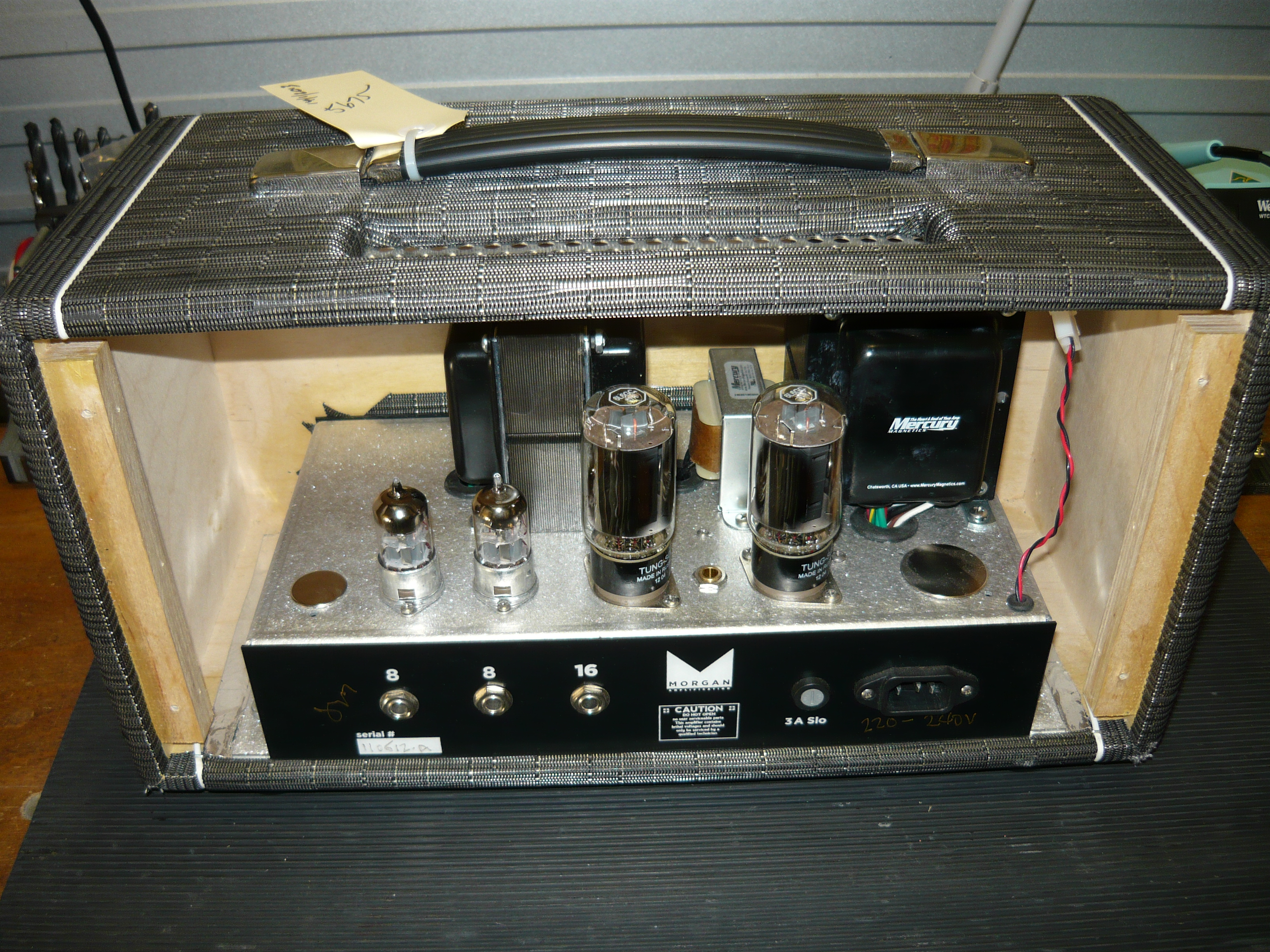
Many of you will already know that for many years now we have specialised in the repair, service & restoration of hand-wired valve (tube) musical instrument amplification, including many of the “boutique” grade amps that have appeared on the scene since the 1990’s. This is our first customer repair job for a relative newcomer to the “boutique” scene, the Morgan amp from California.

rear view - Morgan SW50

rear view – Morgan SW50

The Morgan amps have enjoyed an increased profile in recent times, and have appeared in numerous YouTube demonstrations. This particular model is known as the SW50, and is a stripped-down, single channel dual 6L6 powered amp delivering approx 45 watts @ the onset of clipping. The power supply is quite conventional, employing silicon diodes for rectification. The transformer & filter choke set is by Mercury Magnetics.

rear panel removed

rear panel removed

The Morgan website implies that the design of this model is loosely based on the clean channel of a customer’s early 1970’s Dumble amp. Clearly, the design was revoiced & refined quite significantly to become the SW50, which is primarily a clean, percussive amp with very late break-up. The 2-band EQ is more interactive than a “Blackface” Fender, for example. The bright switch is very effective at low settings of the volume control, the bass switch is obviously Dumble inspired but unfortunately primarily boosts very low frequencies and is best left off.

top/rear view of SW50 chassis

top/rear view of SW50 chassis

The SW50 is actually quite dark running with the volume control set high and the level (ie, master volume) set low. Conversely, the SW50 is quite bright with the volume control set low, and the level set high – this is when the bright switch is most effective. There is more than enough bottom-end with the bass switch off. The preamp employs a single JJ 12AX7 valve (tube), plus a 2nd JJ 12AX7 for the phase-inverter stage.

chassis interior view 01

chassis interior view from front

This particular Morgan was creating some weird resonances on selected notes being played. We discovered that V1 was microphonic, and the pair of SED 6L6GC output valves (tubes) was in very poor condition, with a much weakened internal structure vibrating at selected frequencies. The amp was under-biased, meaning that the 6L6’s were running far too hot for long term reliability.

chassis internal view from rear

chassis interior view from rear

We installed selected replacement valves & rebiased for a more reasonable current draw. On power output test there was no crossover distortion evident and we measured 19V/8 ohms which is 45 watts, @ the onset of clipping. Mains voltage here in Wyoming NSW is approx 245V AC. I should point out that at this point in time we have no official relationship with Morgan amps, we are not an authorised warranty agent. However, we are now offering world-class non-warranty service/repairs to all Morgan amps for Australian customers. Regards – Ivan Richards.