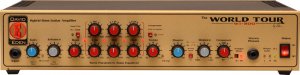
 We discussed in a much earlier blog that we provide service & repairs for the David Eden brand of bass amplification. In today’s blog we are showing the “World Tour Series” WT800 model as an example, but this blog probably applies to most of the range at this time.
 We recently implemented a MOD to this amp at the request of our good customer, Mr Paul Disspain. We can’t claim any originality for this as the idea came from an example on the David Eden user forum. Initially we thought the idea was a bit overkill, but now wholeheartedly agree this is a MOD that greatly enhances long term reliability.
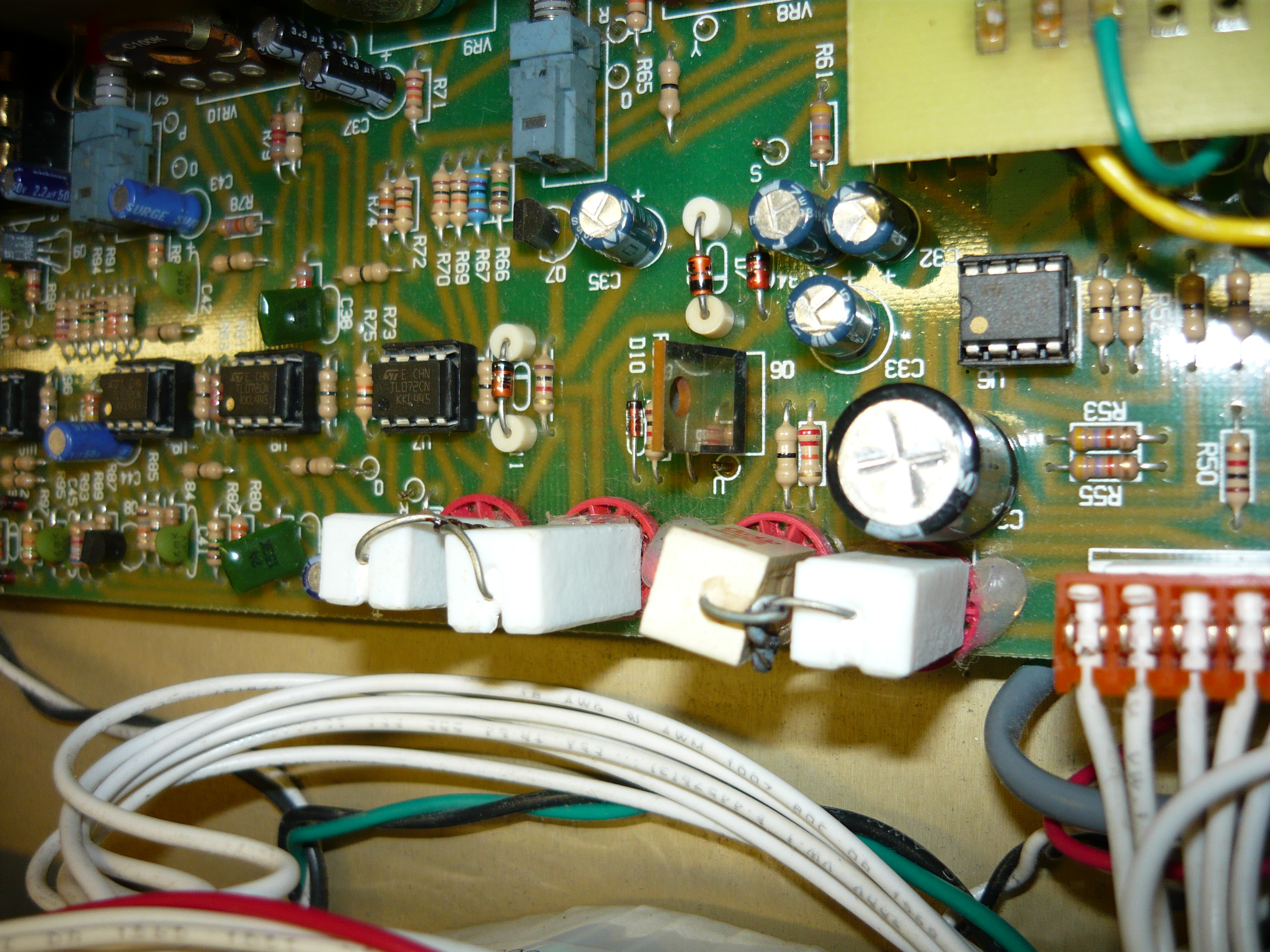 Commercially made amplifiers often have little design short cuts or oversights where the design team momentarily dropped the ball, and David Eden is no exception. Specifically, the low voltage power supply in this model has been done “on the cheap”. Rather than design dedicated low volts supply rails from their own transformer winding, the design simply drops the power amp volts supply rails by way of inserting series resistors, designated R62 & R64.
 The end result of this technique is that the voltage dropping resistors generate a LOT of heat, even though R62 & R64 each comprise a pair of 5 watt ceramic body components. We are talking about enough heat to desolder the connections over a period of time. This heat is constant, the whole time the amp is powered on. The resultant poor connectivity gives rise to intermittent faults – not necessarily a total loss of signal, but unpredictable drops in signal level and functionality which mysteriously correct themselves.
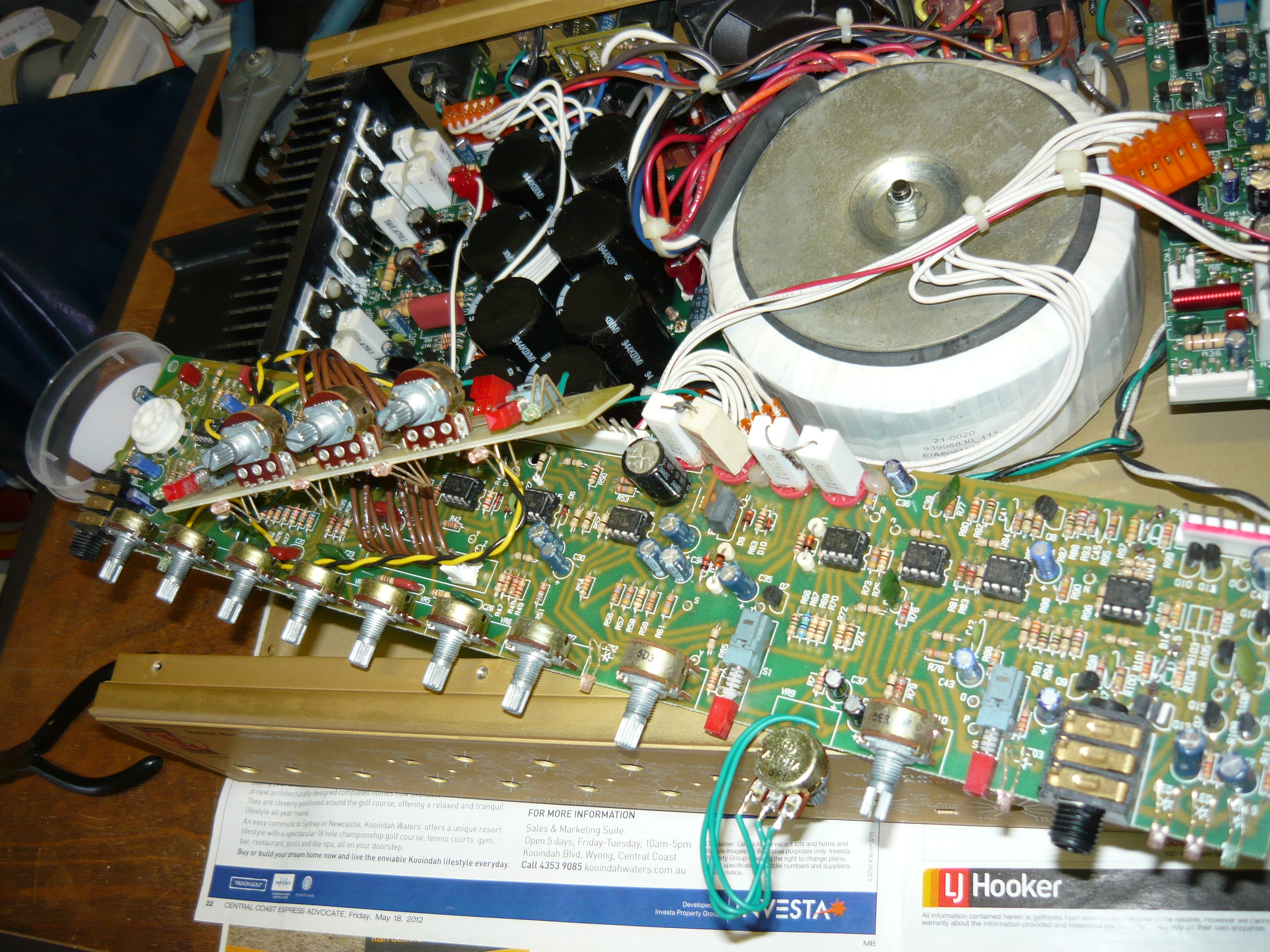 The intention of the MOD is to get the low voltage supply dropping resistors off the printed circuit board altogether. No more heat being absorbed into the board represents a big improvement in reliability. The next obvious step is to up the power dissipation rating of the resistors. If we use aluminium clad resistors, then these by design are suitable for mounting onto a heatsink. A pair of 15 watt resistors each for R62 & R64 (ie, four in total) mounted to an aluminium heatsink, suitably mounted to the bottom section of the amp chassis, in the space between the front board and the toroidal transformer will require only short lengths of hookup wire to connect back to the board.
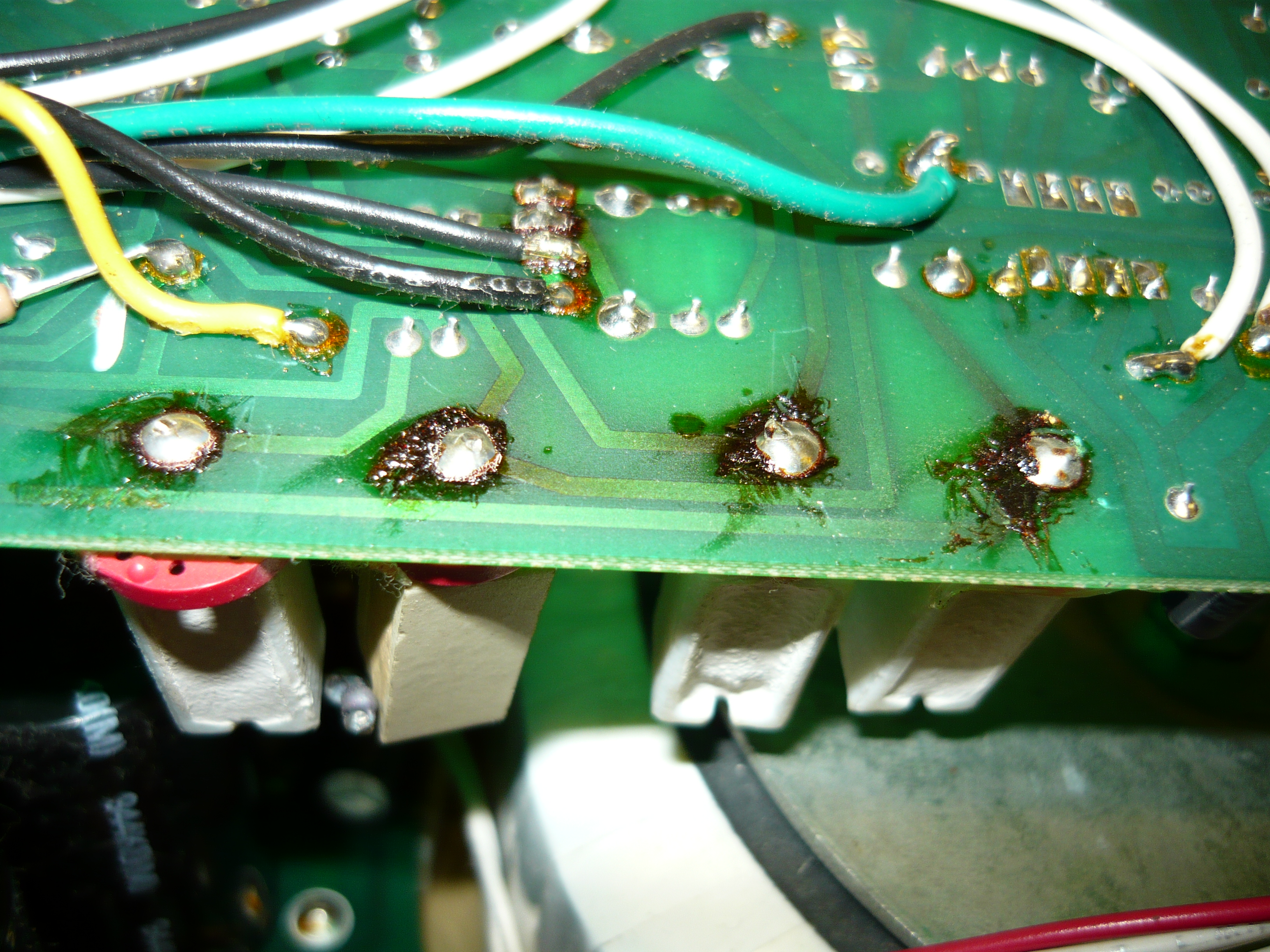 You can see in the photos that we have to strip out the front board completely from the chassis. Removing & replacing the printed circuit board without introducing any additional problems is a time consuming element of this work. We need access to the solder side of the board to clean up any problems, remove the old solder and possibly repair any heat damaged tracks & pads.
 While we have the board out of the way, we can mount the heatsink, taking care to leave enough clearance to actually be able to reinstall the board. This task is fiddly enough as it is, without the resistors in the way. We don’t want the heatsink hard up against the transformer or the interconnecting wiring.
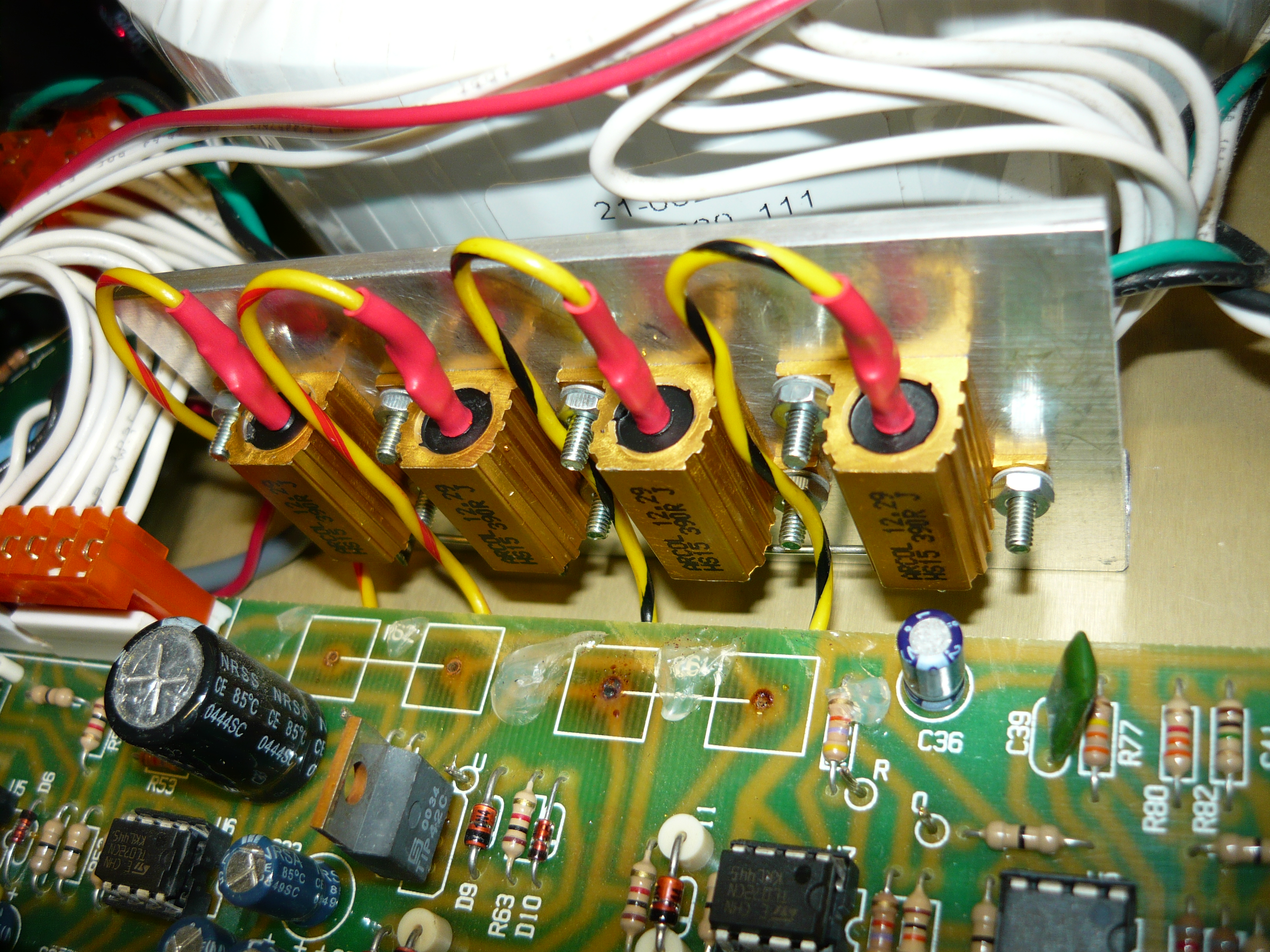 The final photos show the board reinstalled and the interconnections between the aluminium clad resistors and the former positions on the board for R62 & R64 completed. The final arrangement still creates some heat, but nothing at all like the original design. With one channel only driven into a 4 ohm resistive load at a time, the power amps deliver 480 watts, which translates into a nominal 400 watts per channel with both channels driven into 4 ohm loads.
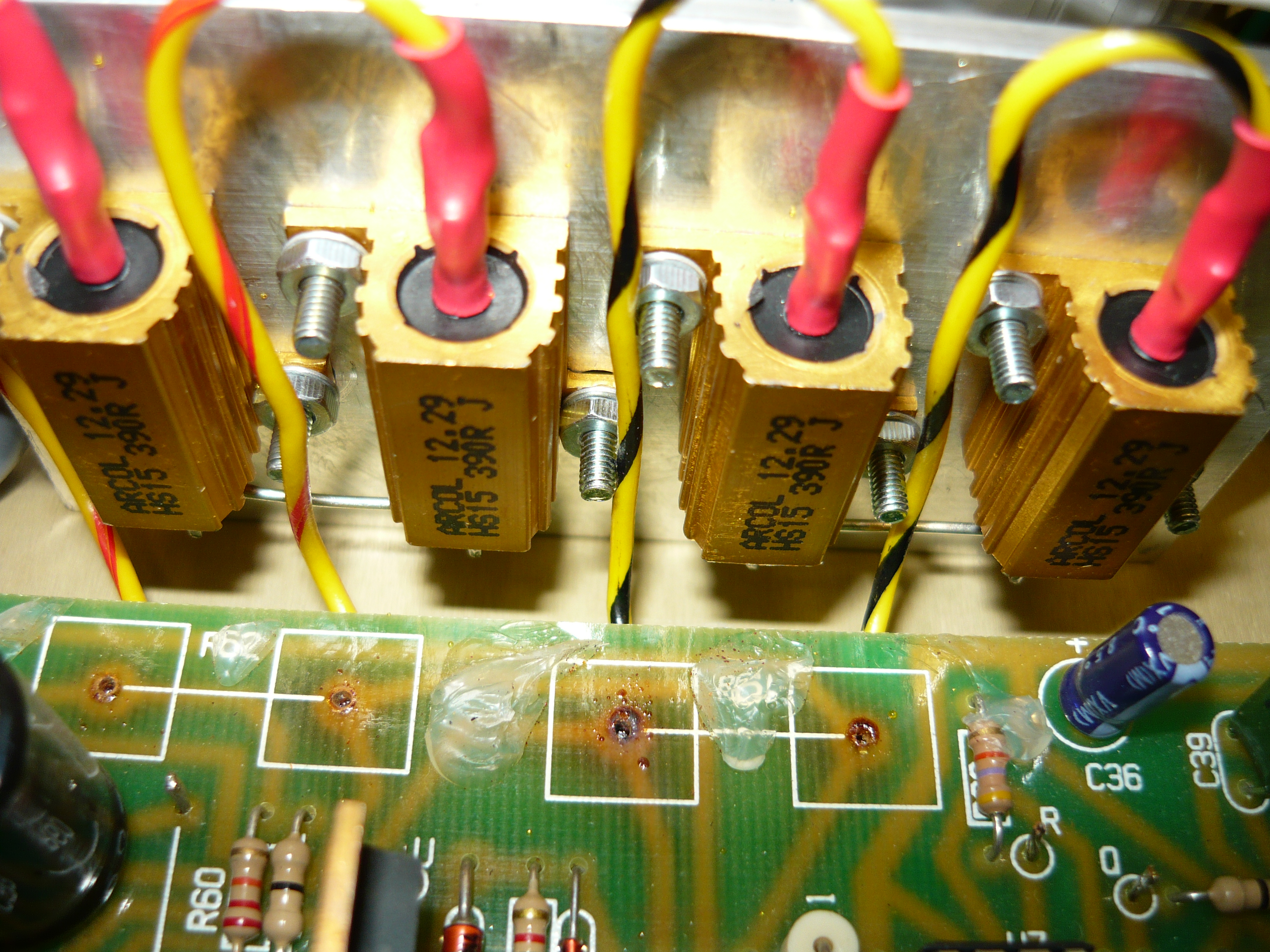 The whole job takes at least 2 hours to complete. It is a worthwhile improvement in reliability for those owners of the original David Eden amplifiers who intend to keep their amps for the long term.


 ivanrichards