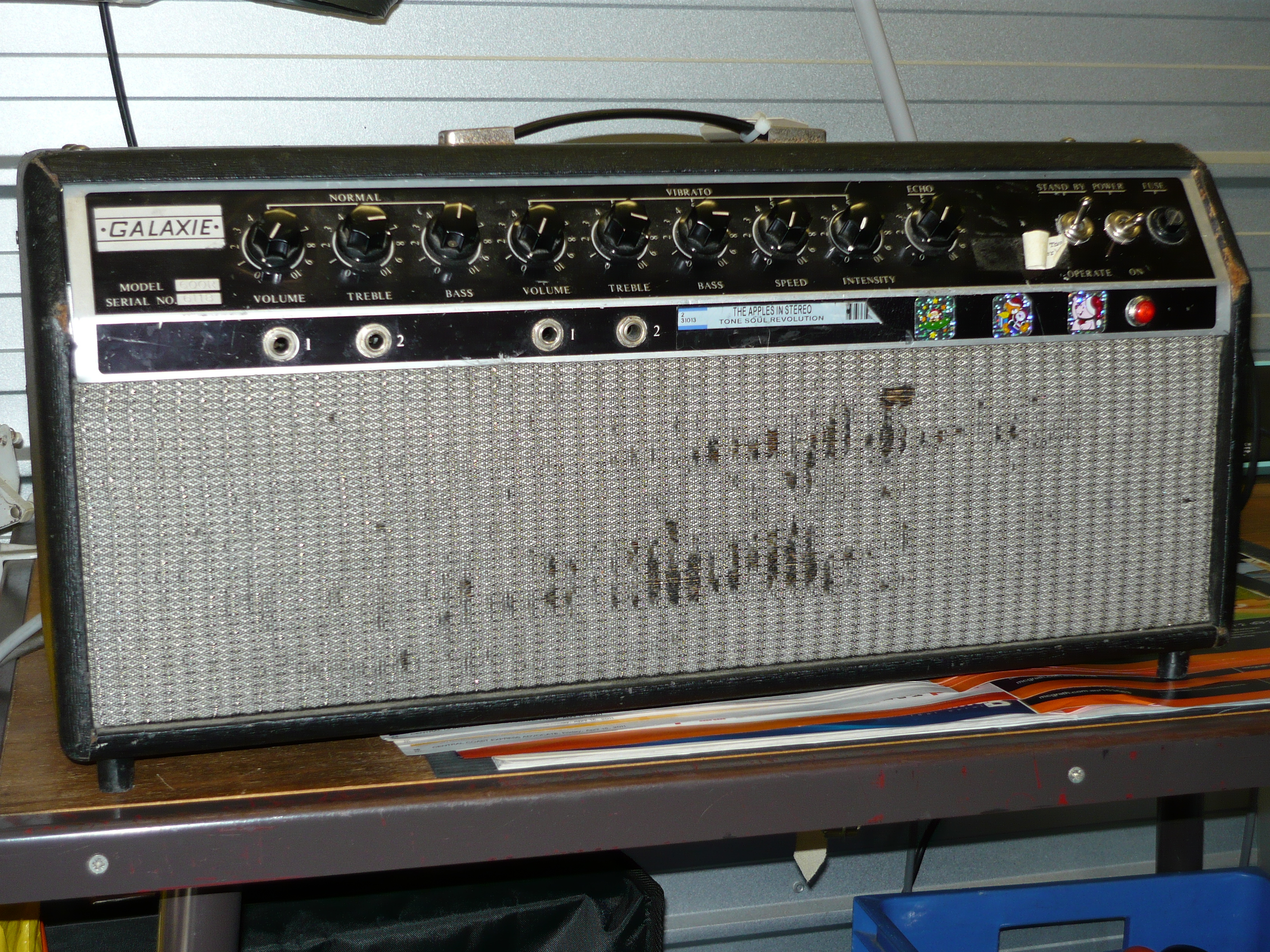
 Happy New Year and welcome to 2012 !! Recently, we carried out a major repair of a Galaxie 60 watt head for David Challinor of the Sydney-based indie band, Sounds Like Sunset. The Galaxie amp is actually a rebadged Vadis amplifier, obviously rebranded for one of the major music stores, possibly Palings, possibly Nicholsons, J Stanley Johnston or Harry Landis, all situated in the Sydney CBD back in the day, but we don’t actually know the details. This was fairly common practice in the 1960’s manufacturing scene, and the Vadis amp may well have been rebadged with other brand names as well. If anyone reading this blog can shed some more light on the subject, please contact us via email, it will be most appreciated.
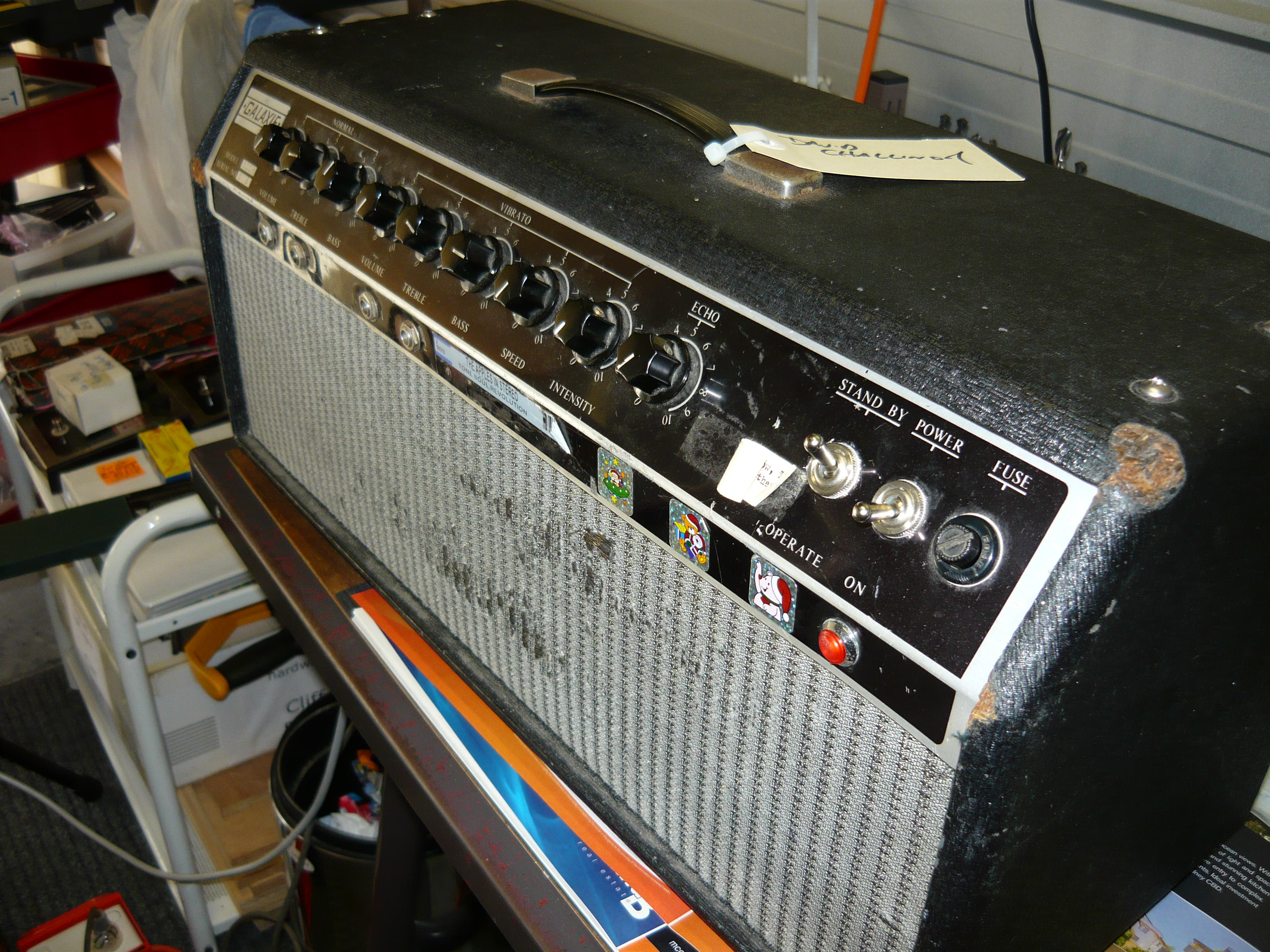 Vadis amplifiers were manufactured in a small factory unit in Brookvale, a northern beaches suburb of Sydney, Australia. The business name of the manufacturer was Soundcraft Industries, Pty Ltd. The name of the proprietor was Jerry Dewey, although I can’t be sure of the correct spelling. Production started in the early 1960’s and continued through to the early 1970’s, but those dates are just approximate. Vadis amps were distributed exclusively through Dynamic Music, who were located in the same general area of Sydney. No doubt this arrangement would have limited the profitability of Soundcraft Industries, but it also gave them a broad penetration of the musical instrument marketplace, as it existed at that time.
 Believe it or not, we actually have a family connection to the Vadis amp. My father, Jack Richards, a guitarist and arranger on the Sydney pro music scene back in the day, lived in the North Narrabeen/Elanora area of Sydney, as did Jerry Dewey. Knowing that Jerry was in the electronics industry, my father suggested to him repeatedly that it would be a shrewd move to start manufacturing guitar amplifiers, as at that point in time there were only two serious competitors, Moody in Lidcombe (Sydney), and Goldentone in Melbourne. By the time Jerry actually started production, however, there were several new competitors starting up in Sydney, Melbourne and Brisbane. Nevertheless, the enterprise was successful.
 My father also claims to have suggested the name Vadis, from the name of a Sydney nightclub, Quo Vadis (also the title of a movie). We have no idea what became of Jerry Dewey after Soundcraft Industries closed its doors.
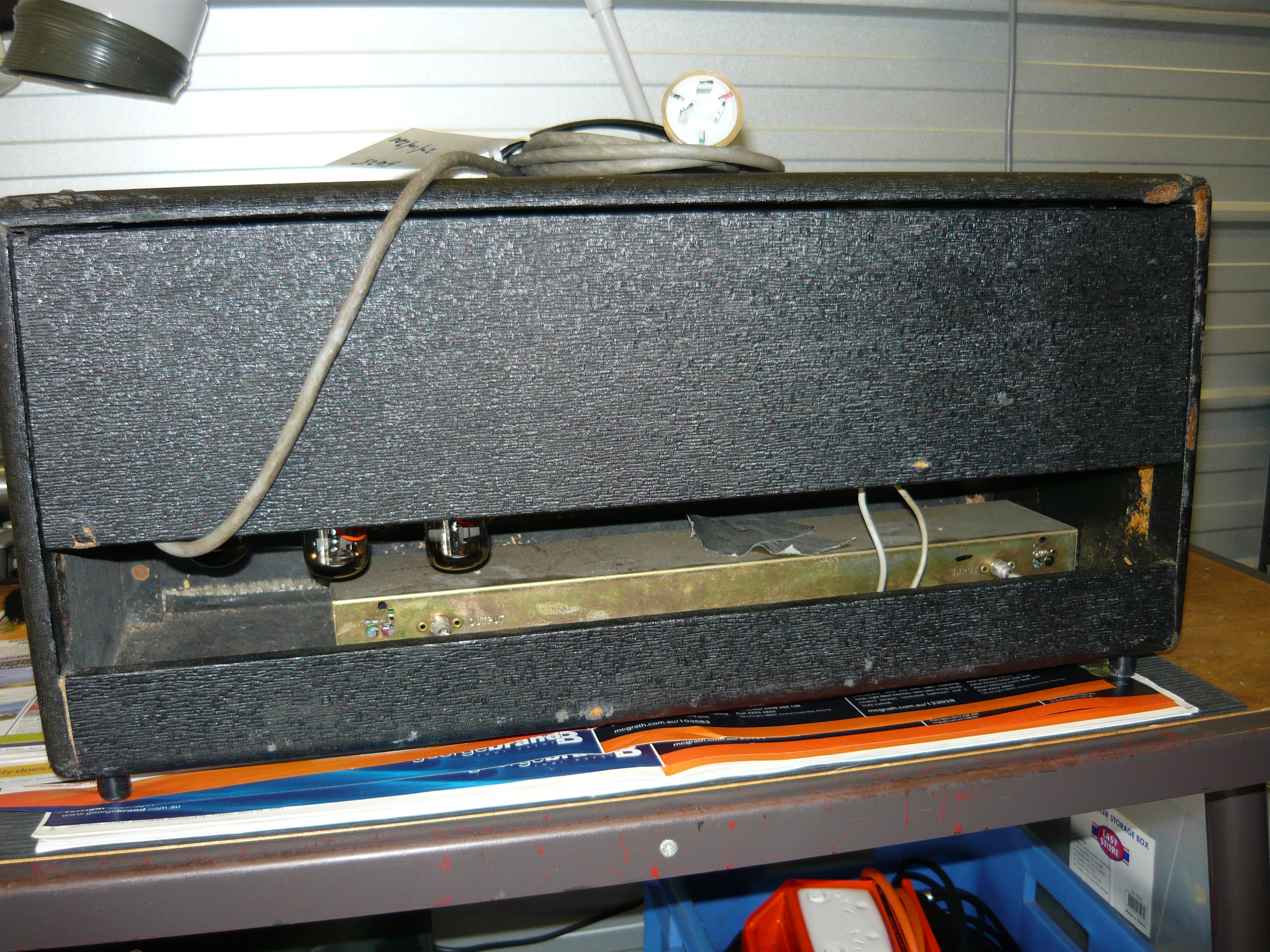
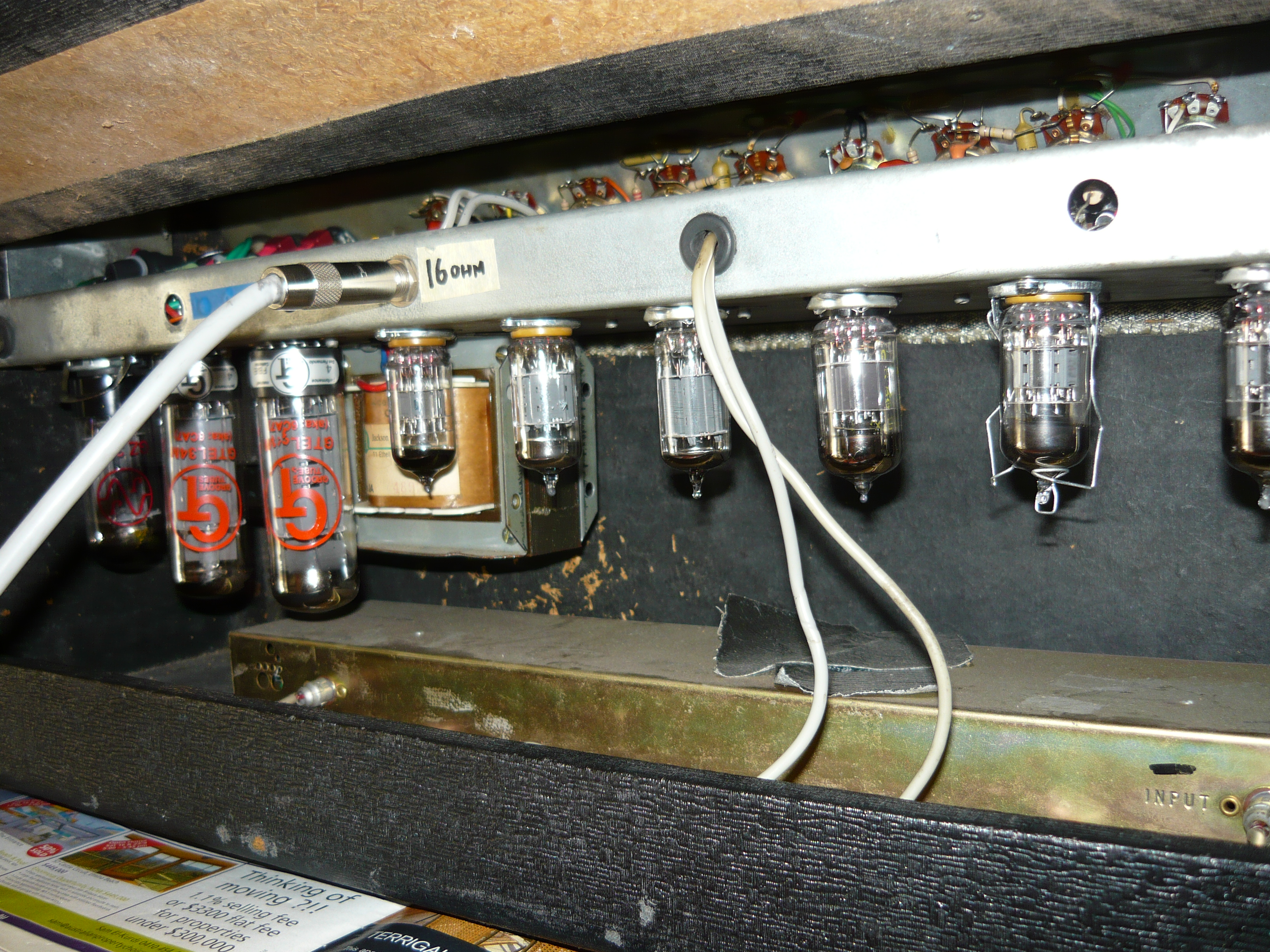
The classic Vadis 40 watt and 60 watt heads and combos typically employed a pair of 6CA7/EL34 output valves, originally with a 5AR4/GZ34 rectifier, but later replaced with solid-state rectification. A resistor (eg 1000 ohms, wire-wound) was normally used rather than a filter choke. These models had two preamp channels, one brighter than the other, and very effective all-valve reverb and tremolo. The reverb design is very similar to that of the 60’s Ampeg amps, but using a 12AU7/ECC82 driver valve. The tremolo employs direct modulation of the 2nd 12AX7/ECC83 gain stage cathode bias, in the 2nd (reverb) channel, resulting in that classic valve amp tremolo, unobtainable any other way. The 2-band passive EQ in each channel, was sometimes as per the Vox “Top Boost” channel, but driven from the anode of the preceding stage, rather than by a cathode-follower buffer stage, sometimes a very simple “tweed amp” style, but most often used a modified Baxandall EQ, optimised for guitar, and obviously a design unique to the Vadis amp. The more expensive amps used Ferguson transformers, manufactured in Chatswood (Sydney), with cheaper alternatives used in other amps.
 There were numerous other lower-powered models employing different output valves, and were generally single channel. Most of the lower powered amps employed the 6GW8/ECL86 dual function triode – pentode valves, which could deliver up to approx 12 watts output in push-pull. These valves were very common in Australian-made guitar amps and record players, etc, in the 1960’s, but are long out of production.
The speakers used in the Vadis amp were primarily MSP (Manufacturers Special Products), a division of AWA in Sydney, or Rola (later Plessey Rola), also manufactured in Sydney. The Rola 12PEG (15 watts) and 12UEG (20 watts) alnico magnet guitar speakers sounded very fine indeed and are quite collectable today. Later, Plessey Rola introduced the updated ceramic magnet versions, the 12U50 and 12P30. The 12UX50 twin-cone model was widely used in PA systems at the time (late 60’s through early 70’s).
 Well, by the late 60’s live performance of rock’n’roll music was changing in a big way, with ever more powerful amps appearing on the scene, and we can imagine that Soundcraft Industries, with their mid-60’s style amps, would have been under a lot of pressure from their distributors, and from retail, to reduce costs to stay competitive. By the beginning of the 70’s the Vadis amp was still a valve (tube) power amp, but with a solid-state preamp. Tone and performance suffered compared to the older models, but the writing was really on the wall when the entire range went completely solid-state. Thus, the Vadis story came to an end.
Getting back to Dave’s amp – both the transformers in this amp had previously been replaced by the writer, installing custom wound replacements from Special Transformers, of Sydney (no longer in business). This amp has had a hard working life and has been used in live performance until quite recently. The power transformer was replaced a 2nd time by a tech not known to us, this was possibly a Mojo unit, but was unfortunately underpowered for this application and developed a short circuit, blowing the fuse of course, and leading Dave to bring the amp down to our workshop. We selected a Mojo Tweed Bassman replacement unit, as having closest to the desired current & voltage ratings, ie able to support EL34 output valves plus a GZ34 rectifier, and importantly it would fit in the available space with some additional metalwork to enlarge the rectangular chassis opening.
Apart from replacing the transformer, there were numerous other issues to sort out, as you would expect in a 45 year old amp. I’m sure the designer would be amazed that these amps are still in use, and even more amazed at the alternative styles of music being performed !! In this amp the GZ34 and its octal socket required replacement, and the 240V wiring tidied up with emphasis on a good earth connection, as per compliance with Workcover NSW standards. All these amps will require replacement of 40+ year old electrolytic capacitors, we recommend a good quality cap such as Sprague Atom (USA) or F&T (W. Germany). Some caps will need to be bedded down in silicone to keep them secure. The bias supply voltage is adjusted by means of paralleling up resistors as required, so is not at all convenient. Jacks & pots will need cleaning or replacing as required. One problem will be the condition of the 9-pin preamp valve sockets. In many cases they will be so damaged and/or corroded that replacement is the only option, which is labour intensive as the Vadis amp is wired true point-to-point, with all components mounted directly between tagstrips and valve socket pins.
The tremolo function in Dave’s amp hadn’t been working for some time, but replacement of the 9-pin socket and a couple of resistors & capacitors restored it to full working order. It sounds fabulous !! In spite of the seemingly random earthing employed in the chassis wiring, the amp is amazingly quiet, and sounds pretty damn sweet. The reverb is a bit surf’s up for our tastes, but is definitely useable – just turned down a tad. We think that Mr Jerry Dewey probably knew a thing or two about electronic design, 60’s style.
Thanks again to Dave for his continued custom, and for supplying us with such rare & unusual items to discuss here in the blog.
http://soundslikesunset.com.au
Once again – if anybody can shed any light on any of the missing pieces of the Vadis jigsaw puzzle, please make contact via email and we will publish an update as appropriate.
Regards, Ivan.


 ivanrichards