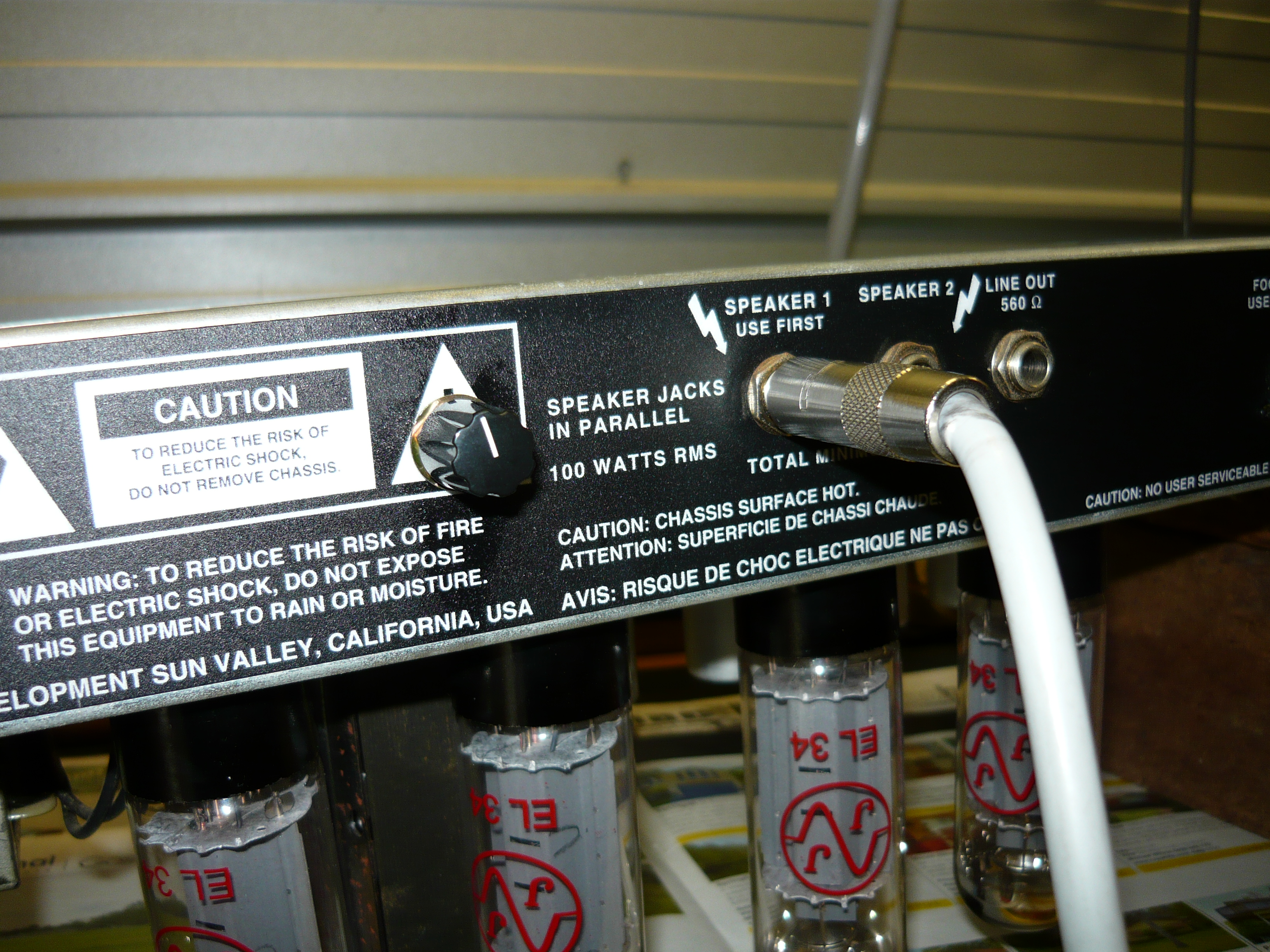
 Those of you who are regular readers of our blogs will know that we have visited the subject of providing quality service to Rivera amplifiers (USA) in a couple of previous blogs. This time, we are not discussing a fault as such, but addressing a design limitation with a (relatively) simple MOD.
 As we have discussed previously, the classic Rivera amp models have two discrete preamp channels, one with ‘British’ voicing, and one with ‘California’ voicing, plus master reverb, FX loop and prescence controls. Both channels have gain boosts, activated from ‘pull-on’ functions on the front panel controls. On the USA (green LED) channel this is known as ‘Ninja Boost’.
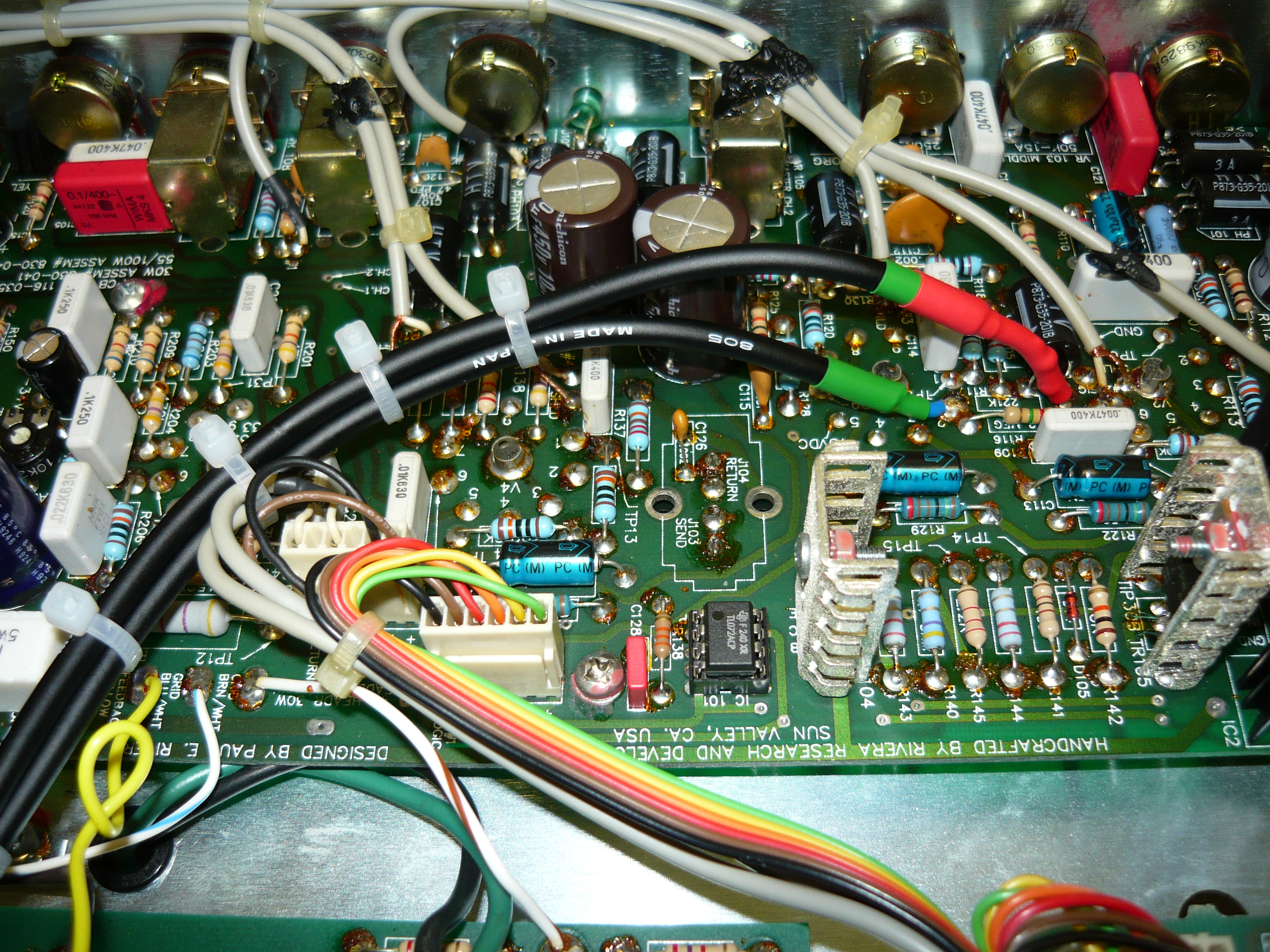 The Ninja Boost feature when activated provides a substantial gain boost. In a live performance situation, activated from the footswitch unit, this gain boost is actually unmanageable, which is the whole point of this blog. We were recently approached by a local Central Coast (NSW) rock guitarist, Mr Greg Taylor, to provide a MOD so that the level of boost can be preset to a more appropriate level from a suitably located additional control.
 The gain boost in the USA channel takes place between the 2nd & 3rd gain stages, where an interstage attenuator is partially bypassed by a fixed resistor when the boost is activated. Each gain stage uses one half of a 12AX7 twin-triode valve (tube). This attenuator and associated switching circuitry is located on the main board.
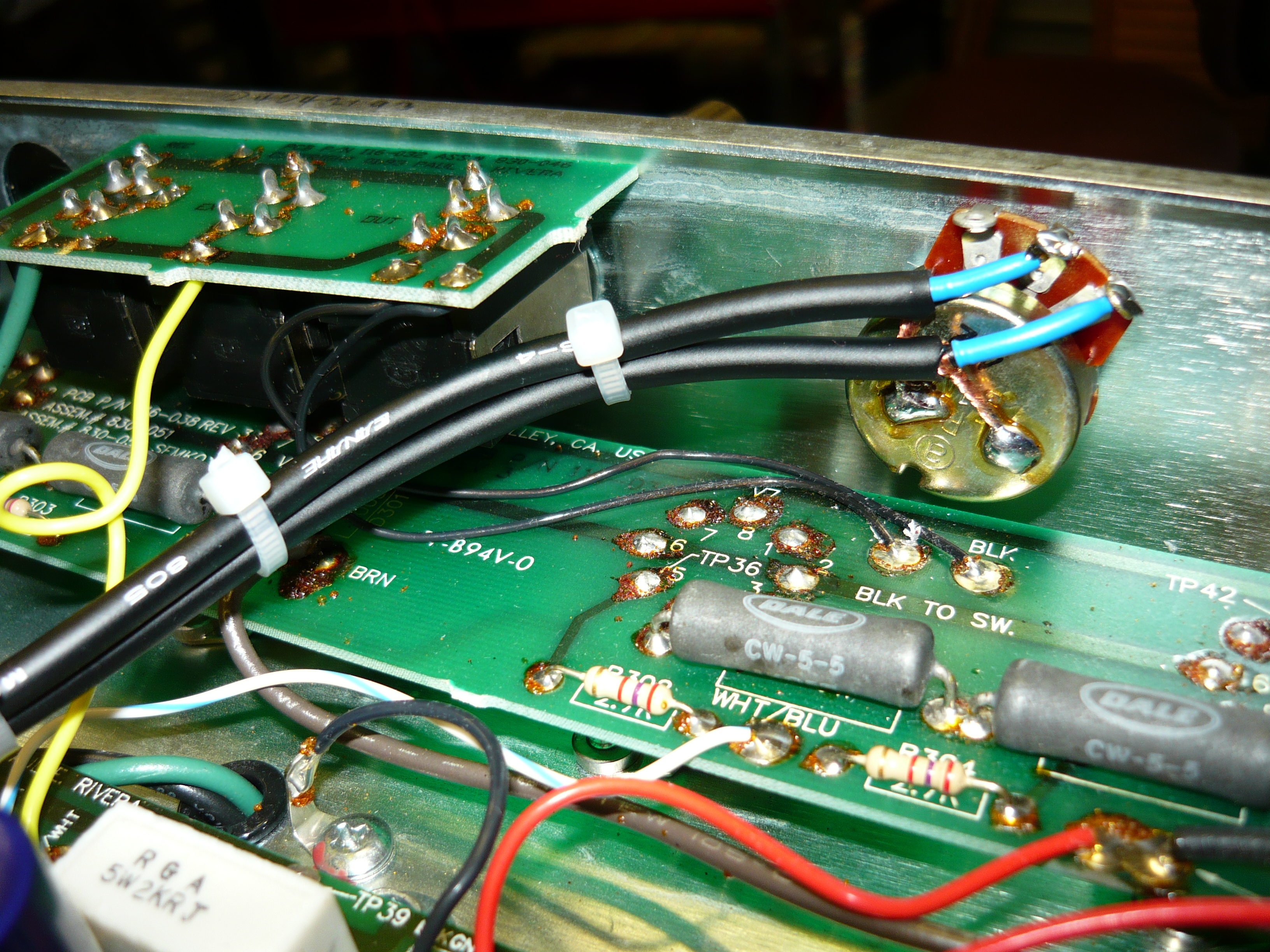 Inspection of the chassis and board revealed that we could snip one end of the abovementioned fixed resistor, close to the input grid of the 12AX7 gain stage. Having done this, we could run a pair of shielded cables to a pot located in a spare position on the rear panel. The pot is wired up as a variable resistance in series with the existing fixed resistor, meaning that only 2 of the 3 lugs are connected. Thus we control the amount of boost by varying the insertion loss of the attenuator circuit. Because this is a series attenautor, as opposed to a volume control, a pot with a linear or reverse-logarithmic taper is more suitable than a logarithmic taper, giving a smoother sweep.
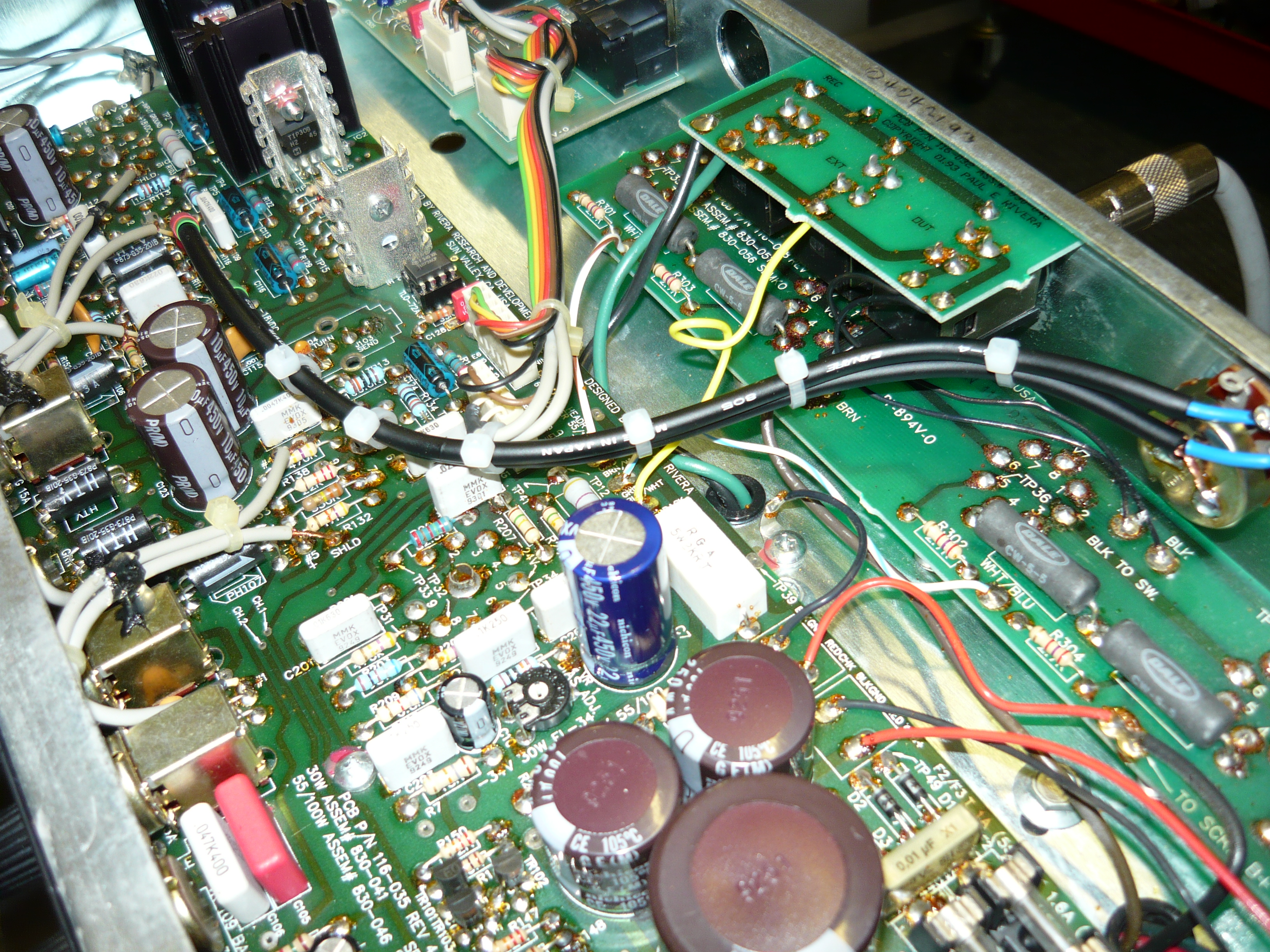 We use a high quality shielded cable (eg, Canare), rather than ordinary hook-up wire, so as not to introduce any additional hum & noise when the boost is activated. The shields of both cables are earthed (grounded) at one end only, in this case to the body of the pot, to avoid creating an earth-loop (ground-loop). Heatshrink is used at both ends to prevent accidental short circuits, and also to create a stable connection to the resistor that we snipped at one end – the other end of this resistor is still connected to the board. The whole job is neatly routed into the existing wiring and held in place with nylon cable ties. Although we have performed an intrusive modification, the amp has not been degraded in any way, from the perspective of reliability or additional noise.
So how did the MOD perform in the final play test ?? The amount of boost is now variable from a just perceptable boost at minimum (anti-clockwise) setting, to the original level of Ninja Boost at the maximum (fully clockwise) setting, all in a smooth, linear sweep preset from the rear panel. Thanks to Greg Taylor for his continued custom and for the many challenges he has provided us over the years ! Coming soon we have a blog about the legendary Wasp amplifiers, modding current Fender amps for blues-harp players, and mods to the Fender Blues Junior amps.


 ivanrichards