Archive for June, 2011

Do we cater for the jazz guitarist ?

June 19, 2011

Yes !  It’s not just about rock’n’roll, we offer our repair services and custom-design/custom build services to every type of musician who is reliant on some form of amplification/sound-reinforcement. This would include jazz, jazz/rock/fusion, country, alt-country, folk-rock, pop, blues, soul, rhythm & blues, roots music/world music………………..the list goes on and on.

Actually, the Richards family has always been into jazz, swing, big bands, hawaiian steel guitar, etc,  all the way back to the 1930’s. I am the black-sheep of the family, I am the one who was seduced by the music of the British Invasion bands from the mid-1960’s onwards. I just couldn’t get enough of The Beatles, The Yardbirds, The Animals, Cream, Hendrix, The Who, The Small Faces, Led Zep, Jeff Beck Group, Jethro Tull and many more, and I’m still hooked !

However, getting back to the jazz musicians out there – we pretty much have the cream of the Australian contemporary country music scene resident here on the NSW Central Coast, but we also have a few jazz orientated players here as well. What kind of equipment issues do they have ? Getting a warm, satisfying tone is a prerequisite as is having enough headroom to voice those complex chords with clarity and authority. Getting a balanced tone and levels across the 6-strings and in fact the entire guitar spectrum is another major issue, particularly if you are playing a hollow-body instrument, eg an arch-top.

Most jazz guys would probably favour a guitar amplifier that is light and compact. A valve amp of something in the order of 20 watts with a single 10-inch or 12-inch speaker would seem a logical choice. For whatever reason that I don’t yet understand, there is a trend among jazz guitarists towards the Rivera amps from California, USA. Perhaps an influential player chose one of these amps and then others followed his example.

A customer recently brought a Rivera Clubster 20 watt 1×10 combo to the workshop. The amp had certainly been reliable and is commendably light and compact. However, the tone was very thin and also lacking in headroom. The overdrive channel was really too high gain to be useable, and did not lend itself to modification, so I concentrated on the improving the clean channel in whatever way I could. I substituted another brand of output valves which gave slightly later break-up, ie more headroom. However, the biggest limitation of this amp is the speaker unit itself. If you are going to have a 1×10 combo, then that 10-inch speaker needs to be a good one ! The stock speaker does not have a good, balanced tone across the guitar spectrum, in fact it is rather thin and generally lacking in tone and dynamics. The biggest possible improvement to this amp was always going to be upgrading the speaker.

I have had some experience with the Jensen NEO speakers, which unlike some of the various Jensen alnico and ceramic magnet reissues, have a very full balanced tone, without particularly favouring any frequency over another, and also good sensitivity. In other words, both the 10-inch and 12-inch Jensen NEO models are well suited to low powered amps, even though they are rated for 100 watts. After installing the NEO-10, both the customer and I agreed the tone of the amp was greatly improved as also was the sensitivity and headroom.

I would like to also remind jazz players that I custom design and build valve amps for guitarists of all persuasions. Not as light and compact as the amp described above, I must admit, but designed and built to last the distance and achieve the desired tonality and performance levels. Possible design criteria might include the use of 6V6 power output valves for their very sweet tones, optional valve-driven reverb, and baxandall e.q. for a more balanced frequency response.

For distortion tones that complement those jazz/fusion explorations, you won’t find a better overdriver than our Class-A Distortion pedal, which achieves a very natural, very organic quality of distortion, with fine control over both level and tone. It never sounds harsh ! In fact, one of the first guitarists to purchase this pedal was Carl Dewhurst, a player and teacher well known on the Sydney jazz scene.

Please take the time to check out our website: www.ivanrichards.com and please feel free to contact us if you have any suggestions and/or useful comments about any issues in the preceding paragraphs. Your own experiences in the world of jazz guitar amplification may well assist other players.

Regards,

Ivan.

Authorised Service Centre for CARR Amplifiers.

June 18, 2011

We are pleased to advise that as of December 2007 we have been appointed as the factory-authorised service agent in Australia for Carr Amplifiers of North Carolina, USA. Carr amps display a unique and highly individual approach to guitar amplification, and are completely valve (tube) in design (some models do have a solid-state rectifier), and are completely hand-wired.

The most popular Carr models have been, and probably always will be, their hot-rodded Princeton-Reverb style amps, however some of their other models defy the usual trends and offer something quite different in both style and tonality.

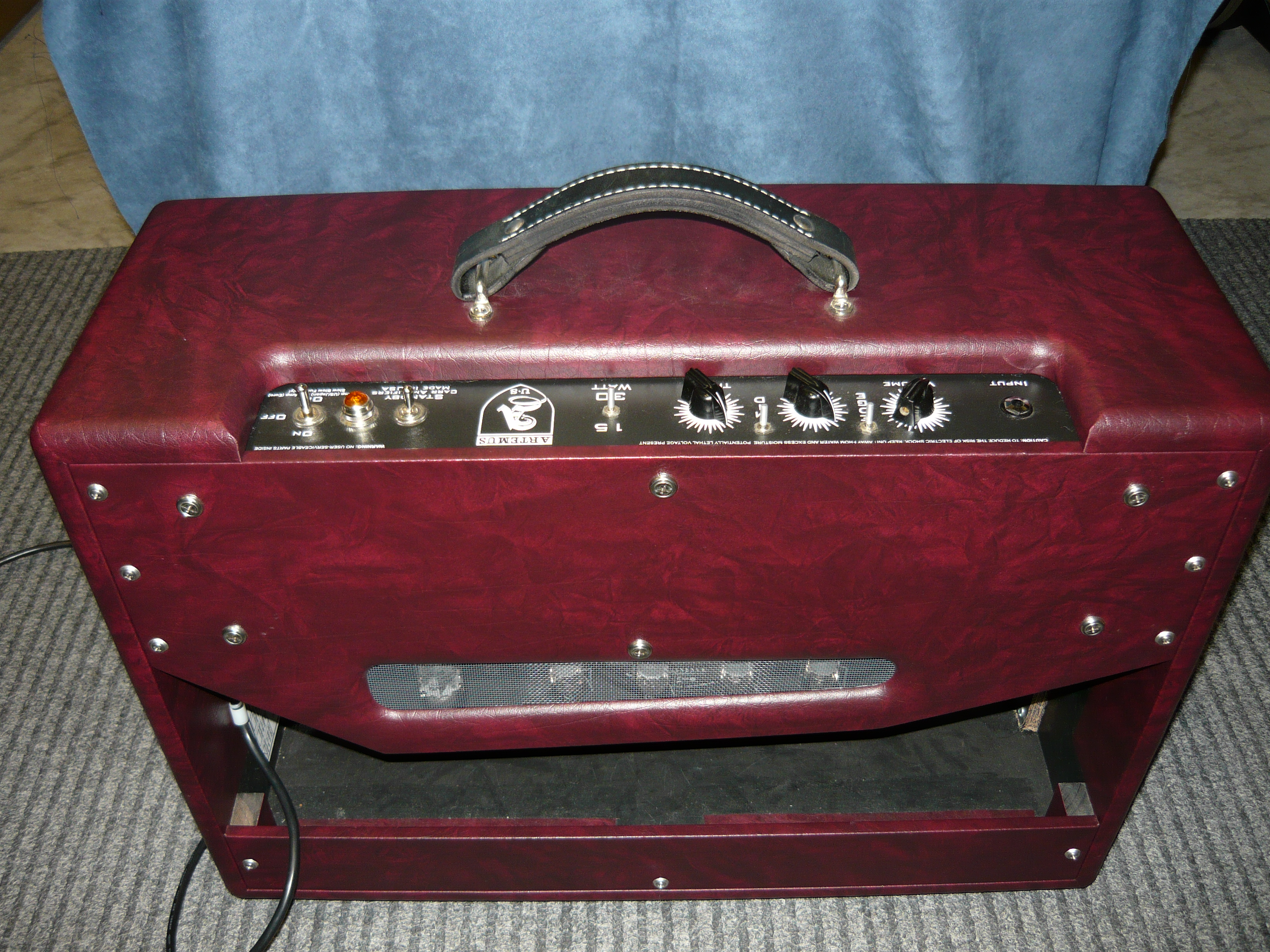
Pictured here is the subject of a recent repair, the Carr Artemus. This is a 30 watt output, class AB/fixed-bias, 4 x EL84 design with an unusual front-end design. This amp would obviously have a fairly specialised appeal, and is quite different to the many AC30-influenced amp designs on the market. Cosmetically, the amp has an attractive art-deco style cabinet which has been faultlessly presented.

Here is what Carr amps had to say as part of our original communications:

hello Ivan:  Great to have you on the case ! You certainly come well recommended and it’s wonderful to have people like yourself work on our amps – Steve Carr.

If you have any service enquiries and/or service issues, please contact us via email address info@ivanrichards.com for world-class service and support, including full backup as required from Carr amps, USA. Our workshop is located in Wyoming (Gosford), New South Wales, just north of Sydney. Alternatively, you can make arrangements via Bondi Intermusic of Oxford Street, Bondi Junction (Sydney). Mobile number for urgent enquiries is 0418 862 034 (within Australia), and 61 418 862 034 (international).
Note:-  for those of you out there that may have a Carr amp purchased direct from the USA and therefore operating on 120V AC via a stepdown transformer, we can offer a permanent solution by installing a 240V power transformer supplied by Carr amps via their Australian distributor, Bondi Intermusic. Please enquire as per the preceding paragraph.

How do we test and evaluate our valves [tubes] ??

June 4, 2011

Let me say from the outset that I am NOT a valve [tube] discounter. You cannot possibly sell valves at some of the prices I have seen on-line [on Ebay, for example] with any degree of quality-control. The mark-up just isn’t there to support or justify this. It is actually quite time-consuming to test and evaluate a batch of valves.

However, I DO supply and install valves as part of my amp servicing business and also obviously with my own Richards amp custom-builds. I also supply some music shops with pre-tested and selected valves for their in-house repairs and customer sales, at prices which reflect the value-add, including quality-control and warranty.

So, how do we carry out this testing and selection of valves ? Firstly, there are very few dedicated valve-testers on the market at all, let alone devices which will test valves at realistic voltages, and/or under load. The older valve-testers which were primarily intended for testing Radio/TV valves applied relatively low voltages to the valves, which doesn’t help us much in the world of guitar amps, where voltages of between 300V and 500V DC are most common. So basically, I was forced to design and build my own valve test sets, to suit the purpose at hand.

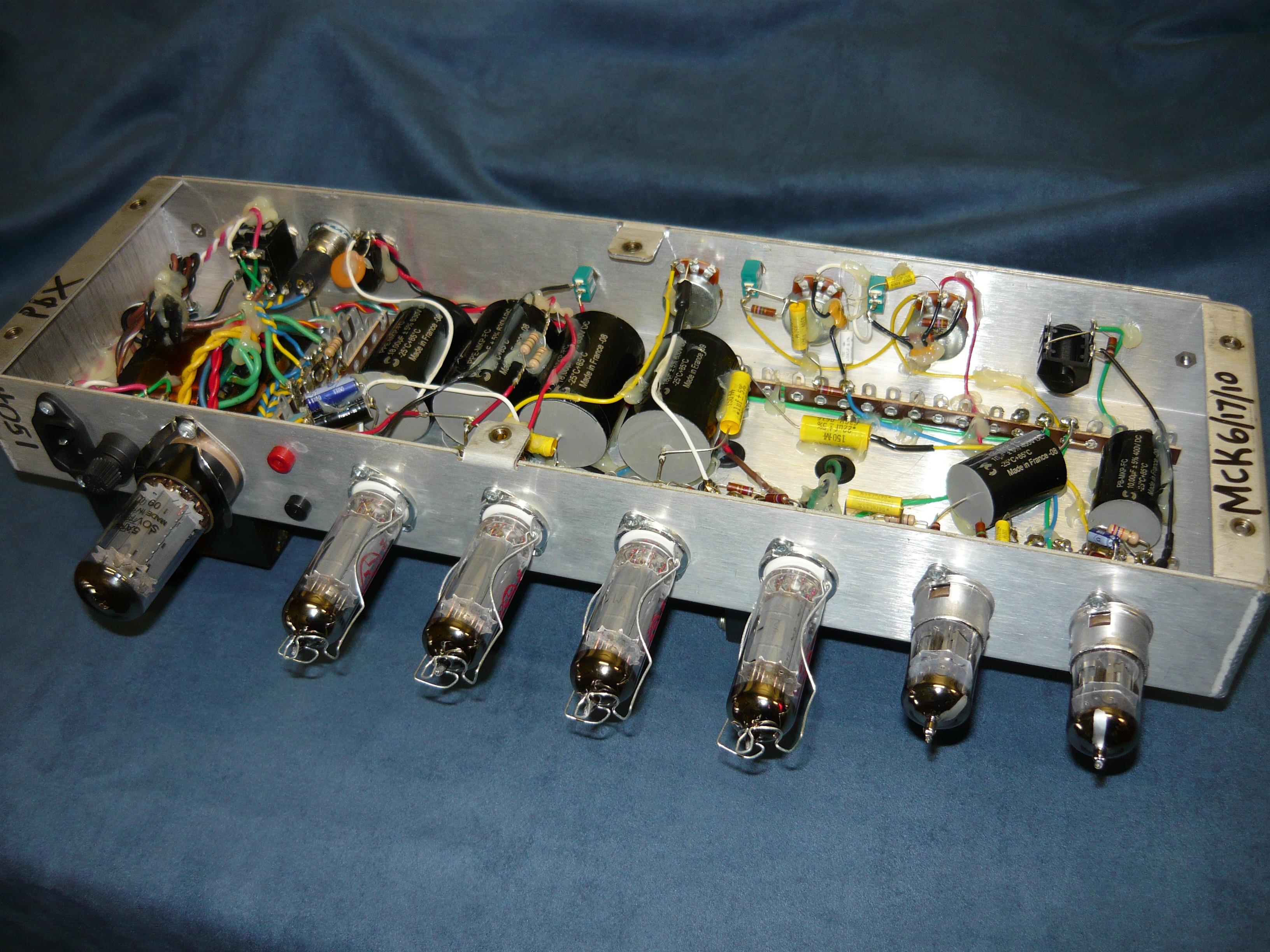
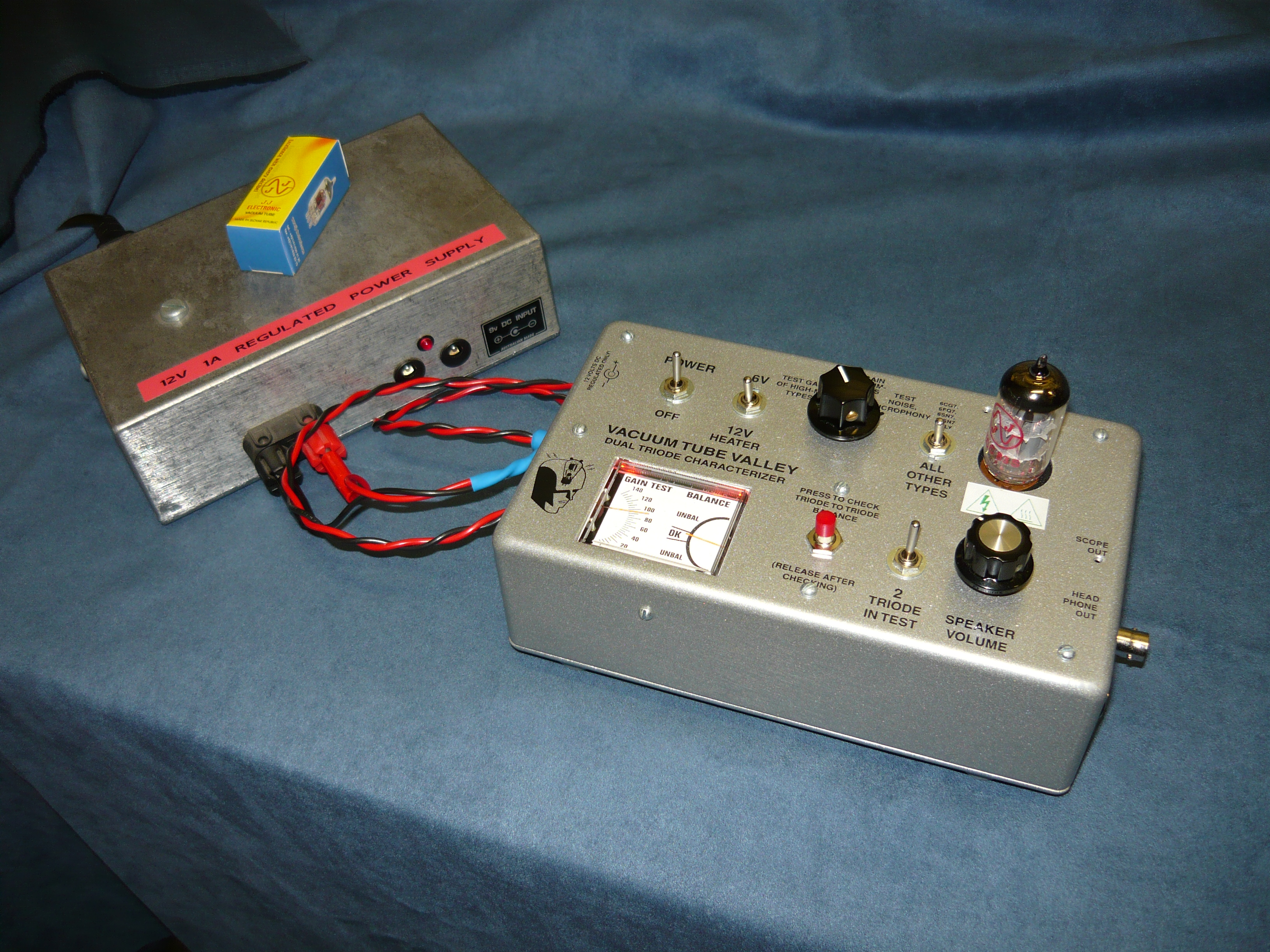
My most expensive test equipment acquisition (apart from the oscilloscope) is the VTV [Vacuum Tube Valley] Valve Characteriser, which tests and evaluates miniature 9-pin dual-triode preamp valves, including such common types as the 12AX7 [ECC83], 12AT7 [ECC81], and 12AU7 [ECC82]. Parameters under test include gain, noise and microphony, as well as the ability to select matched triodes. This device from VTV is no longer in production. This is the device shown in the first two photo’s.

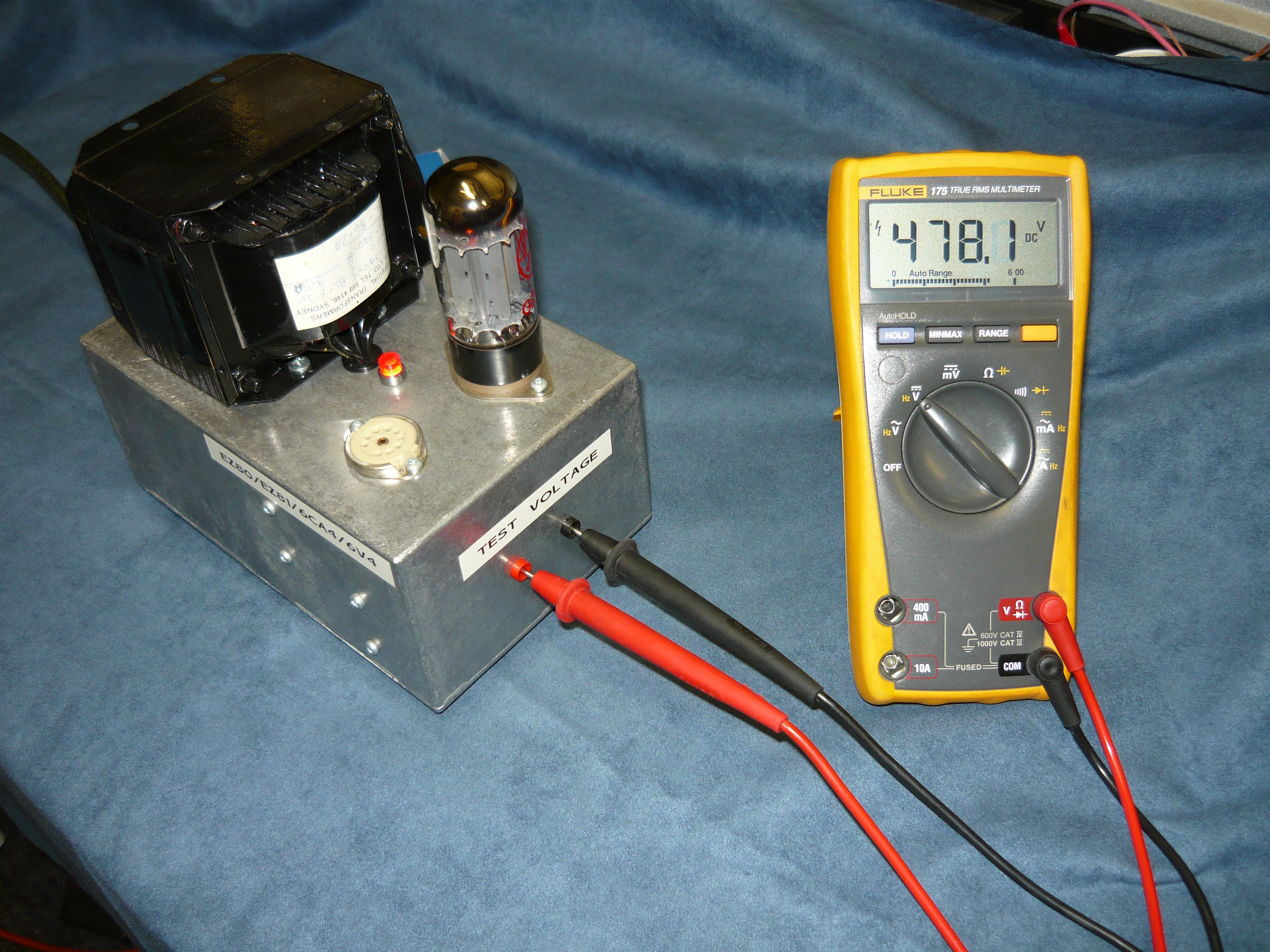
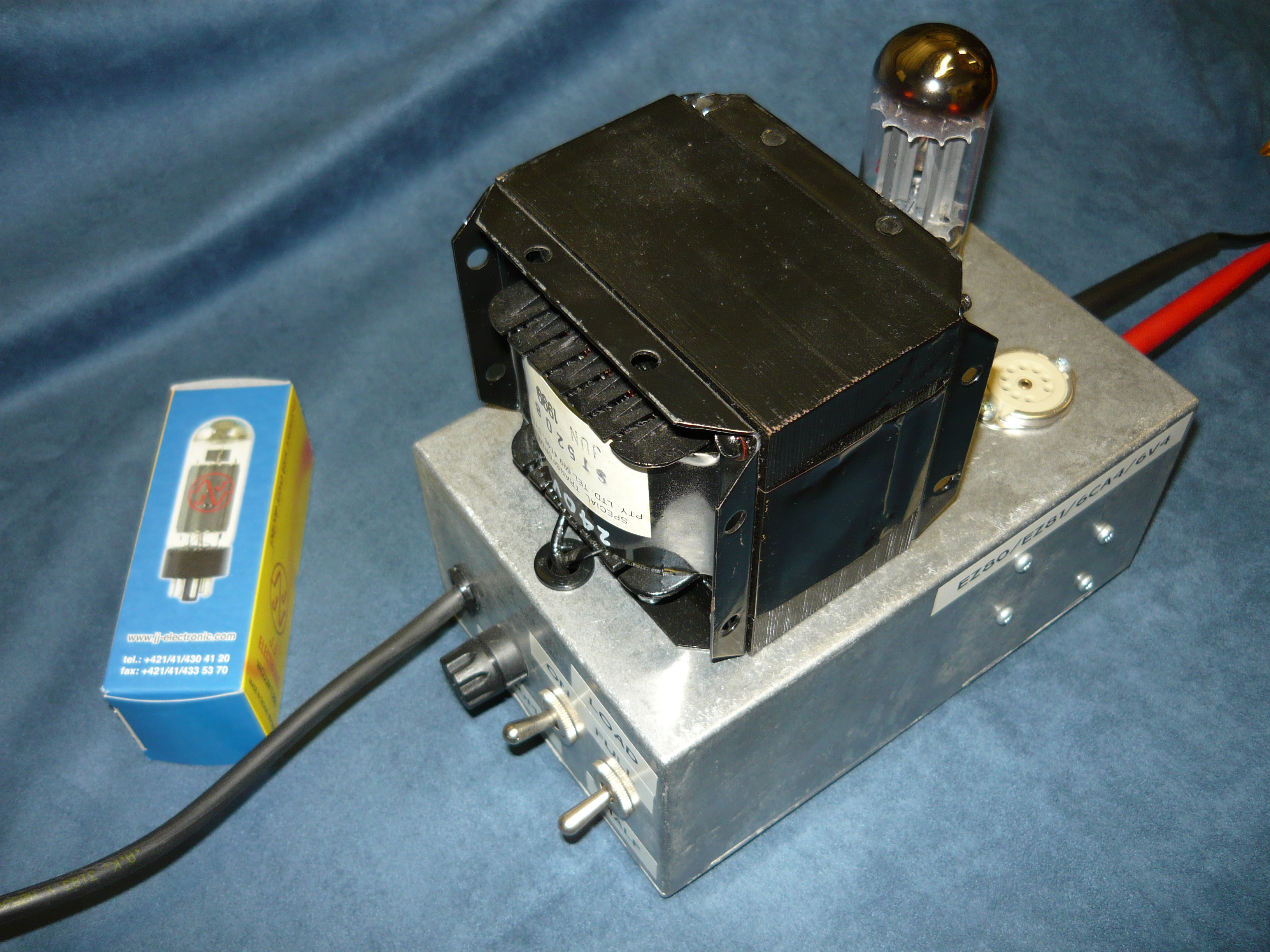
The other item shown in the third and fourth photo’s is an in-house, purpose-built rectifier valve tester, which tests both octal and miniature 9-pin rectifiers at high voltage, and under-load. Rectifier types include the commonly used 5Y3, 5U4 and 5AR4/GZ34 octal types, and the EZ81/6CA4 miniature 9-pin types, and also some more obscure types. As you can clearly see in the 3rd photo, this JJ-brand 5AR4/GZ34 is delivering 478V DC when lightly loaded.

In addition to the above test gear, I also have purpose-built testers [not pictured] for the miniature 9-pin 6BQ5/EL84 power output valves, which tests the valves at a reasonably high 390V DC, and lastly a tester for octal valves including the familiar 6CA7/EL34/6V6/6L6/KT66/6550/KT88 types, which tests the valves at the commonly used 460V DC. You can see that these testers look pretty low-tech !! I basically used whatever transformers I had leftover from servicing that would supply sufficient voltage and current for the job.

Well, that’s the BLOG for this week, hopefully we will have something different and interesting to talk about next week. Please visit us again on a regular basis !