Archive for May, 2011

A Matchless Spitfire Amplifier

May 27, 2011

Yes, we specialise in the service and repair of boutique/hand-crafted valve [tube] musical instrument amplifiers, including Matchless and Bad Cat. This particular model is the Spitfire Reverb, rated at 15 watts – just volume, tone, reverb and master controls.

Unfortunately, one of the output valves, an EL84, went short-circuit [S/C] internally during a gig, destroying an associated component, and causing much embarrassment for the customer. I replaced the component, and at the customer’s request installed a matched pair of JJ EL84 valves in lieu of the brand which had failed. A power output test, electrical safety test, general checkover and final play test and this Matchless is ready to start gigging again.
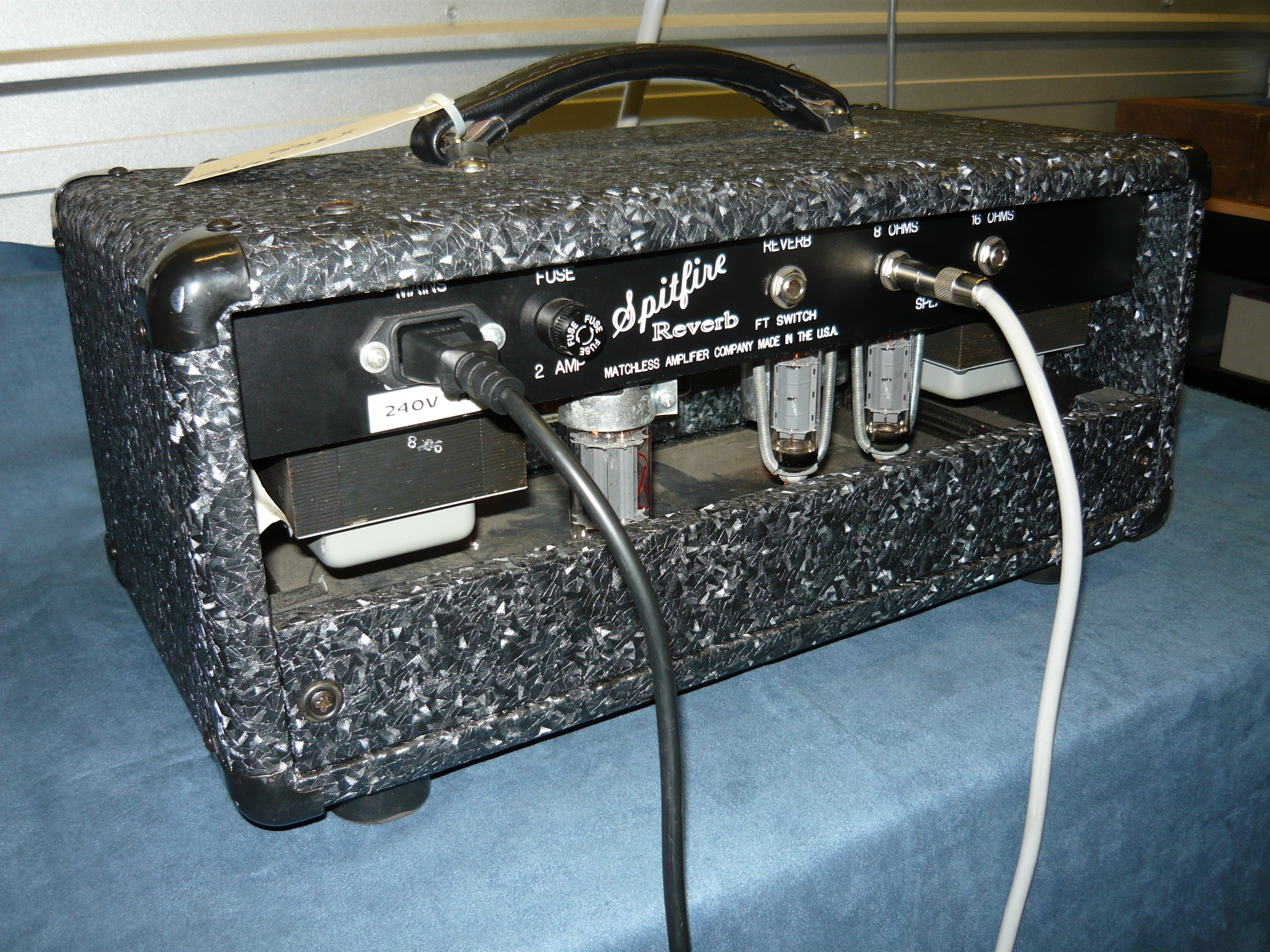
By the way, this amp is bizarely presented in what can only be described as shower-curtain black tolex !!

This class of amp is 100% hand-wired with components mounted directly between valve sockets and tagstrips, earth busbars, and so on. Always take your boutique amp repairs to a service tech who is experienced in this technology and who also possesses highly developed soldering skills, so as to minimise the potential intrusive effects of service work on your amp’s performance and resale value. This comment also particularly applies to the hand-wired made-in-UK VOX amps of the 60’s/70’s and 80’s, which have many idiosyncrasies and require specialist knowledge and experience to bring back up to performance standard.

Wah Wah mods & repairs

May 21, 2011

Yes, we undertake service, repairs and MODS on most (but not all) wah-wah pedals which are based more or less on the original designs. The obvious exceptions would be the Morley pedals which are nothing remotely like the original wah designs, and some of the newer/updated Dunlop wah’s, which employ surface-mount-technology (SMT), making conventional servicing extremely difficult – also there is very little room in such models for additional circuitry, etc.

Pictured here is the VOX V847 wah pedal, which already sounds better than average, but the customer wanted to take it to the next level ! I had previously implemented my true-bypass MOD, including a pull-down resistor on the input side to the board, to minimise pops & clicks. Just this one MOD alone made a big difference for the customer.

We had already auditioned a wah upgraded with kits from Area 51, and done an A/B comparison with the stock VOX wah, and decided that yes – most wah’s upgraded with an Area 51 kit will definitely have more of that highly desirable vocal quality to their sweep.

The customer placed an order with Area 51 for their Vintage Italian Wah kit, plus the DC Power Jack  kit. He did not include the Buffer kit, intended for applications where the wah directly drives a vintage style fuzz (eg Fuzz Face), this is because the relatively low input impedance of such fuzz pedals prevents the wah circuit from performing correctly. Perhaps this buffer should have been included in the project, as this customer loves fuzz pedals.

The DC jack required a neat 1/2″ hole to be created next to the output jack – I have a hydraulic hole punch tool that makes this job easy. The Area 51 board mounts in the same place, but is slightly larger, so this required careful positioning of the IN and OUT jacks to clear the board. Unlike the Vox and Dunlop boards, the Area 51 board requires all hard-wired connections, rather than cheapo push-on connectors. In my opinion this is a big improvement. The DC Power kit also required some additional components to be mounted on the board, for filtering and protection. At the end of the job, the cheapo output jack started playing up, so I threw it in the bin and installed a new Switchcraft jack.

While this BLOG is not intended to be an advertisement or endorsement for Area 51 kits – there are other alternatives out there for you to explore – the standard of the Area 51 kit/board/components is very high. The final and most important test is when we hook up a guitar and amp to the wah pedal and confirm that yes ! – this wah does now have a much improved sweep and a very vocal quality. Anyone know how to play Burning of the Midnight Lamp ??  IR.

the Marshall model 1959 100 watt “Super Lead”

May 20, 2011

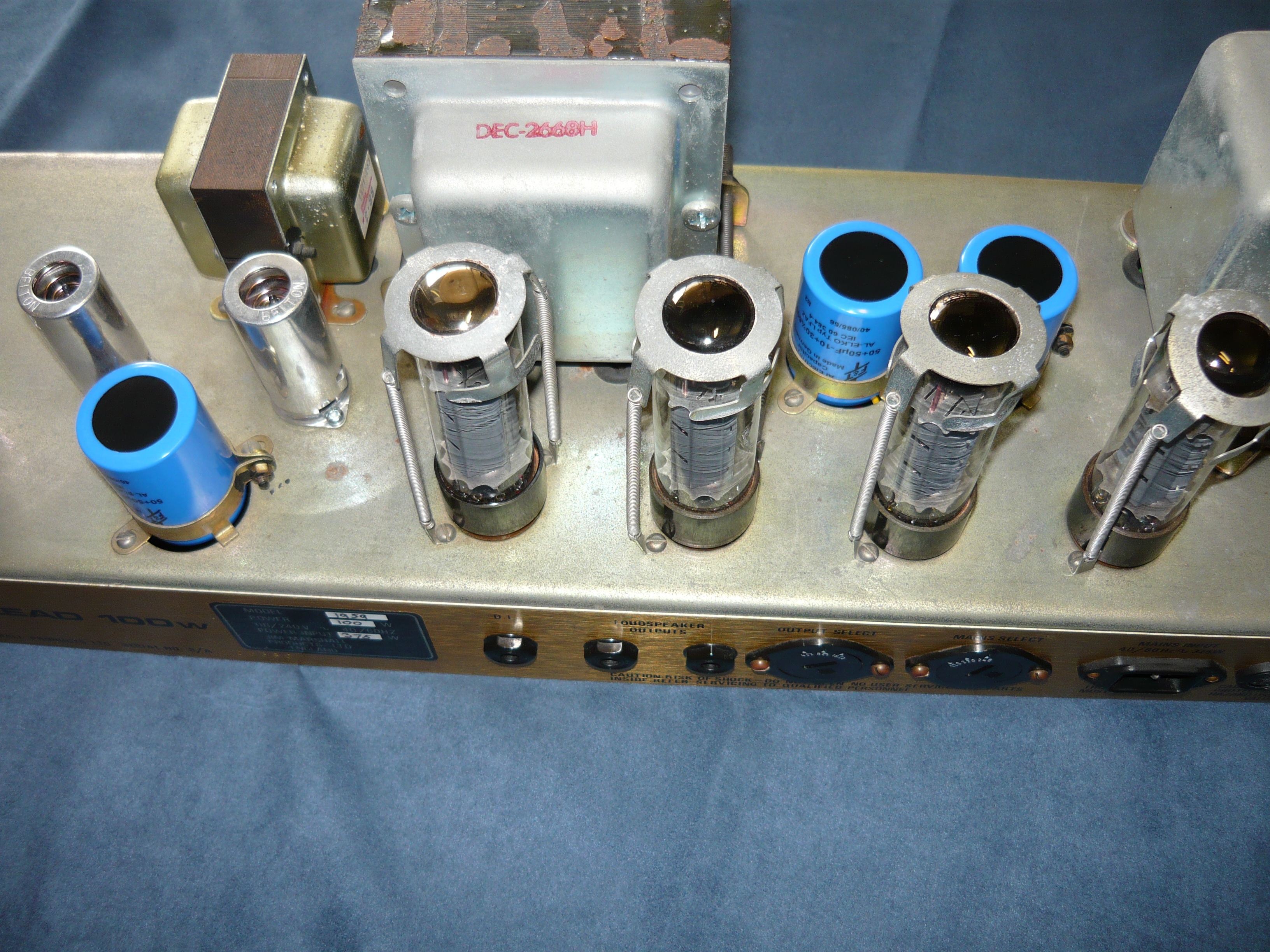
One of the most iconic guitar amplifiers of all time is the 100 watt Marshall “Super Lead” amp, model 1959: 4 inputs via normal & high treble channels with 3-band passive EQ & active prescence controls common to both channels. The 2 channels are often patched together for greater depth of tonality and greater control, like a “pre-EQ”.

Many purists believe that 1976 is round about the last year that the really great Marshalls were built. The hardliners think that anything built after 1973 is crap ! This particular example is the JCM800 version of the 1959 and it really sounds phenomenal ! Of course, it’s way too loud for most players, but the customer who owns this amp is putting together an Eddie Van Halen tribute, and this amp is perfect for the job.

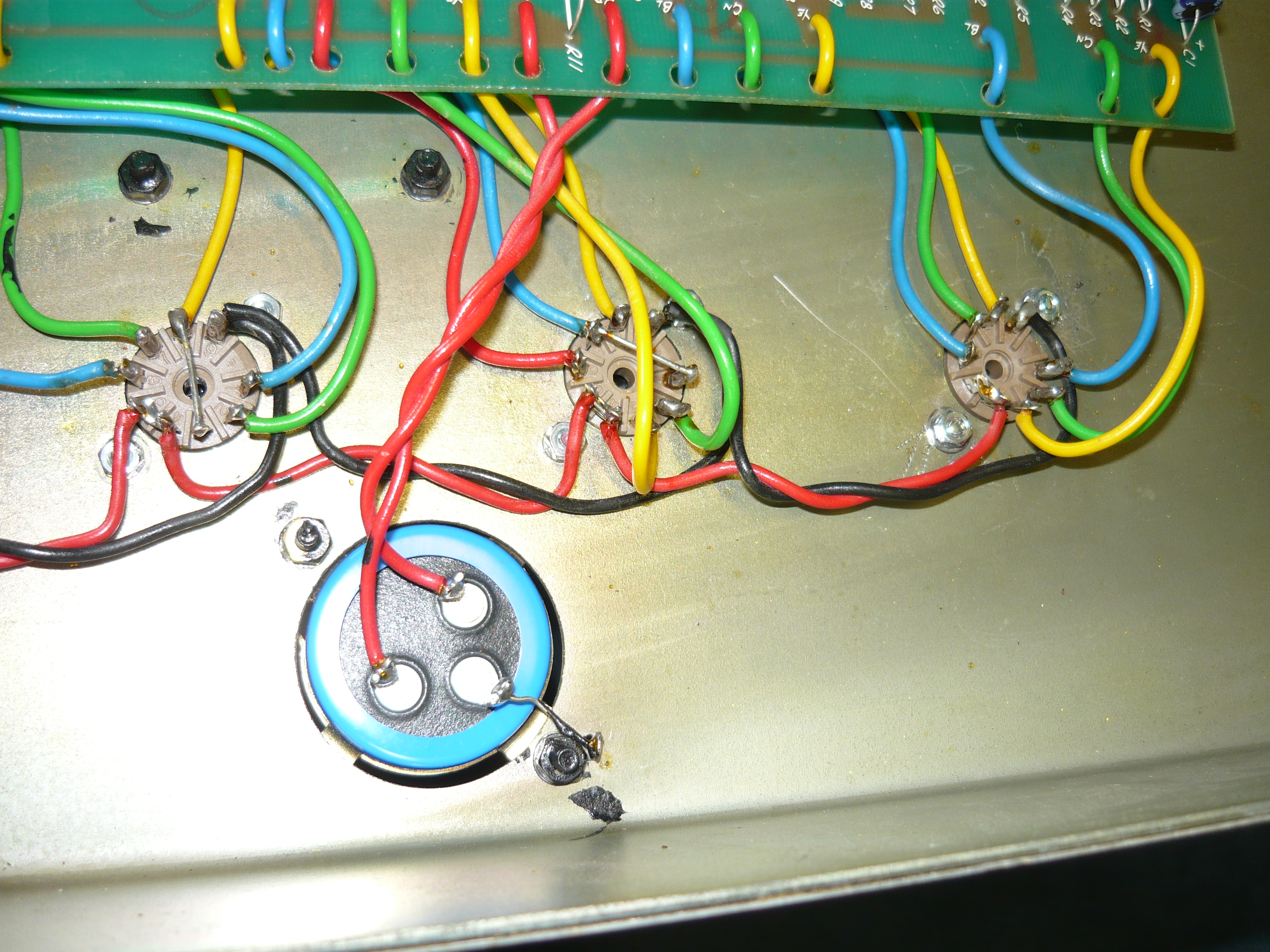
Scott brought the amp in to bring it up to performance standard to facilitate rehearsals for the Van Halen tribute. The original intention was to install 3 x new 9-pin valve sockets to replace the 3 x really crusty sockets which were installed some years back by a less than scrupulous repairer.

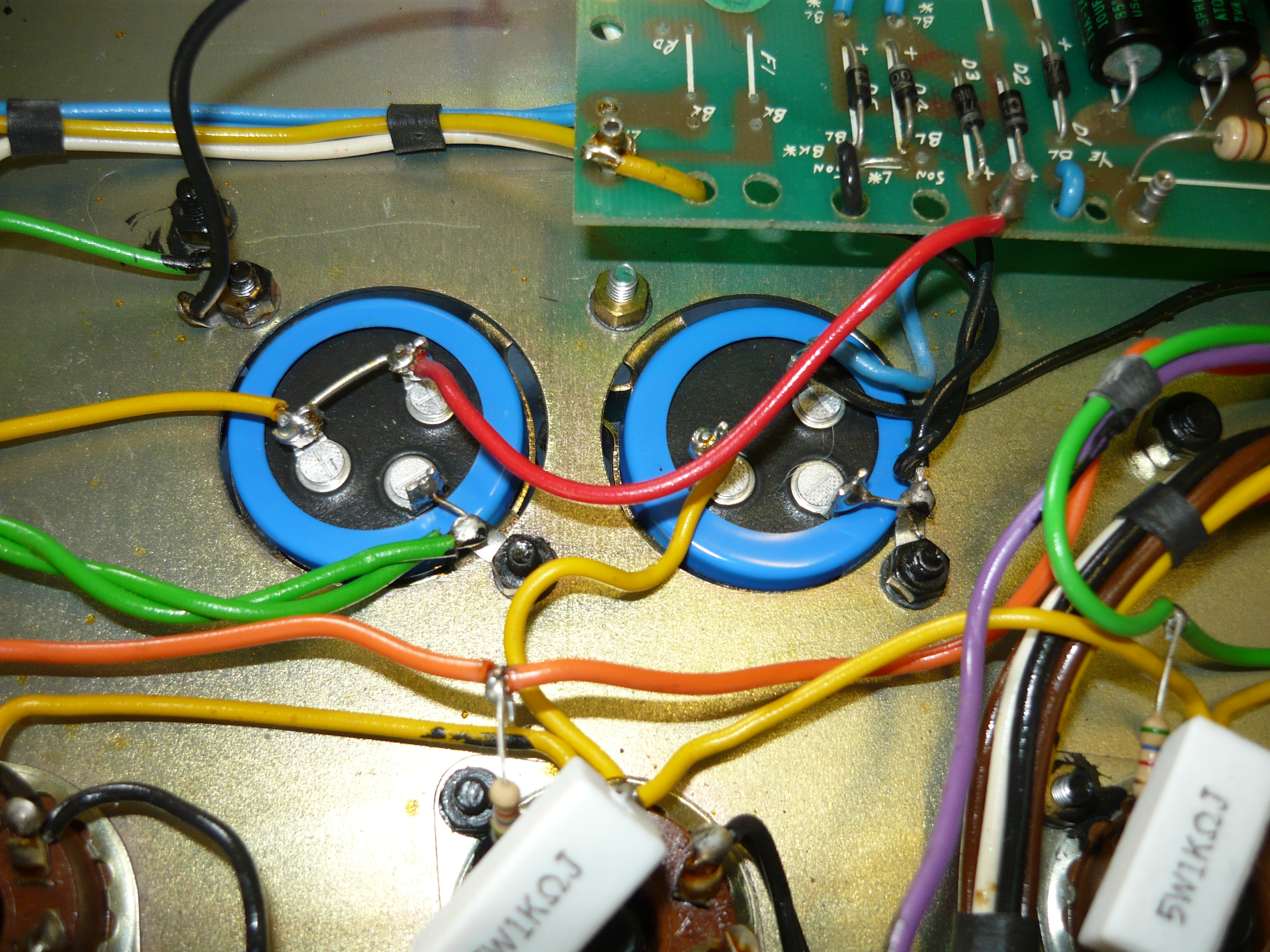
I soon discovered that the 12AX7 valves were weak, noisy and microphonic, so naturally I replaced these as well. As this is already a bright amp and microphony is an issue at such loud playing levels, I selected JJ 12AX7-S valves for the job. Then I realised that the 3 x can mounting 50+50uF/500V electrolytic capacitors were looking very crusty indeed, and were way overdue for replacement. I selected the very fine F&T (W. Germany) capacitors for this job.

The other important job to be done was replacing the 2 x bias supply capacitors, for this job the very best components are obviously the Sprague Atom 10uF/150v caps, which fit neatly into the available space on the board. After a rebias of the output valves, finally the amp is subjected to a power output test, burn-in test and electrical safety test.

My apologies for the crap photography, by the way ! The lighting in my workshop is hardly ideal for amp photos. Maybe I should do a TAFE course in digital photography. When Scott picked up the amp, he was suitably impressed with the neat rewiring job, and minimal obvious impact or intrusion onto the surrounding wiring and /or circuitry (wherever humanly possible).

Many thanks to Scott for his continued custom, and to Jim Marshall for the legendary JMP and JCM800 amplifiers.

Approved Service Centre for Swart Amplifiers

May 19, 2011

Yes, we are now providing service and repairs to products of the Swart Amplifier Company, USA. Like my own amps, and the Carr & Dr-Z amps that we already service, Swart amps are limited production, completely hand-wired, and “boutique” quality.

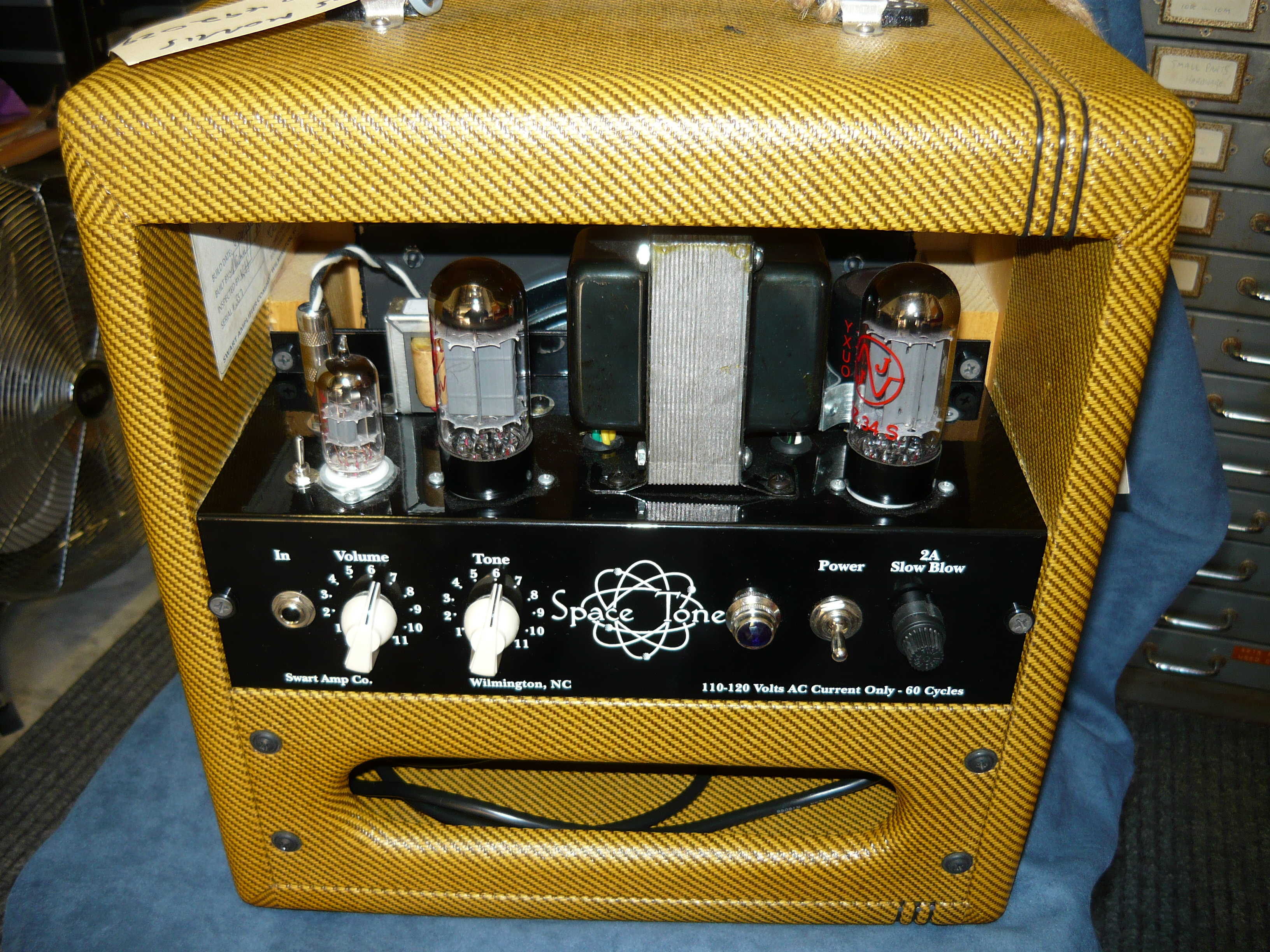
Pictured here is our very first repair job, a Swart “SpaceTone” amp. The 6V6 power output valve had gone internally short-circuit (S/C) and destroyed a component in the power supply, which created some smoke and a definite burning smell. I replaced this component with an uprated but electrically equivalent one and installed a new (tested) 6V6 valve. After a power output test, burn-in test, electrical safety test and final play test the amp is ready to hand back to the customer.

Swart amps are the brainchild of Michael Swart, and are obviously inspired by certain small amps from the 50’s/”tweed” era including various Supro, Champ, Princeton & Gibson models, primarily “single-ended” designs employing the 6V6 power output valve (tube).

This type of low-powered and extremely lightweight/compact amp is obviously gaining in popularity, now that many guitarists are playing primarily at home and/or with friends rather than at gigs. Personally I much prefer the dynamics and full-bodied tone of a larger and more powerful (push-pull) output amp and cab, and that is exactly the type of amp that I design and build – however I can state here that the quality of the build and wiring in these amps is excellent – far superior to the originals that inspired Michael Swart. I look forward to working on more of the Swart amp models.

A hard working Orange amplifier

May 13, 2011

As well as building my own amps, I also service most brands of musical instrument ampifier, in particular those empoying valve, ie tube technology.

As an example here is an Orange (made-in-UK) AD30 amp that has had a hard working life and arrived at the workshop with blown fuses, missing control knobs, and general wear & tear from life on the road. Orange amps have always enjoyed a higher standard of construction & assembly than many commercial brands, going right back to the late 60’s. Originally they were a fairly clean, bright & very loud sounding amp favoured by the blues/rock players of the time, but more recently they have developed a more grungy flavour, very “British” in character. Orange also produce an all-valve 200 watt bass amp head utilising a quartet of 6550 valves, which is worth checking out.

This amp required a re-valve, replacement of fuses, replacement of missing knobs, cleaning of pots & jacks, a general tighten up & clean up, and most importantly an electrical safety check. Every amp that is serviced in my workshop undergoes electrical safety inspection and testing as described in the Australia/New Zealand Standard AS/NZS 3760, and WorkCover NSW Code of Practice.

The repair work having been completed, the amp is subjected to a power output test and a burn-in test, connected to an appropriate load, eg a THD Hotplate device, and monitored on an oscilloscope and true-rms reading digital voltmeter (DVM). Finally, the musician in me takes over and the amp is connected to my workshop speaker and I give the amp a final play test.

After having cooled down, the amp is boxed up and returned to the customer in Sydney, ready to rock & roll !!

More amp repair examples to come as time permits – IR.